

It's safest to avoid e-cigarettes altogether – unless vaping is helping you quit smoking
- Written by: Coral Gartner, Associate Professor, School of Public Health, The University of Queensland
Health authorities in the United States are investigating 530 cases of lung illness, including seven deaths, reportedly connected to vaping. Some of these patients have been diagnosed with lung inflammation caused by inhaling oil.
The US Food and Drug Administration (FDA) has advised many samples tested have contained tetrahydrocannabidol (THC), the psychoactive ingredient in cannabis, as well as significant amounts of vitamin E.
No cases of vaping-related lung disease have been reported in Australia to date. But we know a small proportion of people in Australia do vape (about 1.2% of the population), and may therefore be worried about developing this serious lung disease.
Of people who vape, it’s those relying on the practice to avoid smoking cigarettes who may find the current headlines most confronting.
Read more: Vaping likely has dangers that could take years for scientists to even know about
Vaping as an alternative to smoking cigarettes
Many experts regard the delivery of nicotine through vaping to be less risky than smoking traditional cigarettes, because it avoids most of the harmful combustion products inhaled through cigarette smoke.
Whether vaping works to help people quit smoking continues to be debated, although some clinical trials show it is more effective than other quit aids such as nicotine patches. We know some people who vape in Australia are doing so because they used the practice to quit smoking cigarettes.
While vaping products containing nicotine are banned in Australia, some people source them illegally or obtain a prescription to bring them in from overseas. For others, the behavioural features of vaping nicotine-free products may be enough to prevent them going back to smoking cigarettes.
The widespread reports of an outbreak of a sudden-onset and serious lung disease associated with vaping may leave this group wondering if they would be better off ditching vaping and returning to smoking.
The simple answer is, no, they wouldn’t. Research shows vaping poses less of a danger to our health than smoking traditional cigarettes. But that doesn’t mean it’s without risk.
The chemicals in vapour
Most commercially produced vaping liquids contain water soluble liquid (propylene glycol, glycerol), nicotine (though not in Australia), and flavourings. The liquid is heated by the vaping device to produce a mist that’s inhaled into the lungs.
Other substances can also be used in vaping devices. Vaping cannabis extracts and concentrates such as THC oil (known as “dabbing”) has increased in recent years, particularly in the US, where 11 states have legalised recreational cannabis use and over 30 have legalised medical cannabis. It’s likely these sorts of products are in circulation among people who use cannabis illicitly in Australia, too.
Cannabis vaping liquids are often oil-based, unlike most nicotine vaping liquids. Many come from the black market and may be contaminated with pesticides, fungi and heavy metals. There may also be serious risks posed by added ingredients, such as vitamin E oil, a focus of the current US investigation. This additive is used to dilute and then thicken the liquid to hide the dilution.
The risks from inhaling these vaporised cannabis liquids are not fully known, but likely differ from vaping water soluble liquids.
Read more: Vaping: As an imaging scientist I fear the deadly impact on people’s lungs
No single chemical has been identified as the cause of all cases in the US outbreak. This may be impossible because for some cases there is no vaping liquid leftover to test, some cases used multiple products, and some people don’t want to admit to using illicit substances.
But based on evidence of a strong association between the cases of illness and vaping illicit cannabis liquids, the FDA recommends consumers “avoid buying vaping products on the street, and to refrain from using THC oil or modifying/adding any substances to products purchased in stores”.
There have been calls in Australia to ban all vaping products in response to the US outbreak. But because most of the outbreak cases have admitted to vaping illegal THC oil liquids, this would be unlikely to prevent similar cases from occurring here.
No recall of commercial nicotine vaping products has been issued in the US, suggesting the regulator does not currently suspect those products are responsible for the outbreak.
The short-term risks associated with vaping commercial nicotine liquids appears to be very low. The long term risks are less certain but there is widespread agreement vaping nicotine liquids is less risky than smoking cigarettes.
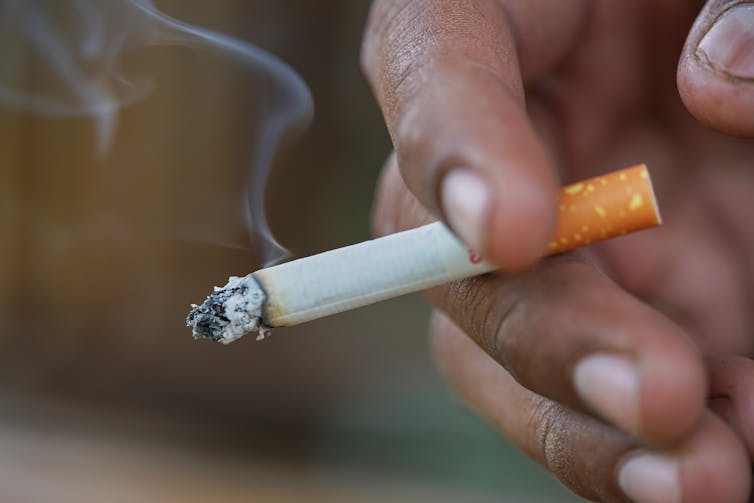 Some people turn to vaping as a way to quit smoking.
From shutterstock.com
Some people turn to vaping as a way to quit smoking.
From shutterstock.com
This isn’t the first time vaping has raised health concerns
In 2009, the FDA tested 18 e-cigarette cartridges and found diethylene glycol, an ingredient in anti-freeze, at 1% in one cartridge. However, subsequent studies have either not detected this contaminant, or found it at the trace levels allowed in medicines.
There were also fears vapers could develop bronchiolitis obliterans, a serious and irreversible lung disease, because research found diacetyl, a flavouring added to give a buttery taste, in some vaping liquids.
This disease was nicknamed “popcorn lung” after microwave popcorn factory workers, who were exposed to airborne diacetyl, developed the condition. The urban myth that vaping causes popcorn lung persists, despite no cases being reported from vaping.
Cigarette smokers are actually exposed to more diacetyl from tobacco than are vapers from vaping diacetyl-containing liquid. Nevertheless, the UK banned diacetyl as an ingredient in vaping liquids in 2016 as a precaution.
Read more: How a person vapes, not just what a person vapes, could also play a big role in vaping harm
Other potentially harmful chemicals have been found in the vapour from commercially produced nicotine vaping products. These include metals, acrolein and formaldehyde. But again, these chemicals are found in much higher levels in cigarette smoke, along with more than 5,000 other chemicals, including many carcinogens.
One study that compared the harmful chemicals in nicotine vapour and cigarette smoke estimated the lifetime cancer risk from smoking was 250 times that from vaping.
So, what’s the take home message?
Vaping should not be seen as a harmless practice. Cell and animal studies indicate vaping may adversely affect lung tissue, although it’s uncertain how these effects translate into disease risk in humans. Across the board, we still have a lot to learn about the health effects of vaping long term.
People who do not smoke tobacco should not begin vaping. However, for someone who smokes tobacco, the choice is more complicated because of the very high risks from smoking. Ideally, the safest option is not to smoke or vape, but the priority for smokers should be to stop smoking.
Read more: Don't ban e-cigarettes, sell them under tight regulation
Professional support from Quitline and medicinal nicotine products or prescription medicines can help. But those who have tried and failed to quit, and have switched instead to vaping, should not return to smoking on the basis of these cases in the United States.
To reduce risks to their health, people who vape should avoid any liquids that contain oils, and especially avoid cannabis/THC liquids. Only purchase vaping products from reputable manufacturers, such as those that comply with European regulatory standards. Working towards stopping vaping is also recommended, if this can be done without relapsing to smoking.
Authors: Coral Gartner, Associate Professor, School of Public Health, The University of Queensland


















