

7 questions answered on how to socialise safely as coronavirus restrictions ease
- Written by: Hassan Vally, Associate Professor, La Trobe University
You can almost hear the collective sigh of relief as coronavirus restrictions are eased across Australia.
But as we emerge from our bunkers and dust off our social skills, we must think about how to navigate this transition safely.
Read more: As restrictions ease, here are 5 crucial ways for Australia to stay safely on top of COVID-19
The winding back of restrictions does not mean the pandemic is over, although it is a recognition of how well we have done to control the spread of COVID-19 in Australia. There is still a long way to go, and it’s everyone’s responsibility to limit the chances of the coronavirus spreading.
So what should a social gathering look like now we’re allowed to get together? Here are answers to some common questions.
How big should my gathering be?
At the time of writing, you can have five visitors in your home and gatherings of up to ten outdoors in Queensland, New South Wales and Victoria. In Tasmania you can only have two visitors to your home; in the ACT, South Australia and the Northern Territory you can have ten, while in Western Australia you can have 20.
Whatever the restrictions in your state or territory, it’s important not to crowd too close together. You need to use common sense in deciding how many people to invite.
Do we still need to socially distance and wash hands regularly?
 Wes Mountain/The Conversation, CC BY-ND
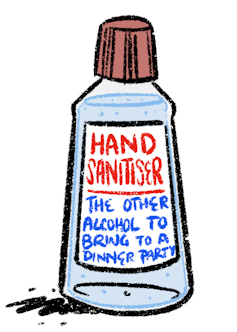
We should carry on doing the things that have so far proved successful in curbing the coronavirus.
This includes staying at least 1.5 metres from other people, and being vigilant about hand hygiene.
Make sure you have plenty of hand sanitiser available if you are hosting or attending a social gathering, so you can disinfect your hands regularly without having to go to the bathroom repeatedly.
Read more:
Economists back social distancing 34-9 in new Economic Society-Conversation survey
Wes Mountain/The Conversation, CC BY-ND
We should carry on doing the things that have so far proved successful in curbing the coronavirus.
This includes staying at least 1.5 metres from other people, and being vigilant about hand hygiene.
Make sure you have plenty of hand sanitiser available if you are hosting or attending a social gathering, so you can disinfect your hands regularly without having to go to the bathroom repeatedly.
Read more:
Economists back social distancing 34-9 in new Economic Society-Conversation survey
 We must maintain social distancing, even though restrictions are relaxing.
Dan Peled/AAP
How should we greet each other?
We must maintain social distancing, even though restrictions are relaxing.
Dan Peled/AAP
How should we greet each other?
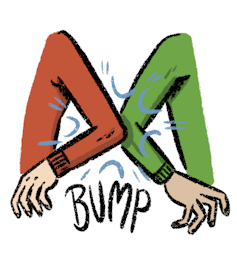 Wes Mountain/The Conversation, CC BY-ND
The same rules about physical contact still apply, so we should not be hugging for now. We could adopt some of the new ways of greeting, such as the elbow bump or the foot shake. Or just stick to saying hello for the moment.
Read more:
Miss hugs? Touch forms bonds and boosts immune systems. Here’s how to cope without it during coronavirus
Should I bring my own cutlery to a dinner party?
Assuming you trust the general hygiene standards of your friends (which I sincerely hope you do), this is not necessary. Cutlery should be washed properly with detergent in hot water and handled only with freshly washed hands.
Cutlery is no different to any other food surface such as crockery, glassware or chopping boards – just make sure it’s as clean as possible.
Can we share food?
Wes Mountain/The Conversation, CC BY-ND
The same rules about physical contact still apply, so we should not be hugging for now. We could adopt some of the new ways of greeting, such as the elbow bump or the foot shake. Or just stick to saying hello for the moment.
Read more:
Miss hugs? Touch forms bonds and boosts immune systems. Here’s how to cope without it during coronavirus
Should I bring my own cutlery to a dinner party?
Assuming you trust the general hygiene standards of your friends (which I sincerely hope you do), this is not necessary. Cutlery should be washed properly with detergent in hot water and handled only with freshly washed hands.
Cutlery is no different to any other food surface such as crockery, glassware or chopping boards – just make sure it’s as clean as possible.
Can we share food?
 Wes Mountain/The Conversation, CC BY-ND
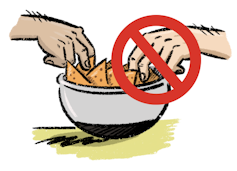
Although there is no evidence coronavirus is spread through food, there is still a risk of cross-contamination while eating food from a shared plate. So this is probably not a sensible thing to do right now.
While it might feel less sociable, avoiding shared grazing plates is a simple tactic to limit the risk of virus transmission. It might even stop your friend scoffing all the dip.
Similarly, avoid the temptation to clink glasses with your friends. It’s only a small risk but we should take every opportunity to reduce the virus’s chances.
Should I wear a mask?
A mask is not essential for social gatherings, assuming you maintain a safe distance and wash your hands regularly. Having said that, a mask can give people some extra reassurance so they can relax a bit more.
That’s assuming it is worn (and taken off) correctly, and that people understand a mask does not guarantee protection from infection. There is no harm in wearing one, but remember to be extra friendly as your friends can’t see your smile!
Read more:
Are you wearing gloves or a mask to the shops? You might be doing it wrong
Wes Mountain/The Conversation, CC BY-ND
Although there is no evidence coronavirus is spread through food, there is still a risk of cross-contamination while eating food from a shared plate. So this is probably not a sensible thing to do right now.
While it might feel less sociable, avoiding shared grazing plates is a simple tactic to limit the risk of virus transmission. It might even stop your friend scoffing all the dip.
Similarly, avoid the temptation to clink glasses with your friends. It’s only a small risk but we should take every opportunity to reduce the virus’s chances.
Should I wear a mask?
A mask is not essential for social gatherings, assuming you maintain a safe distance and wash your hands regularly. Having said that, a mask can give people some extra reassurance so they can relax a bit more.
That’s assuming it is worn (and taken off) correctly, and that people understand a mask does not guarantee protection from infection. There is no harm in wearing one, but remember to be extra friendly as your friends can’t see your smile!
Read more:
Are you wearing gloves or a mask to the shops? You might be doing it wrong
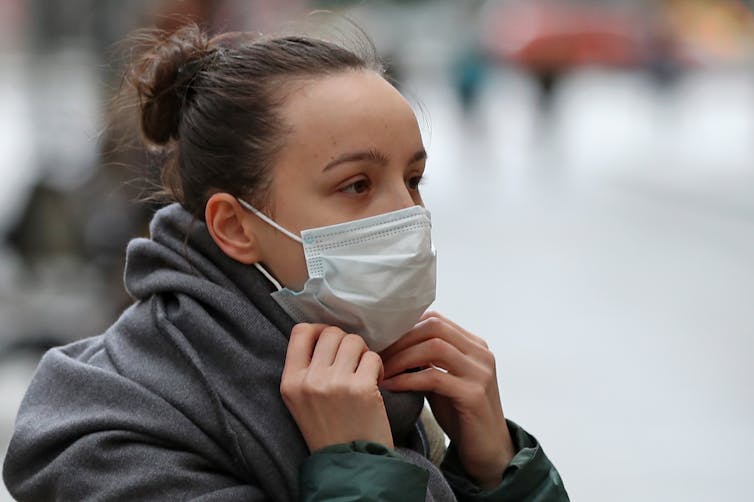 Masks are not required for socialising but can give an extra layer of protection - provided they’re used properly.
Mikhail Tereshchenko/Sipa USA
I don’t feel 100% – should I take a raincheck?
It is important to factor in your personal health and risk factors in determining how you navigate your newly reinstated freedoms. For example, a 75-year-old with a pre-existing health condition, such as a heart condition or asthma, should still be very careful about limiting their contact with others, as the implications of getting sick are very serious.
You should also consider your responsibility to other people. A 25-year-old who feels slightly unwell should err on the side of caution and not socialise, to protect others.
Despite the lockdown lifting, we still need to take responsibility for our own health and also be considerate about the health of others. That way we can all start to enjoy one of the most rewarding aspects of humanity: being sociable.
Masks are not required for socialising but can give an extra layer of protection - provided they’re used properly.
Mikhail Tereshchenko/Sipa USA
I don’t feel 100% – should I take a raincheck?
It is important to factor in your personal health and risk factors in determining how you navigate your newly reinstated freedoms. For example, a 75-year-old with a pre-existing health condition, such as a heart condition or asthma, should still be very careful about limiting their contact with others, as the implications of getting sick are very serious.
You should also consider your responsibility to other people. A 25-year-old who feels slightly unwell should err on the side of caution and not socialise, to protect others.
Despite the lockdown lifting, we still need to take responsibility for our own health and also be considerate about the health of others. That way we can all start to enjoy one of the most rewarding aspects of humanity: being sociable.
Authors: Hassan Vally, Associate Professor, La Trobe University


















