

Today, Australia's Kyoto climate targets end and our Paris cop-out begins. That's nothing to be proud of, Mr Taylor
- Written by: Penny van Oosterzee, Adjunct Associate Professor James Cook University and University Fellow Charles Darwin University, James Cook University
Today marks the end of Australia’s commitments under the Kyoto climate deal as we move to its successor, the Paris Agreement. Emissions Reduction Minister Angus Taylor on Wednesday was quick to hail Australia’s success in smashing the Kyoto emissions targets. But let’s be clear: our record is nothing to boast about.
Taylor says Australia has beaten Kyoto by up to 430 million tonnes — or 80% of one year of national emissions. On that record, he said, “Australians can be confident that we’ll meet and beat our 2030 Paris target”.
Read more: The number of climate deniers in Australia is more than double the global average, new survey finds
The fact that Australia exceeded its Kyoto targets means it’s accrued so-called “carryover” carbon credits. It plans to use these to cover about half the emission reduction required under the Paris commitment by 2030.
But there’s been little scrutiny of why Australia met the Kyoto targets so easily. The reason dates back more than 20 years, when Australia demanded the Kyoto rules be skewed in its favour. Using those old credits to claim climate action today is cheating the system. Let’s look at why.
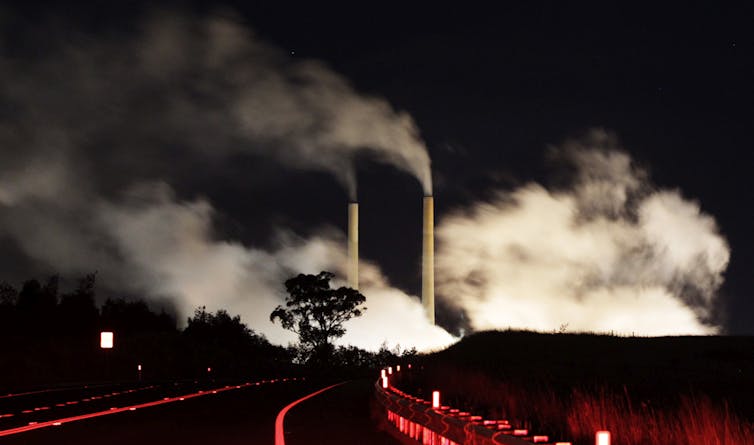 The Paris climate deal officially starts today.
Daniel Munoz/Reuters
The Paris climate deal officially starts today.
Daniel Munoz/Reuters
Australian scorns the spirit of Paris
The Kyoto Protocol was an international treaty negotiated in 1997. Industrialised nations collectively pledged to reduce greenhouse gas emissions by 5.2% below 1990 levels. The reductions were to be made between 2008 and 2012.
Any surplus emissions reduction in the first Kyoto period could be carried over to the second period, from 2013 to 2020. In the name of climate action, five developed countries – Denmark, Germany, the Netherlands, Sweden and the UK – voluntarily cancelled their surplus credits.
However, Australia held onto its credits. Now it wants to use them to meet its Paris target – reducing emissions by 26-28% below 2005 levels by 2030.
This is clearly not in the spirit of the Paris agreement. And importantly, the history of Kyoto shows Australia did not deserve to earn the credits in the first place.
Sneaky negotiations
Under Kyoto, each nation was assigned a target – measured against the nation’s specific baseline of emissions produced in 1990. During negotiations, Australia insisted on rules that worked in its favour.
Instead of reducing its emissions by 5.2%, it successfully demanded a lenient target that meant emissions in 2012 could be 8% more than they were in 1990.
Our negotiators argued we had special economic circumstances - that our dependence on fossil fuels and energy-intensive exports meant cutting emissions would be difficult. Australia threatened to walk away from the negotiations if its demand was not met.
 Australia negotiated an advantageous deal under the UN Kyoto protocol.
Alexandros Michailidis/Shutterstock
Australia negotiated an advantageous deal under the UN Kyoto protocol.
Alexandros Michailidis/Shutterstock
Australia then waited until the final moments of negotiations – when many delegates were exhausted and translators had gone home – to make another surprising demand. It would only sign up to Kyoto if its 1990 emissions baseline (the year future reductions would be measured against) included emissions produced from clearing forests.
Here’s the catch. Australia’s emissions from forest clearing in 1990 were substantial, totalling about a quarter of total emissions, or 131.5 million tonnes of carbon.
Forest clearing in Australia plummeted after 1990, when Queensland enacted tough new land clearing laws. So including deforestation emissions in Australia’s baseline meant we would never really struggle to meet – or as it turned out, beat – our targets. In fact, the rule effectively rewarded Australia for its mass deforestation in 1990.
This concession was granted, and became known as the Australia clause. It triggered international condemnation, including from the European environment spokesman who reportedly called it “wrong and immoral”.
Then prime minister John Howard declared the deal to be “splendid”.
 John Howard was thrilled with Australia’s concessions under Kyoto.
LYNDON MECHIELSEN/AAP
John Howard was thrilled with Australia’s concessions under Kyoto.
LYNDON MECHIELSEN/AAP
A new round of Kyoto negotiations took place in 2010, for the second commitment period. Under the Gillard Labor government, Australia agreed to an underwhelming 5% decrease in emissions between 2013 and 2020.
Australia insisted on using the deforestation clause again, despite international pressure to drop it. It meant Australia’s carbon budget in the second period was about 26% higher than it would have been without the concession.
Had forest clearing not been included in the 1990 baseline, Australia’s emissions in 2017 were 31.8% above 1990 levels.
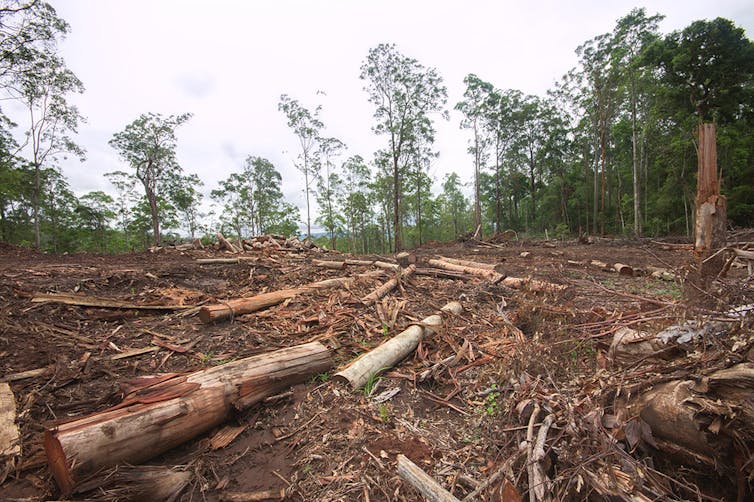 Forest clearing in 1990 made it easy for Australia to beat Kyoto targets.
Harley Kingston/Flickr
Forest clearing in 1990 made it easy for Australia to beat Kyoto targets.
Harley Kingston/Flickr
History repeats
At the Madrid climate talks last year, Australia reiterated its plans to use its surplus Kyoto credits under Paris. Without the accounting trick, Australia is not on track to meet its Paris targets.
Laurence Tubiana, a high-ranking architect of the Paris accord, expressed her disdain at the plan:
If you want this carryover, it is just cheating. Australia was willing in a way to destroy the whole system, because that is the way to destroy the whole Paris agreement.
Whether Australia will be allowed to use the surplus credits is another question, as the Paris rulebook is still being finalised.
Analysts say there is no legal basis for using the surplus credits, because Kyoto and Paris are separate treaties.
Australia appears the only country shameless enough to try the tactic. At Senate estimates last year, officials said they knew of no other nation planning to use carryover credits.
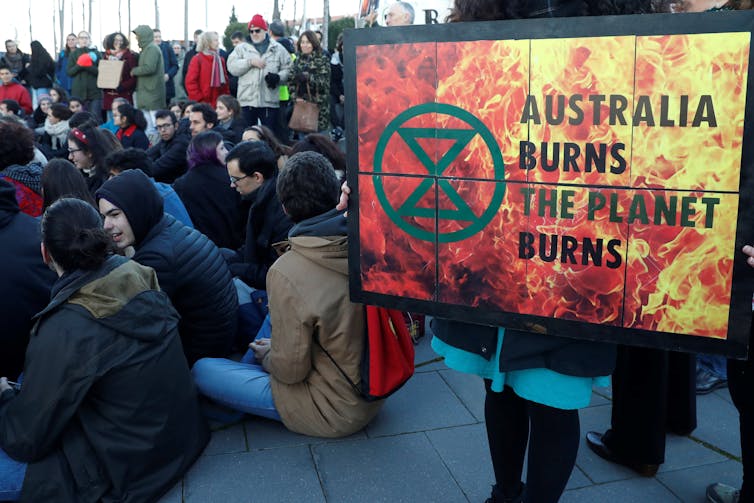 Protesters in Spain in January 2020, calling for global climate action.
JJ Guillen Credit/EPA
Protesters in Spain in January 2020, calling for global climate action.
JJ Guillen Credit/EPA
Nothing to be proud of
Some hoped Australia’s recent bushfire disaster might be a positive turning point for climate policy. But the signs are not good. The Morrison government is talking up the role of gas in Australia’s energy transition, and has so far failed to seize the opportunity to recharge the economy through renewables investment.
Crowing on Wednesday about Australia’s over-achievement on Kyoto, Taylor said the result was “something all Australians can be proud of”.
But Australia abandoned its moral obligations under Kyoto. And by carrying our surplus credits into the Paris deal, we risk cementing our status as a global climate pariah.
Read more: A single mega-project exposes the Morrison government's gas plan as staggering folly
Authors: Penny van Oosterzee, Adjunct Associate Professor James Cook University and University Fellow Charles Darwin University, James Cook University


















