

When bushfires meet old septic tanks, a disease outbreak is only a matter of time
- Written by: Ian Lowe, Emeritus Professor, School of Science, Griffith University
The Royal Commission into the summer fires is an opportunity to start seriously reconsidering our built environment. We need to prepare for accelerating climate change, our changing natural landscape and future natural disasters.
This should include reassessing our building standards and building codes. While the bushfire Royal Commission is working through many of these issues, one that has so far escaped attention is the recently developed standard for wastewater treatment, now being considered by states and territories.
The wastewater systems widely used in rural and regional Australia are vulnerable to natural disasters such as floods and severe bushfires. There is a real risk of outbreaks of water-borne disease, which would compound the misery those catastrophic events cause.
It was simply dumb luck that a disease outbreak did not happen last summer. The current standard and even its proposed replacement is inadequate to protect communities in a future of worsening disasters under climate change.
A major health hazard
Outbreaks of water-borne diseases are a well-known hazard of major flooding disasters, especially in developing countries. This isn’t common in Australia, though in 2011, the Queensland floods led to a handful of cases of the water-borne, bacterial disease leptospirosis.
While there are no recorded major disease outbreaks after bushfires, it’s a preventable accident waiting to happen as bushfires become more frequent and intense in Australia.
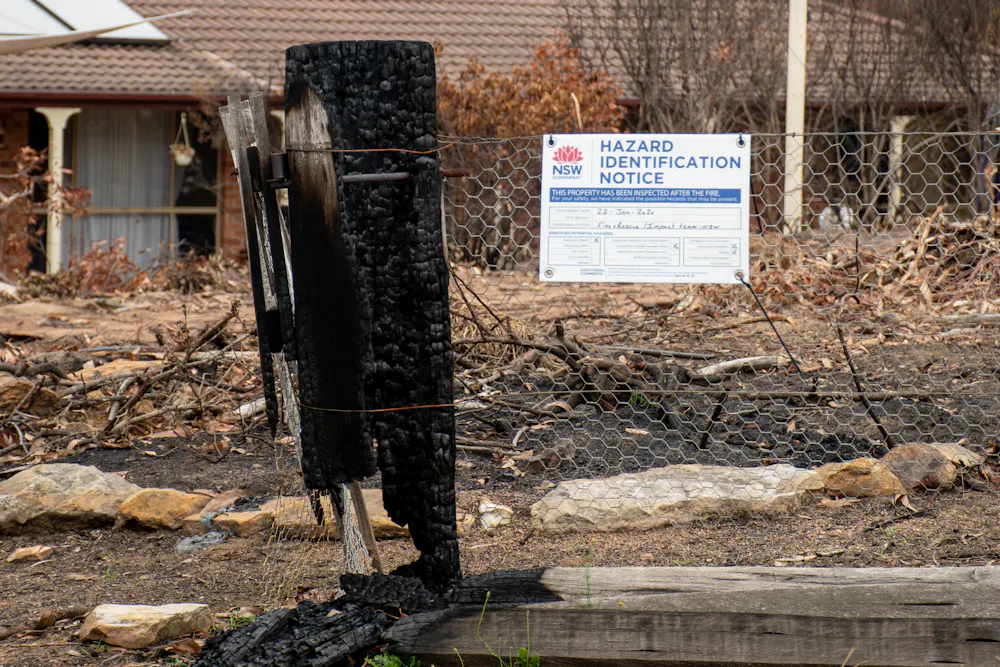 Damage to septic tanks is a huge hazard for people returning to their property after bushfires swept through. Shutterstock
In Sydney, 95% of dwellings are connected to sewers, but the figure falls to 93% for the rest of New South Wales.
Those not connected to these “trunk sewers” generally use the septic tank. This applies to communities on the fringes of our cities as well as regional towns, including many in fire-prone areas.
Read more: Bushfires threaten drinking water safety. The consequences could last for decades
A septic tank is essentially a large underground chamber to receive liquid wastes. Solids fall to the bottom and undergo anaerobic digestion, where micro-organisms break down matter in the absence of oxygen. This releases gases that are vented to the atmosphere, while liquids are released into the soil. The sludge at the bottom of the tank needs to be pumped out every few years and the contents run through oil water separators.
Damage to septic tanks is one of the major health hazards people face when they return to their bushfire-affected homes. The Eurobodalla Shire Council in NSW, for example, even offered free sewerage management system checks for residents with septic tanks to mitigate this risk.
Why septic tanks are so vulnerable
The standard septic tank uses a form of waste treatment known as the aerated wastewater treatment system. These require electricity to work and also have important components such as electronic grid boards above ground.
Without power they are effectively just holding tanks that can overflow and release untreated sewage into the surrounding environment and waterways. And this can lead to bacterial diseases such as salmonella, viral diseases such as hepatitis A or gastroenteritis, or diseases caused by parasites such as giardia. Even COVID-19 can be transmitted through wastewater.
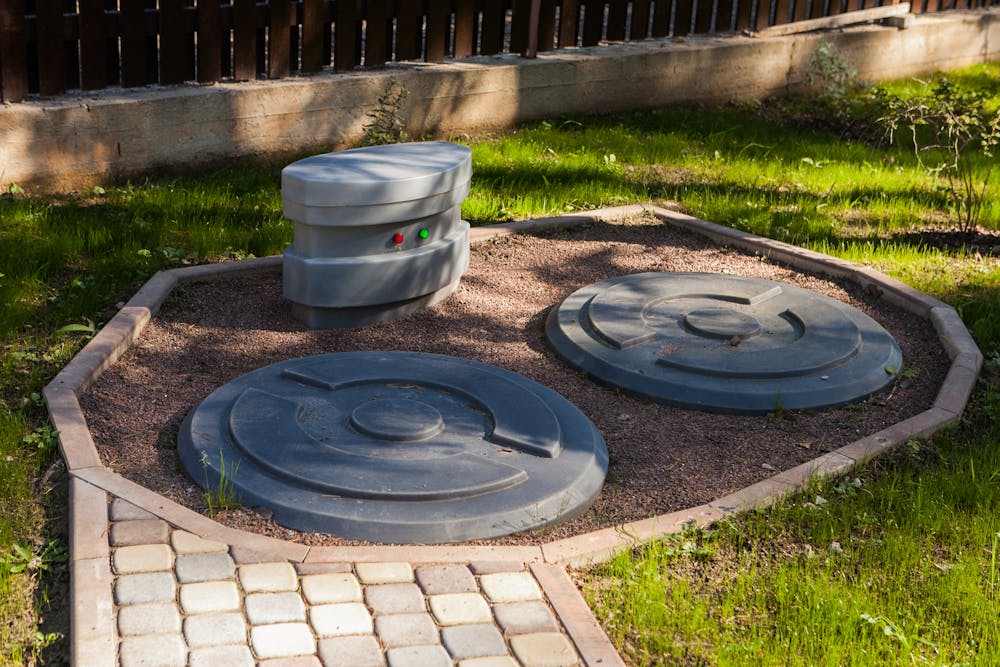 The above-ground electrical components of septic tanks makes them vulnerable to natural disasters. Shutterstock
Electricity is especially vulnerable when disasters occur — even more-so when the components are above, not below, ground. In January at the peak of the bushfires, power outages affected about 50,000 homes in southeast NSW alone. On average, the power outages lasted three and a half days.
Most on-site waste treatment systems have a regulated 1,000 litre emergency overflow reservoir. That would only take a few days to fill up. After that, there is a health risk from escaping sewage.
Read more: Australia's pristine beaches have a poo problem
Wasteful and unsafe
There is increasing concern from safety experts and environmental scientists about the new standard (named AS1546.3.2017) recently devised by Standards Australia. It’s based on old technology, which is both wasteful and unsafe.
It’s wasteful, because it requires wastewater treatment systems with a minimum capacity of between 1,200 and 5,000 litres a day — a size designed to process the waste from eight to 33 people. But the average Australian household consists of only 2.6 people.
Read more: After the firestorm: the health implications of returning to a bushfire zone
While the size does make them safer — as they can last for longer before overflowing — the weak point is the need for above-ground electricity services. Systems above ground are destroyed in the sort of catastrophic fires we saw last summer and can be crippled by flooding or cyclonic winds.
On the other hand, structures underground are protected by the earth from the radiant heat of fires, the rushing water of floods and the extreme wind gusts of cyclones.
We must upgrade the wastewater system
This is why we need to upgrade the septic tank standards to newer, so-called “passive” systems, which are widely used overseas, and can operate safely for fewer people.
How these passive systems work.These new facilities have many advantages over the old technology, including using less fossil fuels to operate. But the biggest benefits are that they use no electricity and are completely underground, with no above-ground operational components or potentially risky sewage dispersal.
This means they have built-in resilience to the sorts of natural disasters we face in Australia: bushfires, floods and cyclones.
A standard like AS1546.3.2017 does not suit the goal of more resilient and environmentally sound neighbourhoods and communities. Such a standard should not exist in a country that’s aware of its environmental obligations and equipped to face more natural disasters in coming years.
Authors: Ian Lowe, Emeritus Professor, School of Science, Griffith University


















