

Body fat deep below the surface is a toxic risk, especially for your heart
- Written by: Lea M D Delbridge, Professor of Physiology, University of Melbourne
Amid the COVID-19 pandemic, it’s easy to forget one of the largest health challenges we face remains the global obesity epidemic. World Health Organisation data shows obesity has nearly tripled in less than 50 years, with about 40% of adults worldwide now overweight or obese. High body fat increases the risk of chronic diseases, including heart problems, diabetes and cancer.
However, it’s not simply the total amount of body fat that can increase the risk of disease. The type and location of fat is also important. We’ve known for some time that subcutaneous fat — the fat just below the skin — increases inflammation in the body. But in recent years, researchers have realised an even more serious risk is the unseen deep body fat that accumulates around vital organs.
Fat around organs can be ‘toxic’
Fat is not all bad — in fact, some fat does a lot of good. It helps protect vulnerable organs and tissues, and provides a convenient energy supply. If you’re out in the cold, it’s essential fuel for body warming through shivering.
But excess fat can increase blood pressure and potentially lead to complications such as heart disease and stroke. Many clinicians use body mass index (BMI) to measure a healthy weight range. It’s calculated as body weight divided by the square of height, and it factors in a healthy amount of fat.
But BMI can’t provide information about the shape and size of potentially dangerous internal fat deposits, known as “visceral fat”. Over recent years it’s become apparent visceral fat can lead to disease, and good fat can turn into toxic fat when there is too much.
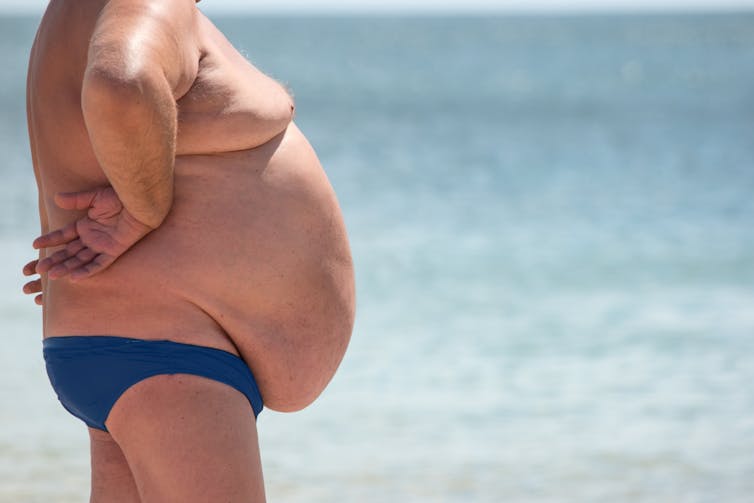 It’s well-known high amounts of body fat can lead to further health problems. But lesser-known is that deep fat wrapped around organs can release damaging molecules.
Shutterstock
It’s well-known high amounts of body fat can lead to further health problems. But lesser-known is that deep fat wrapped around organs can release damaging molecules.
Shutterstock
Various organs seem to accumulate visceral fat. This can be a problem because it can create and release damaging molecules and hormones into the blood. These are transported in the bloodstream, potentially causing health complications in distant parts of the body.
Read more: Obesity has become the new normal but it's still a health risk
For example, toxic fat can release proteins that blunt the body’s sensitivity to insulin. Blood glucose levels then rise, potentially causing diabetes in the long term. Visceral fat can also stimulate uncontrolled cell growth and replication, potentially triggering some forms of cancer. A fatty liver is associated with metabolic diseases, and excess kidney fat interferes with the body’s fluid balance.
The heart is especially vulnerable
Visceral fat can also directly affect the organ around which it’s wrapped. Our new research, published in September in the Journal of the American College of Cardiology, found visceral fat around the heart produces biochemical molecules that can make the heart beat erratically. These molecules potentially cause a serious heart condition called atrial fibrillation, by disrupting the heart’s electrical activity.
Atrial fibrillation is one of the most common types of heart rhythm disturbance, and one in three people over 55 will develop the condition. It occurs when the regular signal to drive each heartbeat originating in the top portion of the heart, the atria, is disrupted. It can cause an irregular and chaotic heartbeat, disrupting the heart’s coordinated pumping action. This can mean not enough fresh blood is circulated to allow regular daily activity.
For some people, living with episodes of atrial fibrillation is a daily challenge – coping with bouts of dizziness, the distressing awareness of a “racing heart”, and chest palpitations. Other people may be unaware they have the condition and the first sign could be tragic, such as a stroke due to a blood clot travelling to the brain. This can lead to heart failure.
An advertisement from the Western Australian health department warning viewers about toxic fat. Only in recent years have researchers discovered the dangers of hidden fat around organs.We worked with clinical cardiologists at the Royal Melbourne Hospital and found fat around the heart secretes molecules which change how nearby cells “talk” to each other, slowing cell-to-cell communication. Because the transfer of electrical signals in the heart muscle are delayed, the heartbeat is potentially destabilised.
Although a high BMI increases the risk of atrial fibrillation, it’s the fat burden on the heart, and not BMI itself, that’s most important in electrical and structural disruption.
This suggests toxic substances released from the surrounding fat can directly harm the nearby organ, without travelling via the blood.
For heart patients, these findings mean the surgical removal of cardiac fat could be an effective treatment to consider. Also, it potentially paves the way for the future development of drugs that can suppress the release of damaging molecules from hidden fat.
Nevertheless, these findings underscore the danger of an “obese heart”, particularly amid the COVID-19 pandemic. Research is emerging that obesity is a major risk factor for serious complications while infected with the virus, and the fat load on the heart may be implicated.
Authors: Lea M D Delbridge, Professor of Physiology, University of Melbourne


















