

Louise Milligan’s Witness is a devastating critique of the criminal trial process
- Written by: Ben Mathews, Professor, School of Law, Queensland University of Technology
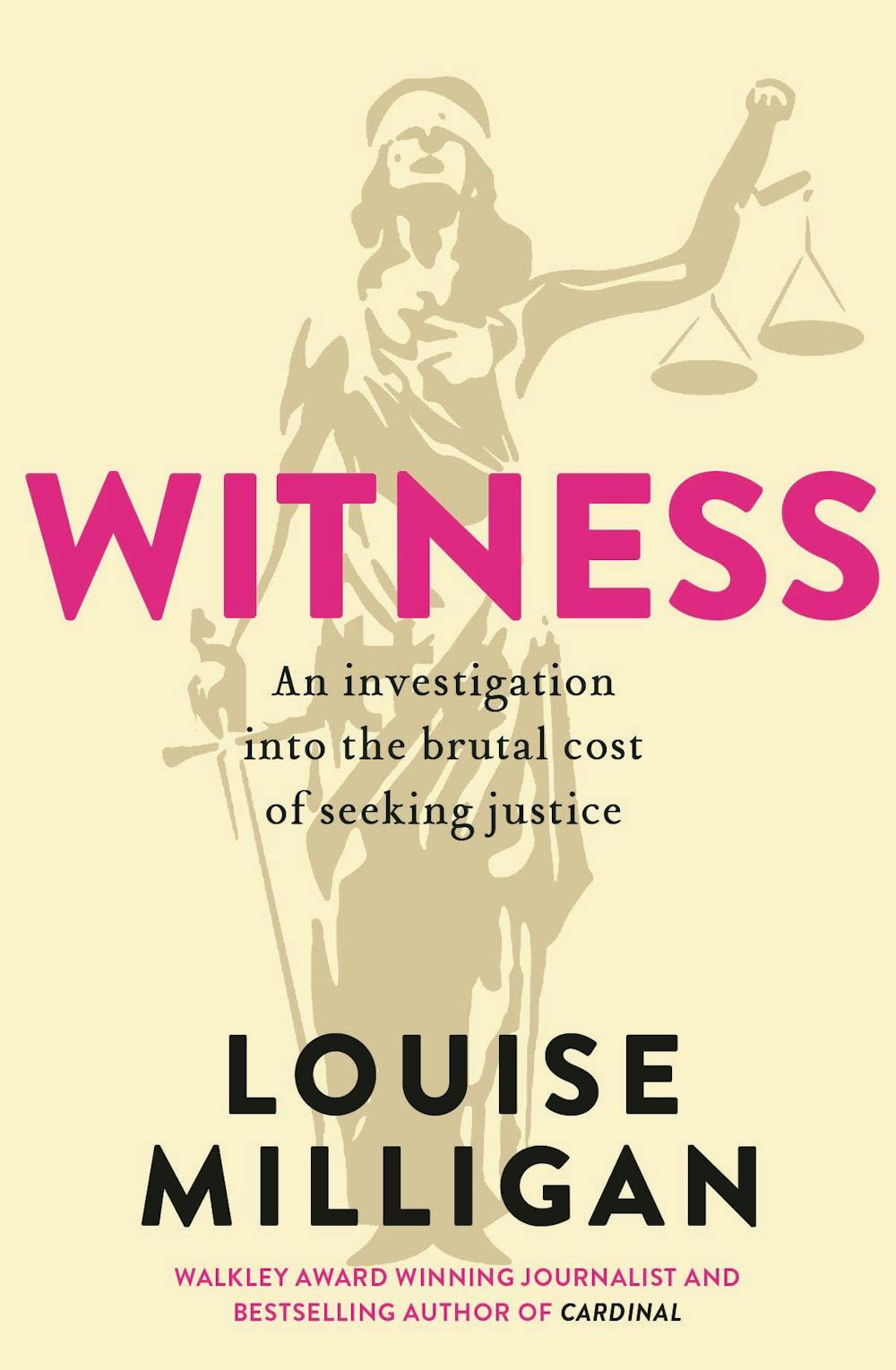
Book review: Witness, by Louise Milligan (Hachette).
Louise Milligan’s new book, Witness, is an excoriating critique of the failures of the criminal justice system in sexual assault trials.
Informed by Milligan’s two decades of experience as an investigative journalist, including her specialist work as a court reporter and her sustained coverage of the trials of George Pell, her analysis is enriched by in-depth interviews with prosecutors, defence counsel, solicitors, judges and academics.
Witness is both a gripping revelation of rarely-heard experts’ opinions about the realities and flaws of criminal procedure, and a devastating critique of the system.
The book is further inspired by detailed consideration of the experience of complainants in two high-profile cases, which Milligan had previously covered in Sydney and Melbourne.
These include Saxon Mullins, a young woman who was the complainant in a rape case that involved two trials, two appeals, and judicial errors. Her experience influenced a Law Reform Commission inquiry into the law of consent. She is now working with criminologists and advocates to develop minimum standards in rape laws to better define consent.
Also examined in detail is the case of former St Kevin’s student Paris Street, who allowed Milligan to reproduce a letter he wrote about his experience of being cross-examined at the age of 15.
Witness is informed, too, by Milligan’s own experience of being cross-examined as a witness in the 2018 committal hearing of Cardinal George Pell. Here Milligan displays courage in divulging the personal toll taken.
“You don’t sleep the night before that first day in court …” she writes. “You vomit … Your mind spins … You cry …”
Her visceral description of the attempted destruction of her own character and credibility in cross-examination testifies to the brutality of many witnesses’ encounters with the criminal trial process.
Victims’ trauma
Witness recognises that for many complainants, their experience of the criminal justice system is traumatic. Through multiple case studies of cross-examination, centring mostly on cases in Victoria and NSW, Milligan demonstrates the best known dimension of this brutality, laying bare the chasm between complainants’ expectations of the system, and the reality of its operation.
Complainants, she shows, are stunned to realise the trial process is not about establishing truth. Often, they feel they are on trial.
 Milligan recognises this experience is only partly due to the adversarial criminal justice system being centred neither on the complainant, nor on truth. Our system enables prosecution by the state: the complainant is simply a witness, subject to rules of evidence and procedure.
Core doctrines protecting the accused exist to prevent state abuse of power. This systemic environment is overlaid by features of sexual assault trials, which often turn on the complainant’s credibility and word against that of the accused.
Read more:
Pell decision: why sexual offence trials often result in acquittal, even with credible witnesses
Milligan’s book is balanced. Neither she, nor her interviewees object to principles of presumed innocence until proven guilty, or the standard of proof. She accepts counsel’s obligation to strongly defend their client, but focuses on the professional ethic of choice in how this is achieved.
Crucially, Witness emphasises that many defence counsel do treat complainants with dignity and respect, and still defend their client admirably.
But at the book’s core is a justified sense of outrage at those who choose to treat complainants and witnesses with a hostility causing its own trauma; a special kind of systemic abuse.
Tactical shifts and empathy deficits
The interviews in Witness trace fascinating shifts in professional culture. Milligan identifies a change in defence cross-examination tactics from the outright aggression of the past. One interviewee admits “there was a time when you’d just try and eviscerate [the complainant]. And I don’t think juries are impressed by that now.”
Still, Milligan finds much room for improvement. Several defence counsel reveal they changed their approach — not because they have greater understanding about the nature of sexual assault and trauma, or empathy for the complainant, but because it was no longer effective for their client.
Others, still reliant on aggression, rationalise their approach as simply doing their job, to “ask the hard questions”. However, Milligan suggests this is simply a disingenuous cloak for cruelty, starkly contrasting it with defence counsel who do a brilliant job without brutalising victims.
Elsewhere in Witness, she charts the historic male dominance of the legal profession and the limits this places on the capacity for change.
Milligan recognises this experience is only partly due to the adversarial criminal justice system being centred neither on the complainant, nor on truth. Our system enables prosecution by the state: the complainant is simply a witness, subject to rules of evidence and procedure.
Core doctrines protecting the accused exist to prevent state abuse of power. This systemic environment is overlaid by features of sexual assault trials, which often turn on the complainant’s credibility and word against that of the accused.
Read more:
Pell decision: why sexual offence trials often result in acquittal, even with credible witnesses
Milligan’s book is balanced. Neither she, nor her interviewees object to principles of presumed innocence until proven guilty, or the standard of proof. She accepts counsel’s obligation to strongly defend their client, but focuses on the professional ethic of choice in how this is achieved.
Crucially, Witness emphasises that many defence counsel do treat complainants with dignity and respect, and still defend their client admirably.
But at the book’s core is a justified sense of outrage at those who choose to treat complainants and witnesses with a hostility causing its own trauma; a special kind of systemic abuse.
Tactical shifts and empathy deficits
The interviews in Witness trace fascinating shifts in professional culture. Milligan identifies a change in defence cross-examination tactics from the outright aggression of the past. One interviewee admits “there was a time when you’d just try and eviscerate [the complainant]. And I don’t think juries are impressed by that now.”
Still, Milligan finds much room for improvement. Several defence counsel reveal they changed their approach — not because they have greater understanding about the nature of sexual assault and trauma, or empathy for the complainant, but because it was no longer effective for their client.
Others, still reliant on aggression, rationalise their approach as simply doing their job, to “ask the hard questions”. However, Milligan suggests this is simply a disingenuous cloak for cruelty, starkly contrasting it with defence counsel who do a brilliant job without brutalising victims.
Elsewhere in Witness, she charts the historic male dominance of the legal profession and the limits this places on the capacity for change.
 Witness looks at how generations of gender discrimination still shape the legal profession and the running of trials.
Shutterstock
A particularly striking dimension of Witness is its revelation that the adversarial system is brutal for legal practitioners, too.
Milligan’s interviews elicit numerous admissions of excessive drinking to cope with the stress, including the trauma of having to try to break down complainants.
One lawyer describes this activity as requiring “a complete separation of self”.
Milligan’s experience
Milligan’s account of her own cross-examination in the Pell committal by Robert Richter QC is exhaustive and compelling. Reflecting on the experience, she repeatedly references the Evidence Act s 41, which imposes a duty on the court to disallow improper questions and improper questioning, including questions that are intimidating or humiliating, or are asked in an insulting way.
Yet, it is clear she felt insufficiently protected by this section of the Act, and by other laws giving the court control over how witnesses should be questioned.
Virtually every question was asked, she writes, in a belittling or insulting way. By the end of the day, she “had never felt more alone”, despite all her experience, preparation, and team of lawyers. What hope do complainants have, she asks, who lack these resources, and were already traumatised?
Witness looks at how generations of gender discrimination still shape the legal profession and the running of trials.
Shutterstock
A particularly striking dimension of Witness is its revelation that the adversarial system is brutal for legal practitioners, too.
Milligan’s interviews elicit numerous admissions of excessive drinking to cope with the stress, including the trauma of having to try to break down complainants.
One lawyer describes this activity as requiring “a complete separation of self”.
Milligan’s experience
Milligan’s account of her own cross-examination in the Pell committal by Robert Richter QC is exhaustive and compelling. Reflecting on the experience, she repeatedly references the Evidence Act s 41, which imposes a duty on the court to disallow improper questions and improper questioning, including questions that are intimidating or humiliating, or are asked in an insulting way.
Yet, it is clear she felt insufficiently protected by this section of the Act, and by other laws giving the court control over how witnesses should be questioned.
Virtually every question was asked, she writes, in a belittling or insulting way. By the end of the day, she “had never felt more alone”, despite all her experience, preparation, and team of lawyers. What hope do complainants have, she asks, who lack these resources, and were already traumatised?
 Milligan leaving the Magistrates Court in Melbourne, where she appeared as a witness, March 27, 2018.
AAP Image/Luis Ascui
An argument for change
Witness eloquently affirms how the criminal justice system is maladapted to meet the needs of complainants.
The system is broken. For sex crimes, rates of complaints, prosecutions, and convictions are persistently low.
Read more:
Queensland rape law 'loophole' could remain after review ignores concerns about rape myths and consent
Knowing the brutal experience awaiting them, victims often do not complain, or withdraw from proceeding, undermining the rule of law. Because these are qualitatively different kinds of cases, leaders in the field have long argued that sexual assault trials require more fundamental changes.
Yet, even without more radical change, Witness insists a minimum acceptable standard of professional practice – treating witnesses with dignity and respect – is required and achievable, without compromising fair trial rights.
Protections against humiliating treatment of witnesses need to be properly enforced by judges and prosecutors. As one QC admits to Milligan, reforms about judicial directions and improper questioning “don’t mean anything if the prosecutor doesn’t intervene and the judge or magistrate isn’t in control of the courtroom”.
Milligan also suggests complainants would benefit from an expert advisor to assist them in navigating the system, and to protect against unduly intimidatory tactics.
This suggestion is supported by many of her interviewees, including both prosecutors and defence counsel.
Having interviewed so many witnesses, having borne witness to these trials, and having been a witness herself, Milligan is uniquely placed to reflect on the process.
She challenges legal practitioners to be part of the problem, or part of the solution. With Witness, a triumph of intellect and empathy, Milligan has chosen to be part of the solution.
Milligan leaving the Magistrates Court in Melbourne, where she appeared as a witness, March 27, 2018.
AAP Image/Luis Ascui
An argument for change
Witness eloquently affirms how the criminal justice system is maladapted to meet the needs of complainants.
The system is broken. For sex crimes, rates of complaints, prosecutions, and convictions are persistently low.
Read more:
Queensland rape law 'loophole' could remain after review ignores concerns about rape myths and consent
Knowing the brutal experience awaiting them, victims often do not complain, or withdraw from proceeding, undermining the rule of law. Because these are qualitatively different kinds of cases, leaders in the field have long argued that sexual assault trials require more fundamental changes.
Yet, even without more radical change, Witness insists a minimum acceptable standard of professional practice – treating witnesses with dignity and respect – is required and achievable, without compromising fair trial rights.
Protections against humiliating treatment of witnesses need to be properly enforced by judges and prosecutors. As one QC admits to Milligan, reforms about judicial directions and improper questioning “don’t mean anything if the prosecutor doesn’t intervene and the judge or magistrate isn’t in control of the courtroom”.
Milligan also suggests complainants would benefit from an expert advisor to assist them in navigating the system, and to protect against unduly intimidatory tactics.
This suggestion is supported by many of her interviewees, including both prosecutors and defence counsel.
Having interviewed so many witnesses, having borne witness to these trials, and having been a witness herself, Milligan is uniquely placed to reflect on the process.
She challenges legal practitioners to be part of the problem, or part of the solution. With Witness, a triumph of intellect and empathy, Milligan has chosen to be part of the solution.
Authors: Ben Mathews, Professor, School of Law, Queensland University of Technology


















