

Tourism desperately wants a return to the 'old normal' but that would be a disaster
- Written by Susanne Becken, Professor of Sustainable Tourism and Director, Griffith Institute for Tourism, Griffith University
With each passing day, the grave future of Earth becomes more stark. The disruption of COVID-19 has not been enough to shift the trajectory, nor has it prompted polluting sectors of the economy to reconsider the harms they inflict on the planet.
Nowhere is this clearer than in the global tourism sector. Before COVID-19, international aviation emissions - already a major contributor to global warming - were forecast to potentially triple between 2015 and 2050. Likewise, emissions from the cruise ship industry were also growing.
The pandemic itself can be traced back to humanity’s relentless damage to nature. And mass global tourism is emblematic of this voracious, growth-at-all-costs mentality.
Tourism brings many economic, social and cultural benefits. But it’s time the industry seriously reconsiders its business model, and overall purpose, in a post-pandemic world.
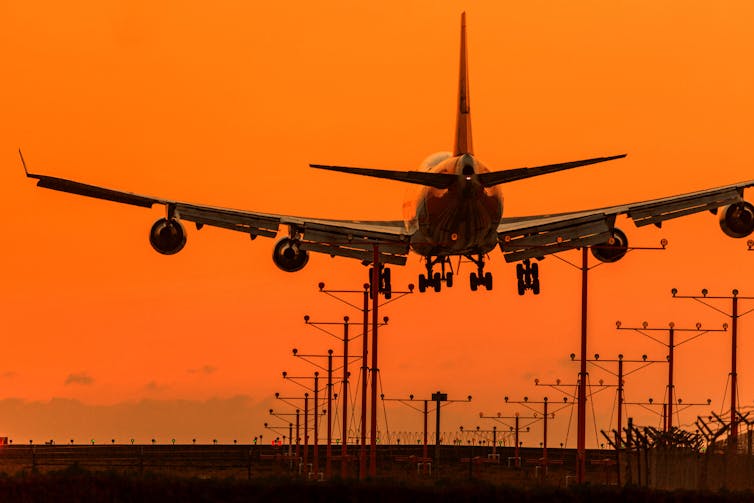 After COVID, tourism must be done differently.
Shutterstock
After COVID, tourism must be done differently.
Shutterstock
We can’t return to normal
The United Nations is among many voices urging the global tourism industry to address its many sustainability challenges in the wake of COVID-19.
The UN says it recognises tourism’s important role in providing incomes for millions of people. But in a recent policy brief, it said now is the time to “rethink how the sector impacts our natural resources and ecosystems”.
Unfortunately, there’s little evidence that global tourism is looking to transform. For example, the International Air Transport Association is clearly seeking to return to the “old normal”. Its resources guide to support airlines during the pandemic and beyond examines ways to restart the industry, but makes no mention of environmental sustainability.
Similarly, the World Travel and Tourism Council’s 100 Million Jobs Recovery Plan calls on nations to remove barriers to travel, saying traveller confidence is “critical to the sector’s survival and recovery”. Sustainability rates only a passing a mention.
In Australia, the federal government is passing up opportunities to encourage tourism to reconfigure towards a more sustainable model. For example, the Building Better Regions Fund offers A$100 million for tourism-related infrastructure projects that mitigate COVID-19’s economic impact. However, sustainability does not form part of the assessment criteria.
The industry’s immediate focus on recovery is understandable. But the lack of a long-term environmental vision is damaging to both the industry and the planet.
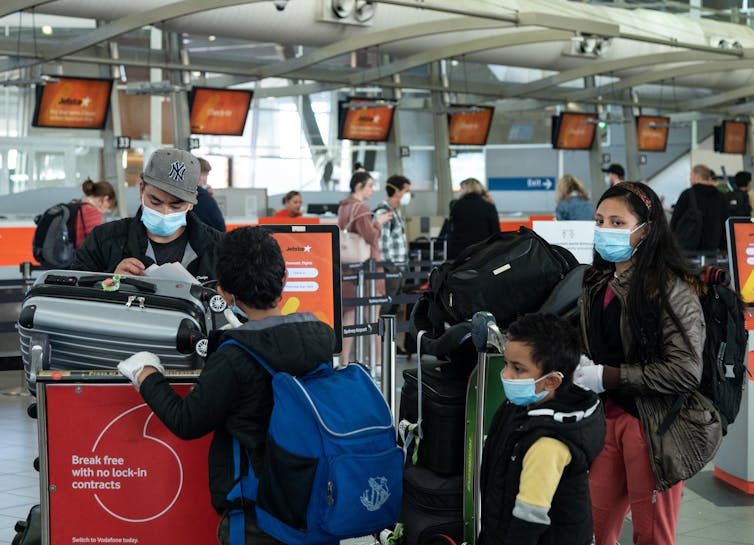 The industry is understandably focused on COVID-safe travel, but a long term environmental vision is lacking.
James Gourley/AAP
The industry is understandably focused on COVID-safe travel, but a long term environmental vision is lacking.
James Gourley/AAP
A job half done
Pre-COVID-19, the global tourism and travel industry had begun to address some sustainability challenges.
For example, international aviation is seeking to improve global fuel efficiency by 2% each year until 2050. But this target is “aspirational” and even the International Civil Aviation Authority has conceded it was “unlikely to deliver the level of reduction necessary to stabilize and then reduce aviation’s absolute emissions contribution to climate change”.
Current technological constraints mean decarbonising aviation is challenging. An expected future increase in flight demand will only add to the problem. Globally, 7.8 billion passengers are expected to travel in 2036.
What’s more, tourism’s damage to the environment extends far beyond climate change. It adds to marine plastic pollution, degrades habitat and leads to a loss of wilderness and natural quiet. The industry’s resurgence must address these and other harms.
 Tourism is a big contributor to marine plastic pollution.
Shutterstock
Tourism is a big contributor to marine plastic pollution.
Shutterstock
A vision for the future
People travelling outside their normal context are open to new experiences and perspectives. In this way, tourism presents an opportunity to encourage a new connection with nature.
So what should the future of tourism look like? I and others are advocating for a more sustainable tourism sector that’s vastly different to what exists now. Travel should be closer to home, slower, and with a positive contribution at its core. In this model, all erosion of natural, cultural and social capital ceases.
Practices under the model (some of which already exist at a small scale) might include:
more travel to regional and local destinations, involving shorter distances. Under COVID-19, the trend towards such tourism has already begun. However, communities must be empowered to determine what type of tourism they want.
travellers paying a conservation-focused levy upon entering a country, such as those imposed in New Zealand and Botswana.
the donation of time, money or expertise to support environmental restoration as an integral part of the travel experience. For example, the Adventure Scientists initiative shows people with outdoor skills how to collect environmental information as they travel, providing new data for researchers.
businesses that “give back” by design. For example, Global Himalayan Expeditions empowers communities by electrifying remote villages in Ladakh, Kashmir. Trekkers co-finance solar panels and carry them as part of their travel experience.
ambitious industry standards, which ramp up over time, for sustainable management of environmental, cultural and human resources.
The UN Sustainable Development Group has suggested other changes, including:
- a frequent flyer levy
- incentives for domestic tourism
- restrictions on flight advertising
- no more airport expansions in high-income countries
- better transport alternatives to aviation.
Read more: Feeling flight shame? Try quitting air travel and catch a sail boat
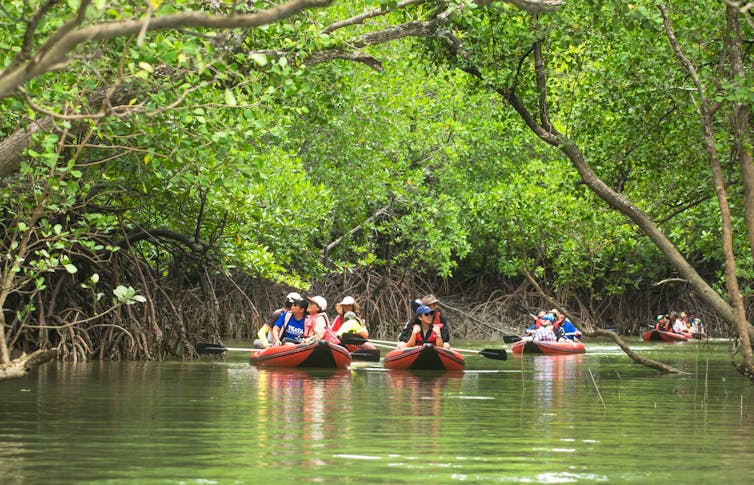 Tourism must refocus towards low-impact tourism, closer to home.
Shutterstock
Tourism must refocus towards low-impact tourism, closer to home.
Shutterstock
Bouncing back differently
The above vision for tourism involves great changes. The industry’s focus must shift from growth and profit to “regeneration” – helping to restore the natural world that humans have so badly damaged.
And the transition must happen gradually, to allow tourism-dependent economies and businesses to adjust.
The global tourism industry will persist after COVID-19. But it must be reimagined as, first and foremost, a public good rather than a commercial activity.
And the goal of ecosystem restoration must be at the industry’s core. Planetary health is inextricably linked to our own well-being – and that of the tourism industry. After all, there’s no tourism on a dead planet.
Read more: Why our carbon emission policies don't work on air travel
Authors: Susanne Becken, Professor of Sustainable Tourism and Director, Griffith Institute for Tourism, Griffith University

















