

Street life ain't easy for a stray cat, with most dying before they turn 1. So what's the best way to deal with them?
- Written by: Trish Fleming, Professor, Murdoch University
Odds are, if you’ve seen a cat prowling around your neighbourhood, it doesn’t have an owner. Australia is home to hordes of unowned cats, with an estimated 700,000 living without appropriate care in urban areas, around rubbish dumps or on farms.
Unowned cats are sometimes called “stray” or “semi-feral”: they, or their parents, were once owned by humans but are now abandoned or lost. Unowned stray cats rely heavily on human settlements for food and shelter and breed freely. Feral cats, on the other hand, live in the wild and can survive without relying on people for food.
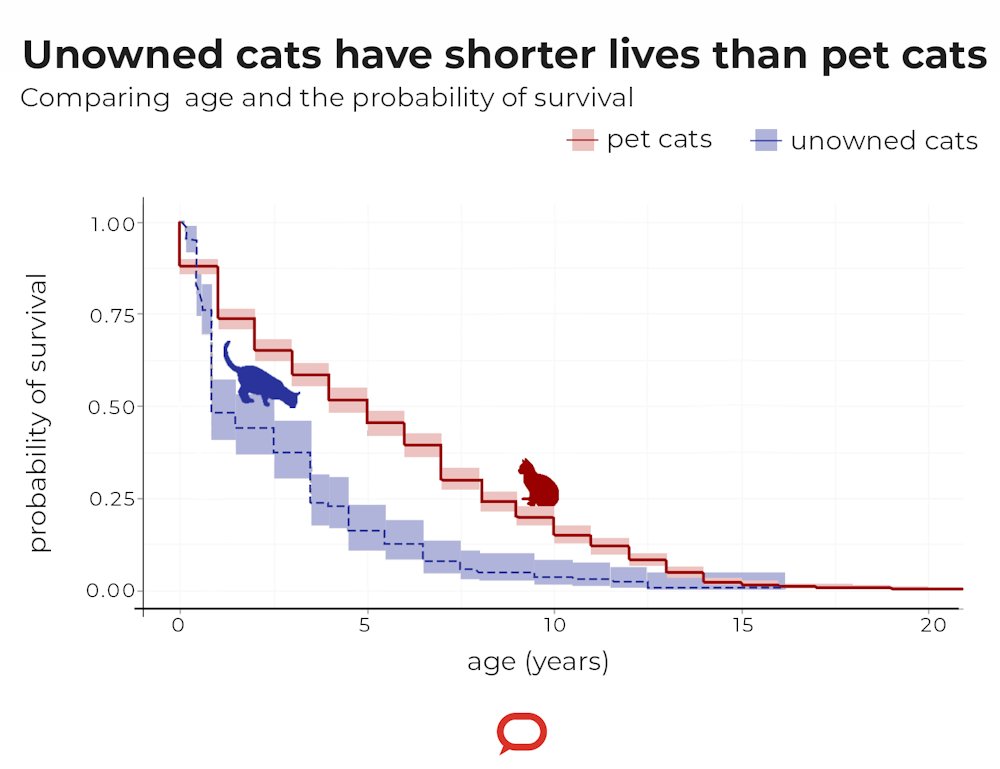
Like their feral counterparts, unowned cats are a public health threat, they can fight with or transmit diseases to pet cats, and they kill native wildlife. And, of course, they themselves suffer poor welfare. In fact, our recent studies show unowned cats have significantly shorter lives than pet cats, with less than half surviving their first year.
It’s vital we find effective ways to reduce their numbers — but what’s the best way to go about this?
Street cats have hard, short lives
Free-roaming cats have hard lives on the streets. Even when they’re owned by someone, things can come to a sticky end.
Numerous international studies report high death rates for roaming pet cats, with causes including road accidents and accidental poisoning. They’re also frequently injured or killed by domestic dogs.
Even Prime Minister Jacinda Ardern’s cat Paddles, the “first cat” of New Zealand, was killed by a car in 2017.
Unowned cats encounter the same issues and more, but without an owner to provide immediate veterinary attention. So it’s no surprise free-roaming unowned cats have low life expectancy.
We analysed the demographics of free-roaming unowned cats in Perth, Western Australia. The 145 unowned cats we studied had significantly shorter lives than the 899 pet cats in Perth. The median age of unowned cats was just eight to ten months. By contrast, the median age for pet cats was about five years.
 Author provided
The unowned cats in our study looked healthy, were reproductive, and had few external parasites. However, these animals were the ones that had survived long enough to be trapped and studied. Cats often hide when traumatised or ill, and so sick cats will often just “disappear”.
Alarmingly, 58% of the cats we examined had consumed dangerous refuse, including sharp, dangerous items or indigestible material that blocked their gastrointestinal tracts. Nearly all (95%) carried substantial loads of transmissible helminth parasites.
Read more:
Don't let them out: 15 ways to keep your indoor cat happy
Across Australia’s states and territories, there are two main approaches local governments use to manage unowned cat populations in urban and regional areas: trap and euthanase or trap and adopt.
Another approach is to trap, desex and return cats to their point of capture (called “trap-neuter-return”). Although this is currently being undertaken by private individuals and groups in capital cities and some towns, it is considered illegal across most jurisdictions in Australia, as it is construed as abandonment or releasing an invasive species.
Author provided
The unowned cats in our study looked healthy, were reproductive, and had few external parasites. However, these animals were the ones that had survived long enough to be trapped and studied. Cats often hide when traumatised or ill, and so sick cats will often just “disappear”.
Alarmingly, 58% of the cats we examined had consumed dangerous refuse, including sharp, dangerous items or indigestible material that blocked their gastrointestinal tracts. Nearly all (95%) carried substantial loads of transmissible helminth parasites.
Read more:
Don't let them out: 15 ways to keep your indoor cat happy
Across Australia’s states and territories, there are two main approaches local governments use to manage unowned cat populations in urban and regional areas: trap and euthanase or trap and adopt.
Another approach is to trap, desex and return cats to their point of capture (called “trap-neuter-return”). Although this is currently being undertaken by private individuals and groups in capital cities and some towns, it is considered illegal across most jurisdictions in Australia, as it is construed as abandonment or releasing an invasive species.
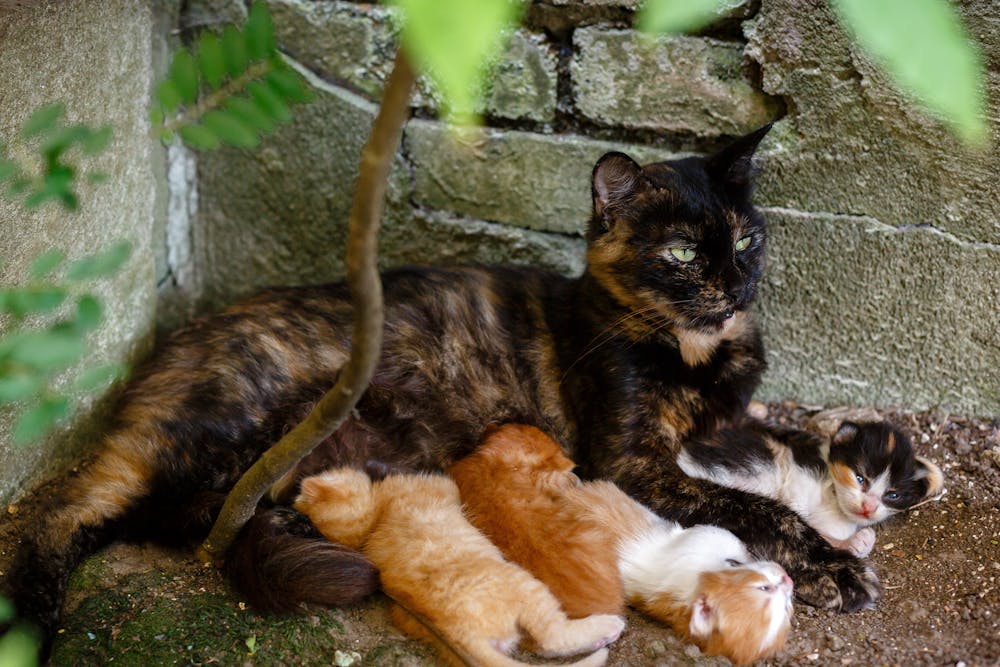 Desexing cats is an important way to curb the numbers of unowned cats on the streets. But cats shouldn’t be returned to where they were found.
Shutterstock
1. Euthanasia
In most parts of the country, where problems with unowned cats have been reported, they are trapped and removed. This normally means euthanasia.
For example, in Brisbane, a council program that ran since 2013 efficiently reduced the numbers of unowned cats with euthanasia, with complaints about stray cats falling from about 140 to just ten per year, over five years.
But high rates of euthanasia for unowned cats can be problematic for many people, especially for veterinarians undertaking the task. It can be traumatic and challenging to euthanise healthy cats just because they are unwanted.
Read more:
Why your veterinarian may refuse to euthanise your pet
2. Trap-neuter-return programs
Some believe desexing cats and returning them to street life, with supplementary feeding, is a solution to large numbers of unwanted cats, because it avoids euthanasia.
But overseas studies have shown trap-neuter-return programs encourage abandonment of unwanted cats at feeding stations. Numbers of cats can actually go up, despite best efforts.
And what is the quality of life for returned cats? Given the difficult, short lives of free-roaming cats, trap-neuter-return programs are arguably a less ethical choice with poor welfare outcomes for the cats themselves. There have even been calls in Japan to revise trap-neuter-return policies on account of poor health and well-being of the cats.
Returning neutered animals to where they were found may also violate state laws. Enforcing these laws is critical to reduce unowned cat populations, improve the welfare of cats, and discourage dumping of unwanted pets.
Desexing cats is an important way to curb the numbers of unowned cats on the streets. But cats shouldn’t be returned to where they were found.
Shutterstock
1. Euthanasia
In most parts of the country, where problems with unowned cats have been reported, they are trapped and removed. This normally means euthanasia.
For example, in Brisbane, a council program that ran since 2013 efficiently reduced the numbers of unowned cats with euthanasia, with complaints about stray cats falling from about 140 to just ten per year, over five years.
But high rates of euthanasia for unowned cats can be problematic for many people, especially for veterinarians undertaking the task. It can be traumatic and challenging to euthanise healthy cats just because they are unwanted.
Read more:
Why your veterinarian may refuse to euthanise your pet
2. Trap-neuter-return programs
Some believe desexing cats and returning them to street life, with supplementary feeding, is a solution to large numbers of unwanted cats, because it avoids euthanasia.
But overseas studies have shown trap-neuter-return programs encourage abandonment of unwanted cats at feeding stations. Numbers of cats can actually go up, despite best efforts.
And what is the quality of life for returned cats? Given the difficult, short lives of free-roaming cats, trap-neuter-return programs are arguably a less ethical choice with poor welfare outcomes for the cats themselves. There have even been calls in Japan to revise trap-neuter-return policies on account of poor health and well-being of the cats.
Returning neutered animals to where they were found may also violate state laws. Enforcing these laws is critical to reduce unowned cat populations, improve the welfare of cats, and discourage dumping of unwanted pets.
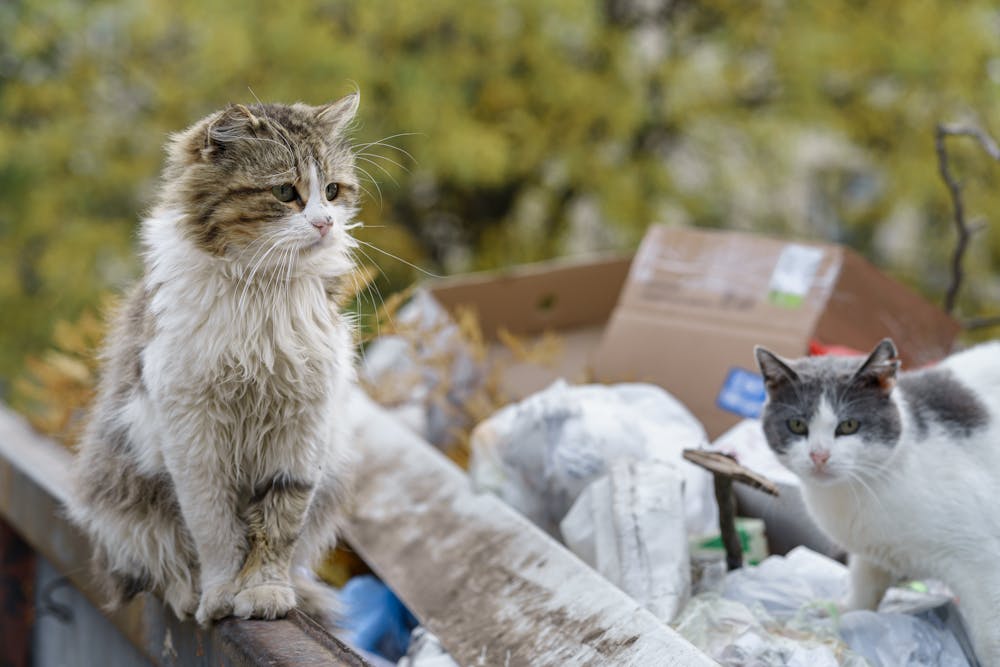 Unowned cats are often found around rubbish dumps, searching for food.
Shutterstock
3. Adopt a cat
In May, the ACT government released an ambitious and targeted ten-year plan with the vision that, by 2031, “all cats in the ACT will be owned, wanted and cared for by responsible owners”. It is an exemplar of what the community can do to improve the lives of cats, and we believe it should be modelled elsewhere in Australia.
The plan has been developed to raise best practice standards, recognising the duty of care needed to ensure the health and well-being of cats.
This starts with responsible owners. It calls for improved compliance with compulsory desexing and registration. To encourage people to comply, the ACT government will be implementing free or low-cost desexing and free microchipping. Compulsory containment for new cats acquired after July 1, 2022 is also on the cards.
The plan provides a strategy to trap roaming cats, with improvements in how pet cats can be identified and returned to their owners, while unowned neighbourhood cats will be put up for adoption.
Unowned cats are often found around rubbish dumps, searching for food.
Shutterstock
3. Adopt a cat
In May, the ACT government released an ambitious and targeted ten-year plan with the vision that, by 2031, “all cats in the ACT will be owned, wanted and cared for by responsible owners”. It is an exemplar of what the community can do to improve the lives of cats, and we believe it should be modelled elsewhere in Australia.
The plan has been developed to raise best practice standards, recognising the duty of care needed to ensure the health and well-being of cats.
This starts with responsible owners. It calls for improved compliance with compulsory desexing and registration. To encourage people to comply, the ACT government will be implementing free or low-cost desexing and free microchipping. Compulsory containment for new cats acquired after July 1, 2022 is also on the cards.
The plan provides a strategy to trap roaming cats, with improvements in how pet cats can be identified and returned to their owners, while unowned neighbourhood cats will be put up for adoption.
 Adopting a cat is the most compassionate way to bring the number of roaming unowned cats down.
Shutterstock
So what do we do about it?
Well, we know two tasks are critical: removing unowned cats from the streets, and reducing unwanted breeding and abandonment of cats.
Trap-neuter-return programs can do more harm than good because cats still live a hard life on the streets and may lead to some people feeling comfortable abandoning unwanted cats at the release sites. And while euthanasia has been shown to be effective, it can be a difficult choice.
Instead, Australia must boost efforts to socialise and adopt unowned cats, and enforce laws that stop owned cats free-roaming the streets. This will require enormous effort with community education, but it is a compassionate choice addressing all problems caused by free-roaming cats (both owned and unowned).
If you’re inspired to give a cat a “furrever” home, contact your nearest cat welfare organisation or local council. And if you already have a pet cat, it’s important to keep it on your property all day, every day — not only to protect native wildlife, but to protect the cats themselves.
Read more:
One cat, one year, 110 native animals: lock up your pet, it's a killing machine
Adopting a cat is the most compassionate way to bring the number of roaming unowned cats down.
Shutterstock
So what do we do about it?
Well, we know two tasks are critical: removing unowned cats from the streets, and reducing unwanted breeding and abandonment of cats.
Trap-neuter-return programs can do more harm than good because cats still live a hard life on the streets and may lead to some people feeling comfortable abandoning unwanted cats at the release sites. And while euthanasia has been shown to be effective, it can be a difficult choice.
Instead, Australia must boost efforts to socialise and adopt unowned cats, and enforce laws that stop owned cats free-roaming the streets. This will require enormous effort with community education, but it is a compassionate choice addressing all problems caused by free-roaming cats (both owned and unowned).
If you’re inspired to give a cat a “furrever” home, contact your nearest cat welfare organisation or local council. And if you already have a pet cat, it’s important to keep it on your property all day, every day — not only to protect native wildlife, but to protect the cats themselves.
Read more:
One cat, one year, 110 native animals: lock up your pet, it's a killing machine
Authors: Trish Fleming, Professor, Murdoch University


















