

why losing these tiny, loyal fish to climate change spells disaster for coral
- Written by: Catheline Y.M. Froehlich, PhD Fellow, University of Wollongong
Environmental scientists see flora, fauna and phenomena the rest of us rarely do. In this series, we’ve invited them to share their unique photos from the field.
If you’ve ever dived on a coral reef, you may have peeked into a staghorn coral and seen small fish whizzing through its branches. But few realise that these small fish, such as tiny goby fish, play a crucial role in helping corals weather the storm of climate change.
But alarmingly, our new research found gobies decline far more than corals do after multiple cyclones and heatwaves. This is concerning because such small fish — less than 5 centimetres in length — are critical to coral and reef health.
Unfortunately, the number of cyclones and heatwaves is on the rise. These disasters have begun to occur back-to-back, leaving no time for marine life to recover.
With the recent push by UNESCO to list the Great Barrier Reef as “in danger”, the world is currently on edge about the status of coral reefs. We’re at a critical stage to take all the necessary measures to save coral reefs worldwide, and we must broaden our focus to understand how the important relationships between corals and fish are affected.
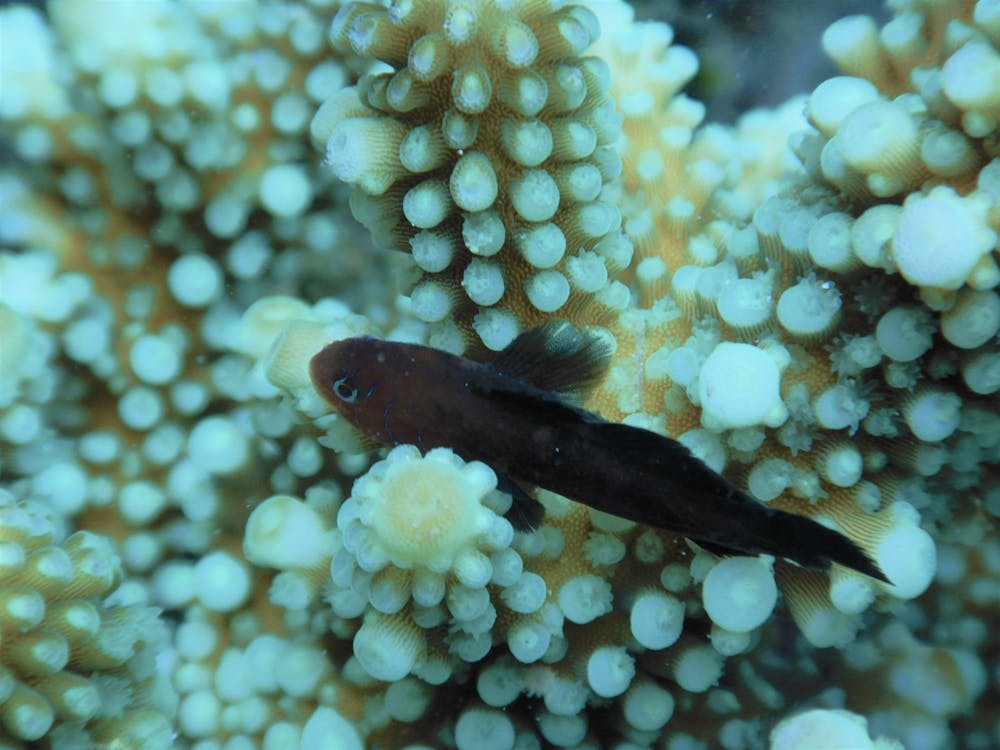 This five-lined coral goby (Gobiodon quinquestrigatus) is taking a break on a coral branch.
Catheline Froehlich, Author provided
This five-lined coral goby (Gobiodon quinquestrigatus) is taking a break on a coral branch.
Catheline Froehlich, Author provided
Goby fish: the snack-sized friends of coral
In all environments, organisms can form relationships where they work together to improve each other’s health. This is called a mutual symbiosis, like a you-scratch-my-back principle.
In coral reefs, other examples of mutual symbioses include invisible zooxanthellae algae living within coral tissue, small cleaner fish removing parasites from big fish, and eels and groupers hunting together.
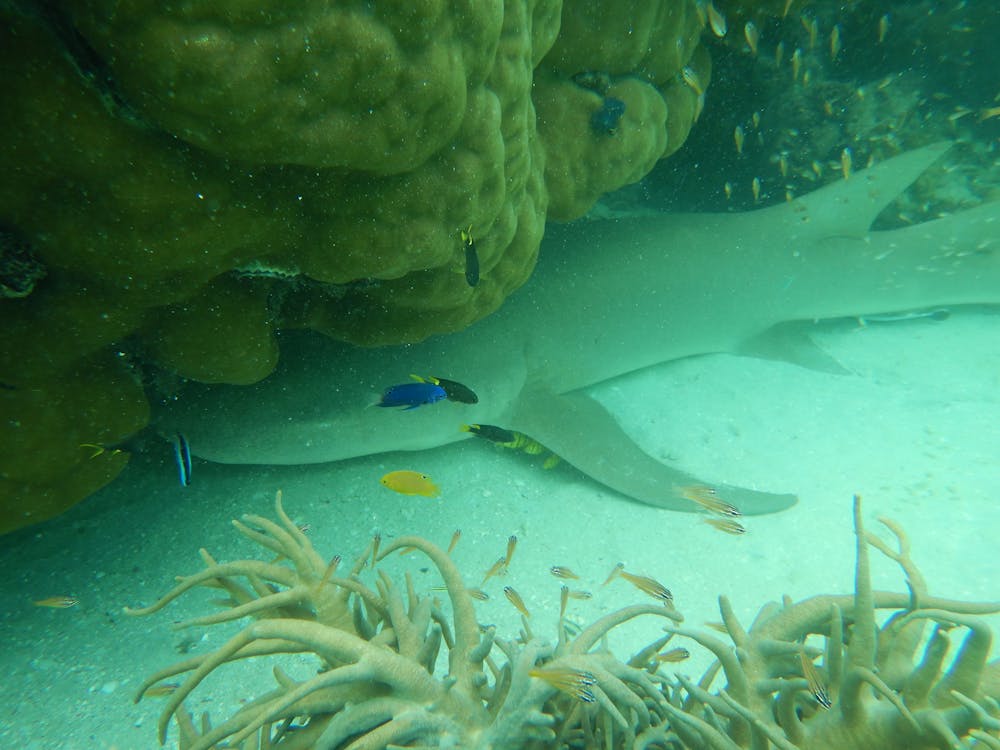 While this shark is taking a nap, small yellow fish are hiding under its fin, and it is also getting cleaned by a cleaner wrasse (slender black fish with neon blue outline).
Catheline Froehlich, Author provided
While this shark is taking a nap, small yellow fish are hiding under its fin, and it is also getting cleaned by a cleaner wrasse (slender black fish with neon blue outline).
Catheline Froehlich, Author provided
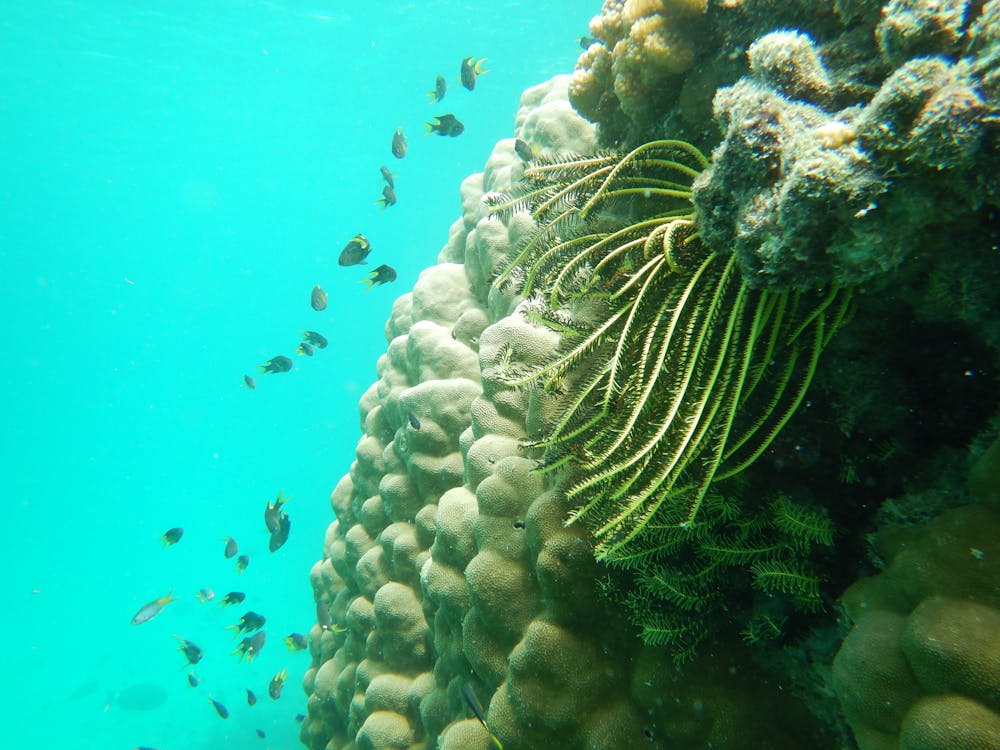 Living on the edge: some fish live inside branched corals, while others live around the perimeter of coral bommies like this.
Catheline Froehlich, Author provided
Living on the edge: some fish live inside branched corals, while others live around the perimeter of coral bommies like this.
Catheline Froehlich, Author provided
Gobies that live in corals are small, snack-sized fish that rarely venture beyond the prickly borders of their protective coral homes. The Great Barrier Reef is home to more than 20 species of coral gobies, which live in more than 30 species of staghorn corals.
In return for the coral’s protection, the gobies pluck off harmful algae growing on coral branches, produce a toxin to deter potential coral-eating fish, and reduce heat stress by swimming around the coral and stopping stagnant water build up.
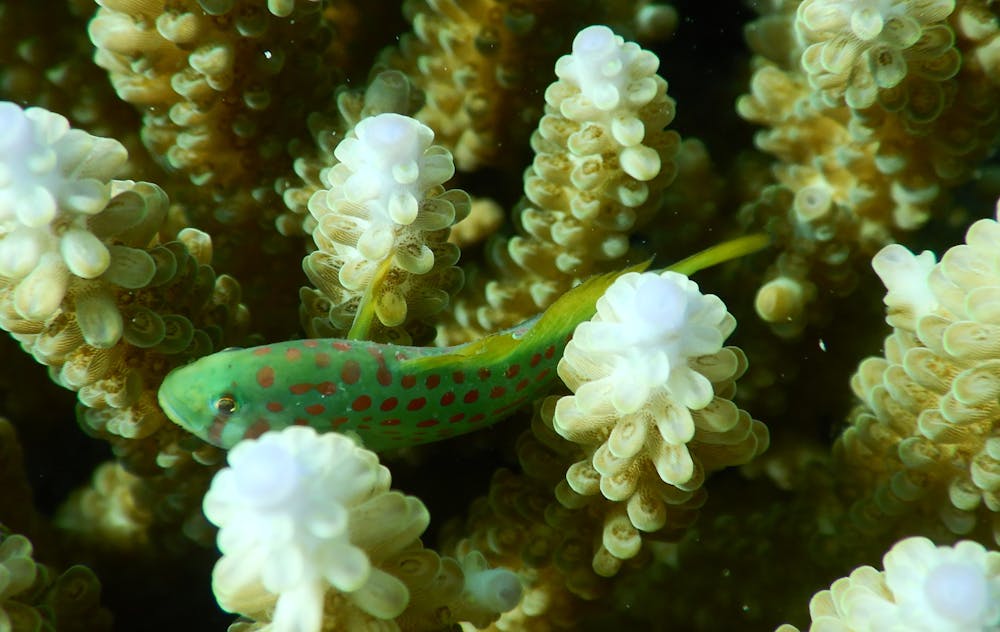 The blue-spotted coral goby (Gobiodon erythrospilus) is holding its position by pushing its front pectoral fins against coral branches.
Catheline Froehlich, Author provided
The blue-spotted coral goby (Gobiodon erythrospilus) is holding its position by pushing its front pectoral fins against coral branches.
Catheline Froehlich, Author provided
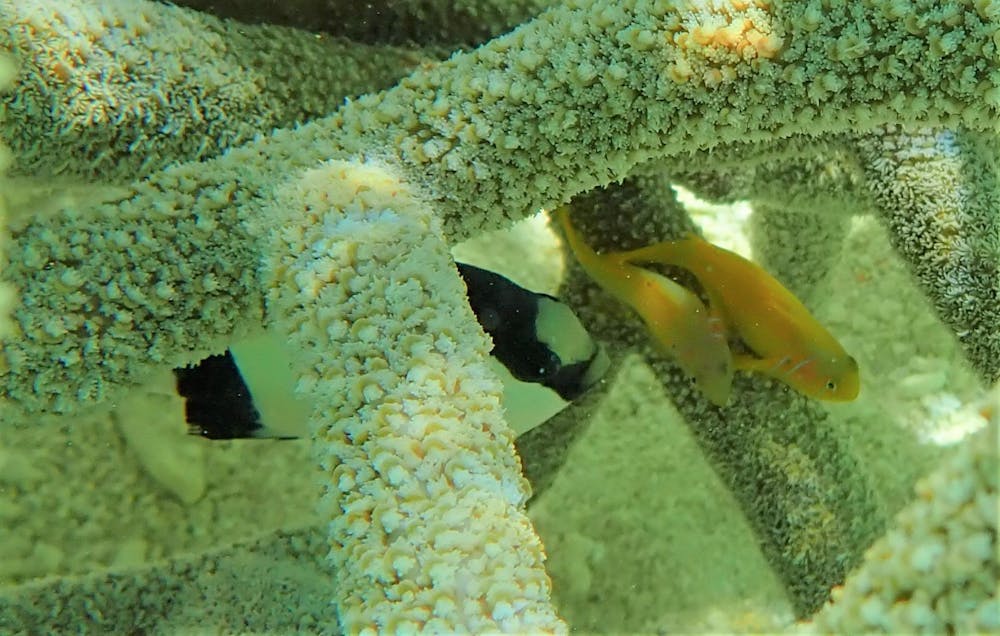 Paired romance: these lemon coral gobies (Gobiodon citrinus) live in monogamous pairs while also sharing their coral with a humbug damselfish (Dascyllus aruanus).
Catheline Froehlich, Author provided
Paired romance: these lemon coral gobies (Gobiodon citrinus) live in monogamous pairs while also sharing their coral with a humbug damselfish (Dascyllus aruanus).
Catheline Froehlich, Author provided
Even if their corals become stressed and bleached, they remain steadfast within the coral, helping it to survive. Without their full-time cleaning staff, corals would be more susceptible when threatened with climate change.
Unfortunately, just like Nemos (clownfish) living inside anemones, climate change threatens the mutual symbioses between gobies and corals.
Coral gobies in decline
While SCUBA diving, we surveyed corals and their goby friends over a four-year period (2014-17) of near-continuous devastation at Lizard Island, on the Great Barrier Reef. Over this time, two category 4 cyclones and two prolonged heatwaves wreaked havoc on this world-renowned reef.
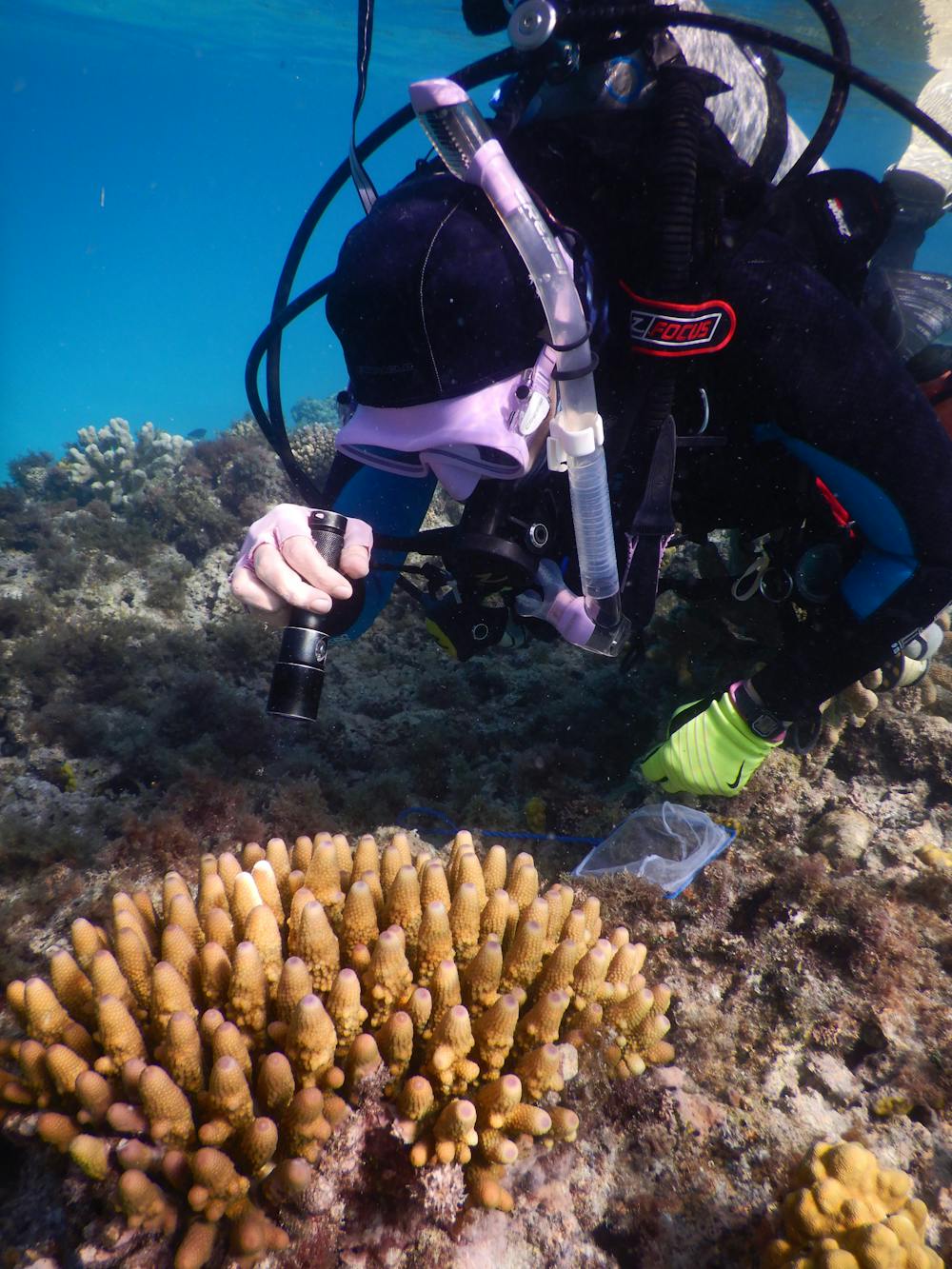 Coral gobies are often hard to spot, so we use underwater flashlights to identify them correctly.
Catheline Froehlich, Author provided
Coral gobies are often hard to spot, so we use underwater flashlights to identify them correctly.
Catheline Froehlich, Author provided
What we saw was alarming. After the two cyclones, the 13 goby species (genus Gobiodon) and 28 coral species (genus Acropora) we surveyed declined substantially.
But after the two heatwaves, gobies suddenly fared even worse than corals. While some coral species persisted better than others, 78% no longer housed gobies.
Importantly, every single goby species either declined, or worse, completely disappeared. The few gobies we found were living alone, which is especially concerning because gobies breed in monogamous pairs, much like most humans do.
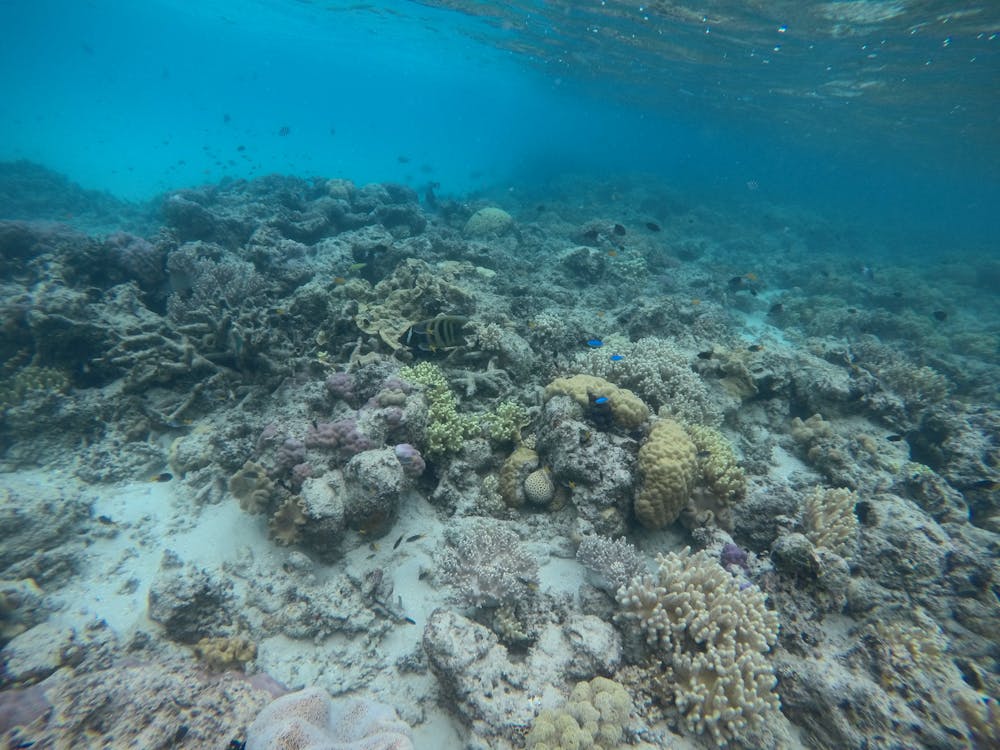 After cyclones and heatwaves, we found a lot of dead corals surrounding pockets of living corals and reef life at Lizard Island.
Catheline Froehlich, Author provided
After cyclones and heatwaves, we found a lot of dead corals surrounding pockets of living corals and reef life at Lizard Island.
Catheline Froehlich, Author provided
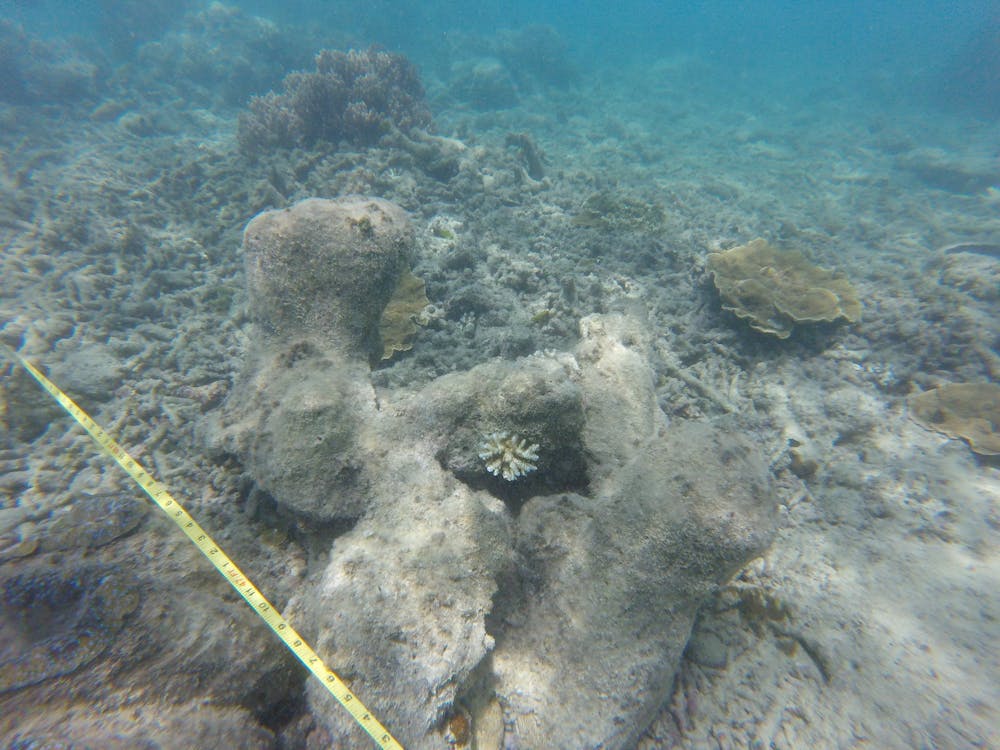 We surveyed coral and goby survival and often found a lot of coral debris after heatwaves.
Catheline Froehlich, Author provided
We surveyed coral and goby survival and often found a lot of coral debris after heatwaves.
Catheline Froehlich, Author provided
Without urgent action, the outlook is bleak
More and more studies are showing reef fish behave differently in warmer and more acidic water.
Warmer water is even changing reef fish on a genetic level. Fish are struggling to reproduce, to recognise what is essential habitat, and to detect predators. Research has shown clownfish, for example, could not tell predatory fish (rockcods and dottybacks) from non-predators (surgeonfishes and rabbitfishes) when exposed to more acidic seawater.
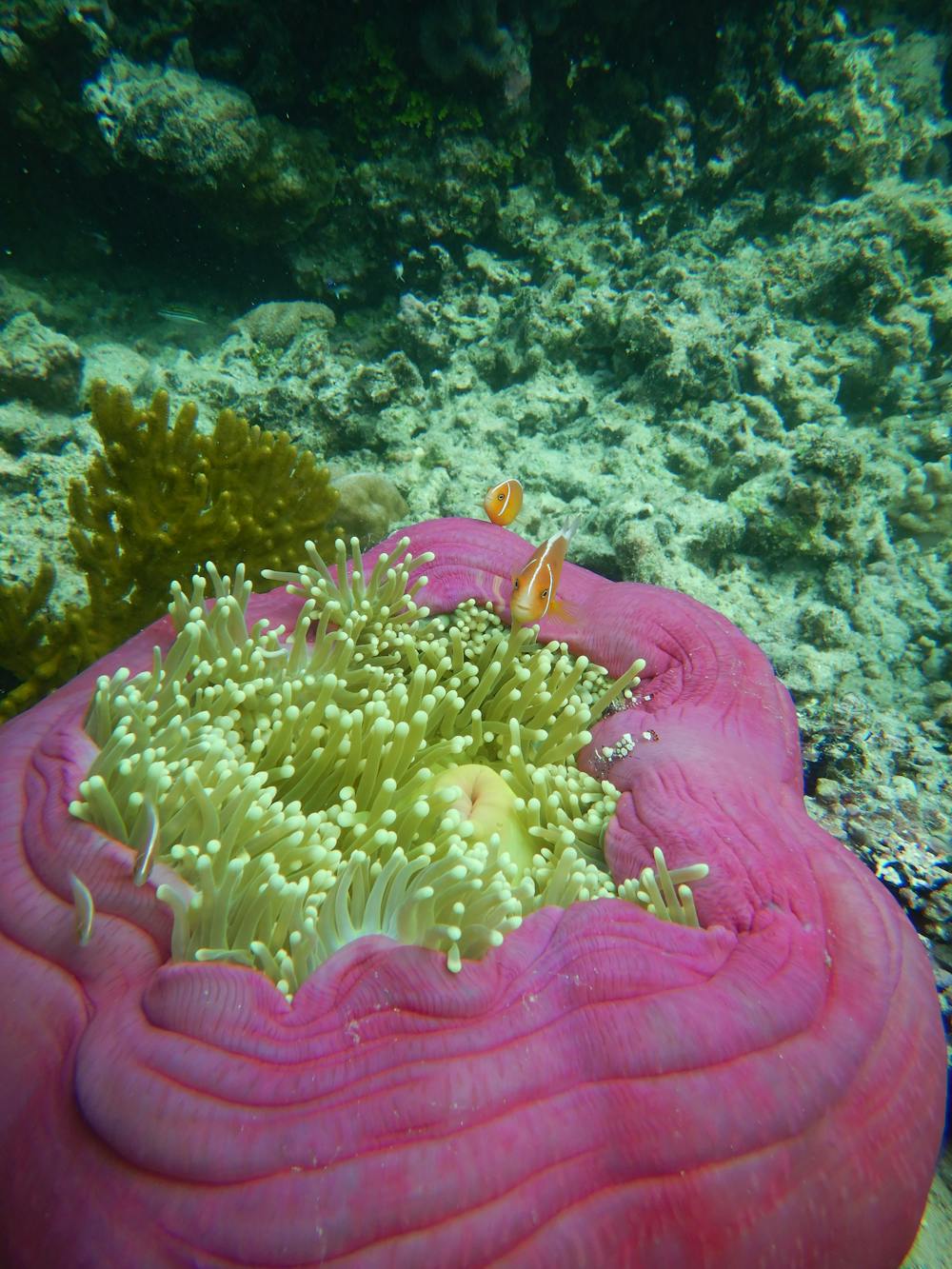 Finding Nemo swimming in anemone in Lizard Island. The bright pink surrounding it is the column of the anemone. Picture the column as your neck and the tentacles as your hair.
Abigail Shaughnessy, Author provided
Finding Nemo swimming in anemone in Lizard Island. The bright pink surrounding it is the column of the anemone. Picture the column as your neck and the tentacles as your hair.
Abigail Shaughnessy, Author provided
The bigger picture looks bleak. Corals are likely to become increasingly vulnerable if their symbiotic gobies and other inhabitants continue to decline. This could lead to further disruptions in the reef ecosystem because mutual symbioses are important for ecosystem stability.
We need to broaden our focus to understand how animal interactions like these are being affected in these trying times. This is an emerging field of study that needs more research in the face of climate change.
 Here, one of my assistants, Al Alder, is measuring the coral so that we can tell what happens to the size of corals after each climatic disaster.
Catheline Froehlich, Author provided
Here, one of my assistants, Al Alder, is measuring the coral so that we can tell what happens to the size of corals after each climatic disaster.
Catheline Froehlich, Author provided
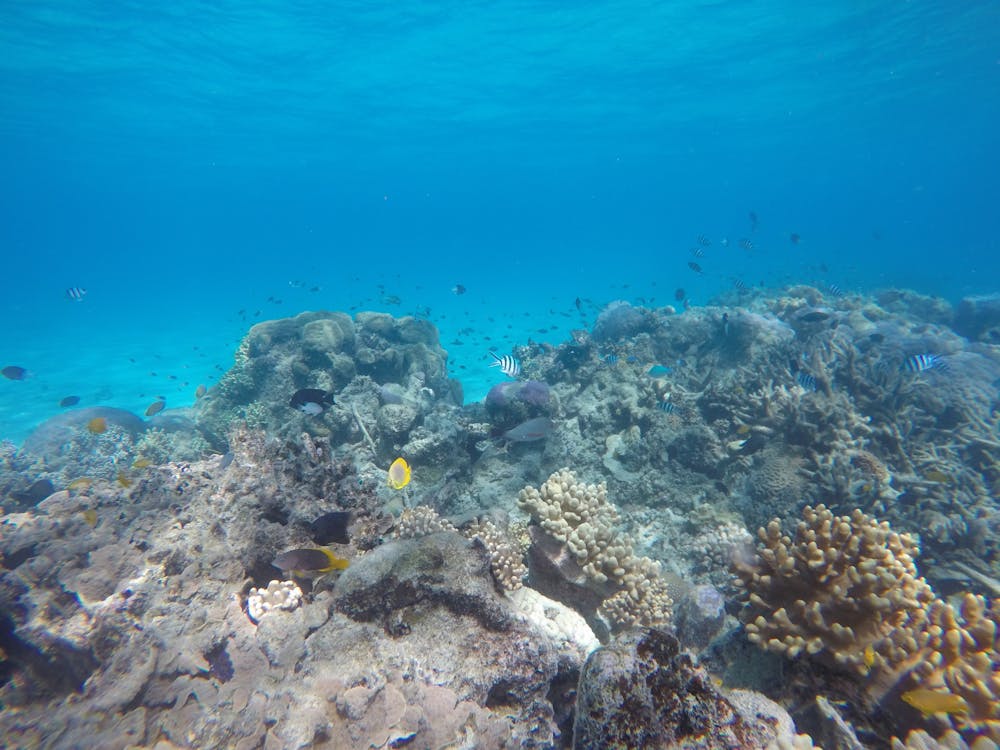 Several fish that are not coral gobies are still found swimming about even after four years of climatic disasters at Lizard Island.
Catheline Froehlich, Author provided
Several fish that are not coral gobies are still found swimming about even after four years of climatic disasters at Lizard Island.
Catheline Froehlich, Author provided
On a global scale, multiple disturbances from cyclones and heatwaves are becoming the norm. We need to tackle the problem from multiple angles. For example, we must meet net zero carbon emissions by 2050 and stop soil erosion and agricultural runoff from flowing into the sea.
If we do not act now, gobies and their coral hosts may become a distant memory in this warming climate.
Authors: Catheline Y.M. Froehlich, PhD Fellow, University of Wollongong


















