Modern Australian
Men's Weekly

.

JobKeeper delivered what was needed to save the patient

  • Written by Richard Holden, Professor of Economics, UNSW
JobKeeper delivered what was needed to save the patient

To the critics, the Treasury has just marked “its own homework”.

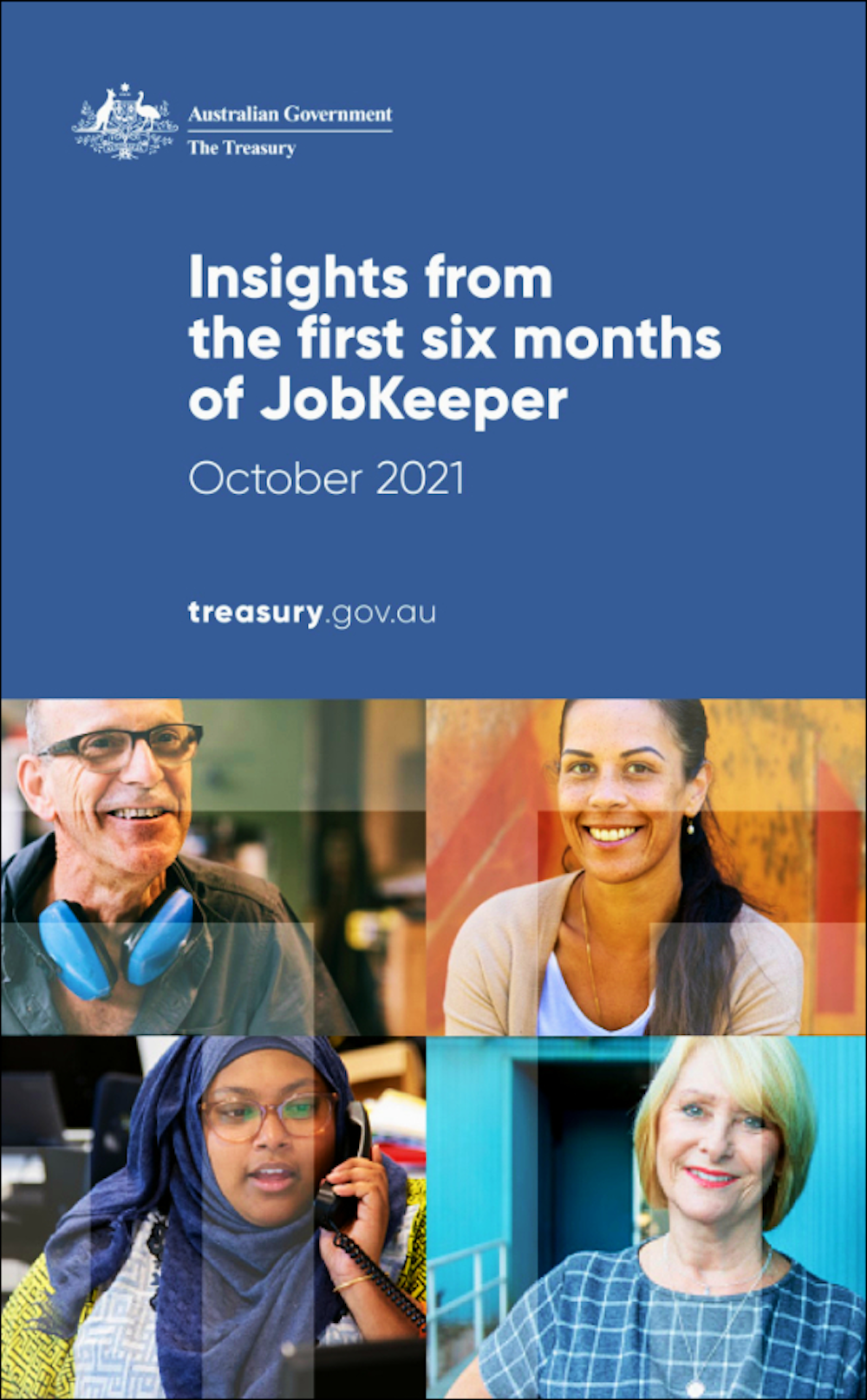
It has produced a 60-page report entitled Insights from the first six months of JobKeeper.

Commonwealth Treasury, October 11, 2021 And it finds the A$89 billion program it designed and delivered held up pretty well last year at the time Australia needed it most. As with the Labor government’s economic rescue programs during the global financial crisis, there are critics claiming it was wasteful, this time from the Labor side of politics. But they’ve exceedingly short memories. In the first week of March 2020, Australia had 93 COVID-19 cases and three deaths. The prime minister said he was “going to the footy” and “looking forward to it”, at a time when medical experts were calling for people to do no such thing and a quarter of Italy was locked down. Italian tourists were coming in freely. We were sleepwalking into a calamity. The way we were On March 10 last year, I wrote that we needed to close our international border totally and immediately, and spend about $100 billion to support workers and business while we shut down the economy and got health measures in place. On March 20 the borders were closed. Treasury forecast that if we had to lock down as hard as Italy or Spain our economy (GDP) would collapse by 24%. That wouldn’t be a mere recession or even a depression. It would be economic and financial Armageddon. The government needed to plug an unimaginable hole quickly. And it did. Read more: The key to the success of JobKeeper is retrospective paid work JobKeeper provided six months of financial support to businesses who expected their revenues to drop. At the time, that was almost every business in the country. It was designed to be easy to understand, and to get money onto business and household balance sheets immediately. Most importantly, it was designed to give recipients certainty in a time of calamitous uncertainty. These are facts. They are undisputed. What the critics say now From the safety of the present day, critics point out that JobKeeper excluded certain industries and workers: short-term casuals and universities among them. And they say $19.7 billion went to businesses whose revenues increased in the three months they received the payment. Read more: Quick, dirty, effective: there was no time to make JobKeeper perfect It would have been better, they say, not to spend the money on businesses that turned out to have rising revenues, and it would have been good to include short-term casuals and universities. JobKeeper should have included a “clawback” provision, they say. They are right. It would have been better had it been designed in that way. But they are taking insufficient account of what things were like at the time. What things were like then The context for the development of JobKeeper was a once-in-a-century event, with a government in power whose entire political brand had been railing against “debt and deficits”. Economists were concerned the government might do too little, or nothing at all. There are the things worth noting: Treasury had to act incredibly quickly, in a matter of days. I like an academic seminar as much as the next person, but Treasury didn’t have the luxury of years of work, refinement and debate. It had to perform battlefield surgery. A key reason so many businesses were able to increase revenues after JobKeeper began was that it was so effective. A smaller scheme, with more requirements and red tape, would have meant fewer workers and business would have got support, leaving the whole economy worse off. The more carve-outs and exclusions from JobKeeper the less effective it was likely to be. Fine-tuning rules creates uncertainty. It provides scope for gaming (getting around the rules). If we want public programs to have force, they need to be simple. The real choice in March 2020 was JobKeeper as it was or no JobKeeper at all. We saved the patient In early March 2020 the Australian economy was critically ill . Doctors Josh Frydenberg (Treasurer) and Steven Kennedy (Treasury Secretary) saved the patient. That’s what matters. Did they use ECG machines, blood bags, gauze and stitches? You bet. Did it cost economic resources? Probably, although had the worst had happened even more resources might have been used. Insurance can look wasteful after the fact, but that doesn’t make it unwise. Read more: The GFC provided the sauce we used to ward off the COVID recession I am glad they erred on the side of too many stitches rather than too few. They provided the only thing that can really help in times of extreme uncertainty, which is certainty. Authors: Richard Holden, Professor of Economics, UNSW

Read more https://theconversation.com/vital-signs-jobkeeper-delivered-what-was-needed-to-save-the-patient-169821

Why A Smart Lock Is Becoming An Essential Upgrade For Modern Home Security

Homeowners today are placing greater importance on security, convenience and technology in their living spaces. One of the most significant advancem...

Expert-Led Solutions for Clear Complexions

Many people struggle with acne at different stages of their lives, and the journey toward clearer skin often feels overwhelming. Breakouts affect not ...

Is Long-Term Pigmentation Correction Possible?

Many individuals struggle with pigmentation concerns that affect how their skin appears and how they feel about themselves. These darkened patches, sp...

The Value Of Commercial Buyers Agents Melbourne For Smarter And More Strategic Property Purchases

Buying commercial property requires a deep understanding of market conditions, tenancy structures, asset performance and long-term financial impact...

EOR Solutions & Offshore Workforce Arrangements: A Smarter Way to Manage Global Teams

For Australian companies expanding into Asian markets, navigating local employment laws and regulations can be complex. By implementing employer of re...

Beachside Moves: A Guide to Moving to Sydney’s Coastal Suburbs

So, you've finally decided to do it. You're trading your city apartment for the salty breeze of beachside living. Who can blame you? Maybe it’s Bo...

The Most Common Causes of Concrete Deterioration (And How to Prevent Them)

Concrete is known for its strength, longevity, and reliability—but even the most durable surfaces can deteriorate over time if they’re exposed t...

Mat Pilates vs Reformer Pilates: What’s Better for Strength, Mobility, and Control?

Pilates has surged in popularity across Australia, and for good reason—it delivers a rare combination of strength, mobility, control, and mindful ...

Your guide to SEO for local business

Most people search online before they buy. In fact, 97% of people learn more about a local company online than anywhere else (Source: HubSpot). That m...

Indigenous Voices in Film, Literature & Music: Why They Matter More Than Ever

Across Australia and around the world, Indigenous storytelling is experiencing a long-overdue surge of recognition. First Nations creators are bring...

Mayfair Funerals: A Fresh, Intimate Approach for Perth Families

Description: Mayfair Funerals is reshaping funeral care in Perth with a compassionate, personal and affordable approach. Their signature Intimate Cre...

Barbecue Boats – The New Must-Have for Retirees!

When your working years are behind you, it’s time to kick back and relax. You’ve earned it! And there’s no better way to do that than by purch...

Pizza Brisbane City: Your Ultimate Guide to Finding the Perfect Slice in the CBD

Brisbane's city centre has evolved into a vibrant culinary destination, and nowhere is this transformation more evident than in its thriving pizza s...

Maximising Your Savings: How to Choose a Competitive Savings Account in Australia

In today's economic climate, Australians are increasingly focused on making their money work harder. With interest rates fluctuating and living cost...

What to Know When Researching a Tummy Tuck on the Gold Coast

Body confidence is something many people seek to improve as they move through different stages of life. Pregnancy, weight fluctuations and ageing ca...

Employer of Record Services & Manpower Outsourcing — The Smart Solution for Seamless Workforce Management

Expanding into Asian markets can feel overwhelming for many Australian businesses, especially when hiring employees in regions like Singapore, Malaysi...

Why Far-Infrared Saunas Are Becoming a Must-Have in Australian Homes; Just What Is a Far-Infrared Sauna?

A far-infrared sauna uses far-infrared (FIR) wavelengths to heat the body directly instead of relying on high cabin temperatures. Unlike traditional...

Tax Accountants Melbourne: Expert Support for Compliance and Financial Efficiency

Taxation is one of the most critical — and often most complex — aspects of financial management. Whether you’re a business owner, property inv...