

Modern Australian
Times Advertising

Facebook wants AI to find your keys and understand your conversations

  • Written by Jumana Abu-Khalaf, Research Fellow in Computing and Security, Edith Cowan University
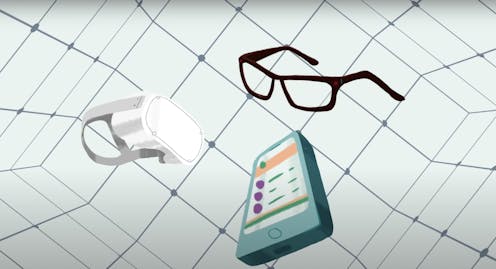
Facebook wants AI to find your keys and understand your conversations

Facebook has announced a research project that aims to push the “frontier of first-person perception”, and in the process help you remember where your left your keys.

The Ego4D project provides a huge collection of first-person video and related data, plus a set of challenges for researchers to teach computers to understand the data and gather useful information from it.

In September, the social media giant launched a line of “smart glasses” called Ray-Ban Stories, which carry a digital camera and other features. Much like the Google Glass project, which met mixed reviews in 2013, this one has prompted complaints of privacy invasion.

The Ego4D project aims to develop software that will make smart glasses far more useful, but may in the process enable far greater breaches of privacy.

Read more: Ray-Ban Stories let you wear Facebook on your face. But why would you want to?

What is Ego4D?

Facebook describes the heart of the project as

a massive-scale, egocentric dataset and benchmark suite collected across 74 worldwide locations and nine countries, with over 3,025 hours of daily-life activity video.

Ego4D: Teaching AI to perceive the world through your eyes.

The “Ego” in Ego4D means egocentric (or “first-person” video), while “4D” stands for the three dimensions of space plus one more: time. In essence, Ego4D seeks to combine photos, video, geographical information and other data to build a model of the user’s world.

There are two components: a large dataset of first-person photos and videos, and a “benchmark suite” consisting of five challenging tasks that can be used to compare different AI models or algorithms with each other. These benchmarks involve analysing first-person video to remember past events, create diary entries, understand interactions with objects and people, and forecast future events.

The dataset includes more than 3,000 hours of first-person video from 855 participants going about everyday tasks, captured with a variety of devices including GoPro cameras and augmented reality (AR) glasses. The videos cover activities at home, in the workplace, and hundreds of social settings.

What is in the data set?

Although this is not the first such video dataset to be introduced to the research community, it is 20 times larger than publicly available datasets. It includes video, audio, 3D mesh scans of the environment, eye gaze, stereo, and synchronized multi-camera views of the same event.

Most of the recorded footage is unscripted or “in the wild”. The data is also quite diverse as it was collected from 74 locations across nine countries, and those capturing the data have various backgrounds, ages and genders.

What can we do with it?

Commonly, computer vision models are trained and tested on annotated images and videos for a specific task. Facebook argues that current AI datasets and models represent a third-person or a “spectator” view, resulting in limited visual perception. Understanding first-person video will help design robots that better engage with their surroundings.

Future robotic agents will benefit from a better understanding of their environment
Wikimedia: Future robotic agents will benefit from a better understanding of their environment Furthermore, Facebook argues egocentric vision can potentially transform how we use virtual and augmented reality devices such as glasses and headsets. If we can develop AI models that understand the world from a first-person viewpoint, just like humans do, VR and AR devices may become as valuable as our smartphones. Can AI make our lives better? Facebook has also developed five benchmark challenges as part of the Ego4D project. The challenges aim to build better understanding of video materials to develop useful AI assistants. The benchmarks focus on understanding first person perception. The benchmarks are described as follows: Episodic memory (what happened when?): for example, figuring out from first-person video where you left your keys Hand-object manipulation (what am I doing and how?): this aims to better understand and teach human actions, such as giving instructions on how to play the drums Audio-visual conversation (who said what and when?): this includes keeping track of and summarising conversations, meetings or classes Social interactions (who is interacting with whom?): this is about identifying people and their actions, with a goal of doing things like helping you hear a person better if they’re talking to you Forecasting activities (what am I likely to do next?): this aims to anticipate your intentions and offer advice, like pointing out you’ve already added salt to a recipe if you look like you’re about to add some more. What about privacy? Obviously there are significant concerns regarding privacy. If this technology is paired with smart glasses constantly recording and analysing the environment, the result could be constant tracking and logging (via facial recognition) of people moving around in public. Read more: Face masks and facial recognition will both be common in the future. How will they co-exist? While the above may sound dramatic, similar technology has already been trialled in China, and the potential dangers have been explored by journalists. Facebook says it will maintain high ethical and privacy standards for the data gathered for the project, including consent of participants, independent reviews, and de-identifying data where possible. As such, Facebook says the data was captured in a “controlled environment with informed consent”, and in public spaces “faces and other PII [personally identifing information] are blurred”. But despite these reassurances (and noting this is only a trial), there are concerns over the future of smart-glasses technology coupled with the power of a social media giant whose intentions have not always been aligned to their users. Read more: Artificial intelligence in Australia needs to get ethical, so we have a plan The future? The ImageNet dataset, a huge collection of tagged images, has helped computers learn to analyse and describe images over the past decade or more. Will Ego4D do the same for first-person video? We may get an idea next year. Facebook has invited the research community to participate in the Ego4D competition in June 2022, and pit their algorithms against the benchmark challenges to see if we can find those keys at last.

Authors: Jumana Abu-Khalaf, Research Fellow in Computing and Security, Edith Cowan University

Read more https://theconversation.com/facebook-wants-ai-to-find-your-keys-and-understand-your-conversations-170092

3PL Logistics Australia Driving Smarter Supply Chains And Faster Deliveries

In a world where customers expect speed almost as much as quality, logistics has become the silent heartbeat of every successful business. Behind th...

Why Professional Electrical Services Are Essential For Modern Properties

Electricity powers almost every aspect of daily life, from lighting and appliances to complex systems in homes and businesses. This makes choosing a...

What Not to Pack When Moving: The Essential Guide to Smart Packing

Moving house is one of those all-encompassing events in life and most people focus their energy on deciding what to pack. But knowing what not to pa...

From Assistance to Independence: Progression in Daily Living Skills

The ultimate goal of many support systems is to empower individuals to lead lives defined by autonomy and self-reliance. While some support requiremen...

The Cost Difference Between Early Repairs and Delayed Replacement

Automotive maintenance often involves a choice between addressing a small issue immediately or waiting until a component fails completely. When it c...

What Is a Stainless Steel Bar? Applications, Benefits, and Buying Tips

Stainless steel is one of the most widely used materials across industrial and commercial sectors, known for its strength, corrosion resistance, and...

Scholars in Developing Nations Depending on Z library

Access to books often shapes the course of study for scholars who live in regions with thin library shelves and slow supply chains. Many students wo...

6 Cheapest POS Systems in Australia (2026)

The cheapest POS systems in Australia for 2026 are POSApt, Square, Zeller, Loyverse, Epos Now, and Shopify POS (Lite). However, “cheap” does no...

The Ultimate Guide to Automating Your Weekend Yard Chores

We all look forward to the weekend as a chance to unwind after a long week of work. You probably picture yourself relaxing on the patio with a cold ...

How Ignoring Regular Car Servicing Can Lead to Costly Repairs

Owning a car gives you a sweet sense of freedom and comfort. You can go wherever you want, whenever you want. But with that freedom comes responsibili...

Someone Trips at Your Fundraiser. Now What? Understanding Public Liability for NFPs

Three months of planning. Volunteers giving up their weekends. Sponsorships chased, catering sorted, tables decorated. And then, about an hour into ...

Stainless Steel Tube: A Complete Specification Guide for Engineers, Project Managers, and Industrial Buyers

Few materials in the industrial and manufacturing world are as universally relied upon — or as frequently misspecified — as stainless steel tube...

How to Choose the Right Barber Shears Scissors for Professional Results

Since a barber is only as good as their tool, choosing the right barber shear scissor must not be taken lightly. Most barbers end up buying the first ...

Why Commercial Construction Companies Play A Critical Role In Modern Urban Development

Urban development requires highly organised planning, engineering expertise, and professional construction teams capable of delivering complex build...

Essential Features for Comfortable Family Caravan Trips

Choosing the right van for family travel requires careful consideration of how the space will be used on a daily basis. Families have specific needs...

Chatswood Tutor: Helping Students Achieve Academic Success With Personalised Learning

Education plays a crucial role in shaping a student’s future, and many students benefit from additional academic support outside the classroom. A pr...

How External Consulting Can Guide Enterprise IT Strategy and Procurement

Internal IT teams carry deep operational knowledge, but that familiarity can create blind spots in strategic decisions. An external IT consultant br...

Why Sports Nutrition Australia Is Important for Performance and Recovery

Athletes and fitness enthusiasts place significant demands on their bodies during training and competition. Maintaining energy levels, supporting mu...
















