

Will national cabinet survive the COVID 'opening up'?
- Written by: Carolyn Holbrook, ARC DECRA Fellow, Deakin University
For a brief moment in 2020, it appeared the COVID pandemic might be the catalyst for a new era in Australian federal relations.
The national cabinet, comprising the prime minister and state and territory leaders, was established in March 2020 in response to the pandemic. Following the first meeting, Prime Minister Scott Morrison praised the forum’s “very strong spirit of unity and co-operation”.
Soon after, in May 2020, the Council of Australian Governments (COAG) was abolished. The national cabinet took its place as the nation’s peak intergovernmental forum.
The national cabinet did not just represent a new, more direct line of communication between political leaders. It promised reform of a federal system that is widely agreed to be inefficient and inadequate.
According to the prime minister, the defining mission of the new intergovernmental infrastructure was “to create jobs”. This would be achieved through “a congestion-busting process” of centralising decision-making in the national cabinet and Council of Federal Financial Relations (a forum of treasurers).
While the national cabinet enjoyed early achievements such as the JobKeeper scheme of wage subsidies and increased hospital funding, optimism about a new era of co-operative federalism has waned.
Cracks that appeared last year over hotel quarantine arrangements and border closures have widened in 2021. The Commonwealth has been accused of favouring New South Wales in the provision of financial assistance and vaccines.
The status and power of state and territory leaders have continued to rise through the pandemic, and there has been condemnation of the Commonwealth’s attempt to subject the national cabinet to the same secrecy provisions that apply to the federal cabinet.
When Queensland’s Annastacia Palaszczuk and Western Australia’s Mark McGowan indicated they would set their own targets for reopening in defiance of the national plan, Deputy Prime Minister Barnaby Joyce quipped Australia had gone
from a federation […] back to little colonies again […] I was waiting for Queensland to get their own air force and Western Australia to get their own navy.
Joyce’s derision of the popular support for state premiers’ action was likely an attempt to deflect attention from adverse polling on Commonwealth leadership during the pandemic. Evidently, many regard a weakening of federal government power over their state as no bad thing.
One might think that emboldened states threaten national cabinet. On the other hand, a national co-ordinating body in which there is (relatively) more parity between participants, inducing measured negotiation that leads to consensual decisions, might provide the circuit breaker to end the bitter partisan deadlocks that have plagued major policy decisions for decades.
As Australia re-opens, can national cabinet serve such purposes and fulfil its early promise as a vehicle for much-needed reform?
The answer to the first question is manifest: though the Australian Constitution is silent on the issue, the nature of our federal system of government, with overlapping jurisdictional responsibilities and complex funding arrangements, means some form of intergovernmental forum is vital.
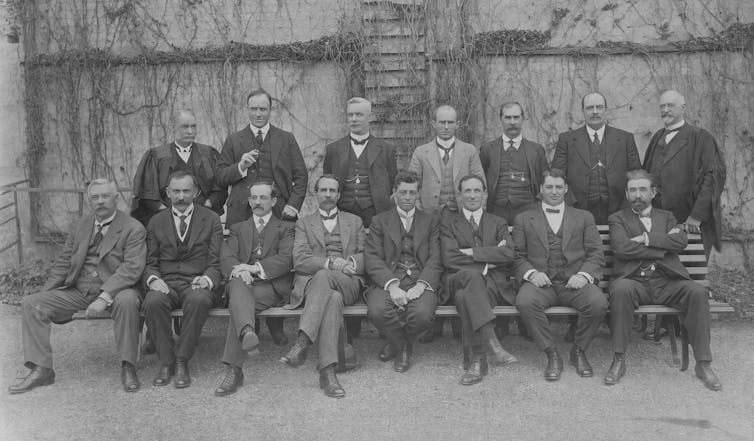
For the first 91 years after Federation on January 1 1901, this forum was known as the Premiers’ Conference. The first meeting between the prime minister and premiers was held in November 1901.
In the following decades, premiers’ conferences were sometimes held once, twice, even three times a year. Occasionally, two or three years passed with no conferences. By the early 1960s, under the Menzies government, premiers’ conferences had settled into a mostly regular schedule of twice-yearly meetings.
In 1992 the Council of Australian Governments (COAG) superseded the Premiers’ Conference. The recently commissioned Conran Review claimed COAG “was a slow, bottom-up framework for intergovernmental cooperation that too often resulted in lowest common denominator outcomes”. But this seems an overly crude characterisation.
Read more: COAG: How to turn a 'parking lot for tough decisions' into something really useful
As constituted by Paul Keating, COAG enjoyed the administrative support of the prime minister’s department and the credibility that came with the leader’s imprimatur. COAG met with early success in dealing with pressing national issues of native title and competition policy.
Morrison’s criticisms of COAG’s overly bureaucratic nature ignore the fact that it was John Howard’s Coalition government that decentralised COAG’s health expenditure negotiations to ministerial councils.
The proliferation of ministerial councils, with secretariats, was one of the factors that led Conran and others rightly to conclude that COAG had become unwieldy and inefficient.
But little attention was paid to the COAG Reform Council, established in 2010. Initially, under the Rudd and Gillard Labor governments, the council looked set to address such problems and continue promoting expert input into the policy deliberation.
Thereafter, Coalition impatience with “bureaucratic” process diminished that momentum.
National cabinet, initially attentive to health experts and epidemiologists, enjoyed success at the onset of the COVID crisis. It effectively addressed a pressing national issue about which it was able to achieve bipartisan consensus, in much the same way as COAG achieved with native title and competition policy. Since then, national cabinet has looked less exceptional and more like its now-maligned predecessor.
The issue, then, is not whether the national cabinet will survive when Australia re-opens. Rather, the issue is how well it will work.
The “job-making agenda” that Morrison assigns to national cabinet seems a thin foundation on which to build an intergovernmental forum. It smacks of sloganeering and politicking. Jobs are vital, but so are other complex issues of economic, energy, climate and social policy.
Read more: Will national cabinet change federal-state dynamics?
The efficacy of premiers’ conferences, COAG and national cabinet is not determined by nomenclature or tweaks in process. It lies ultimately in the willingness and capacity of the prime minister to provide dynamic and sensitive leadership, prioritise policy reform over political spin and negotiate outcomes with all levels of government.
The premiers’ moment in the political sun may seem temporary. But when the national government fails to lead on portentous issues, as it continues to do in regard to climate policy, state premiers have shown themselves ready to act.
Australia needs a prime minister who is willing to deal with the range of pressing challenges we face as a nation, and is capable of orchestrating all parties necessary to their solution.
If Scott Morrison proves unwilling or incapable of providing the strong leadership and consensus-building that an effective intergovernmental forum requires, his failure may well see national cabinet fatally diminished. But successors will surely then create another such forum. Will they learn from what has gone before?
Authors: Carolyn Holbrook, ARC DECRA Fellow, Deakin University
Read more https://theconversation.com/will-national-cabinet-survive-the-covid-opening-up-170631


















