

global deforestation deal will fail if countries like Australia don't lift their game on land clearing
- Written by: Kate Dooley, Research Fellow, Climate & Energy College, The University of Melbourne
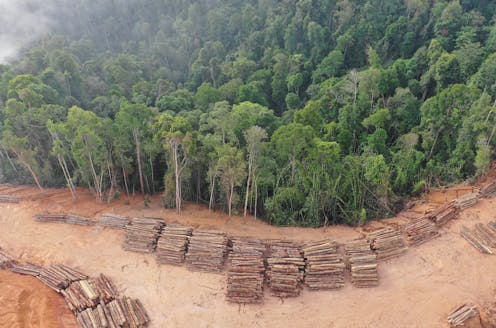
At the Glasgow COP26 climate talks overnight, Australia and 123 other countries signed an agreement promising to end deforestation by 2030.
The declaration’s signatories, which include global deforestation hotspots such as Brazil, Indonesia and the Democratic Republic of the Congo, have committed to:
working collectively to halt and reverse forest loss and land degradation by 2030 while delivering sustainable development and promoting an inclusive rural transformation.
This declaration should be welcomed for recognising how crucial forest loss and land degradation are to addressing climate change, biodiversity decline and sustainable development.
But there have been many such declarations before, and it’s hard to feel excited about yet another one.
What really matters is changing policy domestically; if countries don’t change what they are doing at home to bring emissions from fossil fuels to zero and restore degraded lands, declarations like this are meaningless.
Read more: Want to beat climate change? Protect our natural forests
The good parts
The declaration does a good job of joining up interrelated issues that for too long have been treated as separate problems.
Signatories say they will:
emphasise the critical and interdependent roles of forests of all types, biodiversity and sustainable land use in enabling the world to meet its sustainable development goals; to help achieve a balance between anthropogenic greenhouse gas emissions and removal by sinks; to adapt to climate change; and to maintain other ecosystem services.
Biodiversity is key to forest conservation and sustainable land use.
From there, the signatories promise to:
reaffirm our respective commitments, collective and individual, to the UN Framework Convention on Climate Change and the Paris Agreement, the Convention on Biological Diversity, the UN Convention to Combat Desertification, the Sustainable Development Goals; and other relevant initiatives.
To see commitments under several UN declarations recognised in one place is somewhat of a breakthrough; forests, biodiversity and land-use are often siloed despite the critical links in dealing with these issues.
It is also promising to see recognition that conserving existing forests and other terrestrial ecosystems is the priority, and signatories committing to accelerate their restoration (as opposed to just planting new trees).
A vast body of research shows planting new trees as a climate action pales in comparison to protecting existing forests. As I have written before,
restoring degraded forests and expanding them by 350 million hectares will store a comparable amount of carbon as 900 million hectares of new trees […] Forest ecosystems (including the soil) store more carbon than the atmosphere. Their loss would trigger emissions that would exceed the remaining carbon budget for limiting global warming to less than the 2℃ above pre-industrial levels, let alone 1.5℃, threshold.
Once intact forests are gone, we can’t regain the carbon lost. It is known as “irrecoverable carbon”. So protecting existing forests is the top priority, especially given the critical time frame we are in now to keep climate change under the 1.5℃ or even 2℃ thresholds.
The declaration also mentions trade, promising to:
facilitate trade and development policies, internationally and domestically, that promote sustainable development, and sustainable commodity production and consumption, that work to countries’ mutual benefit, and that do not drive deforestation and land degradation
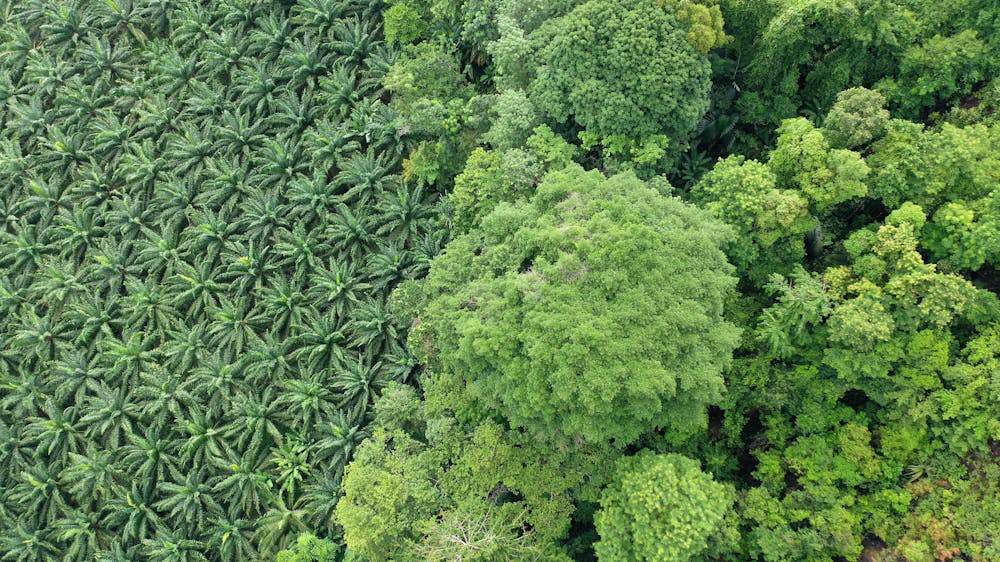
Here, we are starting to get to the real drivers of deforestation. For a long time, there has been too much focus on local drivers of deforestation including local communities. But research shows the leading drivers of deforestation are internationally traded agricultural commodities such as beef, soy, palm oil and timber.
The overall rate of commodity-driven deforestation has not declined since 2001. We can’t tackle forest loss without tackling the trade drivers behind it.
Read more: Deforestation: why COP26 agreement will struggle to reverse global forest loss by 2030
The not-so-good parts
The main deficiency in the text is that not enough attention is paid to the rights of Indigenous peoples and local communities.
It is mentioned the countries will “recognise” and “support” the rights of Indigenous peoples but many of these signatories do not have adequate – or, in some cases, any – legislation that actually recognises those rights.
Subjugation of these rights to national law has been a problem in previous international agreements.
The challenge in many countries is regulatory reform to bring national recognition of land, tenure and other collective rights into line with the internationally recognised rights of Indigenous Peoples.
The track records of some of these signatories bring into question what policy change they will be making back home to ensure this declaration isn’t just for show.
As a global land clearing hotspot, Australia will need to enact rapid policy change to bring its current practices in line with what it has signed on to. Australia remains the only developed nation on the list of global deforestation fronts. This is due to weakening land clearing legislation in New South Wales and Queensland, mostly for expansion of grazing lands.
As a signatory to this new declaration, Australia must strengthen land clearing laws, end native forest logging, and restore degraded ecosystems – just planting new trees will not get us there. Australia has the potential to restore large areas of degraded land. Experts have proposed how this could be done for relatively little investment.
The European Union has signed on too; it has been a global leader on developing trade policies designed to end illegal logging and reduce deforestation. But it recently backpedalled on its commitment to a program of forest governance and law enforcement in timber-producing countries that allow access to the EU timber market.
If they are serious about this declaration, the EU must reaffirm its commitment to partner countries to address illegal logging in traded timber.
In Brazil, the Bolsonaro government has been winding back previous legislation to recognise Indigenous peoples’ land rights. Deforestation rates have soared in the past few years. Perhaps the first action Brazil could take as a signatory to this declaration is to prioritise the landmark case (currently on hold) before Brazil’s Supreme Court to protect Indigenous land rights.
 Brazil, home to the critically important Amazon rainforest, has signed on to the declaration.
Shutterstock
Brazil, home to the critically important Amazon rainforest, has signed on to the declaration.
Shutterstock
Ending deforestation and restoring forests is not enough
This is the latest in a series of similar declarations. A pledge made at COP24 in Katowice, the New York Declaration on Forests, and Sustainable Development Goal 15 (Life on Land) all include similar commitments to end deforestation by 2030 or earlier.
This week’s COP26 declaration ends with the importance of
pursuing efforts to limit it to 1.5℃, noting that the science shows further acceleration of efforts is needed if we are to collectively keep 1.5℃ within reach.
The fact is, we won’t achieve this through ending deforestation and restoring forests. These efforts are critically needed to address biodiversity loss and rural sustainability, but for limiting warming to 1.5℃, fossil fuel emissions need to come down to zero – now.
Authors: Kate Dooley, Research Fellow, Climate & Energy College, The University of Melbourne


















