

how Australia can tackle climate change while restoring nature, culture and communities
- Written by: Rachel Morgain, Senior research fellow, School of Ecosystem and Forest Sciences, The University of Melbourne
Australia’s plan to reach net zero emissions by 2050 relies heavily on unproven technologies to sequester carbon from the atmosphere, among other things.
But we already have solutions based in restoring nature and Country. In fact, nature-based solutions can deliver one third of promised global cuts in emissions.
Our new report, which brings together expertise from across Australia, reveals how we can make this happen using proven approaches including:
Indigenous-led work on Country
keeping our existing forests and woodlands safe from land clearing
restoring ailing ecosystems
simplifying access to carbon markets and
mapping ways of working with nature rather than technology to store emissions.
Here are five big ideas to store emissions while benefiting communities, our economy and our natural and cultural heritage.
1. Seek Indigenous leadership to heal damaged Country
The catastrophic bushfires of the 2019-2020 summer have driven repeated calls to return to Indigenous leadership in managing Country to prevent similar disasters.
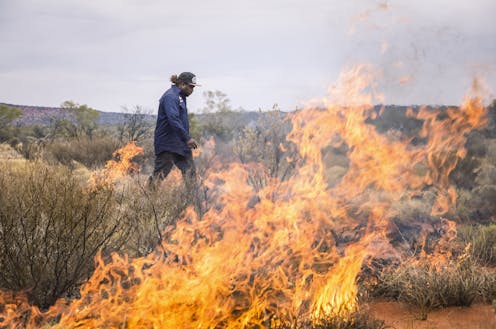
Indigenous-led cool burning practices and land management can make Country safer and keep carbon-storing forests and ecosystems intact. Indigenous management of Country could be integrated in national and state employment, industry and health policy.
This shift will mean a deeper respect for Indigenous leadership and a willingness to learn from Indigenous relationships with Country.
Indigenous ranger programs have been highly successful, helping both Country and its people. Expanding these programs into new places – including cities – would build on their success.
This will require re-framing our relationship and attitudes to Country, removing policy barriers, enabling access to Country, restoring water rights and increasing investment. If we can get this right, it would change the nature of our relationship with Country and provide tangible benefits toward national carbon, social and biodiversity goals.
For instance, the Yumbangku Aboriginal Cultural Heritage and Tourism Development Aboriginal Corporation uses Indigenous management to restore Turraburra, a large drought-affected degraded grazing property in Queensland.
Iningai custodians are reintroducing cultural burning and restoring artesian waterways and sacred rock waterholes as part of measured emissions-reduction projects on Turraburra.
In response, their Country is thriving, and life is returning to the land. These custodians have told us having Country back means healing for the whole community as well as for Country.
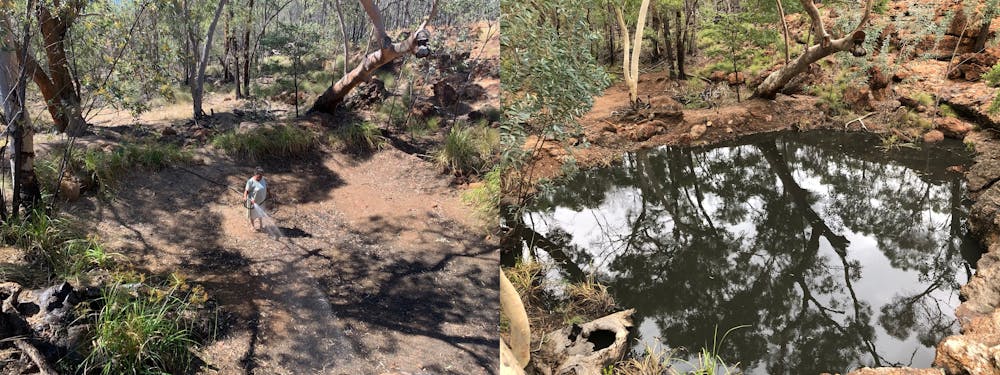 Before (L) and after (R) waterhole restoration in Turraburra, Iningai Country, central Queensland.
Suzanne Thompson, YACHATDAC, Author provided
Before (L) and after (R) waterhole restoration in Turraburra, Iningai Country, central Queensland.
Suzanne Thompson, YACHATDAC, Author provided
2. Look after what we have
The easiest and cheapest way to both reduce and store emissions is by keeping the vegetation we still have. Australia’s plants – from deserts to forests to ocean – play a vital role.
Australia has committed to end deforestation within nine years, but this seems highly optimistic given Australia’s depressing record of land clearing.
Restoration helps pollinator-dependent farming industries and boosts the economy more than cutting down forest.
Read more: Want to beat climate change? Protect our natural forests
In our heating climate, trees keep local areas significantly cooler and wetter. Forested watersheds reduce the cost of providing clean water. And intact vegetation boosts resilience to floods and storms, and stops soil eroding into rivers.
 Vegetation and birds flourish after stock exclusion at a farm dam near Yass, NSW.
Suzannah Macbeth, Sustainable Farms, Author provided
Vegetation and birds flourish after stock exclusion at a farm dam near Yass, NSW.
Suzannah Macbeth, Sustainable Farms, Author provided
To stop clearing, tighter environmental laws are key. The scathing 2021 independent review of Australia’s key environment protection law shows it fails to stop habitat loss and proposes a more strategic approach to sustainable development.
We could also extend stewardship and landcare programs, so they involve more landholders and regional communities. For instance, the Murray Wetland Carbon Storage Project has brought together scientists, landowners, natural resource managers, communities and government to restore wetlands across 41 sites, with replanting, fencing, environmental water, weed and pest control.
3. Map pathways to use nature and culture to get to net zero
We need a clear collective vision for net zero which embeds Country, culture, community and nature as vital methods of cutting and storing emissions. This vision would support action where it’s most needed, and bring policy coherence.
Under this vision, we could work to restore habitat connections across catchments and landscapes. We could embed culture and nature-based emissions reduction in community development, urban infrastructure, adaptation and catchment management strategies.
What does this look like? Consider Sydney’s coastline, where researchers and community members plan to bring a vital seaweed species back to its original range.
This species, crayweed, supports abalone and rock lobster, two of Australia’s most valuable fisheries. The team is working to restore crayweed forests destroyed by urbanisation and sewage.
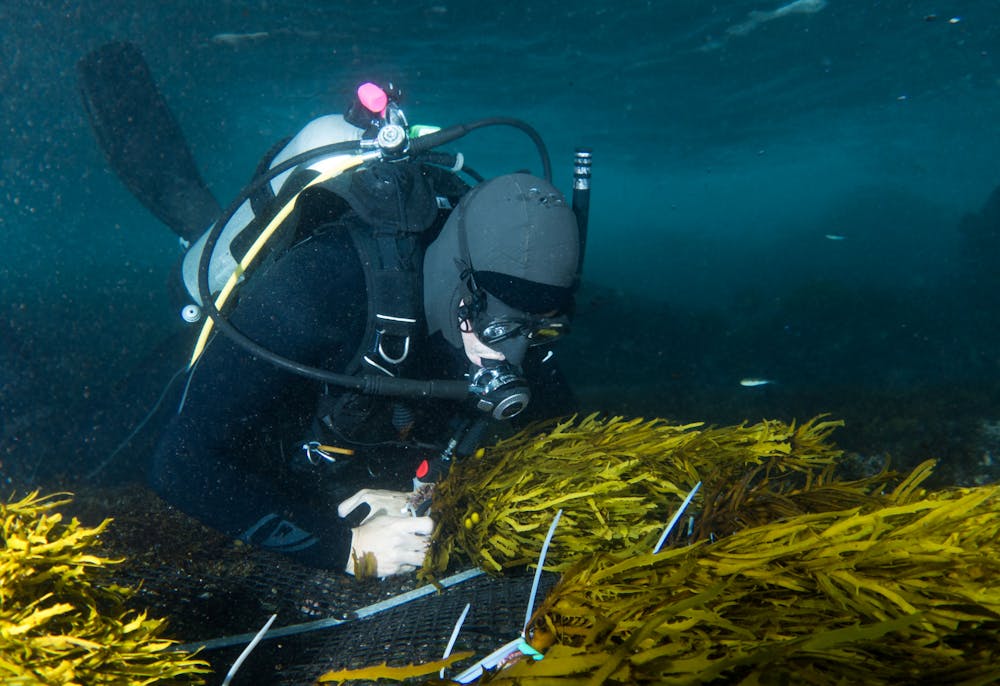 A diver replants crayweed off North Bondi in 2017.
John Turnbull, Flickr, CC BY
A diver replants crayweed off North Bondi in 2017.
John Turnbull, Flickr, CC BY
4. Measure the things we value to demonstrate success
We urgently need better accountability to ensure emissions reduction projects and programs deliver the benefits they claim. Robust monitoring also helps create premium carbon products.
Accountability must be culturally appropriate and measure the most important benefits for each project. Indigenous-led work demonstrates that cultural, social and biodiversity benefits must be central.
Requiring non-Indigenous projects to report robustly on cultural, social and biodiversity benefits would ensure projects deliver for Indigenous people, the wider community, and the ecosystems on which we all depend.
Savanna burning in Northern Australia has been a strong success story for renewing culture and Country. Indigenous-led approaches to assessing benefits have successfully attracted funding to sequester carbon through both government and voluntary markets.
Indigenous groups are now leading conversations on extending this success to other places and ecosystems, such as through an Indigenous-led southern forest fire credits scheme under development.
5. Simplify access to carbon markets and incentive schemes
At present, the methods we use to produce high-quality carbon credits through government emissions reduction schemes are often costly, complex and time-consuming. In short, they require specialist expertise to navigate.
These challenges act as a barrier, particularly for small organisations, and are inequitable for less resourced communities.
If we reduce the administrative burden, more small projects could embark on emission reduction. That means offering accessible methods of assessing projects, streamlining permits, and investing in Indigenous and community-based agencies to provide support.
New incentive schemes to reduce emissions in cities could also be a game-changer, like green roof retrofitting or the City of Melbourne’s Urban Forest Fund which enables property owners to partner with the city to deliver vertical greening, convert carparks into gardens, and build food-producing rooftop parks.
 Salt marsh under restoration (L) and pristine (R) in Western Port Bay, Victoria.
Dr Melissa Wartman, Blue Carbon Lab, Author provided
Salt marsh under restoration (L) and pristine (R) in Western Port Bay, Victoria.
Dr Melissa Wartman, Blue Carbon Lab, Author provided
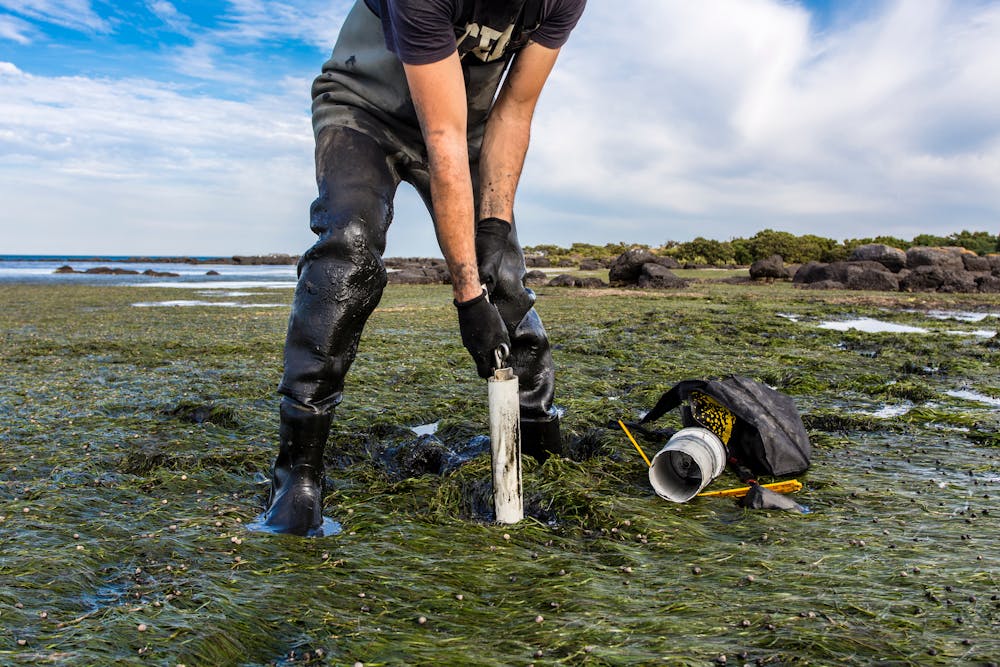
If we draw together methods of producing carbon credits across catchments, land and seascapes, we could provide pathways into a market likely to boom. In Victoria, a team of researchers, government, industry, landholders and Traditional Owners at #VicWetlandRehab are restoring degraded coastal wetlands by fencing and weeding.
To date, this program has restored 130 hectares of saltmarsh in Western Port Bay and Gippsland, home to some of Victoria’s most endangered birds, frogs and plants. The team is now planning to work with landholders and Traditional Owners to map priority areas for restoration along the entire Victorian coastline.
Authors: Rachel Morgain, Senior research fellow, School of Ecosystem and Forest Sciences, The University of Melbourne


















