

Travel bans aren't the answer to stopping new COVID variant Omicron
- Written by: Anthony Zwi, Professor of Global Health and Development, UNSW
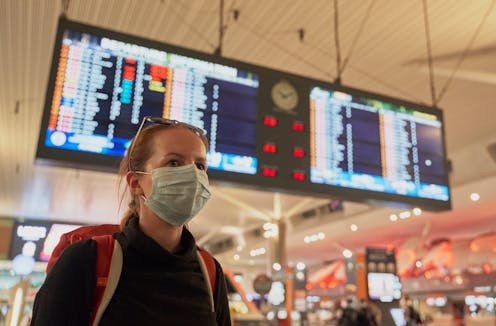
There is global concern and widespread alarm at the discovery of SARS-CoV-2 variant B.1.1.529, which the World Health Organization (WHO) has called Omicron.
The WHO classified Omicron as a “variant of concern” because it has a wide range of mutations. This suggests vaccines and treatments could be less effective.
Although early days, Omicron appears to be able to reinfect people more easily than other strains.
Australia has followed other countries and regions – including the United States, Canada, United Kingdom and the European Union – and banned travellers from nine southern African countries.
Read more: Omicron is the new COVID kid on the block: five steps to avoid, ten to take immediately
Australians seeking to return home from southern Africa will still be able to do so. But they will enter hotel quarantine and be tested. Those who have returned from the nine countries – South Africa, Namibia, Zimbabwe, Botswana, Lesotho, Eswatini, the Seychelles, Malawi and Mozambique – in the past 14 days will have to isolate.
But Omicron has already been detected in other regions, including the UK, Germany, Israel, Hong Kong and Belgium. So while a travel ban on southern African countries may slow the spread and buy limited time, it’s unlikely to stop it.
As the Australian government and others act to protect their own citizens, this should be accompanied by additional resources to support countries in southern Africa and elsewhere that take prompt action.
When was Omicron detected?
The variant was identified on November 22 in South Africa, from a sample collected from a patient on November 9.
South African virologists took prompt action, conferred with colleagues through the Network of Genomic Surveillance in South Africa, liaised with government, and notified the World Health Organization on November 24.
This is in keeping with the International Health Regulations that guide how countries should respond.
The behaviour of this new variant is still unclear. Some have claimed the rate of growth of Omicron infections, which reflects its transmissibility, may be even higher than those of the Delta variant. This “growth advantage” is yet to be proven but is concerning.
‘Kneejerk’ response vs WHO recommendations
African scientists and politicians have been disappointed in what they see as a “kneejerk” response from countries imposing travel bans. They argue the bans will have significant negative effects for the South African economy, which traditionally welcomes global tourists over the summer year-end period.
They note it is still unclear whether the new variant originated in South Africa, even if it was first identified there. As Omicron has already been detected in several other countries, it may already be circulating in regions not included in the travel bans.
Travel bans on countries detecting new variants, and the subsequent economic costs, may also act as a disincentive for countries to reveal variants of concern in future.
The WHO does not generally recommend flight bans or other forms of travel embargoes. Instead, it argues interventions of proven value should be prioritised: vaccination, hand hygiene, physical distancing, well-fitted masks, and good ventilation.
In response to variants of concern, the WHO calls on all countries to enhance surveillance and sequencing, report initial cases or clusters, and undertake investigations to improve understanding of the variant’s behaviour.
Omicron must be taken seriously. Its features are worrying, but there are large gaps in our current knowledge. While further analyses are undertaken, the variant should be controlled with testing, tracing, isolation, applying known public health measures, and ongoing surveillance.
What can wealthier countries do to help?
Wealthy countries such as Australia should support African nations and others to share early alerts of potentially serious communicable disease threats, and help mitigate these threats.
As the Independent Panel for Pandemic Preparedness and Response noted in May:
[…] public health actors only see downsides from drawing attention to an outbreak that has the potential to spread.
The panel recommended creating incentives to reward early response action. This could include support to:
- establish research and educational partnerships
- strengthen health systems and communicable disease surveillance
- greatly improve vaccine availability, distribution, and equity
- consider financial compensation, through some form of solidarity fund against pandemic risk.
Boosting vaccine coverage is key
Vaccines remain the mainstay of protection against the most severe effects of COVID-19.
It’s unclear how effective vaccines will be against Omicron, but some degree of protection is presumed likely. Pfizer has also indicated it could develop an effective vaccine against a new variant such as Omicron within 100 days or so.
COVID’s persistence is partly attributable to patchy immunisation coverage across many parts of the world, notably those least developed. South Africa itself is better off than most countries on the continent, yet only 24% of the adult population are currently fully vaccinated. For the whole of Africa, this drops to only 7.2%.
Greater global support is urgently needed to boost these vaccination rates.
African institutions and leaders, supported by global health and vaccine experts, have argued for mRNA vaccine manufacturing facilities on the African continent. These would prioritise regional populations, overcome supply-chain problems, and respond in real time to emerging disease threats.
Yet developing nations face significant barriers to obtaining intellectual property around COVID-19 vaccine development and production.
While there is still much to learn about the behaviour and impact of Omicron, the global community must demonstrate and commit real support to countries that do the right thing by promptly and transparently sharing information.
Authors: Anthony Zwi, Professor of Global Health and Development, UNSW


















