

Modern Australian
The Times

We asked hundreds of Aussies whether they'd eat insects, and most said yes – so what's holding people back?

  • Written by Jessica Danaher, Lecturer in Nutrition, RMIT University
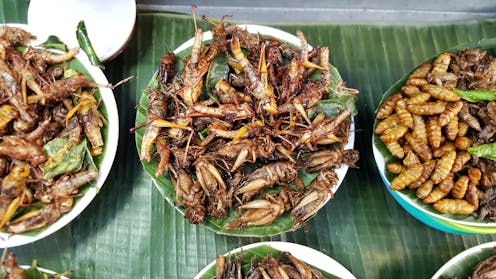
We asked hundreds of Aussies whether they'd eat insects, and most said yes – so what's holding people back?

Insects are sustainable, nutritious and delicious. They’re eaten by more than two billion people worldwide, mostly in the tropics, and have been a staple in Indigenous Australians’ diets for tens of thousands of years.

Yet eating insects isn’t mainstream in Australia. Why?

We surveyed 601 Australians on their experience with, and attitude towards, edible insects. Our findings offer insight into which factors might convince people to add edible insects to their diet.

Importantly, we found Australians are not deterred by the “ick” factor of eating insects, and would be willing to try them as a protein alternative if not for a “lack of opportunity”.

Of the adults we surveyed, 56.2% reported they would be “likely” to eat insects in the future (a much more promising result than that from a recent European Union survey) – and this figure increased to 82.2% among those who had already tried them.

Missed opportunities

Although insects don’t commonly feature on Aussie menus, there are 60 insect species which have been recorded as a traditional food source for Indigenous Australians, including witjuti grubs, bogong moths and honey pot ants.

The ancient Romans and Greeks ate insects, too. It’s thought Westernised countries may have lost their taste for edible insects during the shift from the hunter-gatherer lifestyle to agriculture and urbanisation.

Insects went from fulfilling the role of a staple food to being pests that destroy crops, and this may have prompted a shift in our attitudes towards eating them.

Research conducted with older Australians has revealed a tendency to view the practise as disgusting and incompatible with their personal beliefs, raising concern there may be reluctance for edible insects to return to being a normalised and viable protein alternative.
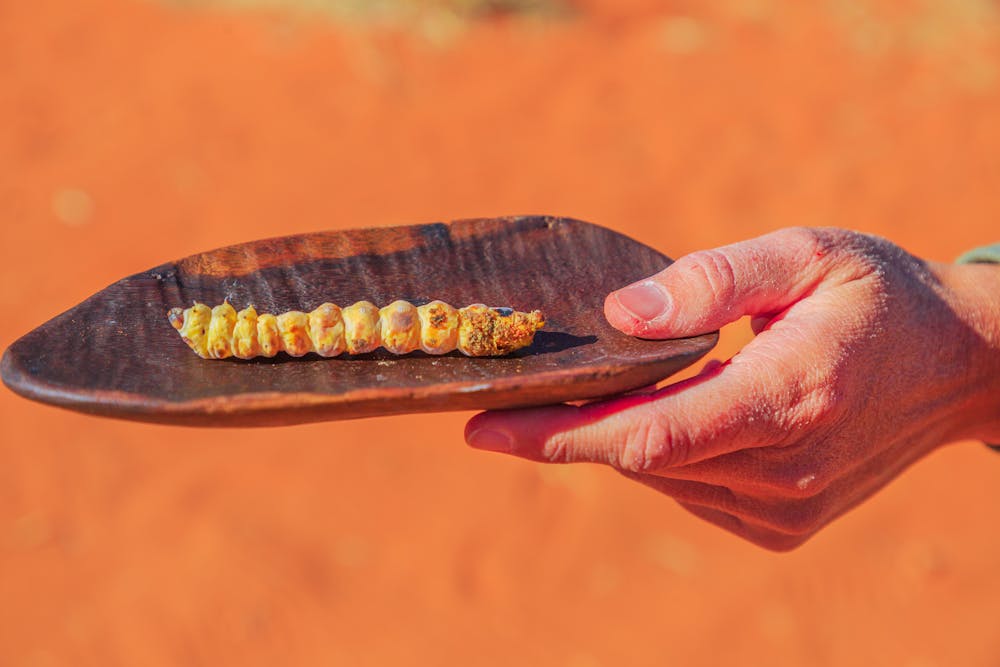
The edible witjuti grub is the larva of the large cossid wood moth (Endoxyla leucomochla), native to Australia. Shutterstock

As it turns out, most people aren’t that squeamish

But our research (mainly with participants aged 25 to 44 years) shows Aussies have begun to adopt a more positive outlook towards insect-based foods.

Of those surveyed, 35% had previously tried insects, most commonly crickets and grasshoppers. And people who had already tried them were also more open to eating them again, which suggests a “taste” for bugs can be developed. Of those who hadn’t tried insects, only 16% reported “disgust” was holding them back.

This paradigm shift may be linked to people expressing more concern for the environmental cost of their food, and a greater interest in adopting healthy dietary habits.

Participants also reported they would be willing to eat insect-based products if it was easier to find out how such foods are beneficial, both from a nutrition and sustainability standpoint.

They said endorsements from governing bodies, as well as more prominence of edible insects in mainstream media, would boost their interest in eating insects – as well as “try before you buy” promotions.

For those willing to give insects a go, insect-based flours (such as bread and biscuits), chocolate-coated ants and crickets were the top choices. Not all species were received the same way, however, with moths and fly larvae not generating such a buzz.

Still, the shift towards a willingness to try insects is promising for Australia’s growing edible insect market.

Embracing future foods

With the global population still growing, we will need alternative sources of protein to sustainably meet future food production requirements.

The demand for protein is on the rise and, according to the UN Food and Agriculture Organisation, will have to increase by 76% by 2050. But production is restricted due to Earth’s finite resources.

Edible insects have potential as an important future food, offering a nutritious protein source that’s more sustainable to produce – using less land, energy and water.

Authors: Jessica Danaher, Lecturer in Nutrition, RMIT University

Read more https://theconversation.com/we-asked-hundreds-of-aussies-whether-theyd-eat-insects-and-most-said-yes-so-whats-holding-people-back-173595

Simple Ways to Make a Commercial Property More Appealing to Buyers

Selling or leasing a commercial property isn’t just about listing the square metres, taking a few photos and waiting for the right person to appea...

What Café Owners Should Know Before Upgrading Their Display Setup

A café display fridge does a lot more than keep cakes cold and sandwiches fresh. It quietly shapes the way customers browse, the way staff move beh...

Creating a Backyard That Feels Comfortable All Year Round

A great backyard doesn’t need to be huge, expensive or perfectly styled. Most of the time, the spaces people actually use are the ones that feel e...

How Homeowners Can Make Smarter Energy Decisions Before Upgrading

Energy upgrades used to feel like something you only looked into after a power bill gave you a nasty surprise. These days, though, more homeowners a...

Why Retail CX Breaks During Peak Sales Events and How to Prevent It

Retail customer experience has become one of the most important drivers of revenue growth, especially during high-intensity sales periods. However, ev...

15 South Indian Dishes Everyone Should Try

If your only experience of "Indian food" is butter chicken and garlic naan, South Indian cuisine is going to feel like discovering an entirely new c...

What Every Homeowner Should Know About Roof and Drainage Maintenance

A home's roof and drainage system work together every day to protect the property from water damage. While many homeowners focus on visible areas such...

From Plans to Priced Quote: The Estimating Workflow Most Builders Skip

For a small one-off job, an experienced builder can size up the materials in their head. The problem is that most jobs are not small one-off jobs, and...

Organisational Experts Share Their Tips for Achieving a Clutter-Free Kitchen

They say the kitchen is the heart of a house which means a clutter-free kitchen not only makes your home in general look nicer, it also makes cookin...

10 Creative Ways AI Image Extenders Are Transforming Digital Content Creation in 2026

Introduction Artificial intelligence continues to reshape the digital landscape, and one of the most exciting innovations in 2026 is the rise of AI i...

What to Do When You're Arrested in Victoria

Most people have thought about this in the abstract. A knock at the door, a hand on the shoulder, a car pulled over on the Hume. In the abstract, th...

Common Financial Disputes During Separation

Separation hits on many levels, not just emotionally. When a partnership ends, untangling the financial side — assets, debts, and everything built t...

Why Posting More Content is Killing Your Brand

More content. More often. More platforms.Most brands have been running this playbook for three years. Most brands have nothing to show for it.Not be...

Garden Clean-Up vs. Regular Maintenance: Which Do You Really Need?

Most people ring a gardener and ask for a "tidy up." What they mean by that, and what the garden actually needs, are often two completely different ...

Solar Panel Maintenance Tips for Melbourne Homes

Three years in and the panels are still on the roof. The inverter is still blinking. The electricity bills are still lower than they used to be, rou...

Cost Effective Kitchen Renovations – From the Ground Up

Even in times of uncertainty, it seems renovations continue to be on the to-do list for many Australian property owners. As a result, demand on materi...

Why Bathroom Product Selection Matters More Than Most Homeowners Realise

Most homeowners think wrong when it comes to a bathroom renovation. They think hard about the layout. Spend hours choosing tiles. Agonise over pain...

How An Asbestos Removalist Ensures Safe And Compliant Property Environments in Melbourne

Maintaining a safe environment within residential and commercial properties requires careful management of hazardous materials, which is why engaging ...
















