

what Indonesia can learn from other master-planned cities' mistakes
- Written by Dorina Pojani, Senior Lecturer in Urban Planning, The University of Queensland
In 1900, there were only about 40 capital cities in the world, and now there are nearly 200. About 40% of all countries have also considered relocating their capital as they’ve grown too big - and at least five new capitals are now being planned.
Indonesia just announced the name of its planned new capital, Nusantara, to be built on Borneo island, about 1,300 kilometres away from the current capital, Jakarta.
This move is expected to cost 466 trillion rupiah (A$32.7 billion). About 1.5 million civil servants are expected to relocate to relieve some of the pressure on Jakarta, reducing air pollution, flood risks and the rapid sinking of the city.
Read more: Does Indonesia really need to move its capital?
Trophy cities: A feminist perspective on new capitals
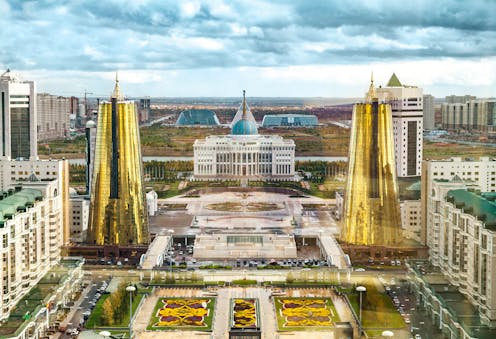
I have been researching new, master-planned capitals for six years and recently published a new book, Trophy Cities. This book examines seven capitals from a feminist perspective – Canberra (Australia), Brasilia (Brazil), Abuja (Nigeria), New Delhi (India), Nur-Sultan (Kazakhstan), Naypyidaw (Myanmar) and Sejong (South Korea).
Overall, I have been disappointed to see most countries have squandered a unique opportunity to create a “perfect” city on a “clean slate”.
The new capitals created since 1900 have been, for the most part, great planning disasters. They are dreary, overpowering, underserviced, wasteful and unaffordable. In short, they are extremely expensive mistakes.
So, how can Indonesia avoid the pitfalls of its peers? Here are some key lessons from my research.
Read more: Sexism and the city: how urban planning has failed women
Mistake #1: Creating a city for architecture books
Nearly all new capital city designers – recognised as grand masters - have been men. Imported from far afield, they have projected their own identities onto the capitals they’ve built, promoting design solutions alien to the local context.
Typically, grand spatial schemes dominate new capitals. Expansive public spaces and boulevards, pinned by statues, fountains, obelisks and the like, are common. This monumental style draws from a patriarchal model of European urbanism, which has been evolving since the Renaissance.
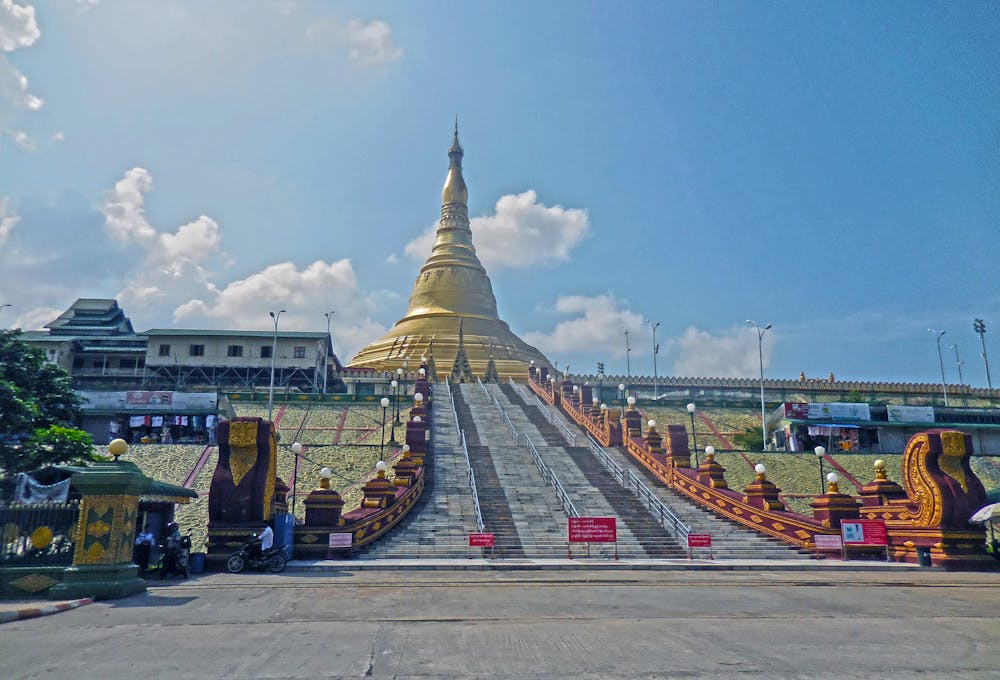
At the same time, planners have sought to “modernise” these new capitals, but this has merely translated into standardised, cookie-cutter housing – such as Naypyidaw’s colour-coded towers for Myanmar’s bureaucrats.
A better approach is a co-design process that involves local people from all classes and encompasses different perspectives. Planning controls and zoning restrictions should not be so strict people are forced to live in informal settlements on a city’s periphery.
Mistake #2: Dominating nature
Another common theme in new capital cities is the idea of taming and even “bettering” nature. New capitals have been built, sometimes against reason, on inhospitable or fragile lands and in harsh climates: marshes, floodplains, jungles, sand dunes and arid steppes.
For example, hectares of savanna vegetation were cleared in central Brazil to quickly build Brasilia. Once the capital was built, tropical plants were introduced from Rio.
Nature has been treated as an inferior entity, which, like women, can be dominated. The colonisation of nature is seen as a triumph of culture and civilisation.
Nature should instead be the basis for design. Planners should consider not only the well-being of residents, but also of the vast diversity of fauna and flora. Nusantara’s planners are obviously ignoring this by building a new capital in the middle of virgin rainforest that is home to endangered species.
Mistake #3: Building a vanity project
The design of new capitals has often reflected the grandiose visions of egotistic leaders and bureaucrats. By building a new capital, they have pursued self-aggrandisement, glorification and immortalisation.
A clear illustration of this is Nur-Sultan, which was named after longtime leader Nursultan Nazarbayev. A monument contains a bronze handprint of Nazarbayev’s, which visitors are invited to touch to be granted a wish.
Some capitals have also been relocated to appease leaders’ paranoia and fulfil their militaristic ambitions.
These approaches are risky as well as senseless. If a new city hinges on a single political patron, it’s merely a pointless vanity project.
Public participation and buy-in are critical to ensure the continuity needed to complete such grand projects. Planning should be guided by the needs and wants of the residents rather than politicians’ desires to wield power and majesty.
Mistake #4: Elevating one ethnic or religious group
In multi-ethnic countries, moving a capital city can kindle internal conflicts, ethnic rivalries and political power plays. In some cases, Indigenous peoples have been displaced, with disastrous consequences.
Some new capitals are founded on myths which serve to legitimise and make sacred places that lack history. In some multi-cultural countries, it is unclear whose myths and traditions represent “the nation”.
In Indonesia, some have already questioned the name of the new capital: Nusantara. The name has a Javanese-centric meaning, which critics say defeats the purpose of creating a capital for all Indonesians outside the island of Java.
Similarly, if the iconography of one religion dominates a new capital in a multi-faith nation, this can also sow discord.
Planners of a new capital should critically evaluate proposed designs (and accompanying narratives) to ensure all ethnic and religious groups are included and treated with respect.
Mistake #5: Failing to prioritise gender equality
Even when planners have made efforts to create urban spaces for families, the fundamental assumptions around gender roles and social hierarchies in many new capitals have not been challenged.
This approach must change. The women who populate a new capital need affordable housing, accessible transport, safety and security provisions and free childcare centres within reasonable distances of each other – not imperial grandeur.
Women also need socioeconomic empowerment in new cities. This can be achieved through living wages, affordable health care and education and greater representation in government.
A capital city master plan should be subject to gender impact assessments and gender mainstreaming, that is integrating a gender equality perspective at all stages of the project.
Looking beyond new capitals
We need radical solutions to transform not only urban spaces, but also the greater patriarchal state, society and economy in many countries. The cities of the future should be gender-egalitarian, classless, peaceful, ecological and beautiful, rather than based on greed, hierarchy, imperial visions and competition.
Authors: Dorina Pojani, Senior Lecturer in Urban Planning, The University of Queensland

















