

how we are recreating Renaissance beauty recipes in the modern chemistry lab
- Written by Erin Griffey, Associate Professor, Art History, University of Auckland
In this new series, Remaking History, academics explain the ways they are recreating historical practices, and how this impacts their research today.
The desire to appear youthful and beautiful has provided impetus for extraordinary chemical experimentation with cosmetics for millennia. Historical cosmetic recipes list an array of plant, animal and mineral ingredients from roses and rosemary to donkey milk and calves’ hooves, gold and sulphur.
The beauty industry developed dramatically in Renaissance Europe from around 1500. Recipes were widely published and recorded in manuscripts. And there was ready availability of a range of ingredients and pre-made formulas, some of them marketed as “secret”.
Recipes claimed to treat a whole arsenal of beauty concerns, including dying hair, removing hair, whitening teeth, clearing blemishes and removing wrinkles. While women were the primary audience for such beautifying recipes, there were also recipes for men to cure baldness and facilitate beard growth.
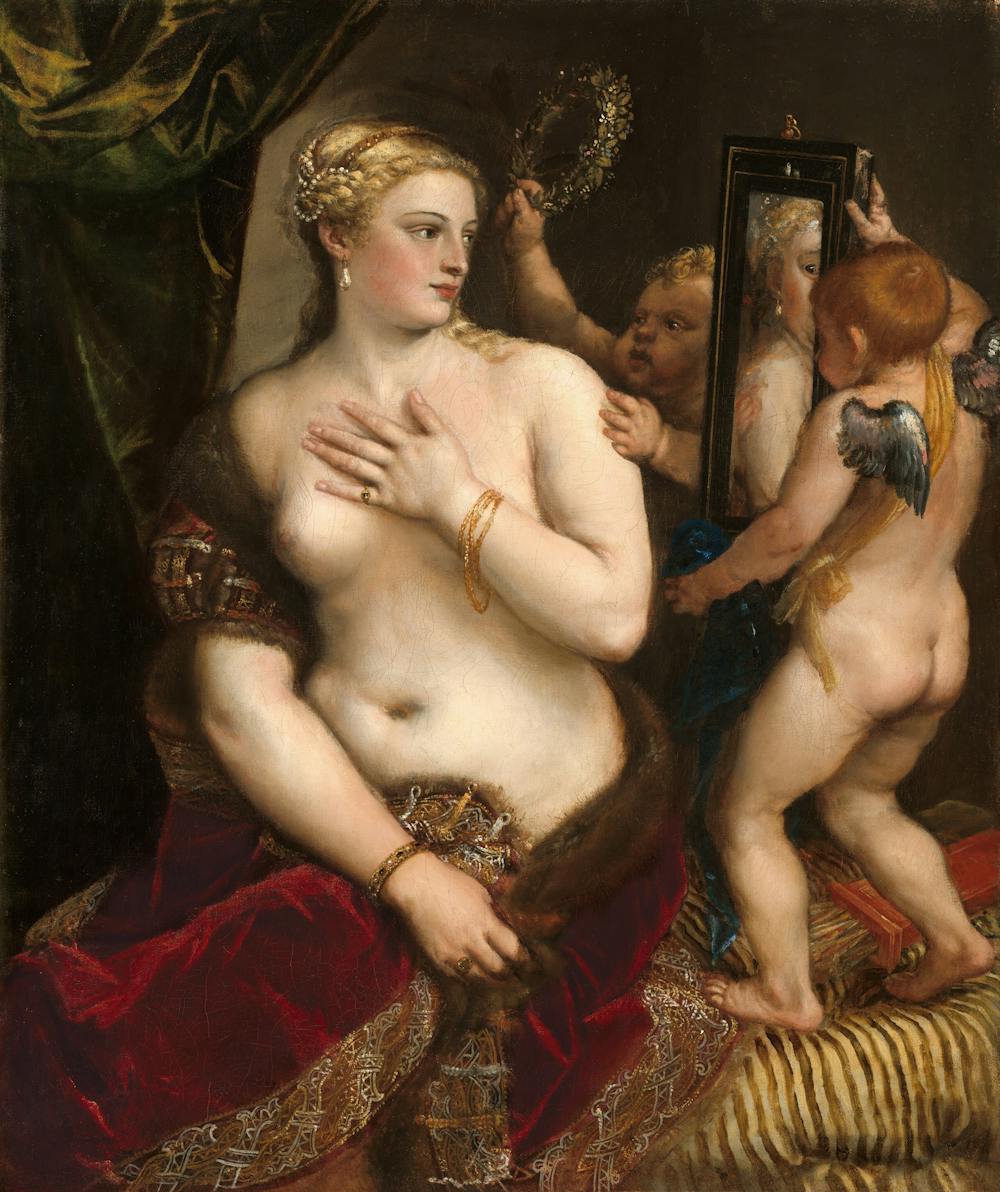
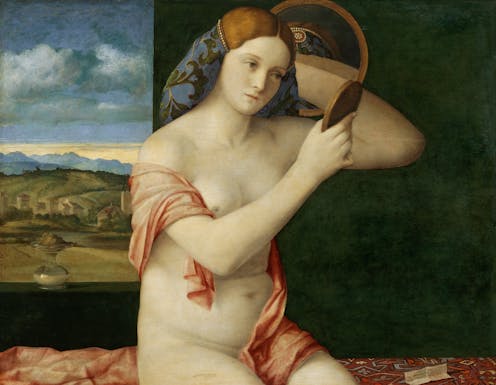
Renaissance artworks provided templates of ideal beauty – above all associated with women and the classical figure of Venus. Recipes offered the possibility the female user might also appear as beautiful as her.
(It is not a coincidence Gillette makes a Venus razor and shaving products – Venus was typically depicted with soft, smooth skin with no bodily hair.)
It is remarkable just how closely Renaissance beauty ideals – and aggressive marketing strategies promising cures – parallel those of today. The principles for treating such concerns and ingredients used in historical beauty recipes are the same as they were many hundreds of years ago. And yet other ingredients seem to have been forgotten or abandoned over time.
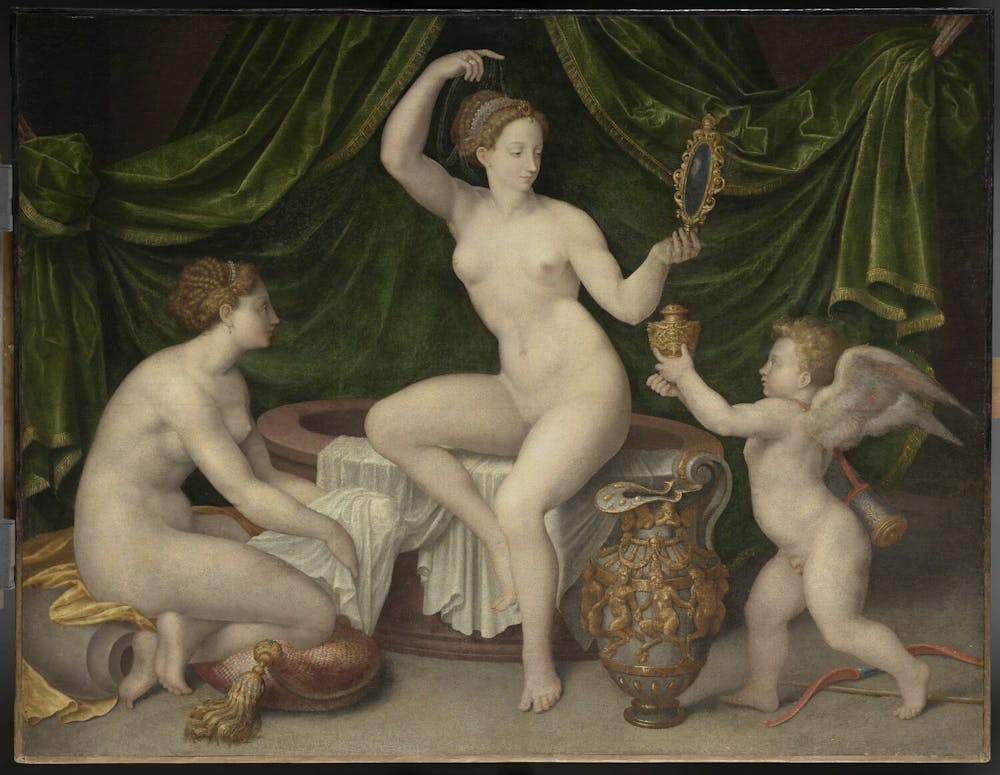 Vénus à sa toilette, c.1525 - 1550.
Musée du Louvre
Vénus à sa toilette, c.1525 - 1550.
Musée du Louvre
One would expect, then, a flurry of scientific research into historical cosmetics. And yet despite some scholarly interest in historical cosmetics, there has been a dearth of scientific, academically-rigorous, lab-based analysis.
Make it beautiful
In the Beautiful Chemistry Project, we recreate and analyse popular beautifying recipes recorded in Renaissance Europe: the ingredients, the working processes and the final products.
The project grew out of a study of cosmetic recipes recorded between 1500-1700 across Europe in a range of sources: medical and surgical texts, herbals, popular “books of secrets”, cosmetic recipe collections and domestic manuscripts of family recipes.
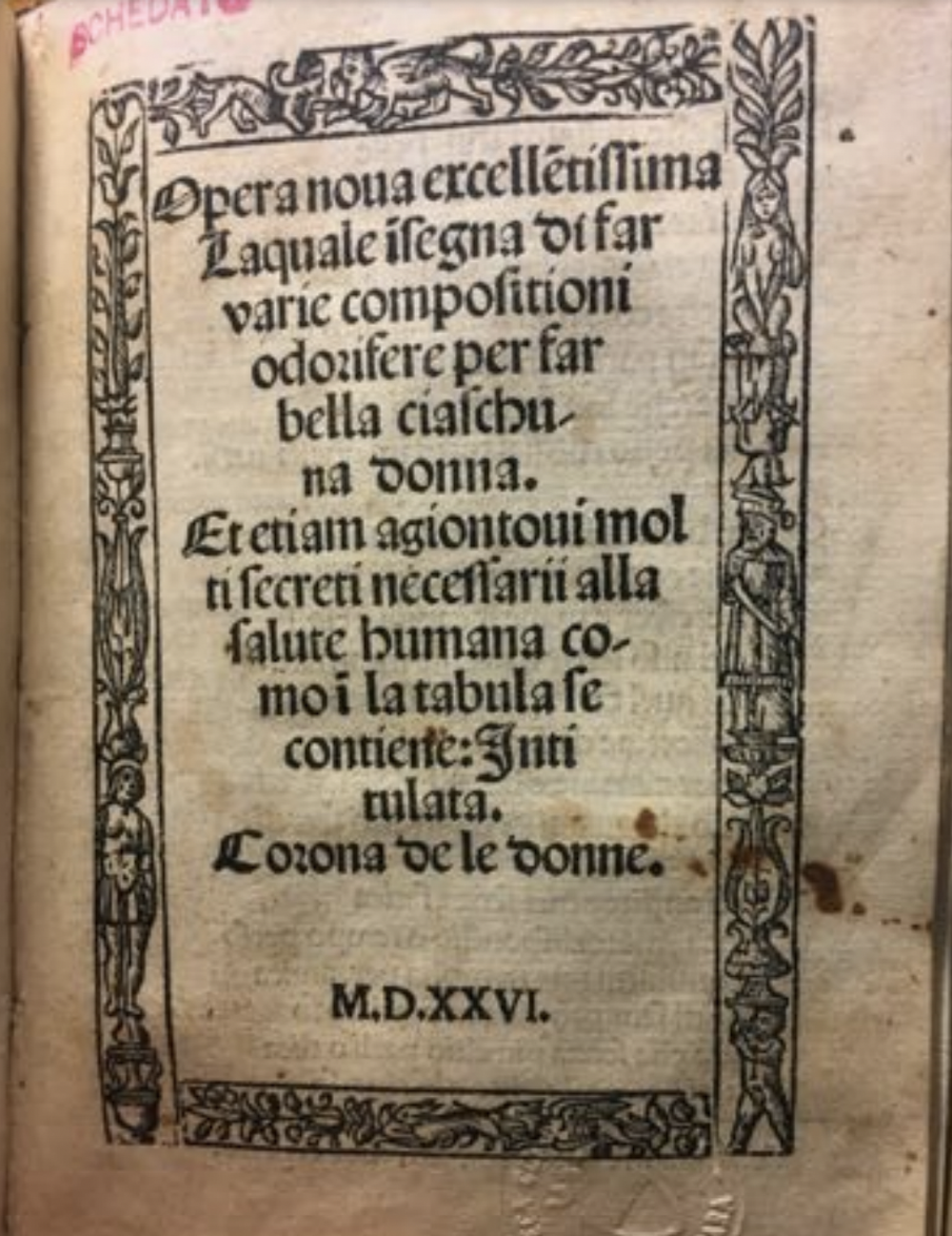 A book containing cosmetic recipes, published in 1526.
Author provided
A book containing cosmetic recipes, published in 1526.
Author provided
There is a colossal amount of material so our study does not aim to be comprehensive. Instead, we have focused on recipes for the skin that promised to “make it beautiful” (a common promise in recipes of the time) as well as those claiming to remove wrinkles and rejuvenate the skin.
While the recipes we study were recorded in European sources in Latin, Italian, French and English, many of the recipes were based on earlier sources. And so ancient Egyptian papyri, Roman, Byzantine and medieval sources have also been consulted to establish patterns and trace changes in the recipes through the ages.
We take an integrated approach that joins history and science, the library and the lab, recipe texts and recipe formulas, and teams up senior researchers and students. First year chemistry students and graduate students work together with postdoctoral researchers with expertise in the analytical, synthetic and physical fields of chemistry.
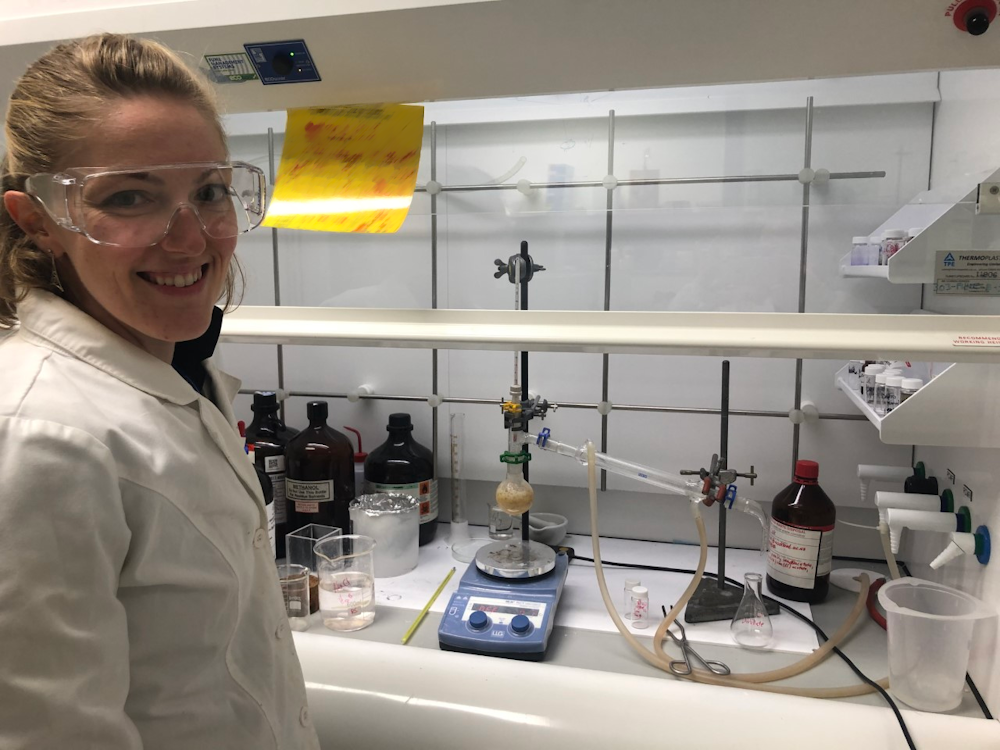 Chemist Ruth Cink working on the Beautiful Chemistry project.
Author provided
Chemist Ruth Cink working on the Beautiful Chemistry project.
Author provided
The approach involves identifying commonly recorded Renaissance beauty recipes and having the enthusiastic students – alongside and guided by the research scientists – recreate them in the lab and/or at home, carefully documenting every step of their thinking, working process and results.
The recreated formulas are then chemically analysed using laboratory analytical techniques in the School of Chemical Sciences, and the effect of these products on skin quality is tested in the Photon Factory at the university.
Making a recipe
Renaissance cosmetic recipes are often frustratingly short and vague. The nature of the ingredients, the measurements and even the processes are rarely self-evident.
Take, for example, a very popular recipe we have worked on, which sounds straightforward: rosemary flowers boiled in white wine. This version of the recipe is recorded in the runaway bestselling book of secrets by the pseudonymous “Alessio Piemontese”, published around the same time Titian painted his dazzling Venus at Her Mirror.
The recipe is entitled, A far bella faccia, or, to make a beautiful face.
 The recipe ‘to make a beautiful face’
De’ Secreti del reverendo donno Alessio Piemontese, Venice, 1555
The recipe ‘to make a beautiful face’
De’ Secreti del reverendo donno Alessio Piemontese, Venice, 1555
Take rosemary flowers and boil them with white wine and with this wash the face very well, and also drink it, it will make your face very beautiful, and the breath good.
For a cultural historian, the recipe leads to questions about the textual tradition of the recipe, the perceived properties of the ingredients, the role of smell, the power of beauty.
For a scientist, there are so many variables: quantities, boiling procedure and length of time, type of white wine and equipment used. Note, too, its beautifying powers are not solely accomplished through application on the skin but through drinking it and making your breath sweet.
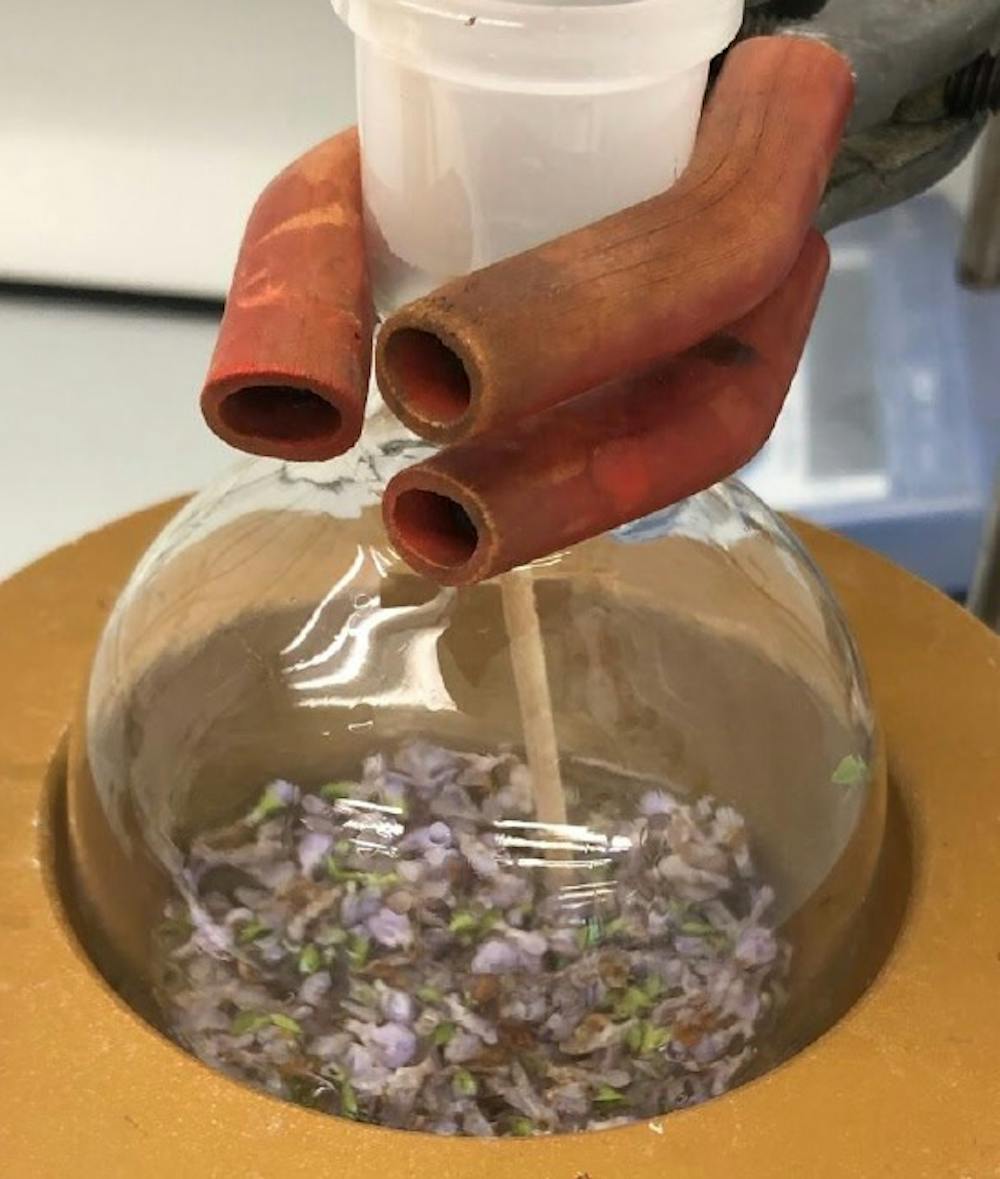 Boiling the rosemary flowers with white wine.
Author provided
Boiling the rosemary flowers with white wine.
Author provided
Variations of the Renaissance formula included steeping and boiling rosemary flowers and/or leaves in white wine. When we recreated these steps and analysed the resulting mixtures, we found both methods extracted a wide variety of essential oils, amino acids and sugars.
These included many chemicals, such as camphor, eucalyptol and linalool you could find in modern skincare products.
Today, we know these substances can have antibacterial, moisture-binding, collagen-growth stimulating, anti-inflammatory, anti-oxidant, brightening and soothing effects.
Renaissance experimenters mixed concoctions of potent, often seemingly unusual ingredients together in their pursuit of beauty. By recreating their experiments, we can see how much modern beauty standards and practices can be traced back many hundreds of years.
Authors: Erin Griffey, Associate Professor, Art History, University of Auckland

















