

Why they're our greatest allies against floods – but also tragic victims
- Written by: Gregory Moore, Doctor of Botany, The University of Melbourne
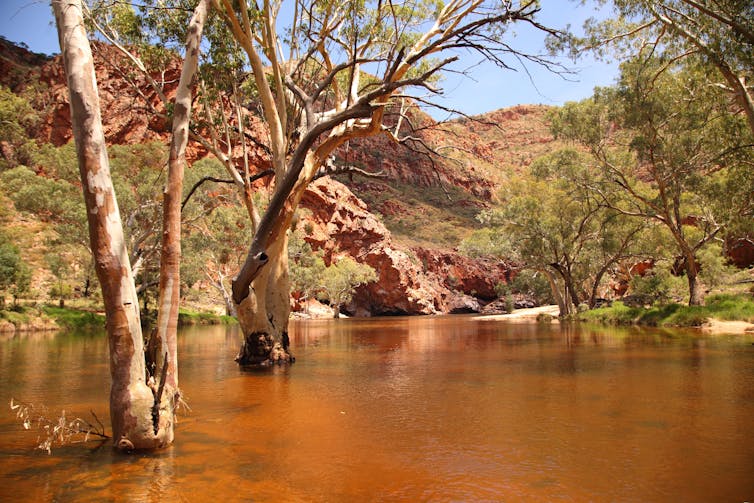
As the floodwaters recede, mountains of debris are left behind – sheets of plaster, loose clothes, mattresses and, of course, trees. Some debris I’ve seen in floods includes massive tree trunks weighing 5 tonnes of more, bobbing along like corks in the rapidly flowing waters.
The trees that line our creeks, rivers and floodplains are on the front line when major flooding occurs, and bear the brunt of the flood’s mighty forces. But while they are often victims of floods, trees are also our greatest allies.
From stabilising river banks with the strong grip of their roots to changing the course of floodwater, here’s how trees influence floods – and how floods can kill them.
How trees influence floods
The large and fine roots of trees, such as river red gums, bind and consolidate soil, stabilising river banks and reducing erosion. This reduces the amount of sediment entering waterways, and prevents waters down-stream becoming muddied and clogged with silt.
Large trees can also protect smaller plants such as shrubs by acting as a physical barrier, shielding other vegetation from the forceful momentum of floodwater. This is because the presence of trees slows the floodwaters’ speed, as their trunks, roots and branches block and deflect water, and change the direction of flow.
However, slowing floodwaters can also cause the flood front to widen, inundating areas further away from the usual river course. This is a major consideration when creek and river banks are being revegetated – we want to capture the benefits trees provide, but also ensure that if floodwaters slow down there’s no greater risk to property or life.
Another different but related role is that trees can prevent landslides or landslips. Indeed, landslides have occurred across flood-affected regions such as Illawarra and Kangaroo Valley in NSW, and continue to threaten people and homes.
On slopes, tree root systems consolidate soils and help prevent the movement of super saturated soil, which can flow like a liquid down hill. So it can be a problem when people remove trees from around their homes or along roads as a part of bushfire prevention programs, without thinking that cleared sites and roadside verges might be prone to landslides.
Sometimes a compromise might be a better management option. Rather than removing all trees on a slope or verge, leave some of those with large roots systems and plant trees that might slow fires or resist them. Also consider planting species that resprout after fires such as tree ferns, so their roots systems aren’t lost and the soil doesn’t erode.
Trees are also flood victims
Some trees won’t survive major floods as the water’s brute force undermines their root systems, bringing them down.
In other cases, the debris, including whole trees and large branches, acts as a battering ram on large trunks. Most big trees will survive this, but some will be repeatedly battered until the trunk, major branches or root systems fail.
These then become part of the debris that damages infrastructure, such as bridges and other trees downstream.
For most trees, floods are a fleeting event that lasts a few days or perhaps a couple of weeks. Many tree species cope well with this situation, but what happens to those that might be inundated for weeks or even months in the wake of floods?
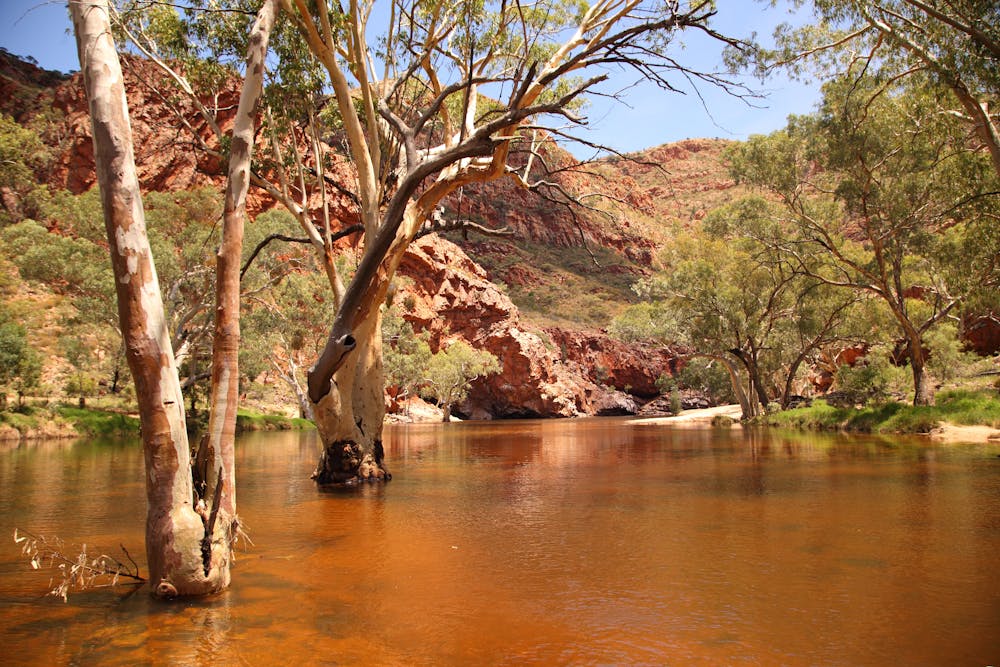
Soils can remain very wet for a long time after flooding. Some trees, such as river red gum (Eucalyptus camaldulensis) and swamp gum (Eucalyptus ovata), can tolerate inundation for many weeks. We’ve seen populations of river red gum, for example, cope with up to nine months of inundation.
Others may not do so well if they remain under water for long periods of time. This includes older and stressed trees, some fruit trees like citrus and stone fruit species, or some conifers.
Read more: 'The sad reality is many don't survive': how floods affect wildlife, and how you can help them
Water-logged soils have low levels of oxygen, which means roots struggle to maintain their normal metabolism, health and function. This also affects the fungi associated with healthy roots. The longer low oxygen levels persist, the less suitable conditions are.
Low oxygen in soils lead to anaerobic respiration – when cells break down sugars to generate energy without oxygen, producing alcohol and lactic acid. Both alcohol and lactic acid are only mild poisons, but as their level rises, root and fungal cells can be killed.
Water-logged soils also mean roots are deprived of their usual sources of energy and die of starvation. And once the roots start to go, there’s a rapid downward spiral in the tree’s condition.
Trees can die very quickly, over a matter of days, and such rapid deaths are much more likely in older, stressed trees. Little can be done to help trees survive under these conditions.
Take care around trees after floods
When trees that survived the flood die in its aftermath, they can cause riverbanks to collapse. This creates a danger for those who approach at the wrong time.
And as roots die, the trees are less stable. This means if winds pick up speed, the compromised root system in soggy soil can lead to windthrow, which is where whole trees are blown over.
This can happen weeks or even months after a flood, so take care on these sites on windy days.
The major floods inundating NSW and Queensland are not the first – and will certainly not be the last – many of us will experience in our lifetimes.
For those of us who have been acutely aware of the prediction of major flooding events as part of climate change, these events haven’t come as a surprise. They were inevitable, just as fiercer bushfires and ferocious storms are inevitable.
In this land of extremes, trees have always been part of floods and flood prone ecosystems. Yet trees are disappearing at an alarming rate along many waterways.
While climate change poses new threats to trees, it also creates new opportunities for us to work with trees as allies in dealing with climate change and its consequences. We must not work against them.
Read more: Here are 5 practical ways trees can help us survive climate change
Authors: Gregory Moore, Doctor of Botany, The University of Melbourne


















