

Modern Australian
Times Advertising

From glasses to mobility scooters, 'assistive technology' isn't always high-tech. A WHO roadmap could help 2 million Australians get theirs

  • Written by Natasha Layton, Senior Research Fellow: Rehabilitation, Ageing and Independent Living Research Centre, Monash University
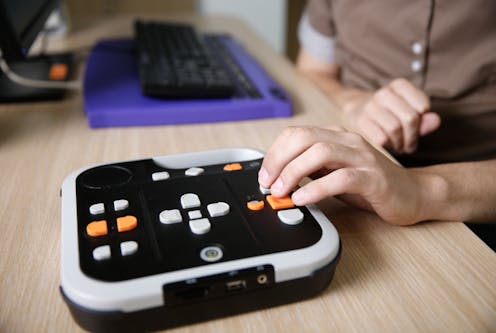
From glasses to mobility scooters, 'assistive technology' isn't always high-tech. A WHO roadmap could help 2 million Australians get theirs

This month, the first ever World Health Organization (WHO) and UNICEF Global Report on Assistive Technology was released.

The WHO estimates one in three of us will need assistive technology, ranging from glasses to mobility scooters, in our lifetimes. This number is set to grow with an ageing population and the rising prevalence of non-communicable diseases such as heart disease and diabetes, which are major causes of disability.

For 2.5 billion people globally and more than two million Australians living with health, disability or age-related conditions, assistive products are vital in daily life. The WHO estimates almost one billion children and adults are denied the assistive technology they need.

The WHO/UNICEF report provides a range of recommendations for policy action that Australia’s new government should consider and learn from.

What is assistive technology?

If you use glasses or screen magnification on your phone, foot orthotics, hiking poles on uneven ground, or a powered mobility scooter to get to the shops, you are using assistive products. Reminder alerts on your mobile phone, smart home and text-to-speech technologies are also in this category.

Then there’s the information, professional recommendations and training needed to fit, troubleshoot, learn to use or maintain your assistive products. Together, these products and services are called “assistive technology”.

The return on investment for assistive technology is around nine times what is spent, because it enables people to work and study, worship and play, control their homes and move around their communities.

How does Australia measure up?

Let’s compare the top recommendations from the Global Report of Assistive Technology with Australian experiences.

1. Improve access to safe, effective and affordable assistive technology

Australia’s National Disability Insurance Scheme (NDIS) funds support for about 10% of Australians living with disability, including assistive technology products and services.

But outside the NDIS, Australians who need assistive technology often have very restricted access to funding.

They must navigate more than 100 different funding schemes in a “postcode” or eligibility lottery identified by the recent Aged Care Royal Commission as unfair.
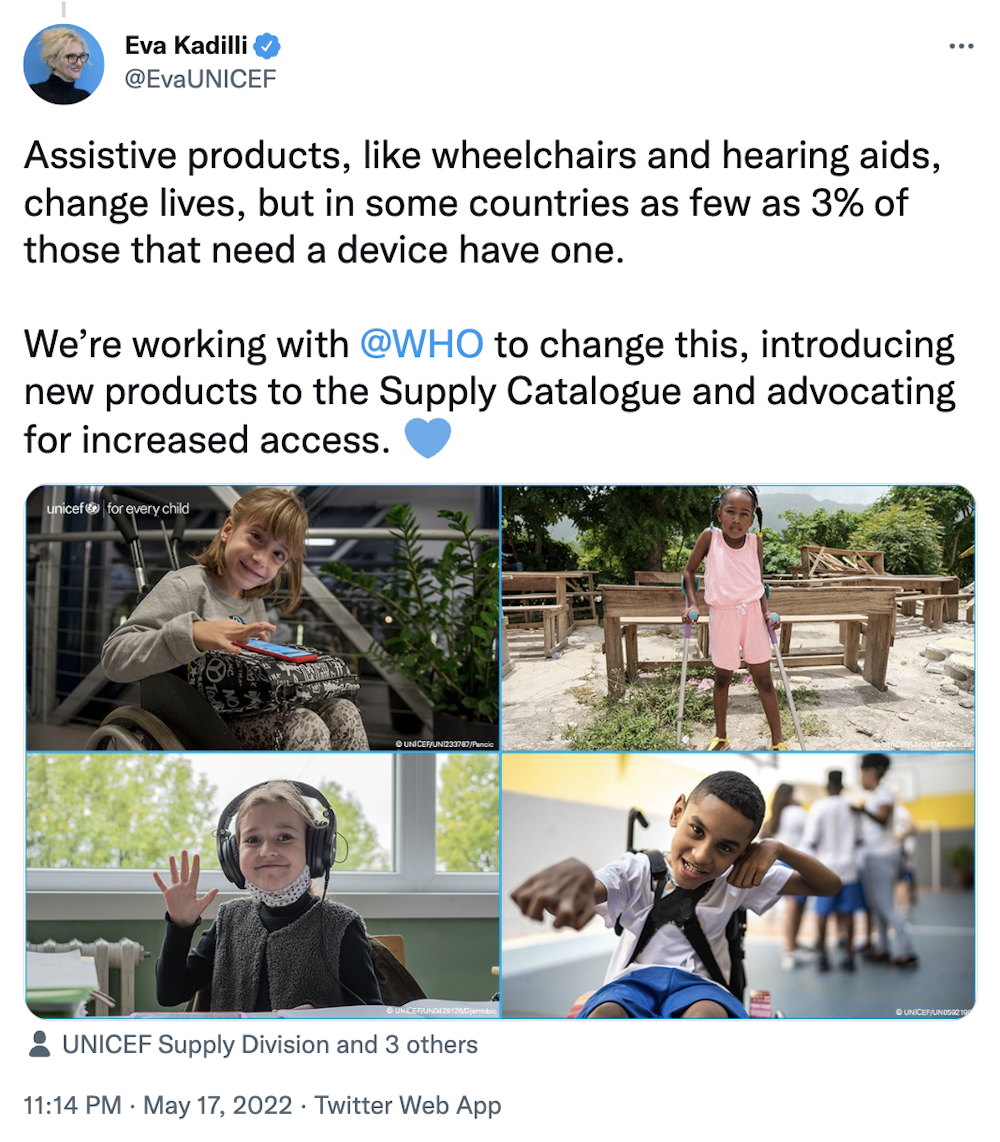
tweet by Unicef representative about the importance of assistive technology
Twitter 2. Invest in research data, evidence-based policy, and innovation Australia is building a National Disability Data Asset, for safe and secure sharing and linking of data. This will give governments a better understanding of people with disabilities’ life experiences. For now though, there is no detailed data collection on assistive technology use and unmet need in Australia. On the innovation front, assistive technology that uses artificial intelligence (AI) or changes how a person receives support offers real potential to help people to live how and where they want to. For example, infrared movement sensors in homes - linking to AI - can learn patterns of typical or out of the ordinary events and alert a nominated family member if required, whilst still allowing a person to live on their own. But Australia needs an ethics framework for the use of AI, including by people with disability, to protect privacy, safety and effectiveness – and more broadly, human rights. Read more: Digital inequality: why can I enter your building – but your website shows me the door? 3. Enlarge, diversify and improve workforce capacity Australia is facing workforce shortages across health, disability and aged care. The Global Report on Assistive Technology outlines roles for assistive technology users to be peer supporters, alongside expert health teams. A skilled and diverse workforce is required, and will include both health professionals at the point of need (via telehealth or in person), and training and employment pathways for the assistive technology peer workforce. 4. Develop and invest in enabling environments Recent Australian National Construction Code reforms propose minimum accessibility in new housing. This would allow people more choice in where they live, and who they live with. Man in power wheelchair reaches to unload dishwasher drawer A power wheelchair and dishwasher drawer makes this kitchen accessible. Author provided However, some states have refused to adopt this voluntary code. When the NDIS was introduced, government funding for independent assistive technology advice via state-based information and resource centres, called Independent Living Centres (ILCs), was lost. The ILC National Equipment Database remains online, but the few remaining information clearinghouses – including the Centre for Universal Design Australia and the Home Modifications Information Clearinghouse – rely largely on the goodwill of dedicated volunteers to collate information and resources. Read more: 'It's shown me how independent I can be' – housing designed for people with disabilities reduces the help needed 5. Include assistive technology in humanitarian responses Australia is facing ongoing humanitarian crises with fires, floods and a pandemic threatening lives – and livelihoods. Our research with people who use assistive technology and their families, as well as providers and civil society showed that during the COVID pandemic, the public health response excluded assistive technology services. They were considered “non essential” by government. In Australia, during the floods, accessible information and disaster preparedness for people who use assistive technology was absent. This meant that, for example, when the lift in the building of a wheelchair user broke, and the building’s intercom was down, there was no way for them to escape or call for help. Read more: Homeless and looking for help – why people with disability and their carers fare worse after floods This information and support gap, and access to safe evacuations, was often filled by local communities. The knowledge of assistive technology users, their families and providers to create more inclusive preparedness plans will be vital for future disasters. Time for change Assistive technology is key to a good life for one in ten Australians. Labor made a pre-election commitment to a major review of disability services in Australia, and inherits potentially transformative Royal Commission recommendations across both ageing and health care. The WHO and UNICEF Global Report on Assistive Technology provides a roadmap for the incoming government to involve users and their families in change. Authors: Natasha Layton, Senior Research Fellow: Rehabilitation, Ageing and Independent Living Research Centre, Monash University

Read more https://theconversation.com/from-glasses-to-mobility-scooters-assistive-technology-isnt-always-high-tech-a-who-roadmap-could-help-2-million-australians-get-theirs-183529

Interstate Car Transporter Urges Buyers to Book Early

As the conflict in the Middle East continues to put increasing pressure on local fuel supply, Australian transport companies are experiencing increasi...

Digital Minimalism for Business Owners: Fewer Tools, Better Systems

Be honest. How many apps are open right now? One for scheduling, another for invoices, a third for customer notes, plus a spreadsheet someone email...

The Importance Of Proactive NDIS Renewal Preparation For Sustaining Your Provider Business

Your NDIS renewal notice is not a signal to start preparing. By the time it arrives, preparation should already be well underway. For new providers, s...

Why Fire Extinguisher Testing in Sydney Is Becoming a Records Game, Not Only a Maintenance Job

A fire extinguisher used to feel like one of the simpler parts of building safety. It hung on the wall, wore a service tag, and sat there quietly unle...

The Switchboard Upgrade Question Every Melbourne Renovator Should Ask Before the Walls Close Up

Renovations have a funny way of making people think on surfaces first. Splashback, stone, joinery, tapware, paint. Fair enough too. That is the exciti...

Winter Sanitation Gaps in Parramatta Kitchens: A Hidden Pest Risk

Winter brings a host of changes to our homes, from the chill in the air to the cozy warmth indoors. However, this season also introduces sanitation ch...

When to Seek Advice from Employment Lawyers in Melbourne

Australian employment law is detailed and, at times, complex, with rights and obligations that aren't always obvious to employees or employers witho...

7 Benefits of Professional Gutter Cleaning for Australian Homeowners

Gutters aren't exactly glamorous. They sit up there on the edge of your roof, doing their job quietly - until they stop working. Clogged, overflowing ...

Pipe Floats Strengthening Pipeline Performance In Demanding Environments

Pipelines often travel through environments that are anything but predictable, water currents shift, terrain changes, and materials keep moving unde...

Why Ceiling Fans Are Essential For Comfort, Efficiency, And Modern Living

Creating a comfortable indoor environment is not just about temperature; it is about how air moves, how a room feels, and how efficiently energy is ...

Why Duct Cleaning In Melbourne Is A Smart Investment For Healthier Living Spaces

Behind your walls, ceilings, and vents lies a network quietly working every day to keep your home comfortable. Yet over time, this system can become...

Disability Service Providers Supporting Inclusive And Independent Living

Finding the right support system can feel like assembling a puzzle where every piece must fit just right. For individuals and families navigating di...

A Beginner's Guide to Owning a Caravan in Australia

Owning a caravan opens up a style of travel that's hard to match for freedom and flexibility. However, for those just starting out, the process of c...

Preparing Your Air Conditioner for Summer: What Most Homeowners Overlook

As temperatures rise, many homeowners switch on their air conditioning for the first time in months — only to find it’s not performing the way i...

What Actually Adds Value to Properties in Newcastle

Newcastle has seen steady growth over the past few years, with more buyers looking beyond Sydney for lifestyle, space, and long-term value. As dema...

What is Design and Build in Construction?

Imagine you’re about to start a new construction project, maybe it’s a custom home or a commercial building. You’ve got the idea, the land, an...

Commercial roof leak detection: why early action protects your building

Water ingress is one of the most disruptive and costly issues facing commercial properties. For property managers and facilities teams, even a minor...

Custom Photo Frames: Turning Everyday Moments into Lasting Displays

Photos capture moments, but how you display them determines how they’re experienced every day. A meaningful photograph deserves more than a generi...















