

we studied why people (and especially men) engage in street harassment
- Written by: Bianca Fileborn, Senior Lecturer in Criminology, The University of Melbourne

“Hey sexy.”
“Smile!”
“Hey ladies, can I watch?”
“Can I have your number?”
A growing body of research shows public harassment is among the most prevalent forms of sexual and gender-based violence. Street harassment can include homophobic, transphobic, racist and ableist actions, as well as overtly hostile and aggressive behaviour.
Yet, we know very little about who harasses and why they do it. Typically, harassment is perpetrated by strangers, is often fleeting, and can include behaviours welcome in other contexts, such as asking for someone’s number.
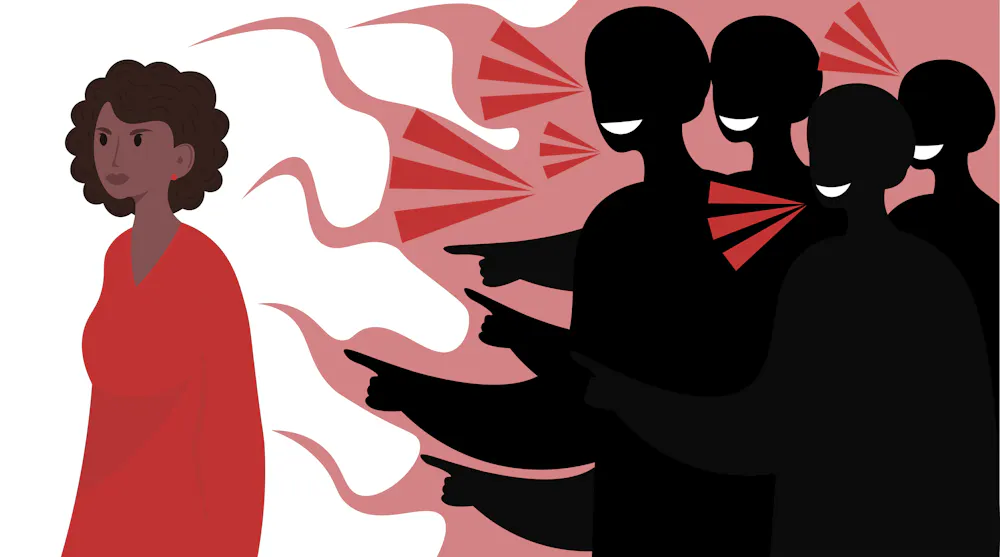
In our recent work, we asked participants about why they think people (mostly men) harass others in public space. This centres the expertise and knowledge of those targeted for harassment.
Read more: How to get consent for sex (and no, it doesn’t have to spoil the mood)

Who does it?
Unsurprisingly, participants said they were either solely or disproportionately harassed by men, reflecting what we know about gender-based violence broadly.
However, a few participants discussed experiencing harassment from women. This was typically in relation to non-sexualised harassment, for example racist, homophobic and transphobic abuse.
There was less agreement on which “types” of men harass. For example, some people said they were most commonly harassed by younger men, older men, men by themselves and men in groups.
Some participants mentioned factors such as age, race and class in describing harassers. “Tradies” were commonly identified; one participant told us “it’s always tradies”, while another described her experiences as the “classic tradies yelling at school girls sort of stuff”.
Some thought men from particular cultural or racial backgrounds were more likely to harass, though others stressed most harassment they experienced was from white Australian men.
However, the focus on particular “types” of men in some responses – such as “tradies”, “bogans”, “creepy old men” and men of colour – also provides insights into who is viewed as more likely to engage in harassment.
Participants often inadvertently perpetuated power inequalities such as classism and racism in the ways they described harassers.
It is important to recognise these are not “neutral” accounts. Perceptions of harassment are shaped by our internalisation of stereotypes and our lived experiences. This is particularly so when what “counts” as harassment can be highly subjective and context-dependent.
So, why did participants think men harass others in public spaces?
 Perceptions of harassment are shaped by our internalisation of stereotypes.
Shutterstock
Perceptions of harassment are shaped by our internalisation of stereotypes.
Shutterstock
Because they’re ‘stupid, sleazy, losers’
Participants offered a range of explanations for why men harass. At an individual-level, men who harass were often depicted as “other” or “deficient” in some way.
Terms such as “stupid”, “creepy”, and “losers” were commonly used to describe men who harass. One participant said “men are just creeps and that’s what they do”, while another thought “that’s their escape from their crappy lives”.
Younger men were more likely to be described as “bored” or doing it for a laugh:
Often it’s like the younger guys that are in groups that are just being silly and have the done up cars and completely attention seeking.
As white, cisgender, heterosexual men typically do not experience harassment to the extent women and LGBTQ+ people do, and are not generally socialised to be fearful for their safety in public, participants felt men were unable to understand why their actions might be threatening to women in public spaces.
These explanations tended to “other” certain types of men as deviant “monsters”, or implied harassment occurs as a result of individual character flaws.
 Some participants challenged the idea men didn’t know what they were doing.
Shutterstock
Some participants challenged the idea men didn’t know what they were doing.
Shutterstock
Because they’re blokes
Participants viewed harassment as a way for men to “perform” their masculinity, and as an expression of gendered power, alongside other forms of power relating to whiteness and heteronormativity. As one (male) participant put it: “So why did he do it? Because he’s a fucking bloke”.
In other words, harassment provided men with an avenue to express power over women and other men (particularly men who were not seen to be doing their masculinity “appropriately”):
I think it’s just men sort of showing themselves as the superior gender by…dehumanising the female gender […] we can degrade you and you just have to accept it.
Harassment was also a way for men to bond with other men, something referred to as “homosociality”. Reflecting on his own experiences of participating in harassment as a teenager, one male participant said:
It’s hey look at me, I can shout out to that lass, and it’s alright, and that makes me a fella, that makes me a bloke, and that makes me a bigger bloke than you lads.
Because they can: the normalisation of street harassment
Many participants thought men harass because there were no consequences for their behaviour:
Because it’s such a socially acceptable thing at this point for people to harass women and think it’s like a compliment […] I think a lot of men actually don’t realise that what they’re doing is harassment.
Others felt harassment was excused as a form of “locker room banter” and as a case of “boys will be boys”. These responses illustrate the ways street harassment is culturally sanctioned and able to flourish.
 Many participants thought men harass because there were no consequences for their behaviour.
Shutterstock
Many participants thought men harass because there were no consequences for their behaviour.
Shutterstock
Why do they do it? It’s complicated
Our participants’ explanations of why men harass paint a complex and multifaceted picture. While harassment is firmly situated in the spectrum of violence against women, a more holistic approach is needed addressing homophobic, transphobic, racist and ableist harassment.
It’s clear street harassment requires interventions targeting individual, cultural and structural drivers.
The normalisation of street harassment requires urgent attention, so this behaviour is no longer excused.
Read more: LGBTQ+ people are being ignored in the national discussion on family and sexual violence
Authors: Bianca Fileborn, Senior Lecturer in Criminology, The University of Melbourne
-engage-in-street-harassment&media=https://www.modernaustralian.com/https://images.theconversation.com/files/466158/original/file-20220531-12-mb0mpk.jpg?ixlib=rb-1.1.0&rect=0%2C10%2C3600%2C2387&q=45&auto=format&w=496&fit=clip&description=we%20studied%20why%20people%20(and%20especially%20men)%20engage%20in%20street%20harassment "Pin It")

















