

Our new environment super-department sounds great in theory. But one department for two ministers is risky
- Written by: Peter Burnett, Honorary Associate Professor, ANU College of Law, Australian National University
Good news, Australia – the environment is back. Our new government has introduced a new super-department covering climate change, energy, the environment and water.
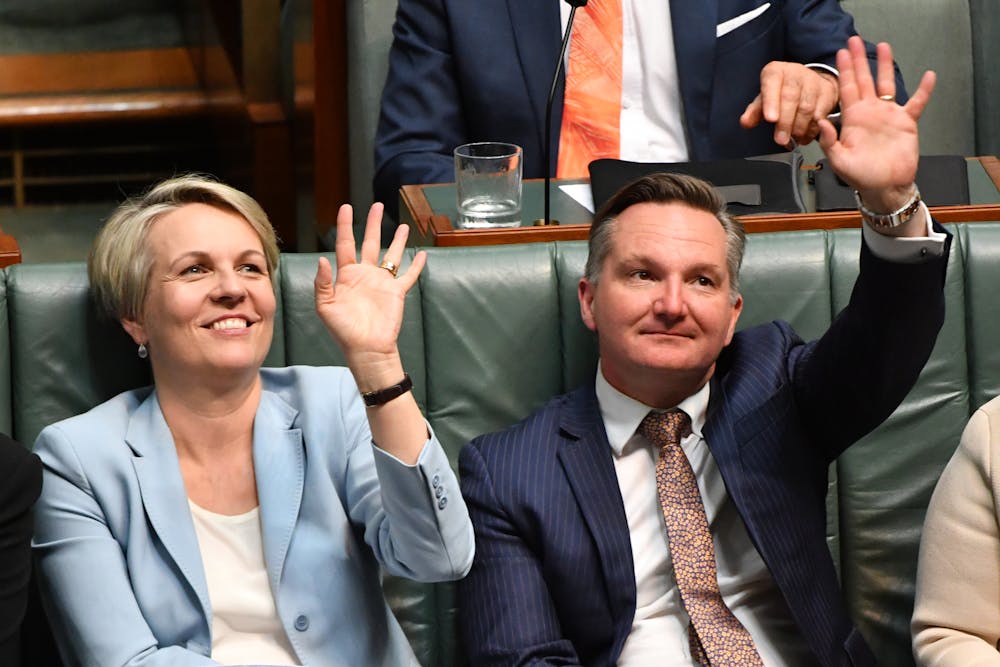
But while the ministry move sounds great in theory, it’s risky in practice. Having one super-department supporting two ministers – Tanya Plibersek in environment and water, and Chris Bowen for climate change and energy – is likely to stretch the public service too far.
If a policy area is important enough to warrant its own cabinet minister, it also warrants a dedicated secretary and department. This is especially true for the shrunken environment department, which has to rebuild staff and know-how after having over a third of its budget slashed in the early Coalition years.
Supporting two cabinet ministers stretches department secretaries too thinly. It makes it hard for them to engage in the kind of deep policy development we need in such a difficult and fast-moving policy environment.
What are the politics behind this move?
Tanya Plibersek’s appointment last week as minister for the environment and water was the surprise of the new ministerial lineup.
Even if Plibersek’s move from education in opposition to environment in government was a political demotion for her, as some have suggested, placing the environment portfolio in the hands of someone so senior and well-regarded is a boon for the environment.
Having the environment in the broadest sense represented in Cabinet by two experienced and capable ministers is doubly welcome. It signifies a return to the main stage for our ailing natural world after years of relative neglect under the Coalition government.
It also makes good political sense, given the significant electoral gains made by the Greens on Labor’s left flank. While ‘climate’ rather than ‘environment’ was the word on everybody’s lips, other major environmental issues need urgent attention. Threatened species and declining biodiversity are only one disaster or controversy away from high political urgency.
When released at last, the 2021 State of the Environment Report will make environmental bad news public. Former environment minister Sussan Ley sat on the report for five months, leaving it for her successor to release it.
 More Australian species are in danger, such as the kowari.
AAP
More Australian species are in danger, such as the kowari.
AAP
Now comes the avalanche of policy
Both ministers have a packed policy agenda, courtesy of Labor’s last minute commitment to creating an environmental protection agency, as well as responding to the urgent calls for change in the sweeping [2020 review] of Australia’s national environmental law (https://epbcactreview.environment.gov.au/resources/final-report).
That’s not half of it. Bowen is also tasked with delivering the government’s high-profile 43% emissions cuts within eight years, which includes the Rewiring the Nation effort to modernise our grid. He will also lead Australia’s bid to host the world’s climate summit, COP29, in 2024, alongside Pacific countries.
Plibersek also has to tackle major water reforms in the Murray Darling basin and develop new Indigenous heritage laws to respond to the parliamentary inquiry into the destruction of ancient rock art site Juukan Gorge by Rio Tinto.
Can one big department cope with this workload?
Creating a super-department is a bad idea. That’s because the agenda for both ministers is large and challenging. It will be a nightmare job for the department secretary tasked with supporting two ministers. It’s no comfort that the problem will be worse elsewhere, with the infrastructure department supporting four cabinet ministers.
Giving departmental secretaries wide responsibilities crossing lines of ministerial responsibility encourages them to reconcile policy tensions internally rather than putting them up to ministers, as they should.
The tension between large renewable energy projects and threatened species is a prime example of what can go wrong. Last year, environment minister Sussan Ley ruled a $50 billion renewable megaproject in the Pilbara could not proceed because of ‘clearly unacceptable’ impacts on internationally recognised wetlands south of Broome.
Ley’s ‘clearly unacceptable’ finding stopped the project at the first environmental hurdle. That’s despite the fact the very same project was awarded ‘major project’ status by the federal government in 2020.
The problem here is what might have been the right answer on a narrow environmental basis was the wrong answer more broadly.
If Australia is to achieve its potential as a clean energy superpower and as other renewable energy megaprojects move forward, we will need more sophisticated ways of avoiding such conflicts. This will require resolution of deep policy tensions – and that’s best done between ministers rather than between duelling deputy secretaries.
Super-departments also struggle to maintain coherence across the different programs they run. While large departments bring economies of scale, these benefits are more than offset by coordination and culture issues.
An early task for Glyn Davis, the new head of the prime minister’s department, will be to recommend a secretary for this new super-department of climate change, energy, the environment and water. In addition to the ability to absorb a punishing workload, the successful appointee will need high level juggling skills to support Plibersek and Bowen simultaneously.
Ironically, in dividing time between two ministers, she or he will be the least able to accept Plibersek’s call for staff of her new department to be ‘all in’ in turning her decisions into action.
Authors: Peter Burnett, Honorary Associate Professor, ANU College of Law, Australian National University


















