

Fennel looking a bit feeble? Growing enough veggies to feed yourself depends on these 3 things
- Written by: Isobel Violet Hume, PhD Candidate , University of Adelaide
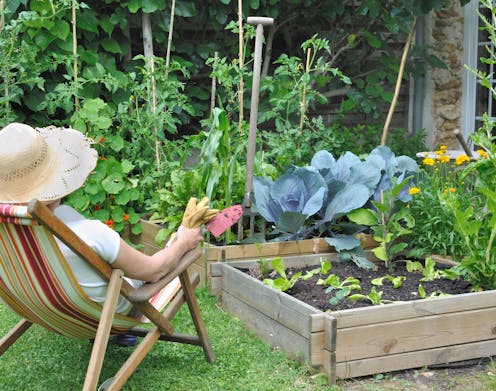
Farming inside city boundaries is on the rise as countries become more urbanised and people seek to connect with the source of their food and improve their sustainability.
But despite the productivity potential of home food gardens and the like, they are rarely analysed as serious farming systems. There’s little data, for example, on how much can be grown on an average suburban property.
As climate change threatens global food supplies, however, building sustainable urban food systems will be crucial.
Our research has examined how productive the average home vegetable garden really is, and how to get the most from your patch.
Lawn with a side of salad?
Urban agriculture refers to growing produce and raising livestock inside a city’s boundary. In Australian cities, it might involve a home vegetable patch, community garden, backyard beehives, an edible rooftop garden on an apartment block, indoor hydroponics, a communal orchard and more.
Sometimes, especially in developing countries, urban farming can help address issues such as poverty, unemployment and food insecurity.
More broadly, it can increase access to healthy, fresh produce and lead to more sustainable food production. It can also help us save money and improve our well-being.
Societies have traditionally lent on urban farming during times of stress. So it’s no surprise the practice resurged during the COVID pandemic. In Australia, keeping edible gardens significantly helped people maintain mental health during lowdown, particularly those on low incomes.
But to what extent can we rely on our backyard gardens to meet all our fresh produce needs? Our research shows these three factors are key.
Read more: 3 ways community gardens often exclude migrants and refugees — and how to turn this around
1. Give up some lawn
We looked at the potential for food production at about 40,000 residential properties in suburban Adelaide – mostly free-standing homes.
We calculated the amount of land required for a household of 2.5 people to grow the recommended five servings of vegetables per person each day. Then, using high-resolution aerial imagery to get a birds eye view of properties, we identified those with enough lawn area to make that happen.
Some 21m² of lawn is needed to produce the recommended vegetable intake. In a scenario where a garden is high-yielding, this would require converting 23% of lawn area on a typical block into a vegetable patch. Of the properties modelled, 93% had the room to a create 21m² garden from the total lawn space.
In a medium-yield garden, 72% of lawn on a typical block would need converting to produce enough vegetables to feed a household – equating to 67m².
We limited the research to in-ground veggie production and didn’t include fruit trees. So a property’s potential to grow food would be even higher if food gardens or fruit trees already exist, or other garden beds or paved areas could be converted.
2. Up your gardening game
Research out of Adelaide, which surveyed about 30 home gardeners, found yields per square metre ranged from 0.24kg to 16.07kg per year. This suggests a high rate of variability in home garden productivity – notwithstanding the fact people grow different crops.
Not all of us have green thumbs and in some cases, your veggie patch might not yield as much as you hoped.
Perhaps you gave it too much or too little water. Maybe you didn’t have time to pull out weeds or harvest produce. Pests and fungus might have struck down your crop. You may have planted the wrong seeds at the wrong time or just have poor soil.
Our research suggests low-yield gardens would need 1,407m² of converted lawn to meet the vegetable needs of a household. However, less than 0.5% of properties in the analysed Adelaide sites had so much land. So to reach self-sufficiency in urban agriculture environments, medium to high yields are preferred.
Skilled gardeners with high yields will need much less land. Given the space constraints in cities, upskilling gardeners is important to maximising production.
3. Know what’s in your soil
Good soil is a key factor in productive gardens. It needs a good structure (one that allows water and air to enter and drain easily, while retaining enough moisture) an ample supply of plant nutrients and a rich microbial community.
In city areas, heavy metal contamination and pollution of soils can be a concern. We examined soils at 12 urban agricultural sites in Adelaide, and found in all cases that metal concentrations did not exceed health guidelines for residential areas – even at sites with an industrial history.
But this might not always be the case. An analysis of residential and community gardens in Melbourne, for example, showed some soils were contaminated at levels which could pose a human health hazard. This highlights the importance of testing urban soils before planting.
Proper management of inputs – particularly fertiliser – is also key. Our research has found urban gardeners can choose from a variety of organic waste-based fertilisers such as spent coffee grounds, food scraps or lawn clippings. But this abundance can lead to imbalances.
In Adelaide, for example, the widespread use of freely available horse manure led to excessive phosphorous levels in almost all of the 12 tested sites. This imbalance can depress plant growth and damage the broader environment.
Read more: These 3 tips will help you create a thriving pollinator-friendly garden this winter
Helping city gardens flourish
Urban agriculture has been identified as a A$4 billion economic growth opportunity for Australia. However, suburban blocks are trending towards smaller yards with less growing space.
Given the many benefits of urban farming, it’s time to think more seriously about maximising efficiency and scale.
Community gardens are well placed for knowledge-sharing. Research on 13 community gardens in Sydney revealed they were very high-yield – around twice as productive than the typical Australian commercial vegetable farm.
Funding for more community gardens, and other education opportunities for urban gardeners, would be a valuable investment in improving public health and sustainability.
This should be coupled with policy and planning decisions designed to increase the amount of urban farming space in our cities.
Read more: Could we learn to love slugs and snails in our gardens?
Authors: Isobel Violet Hume, PhD Candidate , University of Adelaide


















