

Australian frogs are dying en masse again, and we need your help to find out why
- Written by: Jodi Rowley, Curator, Amphibian & Reptile Conservation Biology, Australian Museum, UNSW Sydney
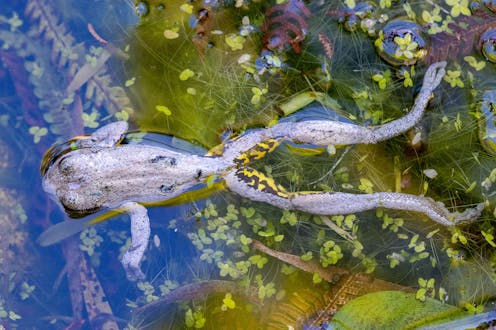
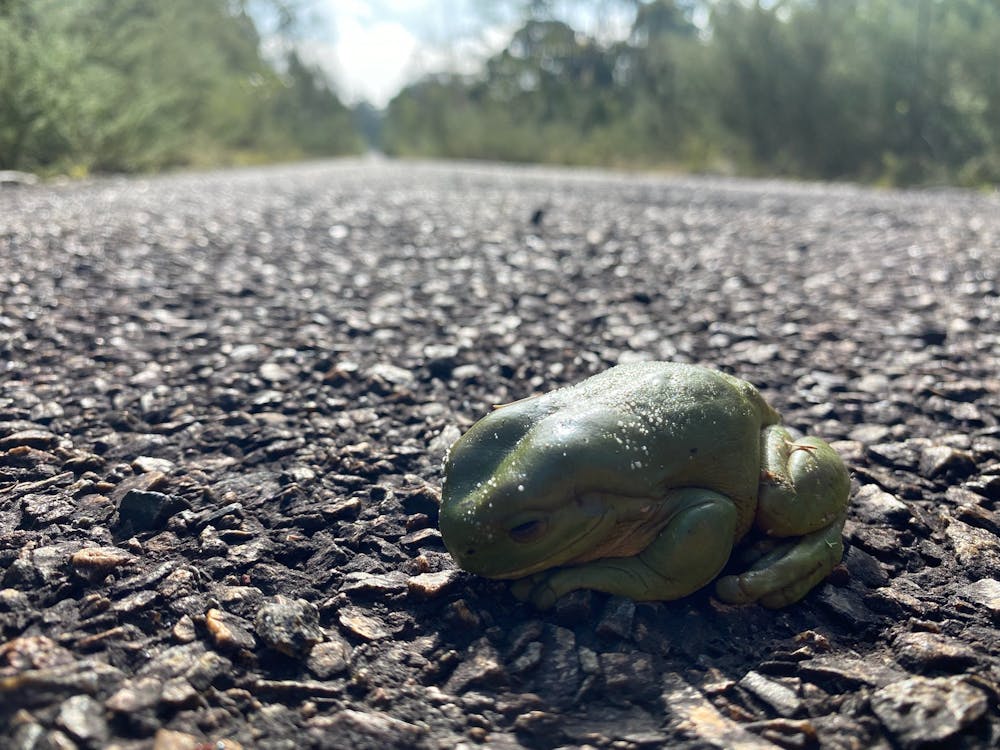
Last winter, thousands of dead and dying frogs were found across Australia. Instead of hunkering down and out of sight, frogs were spotted during the day in the open, on footpaths, highways and doorsteps – often in the blazing sun.
These frogs were often thin, slow moving, and with dark patches on their back or red bellies. They were seeking water in pet bowls or pot plants. And they usually died in a matter of hours.
A crash in frog populations could have very real consequences, particularly for already threatened frog species, and the importance of frogs in both freshwater and land systems means it can also impact entire ecosystems.
Thankfully, reports of sick or dead frogs slowed as the weather got warmer, and by the end of last year they had all but ceased. We hoped the awful spate of frog deaths was a one-off. But now, we fear it is happening again.
In the last few weeks, we’ve started getting scarily similar reports of sick and dead frogs from people across Australia.
From Warwick in southeast Queensland, we’ve received emails reporting green tree frogs (Litoria caerulea), discoloured and hunched up, sitting in the open, with the upsetting email:
We normally have these beautiful creatures hopping around our house but in the last week have only spotted two. Both were dead.
From Sydney’s North Shore, another report:
I have just found a dead Peron’s tree frog when raking up leaves in my garden.
And most recently, one of our colleagues stumbled across a big green tree frog in the middle of the day while bird-watching in western Sydney. The bright green frog was sitting in the sun on an asphalt path. In only a few hours, the frog was dead.
How many frogs died last year?
Photos of sick frogs started popping up on social media feeds in May last year. This was not initially alarming, as sick, old or injured frogs are most likely to die in winter as their immune system slows down.
However, reports increased over late June and July, and we began to worry about just how many frogs were dying. Unfortunately, just as we began to worry, we were in lockdown, unable to venture out and investigate for ourselves.
So we asked the community for help. We asked for reports of sick or dead frogs, and then aligned members of the public with local veterinary clinics willing to take in these frogs for examination, care and diagnostic sample collection.
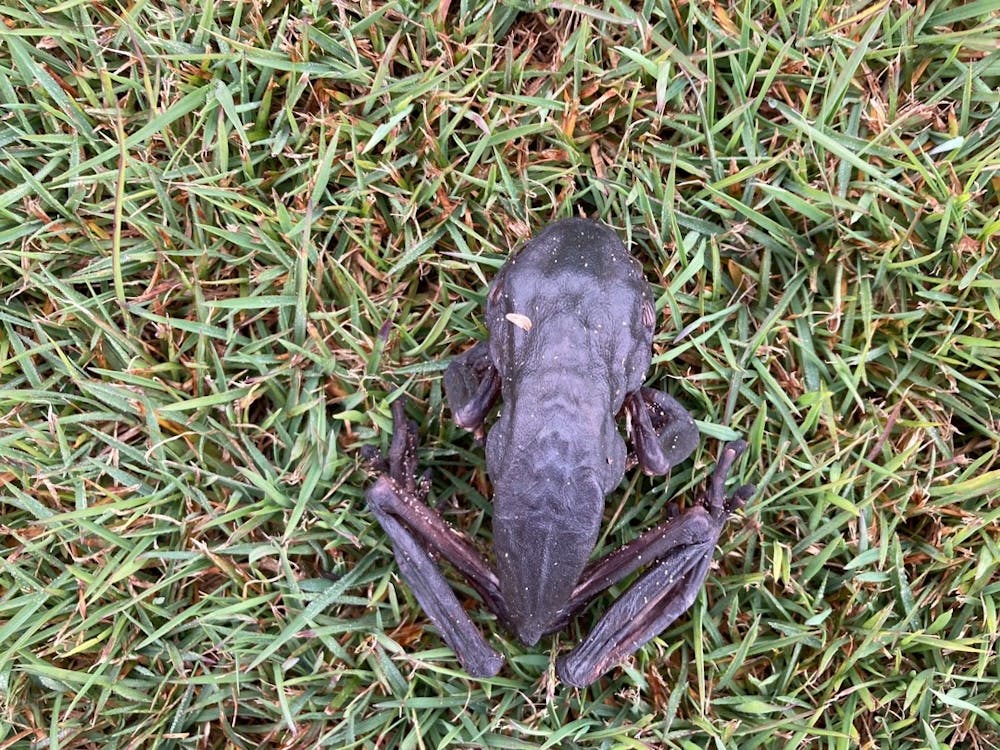 A dead, shrivelled green tree frog found by a member of the public.
Suzanne Mcgovern, Author provided
A dead, shrivelled green tree frog found by a member of the public.
Suzanne Mcgovern, Author provided
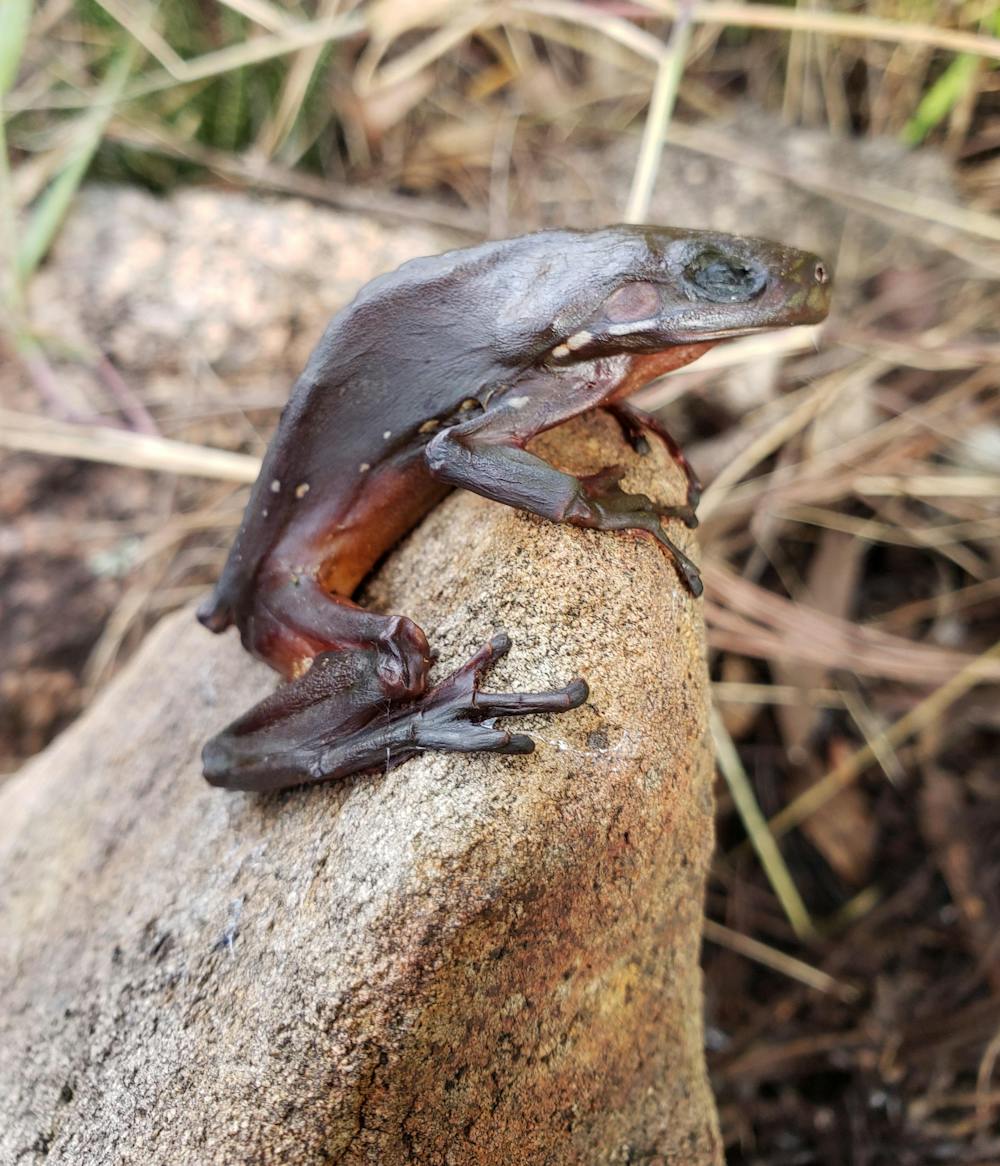 Another dead, discoloured green tree frog.
Jayne Barrett, Author provided
Another dead, discoloured green tree frog.
Jayne Barrett, Author provided
This meant the welfare of frogs could be assured, and we could begin our scientific investigation into the cause once lockdown ended.
Reports came flooding in. Across Australia, a remarkable 1,600 people reported finding sick or dead frogs. Each report often described dozens of dead frogs, making the grim tally in the thousands.
Although most sick and dead frogs reported were green tree frogs, this is likely because this species tends to hang around houses and be spotted more. Frog species less tolerant of suburbia are far less likely to be seen.
Despite this, more than 40 species were reported, including threatened species such as the green and golden bell frog (Litoria aurea) and the giant barred frog (Mixophyes iteratus).
The true death count and full list of species impacted is likely to be orders of magnitude higher.
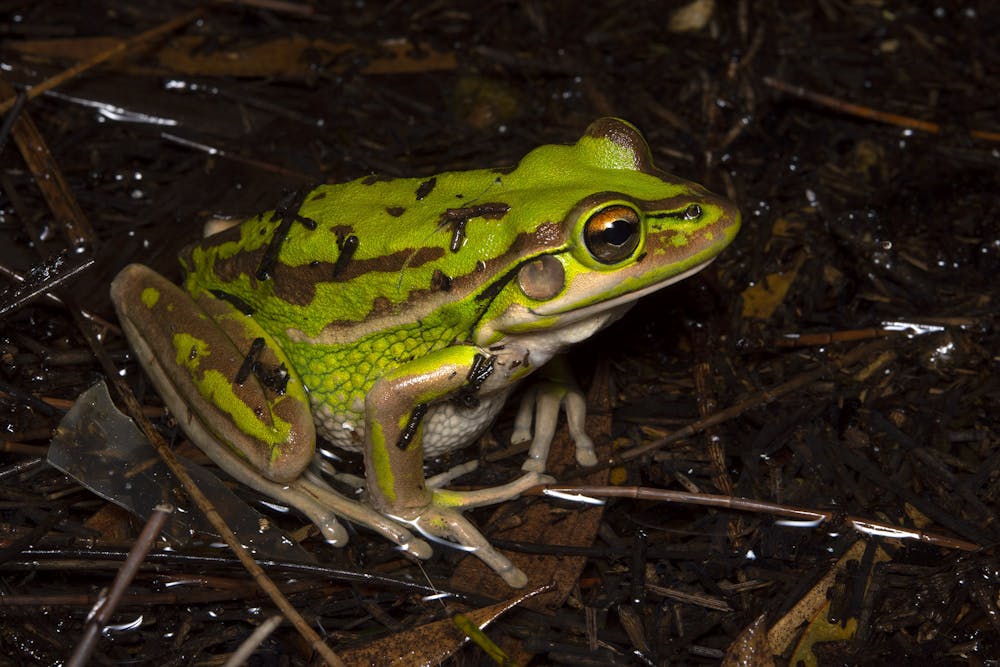 The green and golden bell frog, Litoria aurea
Jodi Rowley, Author provided
The green and golden bell frog, Litoria aurea
Jodi Rowley, Author provided
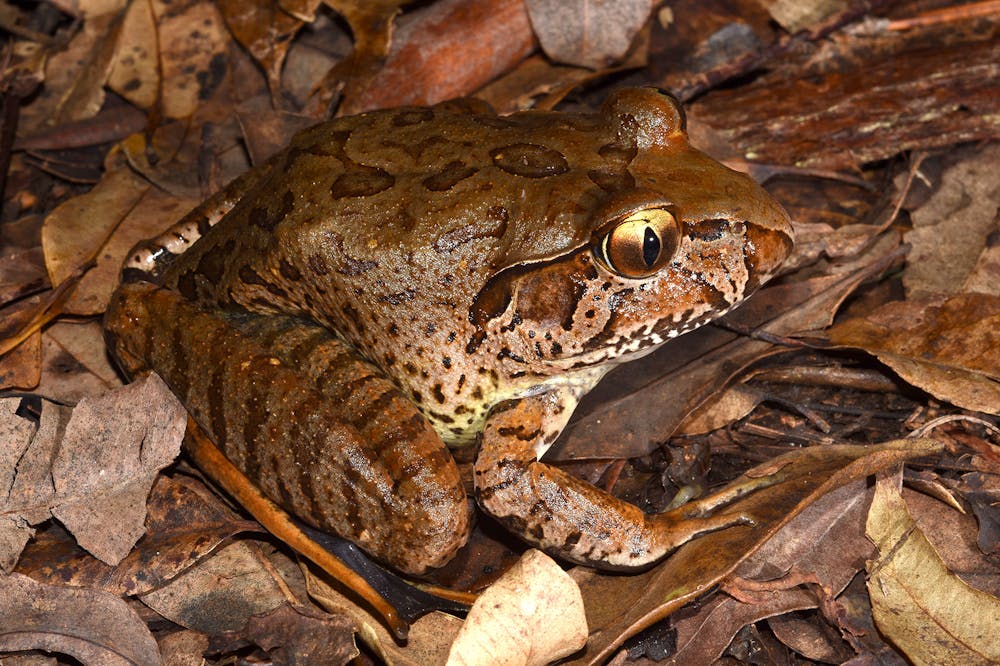 The giant barred frog, Mixophyes iteratus
Jodi Rowley, Author provided
The giant barred frog, Mixophyes iteratus
Jodi Rowley, Author provided
Why are the frogs dying?
We’ve been working with universities, government biosecurity and environment agencies to understand just what caused frogs to die last winter.
Our investigation has only been made possible due to the efforts of people across Australia reporting sick and dead frogs, taking sick frogs to veterinary clinics and freezing dead frogs for us to pick up and test ourselves.
In New South Wales alone, more than 350 people froze dead frogs for us to collect. Without this help, we would still be at square one with our investigation.
It’s a murder mystery, and there are so many possible suspects. We’ve been testing for parasitic, bacterial, viral and fungal pathogens. These tests include looking for pathogens known to kill frogs, and also looking for possible novel pathogens, which is by far the harder task. The potential role of toxins is also being assessed.
 A dead green stream frog, Litoria phyllochroa
Andrew Jennings, Author provided
A dead green stream frog, Litoria phyllochroa
Andrew Jennings, Author provided
Right from the very first frog deaths last year, our number one suspect has been the amphibian chytrid fungus (Batrachochytrium dendrobatidis). This pathogen is a known frog killer, responsible for causing frog population declines and species extinctions around the world, including in Australia.
The fungus attacks the skin of frogs, which is their Achilles heel – frogs use their skin to breathe, drink and control electrolytes. Deaths of frogs due to this pathogen are often at cooler temperatures.
Read more: A deadly fungus threatens to wipe out 100 frog species – here's how it can be stopped
Our testing has revealed the amphibian chytrid fungus is certainly involved in this mass death event. Most of the hundreds of dead frogs tested so far have tested positive for the pathogen.
But we aren’t yet sure if the fungus is acting alone, or even the primary cause of death. We continue to test for an array of other pathogens, toxins and other potential stressors.
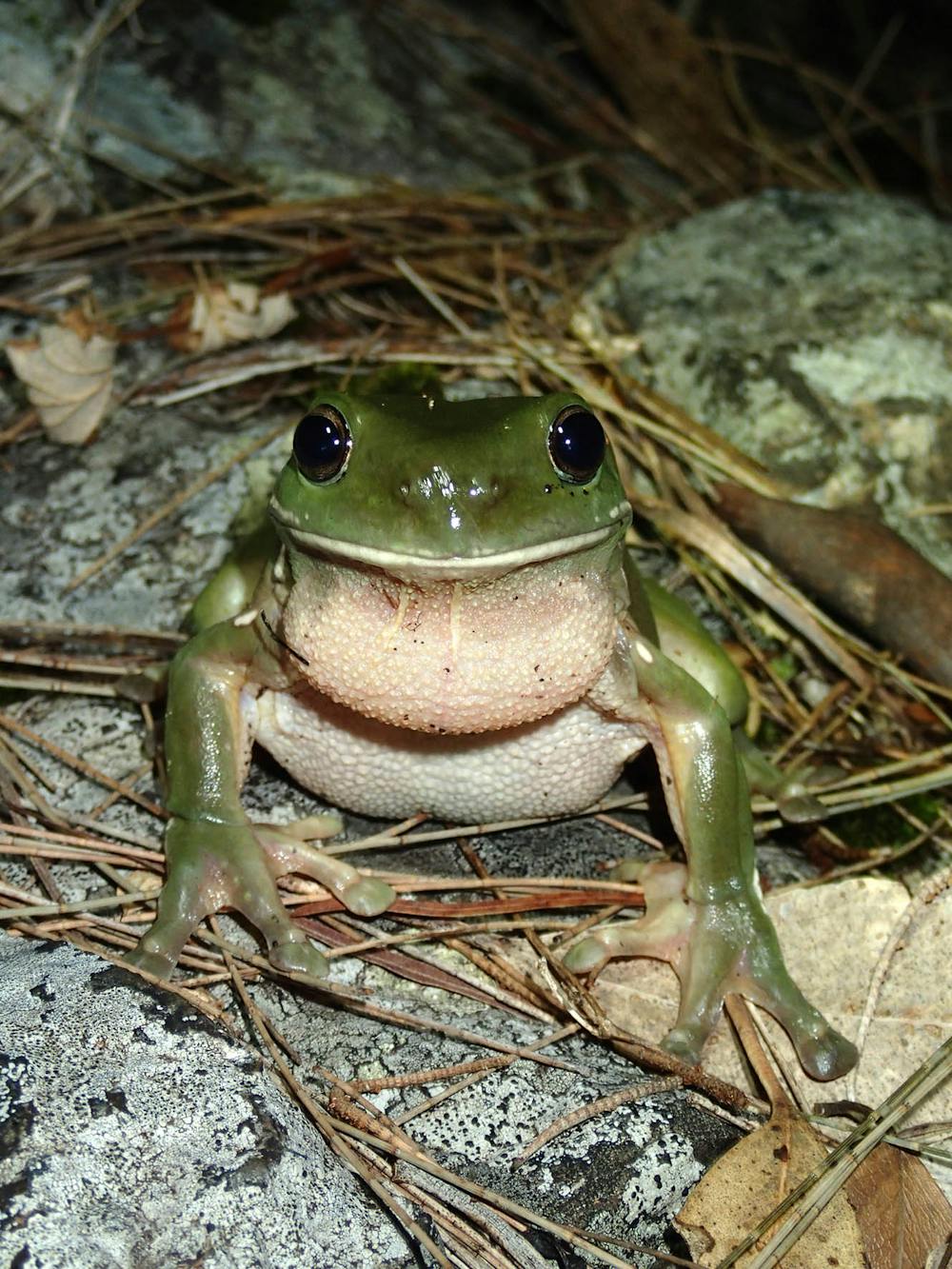 A healthy green tree frog.
Jodi Rowley, Author provided
A healthy green tree frog.
Jodi Rowley, Author provided
Why should we care?
Australia has 247 known species of native frog, 40 of which are threatened with extinction, and at least four species are already extinct.
The impacts on Australia’s frog species from such large scale deaths are unknown, but scientific surveys of frogs, combined with large scale citizen science data are underway.
Frogs are often extremely abundant, and play an important role in the flow of energy and nutrients, and in food webs. In places where amphibians have declined, the impacts are noticeable, with ripple effects across entire ecosystems as animals that rely on frogs for food start to disappear, too.
The 26 Australian frog species at greatest risk of extinction.Read more: Clicks, bonks and dripping taps: listen to the calls of 6 frogs out and about this summer
We need your help
To help us understand the scale and cause of any frog deaths this winter, please send any reports of sick or dead frogs to the Australian Museum’s citizen science project FrogID via calls@frogid.net.au.
Please include your location and, if possible, photos of the frog(s).
To help us determine the impact of frog deaths on Australia’s frogs, and which species are likely to need our help the most, please download the free FrogID app and record calling frogs whenever you can.
Every recording will help us better understand and conserve Australia’s frogs.
Authors: Jodi Rowley, Curator, Amphibian & Reptile Conservation Biology, Australian Museum, UNSW Sydney


















