

a timeless exploration of violence and treachery
- Written by: Kate Flaherty, Senior Lecturer (English and Drama) ANU, Australian National University
In our Guide to the Classics series, experts explain key works of literature.
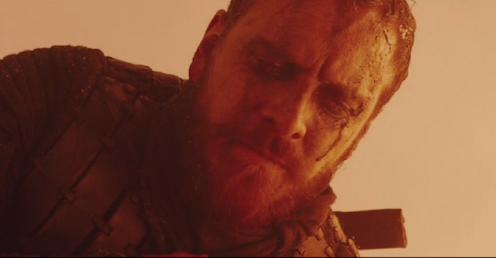
Macbeth issues a warning: the greatest risk to the inner life comes from the delusion that it does not exist.
“A little water clears us of this deed,” says Lady Macbeth, thinking that getting the look right will make it right. But in doing so she commits treachery upon her inner life.
In a world where existence seems increasingly to equate to self-projection, she is an example of the mistake we make when we see the visible surface of public and social media as the place where reality plays out, the place where we see what we are.
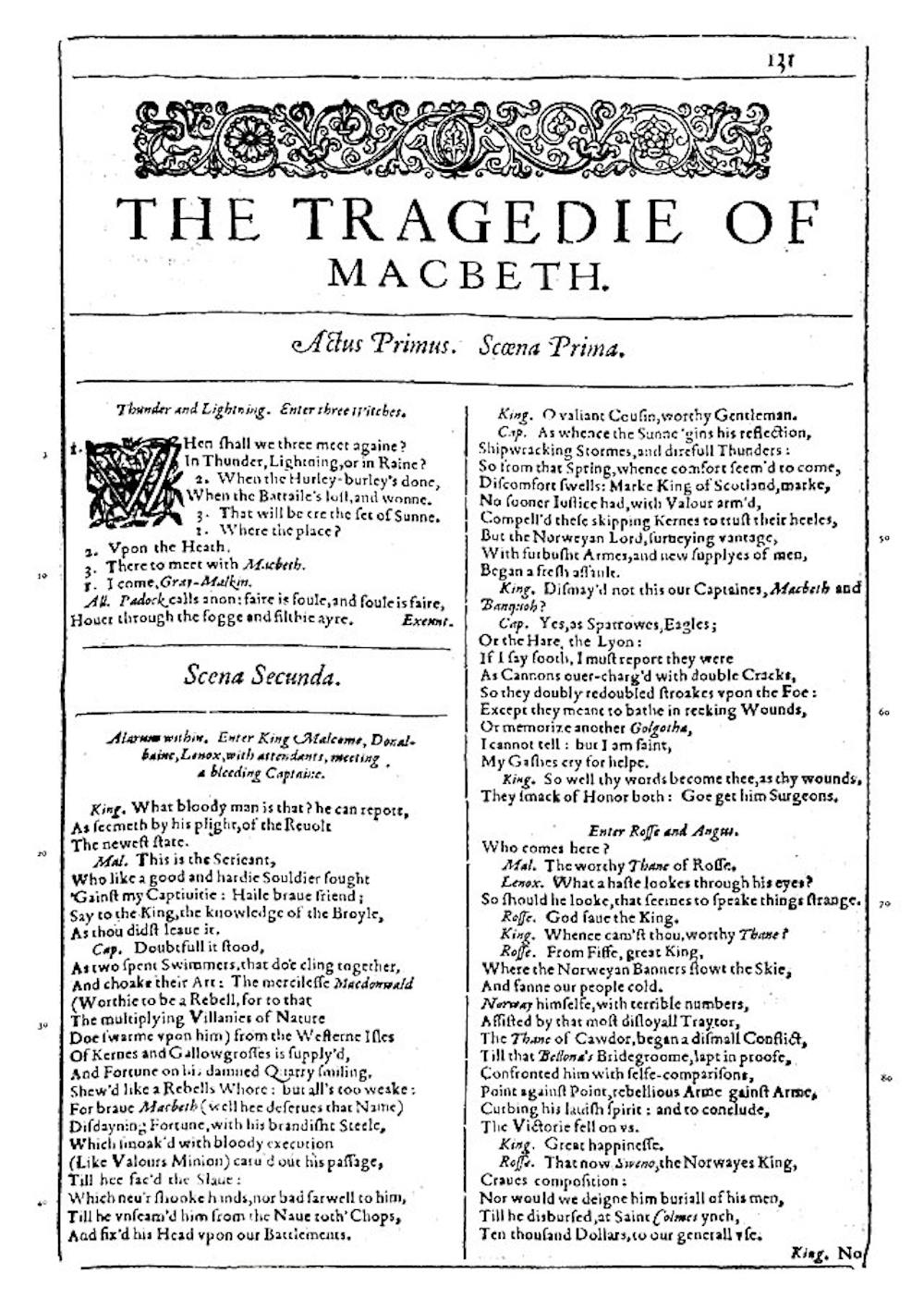
Macbeth, like most of Shakespeare’s plays, sets two worlds spinning: one of outer action and one of inner being. The collision of their orbits provides the spark for the drama. The themes of Macbeth’s outer world of action are violence and treachery. The intersecting themes of its inner world are ambition, and moral reasoning.
In exploring what holds a society together and what tears it apart, the play doesn’t just condemn violence, it dramatises its uses. The play showcases both loyal violence and treacherous violence.
In Act One, Scene One, a soldier reports that Macbeth, a Scottish general, has shown prowess on the battlefield and “unseamed” his rebel opponent, Macdonald, “from the nave to th’ chops.” That means he cut him in half.
Macbeth does this in loyal service to King Duncan, and usually enters the stage splattered with blood, that of his victims and his own – blood lost in service to his king. The military campaign is to suppress domestic rebellion. Among the rebels is the “disloyal traitor” the Thane of Cawdor, whose title Duncan transfers to Macbeth, commanding that the treacherous clan chief be executed.
Macbeth’s first promotion, then, is gained through the sanctioned violence of killing traitors. There is a fragile moment at the beginning of the play, when this violence seems to have restored order.
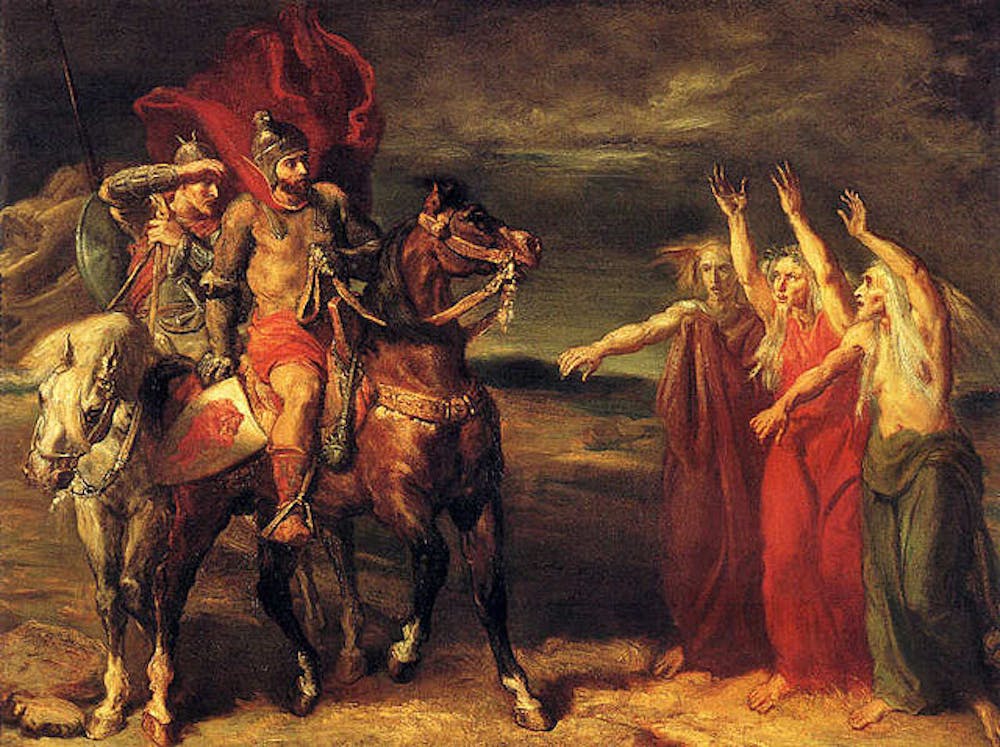 Macbeth and Banquo meet the Witches - Théodore Chassériau (1855)
Public domain
Macbeth and Banquo meet the Witches - Théodore Chassériau (1855)
Public domain
Read more: 'Supp'd full with horrors': 400 years of Shakespearean supernaturalism
Macbeth’s second promotion is also achieved through violence, but this time by premeditated treachery. The witches on the heath greet him as Thane of Glamis, which he is, Thane of Cawdor, which we know from Duncan’s command that he will be, and “king hereafter”.
This sets the spark to the powder keg of Macbeth’s ambition. Violence is in his repertoire and he needs only to take one violent step further to fulfil their prophecy.
The thought of killing the king, a thought “whose murder yet is but fantastical”, occurs to him immediately. And when he arrives back at his castle, his wife Lady Macbeth urges him to “catch the nearest way” to fulfilment of the prophecy by stabbing King Duncan to death as he sleeps in their home.
Here one of the inner-world themes intrudes – who is morally responsible for what Macbeth does? Do the witches wield power over him? Does Lady Macbeth, as the architect of regicide, carry equal blame with Macbeth?
Read more: Guide to the classics: Shakespeare's Hamlet, the Everest of literature
Outer and inner dimensions
The unfolding of their murderous plot is dramatised by Shakespeare as having outer and inner dimensions. The physical world is portrayed as instantly ruptured by their act of violence. Even before Duncan’s murder is discovered, Lennox speaks of the unruly night that has passed: chimneys were blown down, strange lamentings and screams of death were heard in the air, and the earth shook and was feverish.
There is dramatic irony in Macbeth’s response to this poetic description of cosmic disorder: “It was a rough night.”
Society is also fractured. Duncan’s sons flee Scotland. A mood of paranoid crisis sets in as Macbeth is crowned.
 Herbert Beerbohm Tree as Macbeth - Charles A Buchel (1872)
Wikimedia commons
Herbert Beerbohm Tree as Macbeth - Charles A Buchel (1872)
Wikimedia commons
But the treachery resonates inwardly, too, and Shakespeare keeps the inner dimension perpetually before the audience. That image from Act One of a man split down the middle is a potent symbol for the destruction the Macbeths have wrought upon themselves.
The order of Macbeth’s mind begins to break down the moment he murders his king. He roams out of the king’s chamber with the bloody daggers still in his hands saying he has heard a voice cry, “Sleep no more! Macbeth does murder sleep.”
Lady Macbeth seems to preserve her practical mindset for a time. She says “a little water clears us of this deed”. But this is another moment of dramatic irony. Her moral delusion is patent.
It seems that Macbeth, with his auditory and ocular hallucinations, has the clearer moral vision. Inevitably, her sleeping mind goes to war with her waking consciousness: “Out damn spot!” She cannot unsee the blood on her hands.
The Macbeths have failed to anticipate that their inner lives – their minds and their functional connection with the world – will be broken by their outer action. Remarkably, these mental, physical, spiritual breakdowns are rendered from the sufferers’ point of view.
Before he kills the king, Macbeth gives a speech about ambition that shows he has the moral insight to avoid the crime. He says he has “no spur to prick the sides of [his] intent”, using the metaphor of riding a horse to express that there is nothing about Duncan to urge him forward into the act of murder.
Macbeth realises he has “only vaulting ambition”, which leaps over itself and falls on the other side. He anticipates the catastrophe, but he kills the king anyway.
The twists and turns of moral reasoning
Why does Shakespeare include such contradictions?
Shakespeare understood that it is spellbinding to witness a character forming an inner resolution, or breaking one. In Macbeth, the stakes are high: an innocent life and a kingdom’s peace hang in the balance. The tension is relentless. Lady Macbeth enters, cutting off Macbeth’s reflection on ambition. He has just reasoned himself out of committing the murder, and she reasons him back into it.
The play dramatises the twists and turns of moral reasoning and the pressure of emotional coercion on conscience. Macbeth is wise and compassionate one instant, and preparing to kill his friend the next. This challenges our tendency to see the world in black and white, populated by good people and bad people.
All of the themes of Macbeth – violence, treachery, moral reasoning, conscience and ambition – were close the surface of public consciousness in Shakespeare’s day.
Since Henry VIII left the Catholic Church, establishing himself as the head of the Church of England in 1534, the nation’s political landscape had been riven by religious opposition. This affected people’s everyday lives and challenged their deepest inner convictions. In 1557, you could be burned as a heretic for being Protestant; in 1567, you could be burned as a heretic for being Catholic.
Being able to see the soul in motion, as Shakespeare allows his audience to do, was a fantasy that interrogators of both Catholic and Protestant persuasions would have cherished.
By the time Shakespeare wrote Macbeth, he was a member of The King’s Men – a playing company patronised directly by a new king – James the First of England and the Sixth (you guessed it) of Scotland. What can we make of the fact of Shakespeare writing a Scottish play for a Scottish king, who is also the boss of his particular business enterprise? He had to be very careful.
 King James the First - John de Critz (1604).
Public domain
King James the First - John de Critz (1604).
Public domain
Shakespeare steered a clever course. His play seems mildly topical and politically correct on the surface, but underneath it complicated the moral questions of its moment.
The first thing to be aware of is that James had a preoccupation with the occult. In 1597, James had published a book called Demonology, seeking to prove and condemn witchcraft. He had it published again in 1603 when he became King of England.
Shakespeare seems to pander to this obsession when he includes witches in his play, who discuss spells and make prophetic predictions.
Notice, though, that Shakespeare leaves unanswered the question of their moral culpability. We are left wondering whether it pleased or disturbed King James that the supernatural element in the play explains very little about the actions of its characters. Shakespeare portrays the Macbeths’ ambition for power as perfectly adequate motivation for their criminal action.
The second thing to be aware of is the Gunpower Plot. When Macbeth was first staged in 1606, England was reeling from the discovery of a nearly successful conspiracy to blow up parliament. If successful, the attempt would have killed the king and a large number of the nation’s ruling class, and triggered catastrophic civic disorder.
Read more: The Gunpowder Plot: torture and persecution in fact and fiction
Gunpowder, treason and plot
On 4 November 1605, Guy Fawkes was arrested. A letter tipping off a member of parliament had led to the discovery of a stash of barrels of gunpowder in a cellar under parliament. Under torture, Fawkes revealed the names of his Catholic conspirators.
The discovery of the plot was promoted as a defining moment of victory for the Protestant nation against its Catholic traitors within, and led to intensified persecution of Catholics across Europe.
 The Gunpowder Plot conspirators.
Wikimedia commons
The Gunpowder Plot conspirators.
Wikimedia commons
The adage, don’t waste a crisis, seems to have been heeded by James. Even in its own moment, the event became a black and white moral fable, in which treachery was weeded out and punished with violence. The traitors were tortured and publicly executed. Their bodies were literally quartered.
How did Shakespeare’s play, first performed in 1606, engage with the Gunpowder Plot and the grisly punishment of its perpetrators?
On the surface, Shakespeare cashed in on the way the Gunpowder Plot had shocked the people of London. Fireworks, or “squibs”, were used at the opening of the play as special effects for the “thunder and lightning” called for in the script. It is easy to imagine the first audience jumping with terror and then telling friends to attend the next spectacular performance.
By inventing the witches, Shakespeare also sets up ambiguous, almost imaginary figures of evil who “melt into air”. Were these anything like the monsters that the trial of the Gunpowder Plot conspirators had created in the public imagination? Many understood the discovery of the Gunpowder Plot to be an act of supernatural preservation of their God-ordained ruler. A silver commemorative medal from 1605 bears the Latin inscription: “You [God], the keeper of James, have not slept.”
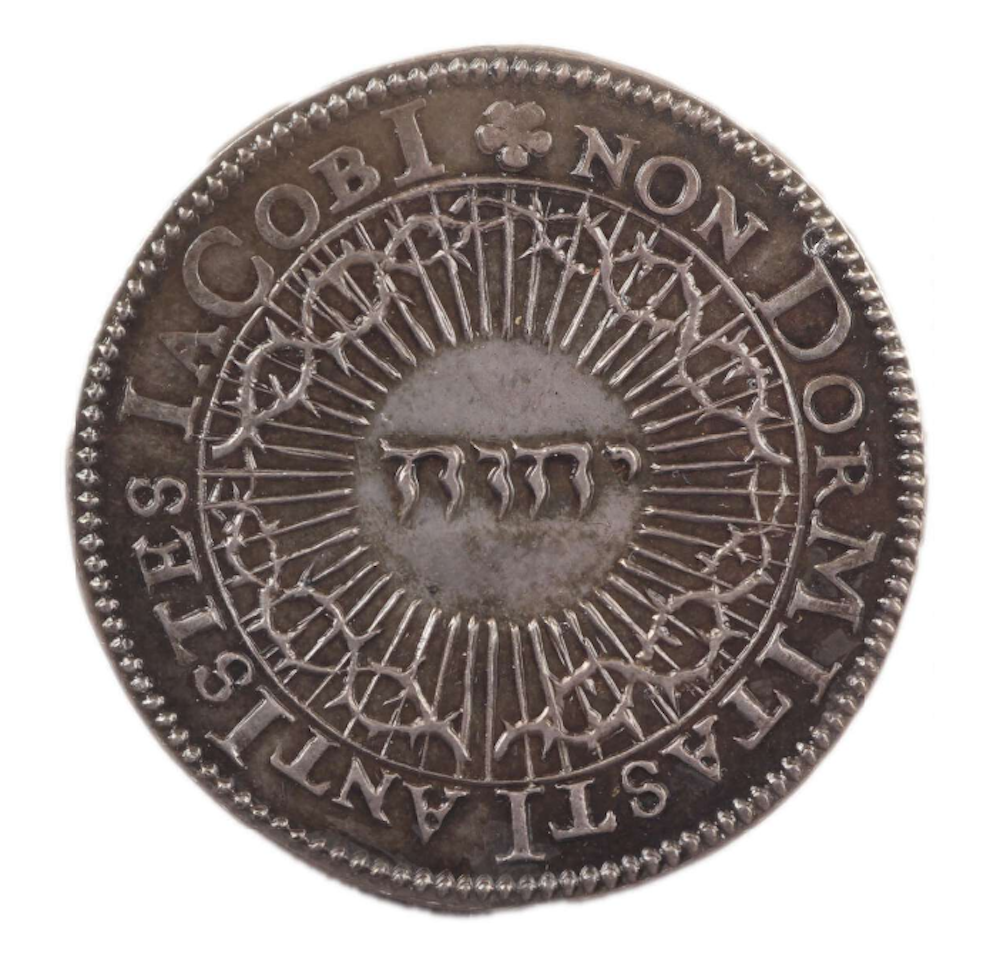 Image: British Museum
Tracing a parallel with this sensibility, Shakespeare borrows Banquo – a real 11th century person believed to be an ancestor of King James – from the historical Chronicles of Raphael Holinshed. His characterisation, deviating from that of Holinshed, puts King James, through association, on the side of right in the play.
Shakespeare’s story of Banquo, who is murdered on Macbeth’s orders but returns as a ghost, seems to shore up by supernatural intervention James’ right to the throne. That is, until we consider that the witches who prophesy that Banquo will be the father of kings are the same ones who predict Macbeth’s ascent to the crown.
Shakespeare’s play is unsettling. It provides a thought experiment. It teases out the moral ambiguities of a society whose members see others in black and white, while permitting shades of grey in themselves.
It is a society in which treachery is punished with sanctioned violence, but in which ambition paves the way to real power via both violence and treachery. It is the kingdom of Scotland riven by contending clans. It is England of 1606 reeling from the discovery of the Gunpowder Plot. It is our world of perpetual crisis.
Crisis appeals to the human imagination because it offers to suspend the rules by which we normally operate. Crisis can, as Macbeth shows, make moral compromises appeal as “the nearest way” to increased power. It can make brutal measures seem necessary to retain it.
Macbeth issues a warning for our times about the harm done to individuals and societies when they allow the will for power to drown out the inner voice of conscience.
Authors: Kate Flaherty, Senior Lecturer (English and Drama) ANU, Australian National University
Image: British Museum
Tracing a parallel with this sensibility, Shakespeare borrows Banquo – a real 11th century person believed to be an ancestor of King James – from the historical Chronicles of Raphael Holinshed. His characterisation, deviating from that of Holinshed, puts King James, through association, on the side of right in the play.
Shakespeare’s story of Banquo, who is murdered on Macbeth’s orders but returns as a ghost, seems to shore up by supernatural intervention James’ right to the throne. That is, until we consider that the witches who prophesy that Banquo will be the father of kings are the same ones who predict Macbeth’s ascent to the crown.
Shakespeare’s play is unsettling. It provides a thought experiment. It teases out the moral ambiguities of a society whose members see others in black and white, while permitting shades of grey in themselves.
It is a society in which treachery is punished with sanctioned violence, but in which ambition paves the way to real power via both violence and treachery. It is the kingdom of Scotland riven by contending clans. It is England of 1606 reeling from the discovery of the Gunpowder Plot. It is our world of perpetual crisis.
Crisis appeals to the human imagination because it offers to suspend the rules by which we normally operate. Crisis can, as Macbeth shows, make moral compromises appeal as “the nearest way” to increased power. It can make brutal measures seem necessary to retain it.
Macbeth issues a warning for our times about the harm done to individuals and societies when they allow the will for power to drown out the inner voice of conscience.
Authors: Kate Flaherty, Senior Lecturer (English and Drama) ANU, Australian National University 

















