

A clinical psychiatrist reveals how Indian women in Australia experience family violence – and how to combat it
- Written by: Silke Meyer, Professor of Social Work; Leneen Forde Chair in Child & Family Research, Griffith University
Manjula Datta O’Connor is a clinical psychiatrist and chair of the Royal Australian and New Zealand College of Psychiatrists Family Violence Psychiatry Network. She has a particular interest in the mental health experiences of migrant women affected by family violence. She has been supporting women in her clinical practice for the past three decades.
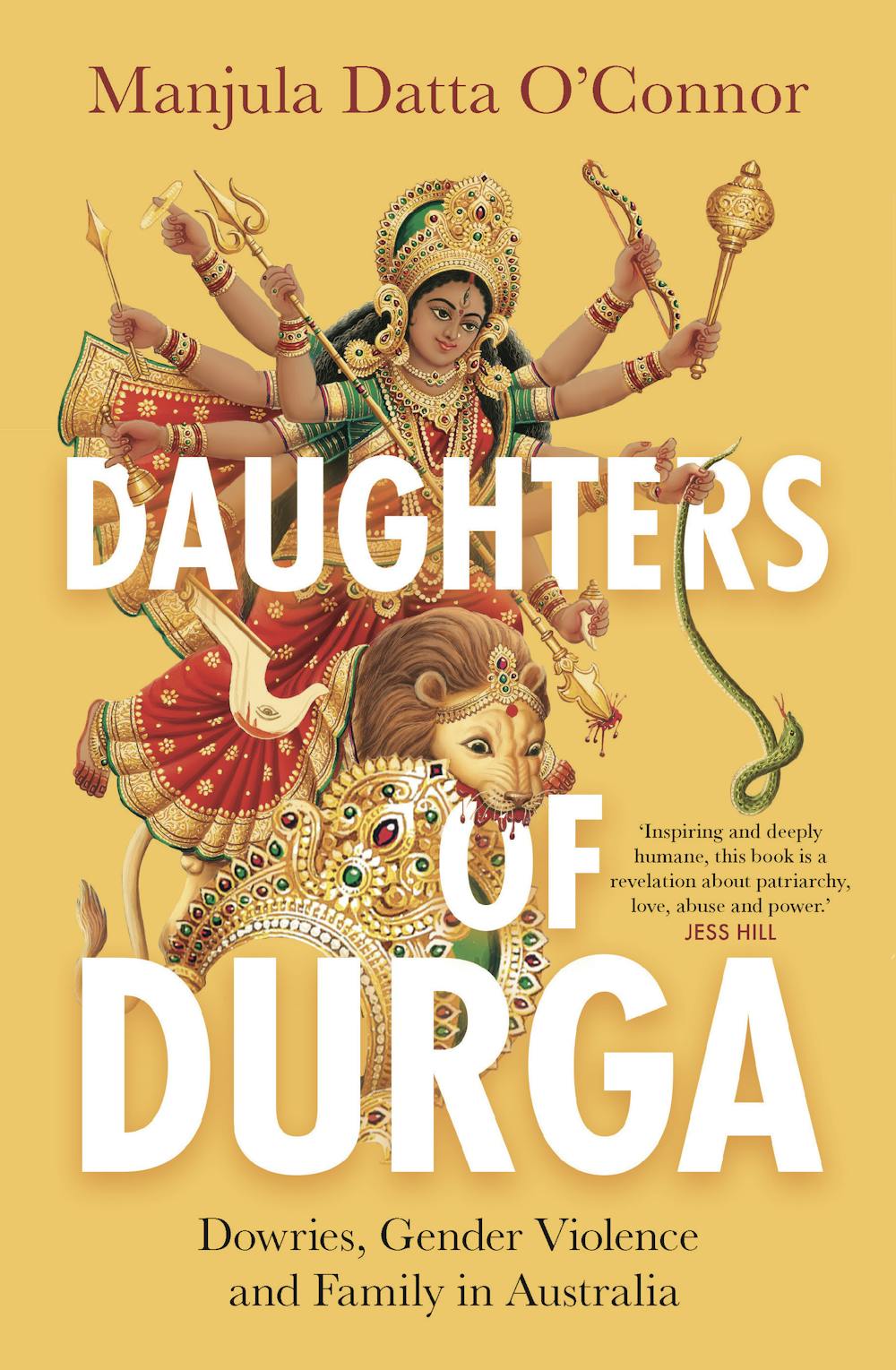
Review: Daughters of Durga: Dowries, Gender Violence and Family in Australia by Manjula Datta O’Connor (MUP)
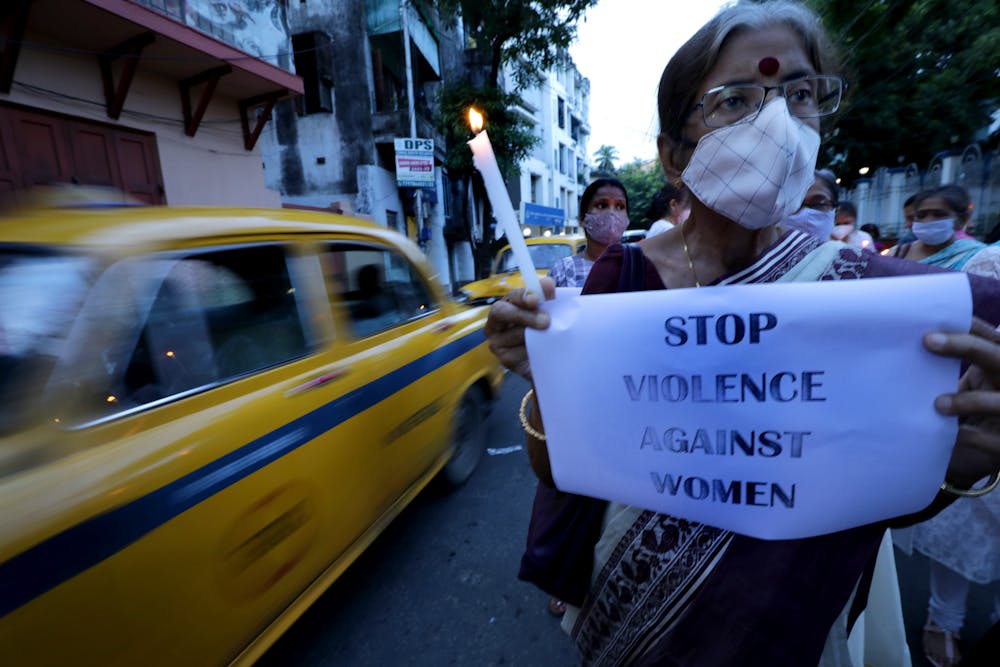 Indian women activists walk with candles and posters during a protest campaign titled Stop Violence Against Women in Kolkata, Eastern India, 2021.
Piyal Adhikary/EPA
Many Indian women thus complete university degrees that set them up with future career and earning opportunities. Yet as soon as a woman is married, her potential career is traded for her role as a “good” wife and mother. For many Indian women, this means being subordinate to their husbands and in-laws and giving birth to at least one son – because sons promise prosperity, while daughters are a financial burden.
Daughters of Durga illustrates how increasing a woman’s status through education also increases her risk of family violence. Many men – Indian and otherwise – continue to feel threatened by highly educated women with career prospects, particularly where these may exceed their own.
Educated women in India have a chance at gender equality in theory. But in practice a woman may still find herself trapped in a patriarchal relationship that reinforces her inferiority.
Read more:
Forceful and dominant: men with sexist ideas of masculinity are more likely to abuse women
Devaluing women harms everyone
Indian women activists walk with candles and posters during a protest campaign titled Stop Violence Against Women in Kolkata, Eastern India, 2021.
Piyal Adhikary/EPA
Many Indian women thus complete university degrees that set them up with future career and earning opportunities. Yet as soon as a woman is married, her potential career is traded for her role as a “good” wife and mother. For many Indian women, this means being subordinate to their husbands and in-laws and giving birth to at least one son – because sons promise prosperity, while daughters are a financial burden.
Daughters of Durga illustrates how increasing a woman’s status through education also increases her risk of family violence. Many men – Indian and otherwise – continue to feel threatened by highly educated women with career prospects, particularly where these may exceed their own.
Educated women in India have a chance at gender equality in theory. But in practice a woman may still find herself trapped in a patriarchal relationship that reinforces her inferiority.
Read more:
Forceful and dominant: men with sexist ideas of masculinity are more likely to abuse women
Devaluing women harms everyone
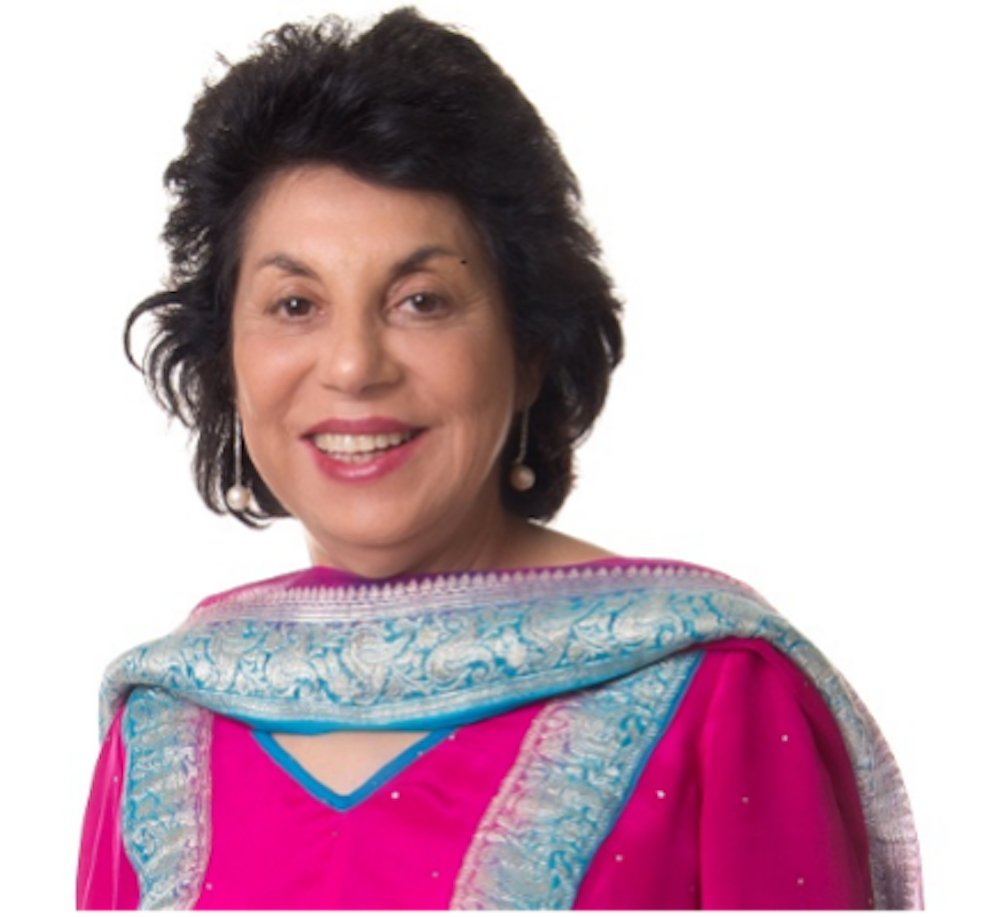 Author Manjula Datta O'Connor.
Author provided
The reinforcement of societal values that regard daughters as worth less than sons harms the mental wellbeing of the whole family. Again, this is not restricted to the Indian community: Datta O’Connor’s findings consider mental health costs associated with family violence more broadly.
Australia’s hyper-masculine culture has contributed to men’s mental health problems, including staggeringly high suicide rates among Australian men. Daughters of Durga empathetically explores how expectations of what it means to be a “real man” in Indian society similarly affect men’s mental well-being and the functioning of their relationships.
Social pressure to be the dominating head of the family has contributed to the deteriorating mental health of modern Indian men who seek equal relationships with a female partner. So long as the culture promotes gender inequality, Indian men who try to break out of the “man box” (which prescribes male dominance, strength and power within intimate relationships) will be reminded that they have failed as men.
This comes on top of gender inequality’s obvious cost to women. Family violence has detrimental short-term and long-term effects on women’s mental health. Datta O’Connor’s clinical practice and research highlight the devastating consequences of family violence for Indian women living in Australia.
Like many other advocates, Datta O’Connor argues that addressing men’s violence against women at its roots – by improving social attitudes to gender equality – would reduce the costs associated with the recovery needs of women and children, and mental health support for men. This would not only improve individual wellbeing, but promote healthy, respectful and safe relationships.
Read more:
It's still legal to rape your wife in India. That could be about to change
Preventing violence against Indian women
Daughters of Durga makes a significant contribution to our understanding of domestic and family violence in multicultural Australia. It also adds to current conversations around educating the community and service providers about women’s experiences of non-physical forms of abuse, such as coercive control.
Datta O’Connor clearly situates the culturally specific experiences of South Asian women experiencing family violence within a broader context of universal, cross-cultural experiences. She highlights the importance of a nuanced understanding of family violence that considers culture, migration and gender.
She concludes by reimagining the Manusmriti in a way that reflects gender equality and freedom from individual and structural violence for women.
Author Manjula Datta O'Connor.
Author provided
The reinforcement of societal values that regard daughters as worth less than sons harms the mental wellbeing of the whole family. Again, this is not restricted to the Indian community: Datta O’Connor’s findings consider mental health costs associated with family violence more broadly.
Australia’s hyper-masculine culture has contributed to men’s mental health problems, including staggeringly high suicide rates among Australian men. Daughters of Durga empathetically explores how expectations of what it means to be a “real man” in Indian society similarly affect men’s mental well-being and the functioning of their relationships.
Social pressure to be the dominating head of the family has contributed to the deteriorating mental health of modern Indian men who seek equal relationships with a female partner. So long as the culture promotes gender inequality, Indian men who try to break out of the “man box” (which prescribes male dominance, strength and power within intimate relationships) will be reminded that they have failed as men.
This comes on top of gender inequality’s obvious cost to women. Family violence has detrimental short-term and long-term effects on women’s mental health. Datta O’Connor’s clinical practice and research highlight the devastating consequences of family violence for Indian women living in Australia.
Like many other advocates, Datta O’Connor argues that addressing men’s violence against women at its roots – by improving social attitudes to gender equality – would reduce the costs associated with the recovery needs of women and children, and mental health support for men. This would not only improve individual wellbeing, but promote healthy, respectful and safe relationships.
Read more:
It's still legal to rape your wife in India. That could be about to change
Preventing violence against Indian women
Daughters of Durga makes a significant contribution to our understanding of domestic and family violence in multicultural Australia. It also adds to current conversations around educating the community and service providers about women’s experiences of non-physical forms of abuse, such as coercive control.
Datta O’Connor clearly situates the culturally specific experiences of South Asian women experiencing family violence within a broader context of universal, cross-cultural experiences. She highlights the importance of a nuanced understanding of family violence that considers culture, migration and gender.
She concludes by reimagining the Manusmriti in a way that reflects gender equality and freedom from individual and structural violence for women.
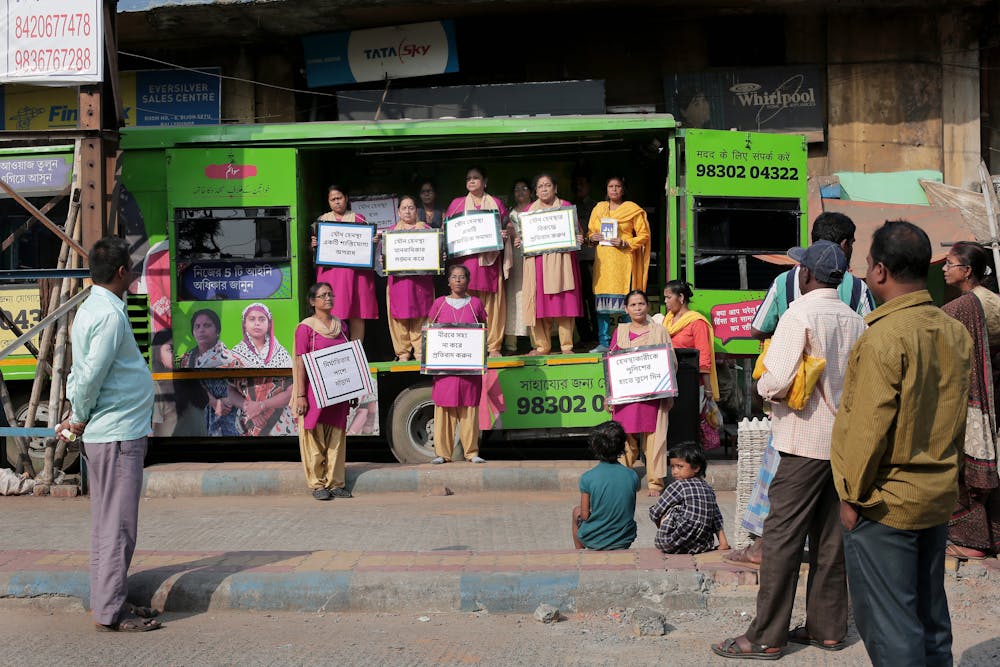 Indian activists perform a drama during a protest campaign titled Stop Violence Against Women by Swayam at a public area in Kolkata, Eastern India, 2018.
Piyal Adhikary/EPA
Indian women have made significant progress towards empowerment and equality in recent decades. Until men join them on this journey, women’s increasingly elevated status through education will remain a risk factor for family violence.
Indian societal expectations need to shift away from women being “good” and obedient wives and mothers in order to prevent men’s violence against them. Men need to be expected to support gender equality by contributing to housework and childcare, and by supporting women’s career opportunities and financial independence.
To achieve this, Datta O’Connor concludes, we need to educate boys and engage men as allies in the fight against family violence – and violence against women more broadly.
Authors: Silke Meyer, Professor of Social Work; Leneen Forde Chair in Child & Family Research, Griffith University
Indian activists perform a drama during a protest campaign titled Stop Violence Against Women by Swayam at a public area in Kolkata, Eastern India, 2018.
Piyal Adhikary/EPA
Indian women have made significant progress towards empowerment and equality in recent decades. Until men join them on this journey, women’s increasingly elevated status through education will remain a risk factor for family violence.
Indian societal expectations need to shift away from women being “good” and obedient wives and mothers in order to prevent men’s violence against them. Men need to be expected to support gender equality by contributing to housework and childcare, and by supporting women’s career opportunities and financial independence.
To achieve this, Datta O’Connor concludes, we need to educate boys and engage men as allies in the fight against family violence – and violence against women more broadly.
Authors: Silke Meyer, Professor of Social Work; Leneen Forde Chair in Child & Family Research, Griffith University 

















