

Want a solution for the energy crisis gripping Australia's east? Look west
- Written by: Tina Soliman Hunter, Professor of Energy and Natural Resources Law, Macquarie University
You can thank Margaret Thatcher for the gas supply crunch Australia’s east coast has been plunged into. As UK prime minister, Thatcher led the charge to kick the government out of the economy and allow the market to rule. In Australia, governments took up the idea with enthusiasm through deregulation and privatisation. But when the market fails, what happens? The state has to step in, again and again.
Putting the interests of citizens first requires state leadership over market rule. We saw this clearly yesterday when Australia’s national electricity market operator, AEMO, moved to suspend the wholesale electricity market. This radical move allowed the government entity to manage pricing and control of power plants and prevent rolling blackouts.
To see the truth of this, look west. While energy on Australia’s east coast has been in the hands of the market for decades, Western Australia has learned from previous crises. In the 1980s, the isolated state – which is not part of the national electricity market or the eastern gas region – decided to reserve 15% of all gas produced from the north west shelf for domestic use. Since then, WA has championed state intervention through its DomGas policy to ensure continuous supply of gas for its gas power stations and industry.
As the east coast energy crisis worsens, one thing is clear. Any solution has to involve government action. It’s time for governments to take back power – in more ways than one.
Letting the market lead is risky
State intervention has shielded West Australians from the east’s energy crisis. “The gas belongs to Australian citizens through their governments,” as former Western Australian premier Colin Barnett has said.
West Australian-style intervention came, in part, from necessity. The state lacks the east coast’s large coal reserves. The issue became urgent after the 2008 Varanus Island pipeline explosion, where the state suddenly lost almost a third of its gas supply. To compensate, the state government was able to maintain availability through its legislated domestic gas requirements.
Read more: Australia's National Electricity Market was just suspended. Here's why and what happens next
Paying homage to the market has got us into this mess. State and federal governments moved to privatise state assets throughout the 1980s and 1990s. Since then, governments have largely refused involvement in energy availability.
When Queensland’s coal seam gas was being developed in the 2000s, the state government let the market lead. That led to major waste, when the three successful consortia spent more than $A32 billion on separate pipelines, ports and processing facilities before a molecule of gas was produced. That meant all gas extracted was committed to overseas export contracts to be able to secure investment – leaving none for domestic use.
Imagine if the Queensland government had required coordination and multi-company participation, just as WA did when developing the gas resources of the Northwest Shelf. With government leadership, companies could have been able to use shared infrastructure – and gas could have been reserved for domestic use.
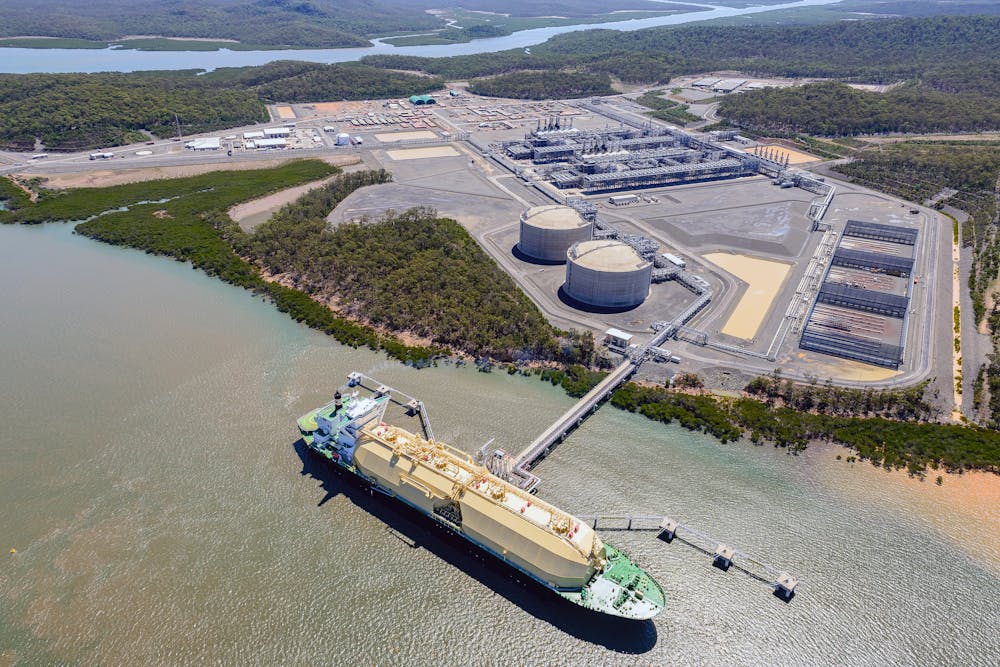 Nearly all of the east coast’s gas is exported through terminals like Curtis Island in Gladstone.
AAP
Nearly all of the east coast’s gas is exported through terminals like Curtis Island in Gladstone.
AAP
There’s no single silver bullet – but we do have three immediate solutions
Where is the market today? Suspended by AEMO to ensure consumers and manufacturers have power. Reliance on the market meant we have no gas available for the east coast because producers had to secure long-term contracts with foreign buyers to make their projects viable. Ahead of the transition towards hydrogen, the east coast still relies on gas for manufacturing and industrial uses.
As we wrote in 2018, there is no silver bullet to achieve energy security and overcome this crisis. But there are three linked solutions, which, as a package would provide short to medium term relief.
Short-term, we need to transport Western Australia’s abundant gas to the east coast. It is deeply ironic a country handsomely endowed with gas and the world’s largest LNG exporter is suffering from critical shortages because of our geography. In the short term, that means shipping liquefied natural gas (LNG) from WA ports to to east coast ports. In these ports, LNG can be loaded onto special ships, where LNG can be stored, regasified as needed, and injected into the existing gas pipelines. This is what Finland has turned to since deciding to cut all supply of Russian gas in May.
Medium-term, we need to connect the west’s gas pipeline network with the northern and eastern gas pipeline network. Five years ago, we recommended a pipeline be built as a solution to what we saw was an inevitable energy crisis on the east coast. In addition, this pipeline will let us transport hydrogen in the future. For years, it has been seen as too difficult – not technically, but commercially, since most pipelines are privately owned. Here, too, the government should step up and build it given the importance of energy security.
Medium-term, we also need legally binding gas reservation policies. At present, there are no legally binding conditions for eastern state gas projects requiring producers to reserve a percentage of gas for the domestic market. While the planned Narrabri gas project in NSW has been suggested as a solution to the energy crisis, this won’t work. That’s because while Narrabri still requires secondary approvals, there are no legal requirements to reserve gas. Narrabri is also controversial, as it poses multiple threats to the environment and surrounding community.
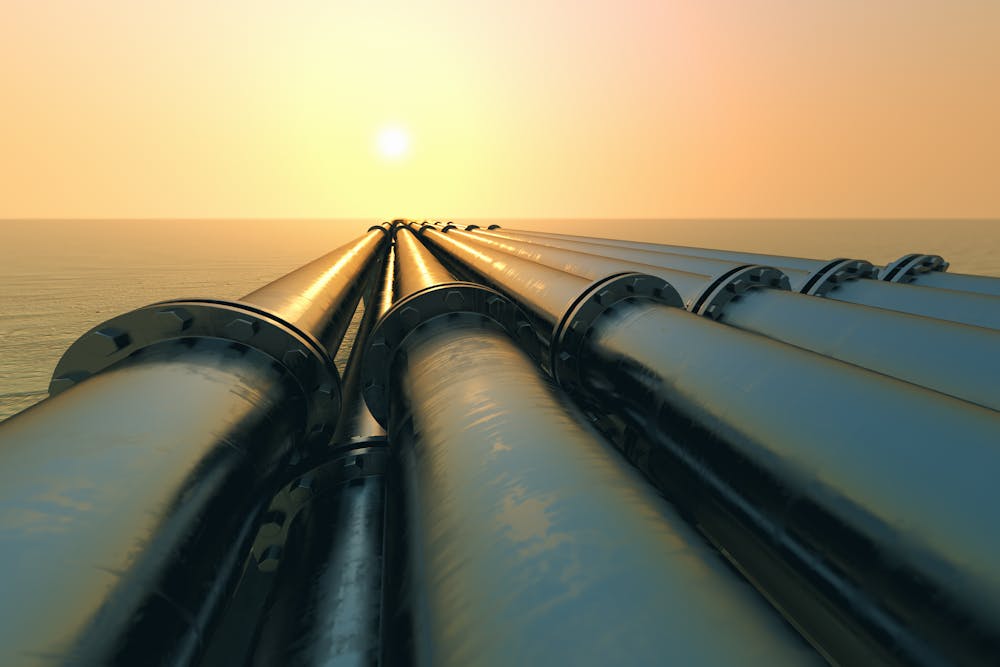 Connecting the west’s gas pipelines to the east will help.
Shutterstock
Connecting the west’s gas pipelines to the east will help.
Shutterstock
Never waste a good crisis
Once the immediate crisis is over, we should look west again. Western Australia has given the east a blueprint on how to handle energy crises and the clean energy transition.
In 2022, as east coast states reel from fossil fuel price spikes, what’s WA doing? They’ve committed to quitting coal power before 2030 and ruled out any new gas-fired power stations on the south-west grid after 2030. The state government will keep intervening in the energy market by directing billions of dollars into renewable energy and storage to ensure an orderly energy transition. In a similar approach to Germany, Western Australia will implement a “just transition” program allowing workers to be retrained or re-employed.
To make sure this never happens again, governments involved in the national electricity market should step up and claw back control foolishly given to the market for far too long.
Authors: Tina Soliman Hunter, Professor of Energy and Natural Resources Law, Macquarie University


















