

Keen to retrofit your home to lower its carbon footprint and save energy? Consider these 3 things
- Written by: Nimish Biloria, Associate Professor of Architecture, University of Technology Sydney
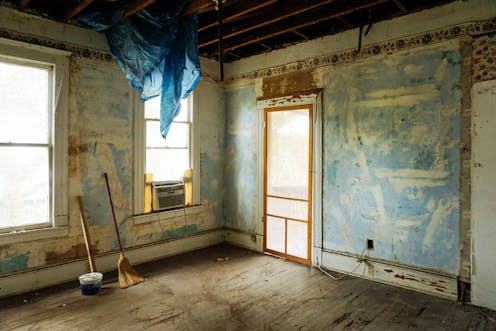
If you’re anything like me, you’re increasingly working from home, one that was built before energy efficiency measures were introduced in Australia.
With temperatures along the east coast plunging and power bills skyrocketing, heating (and cooling) our homes is an energy intensive, expensive affair.
Almost 8 million homes across Australia lack sufficient insulation, use sub-par heating and cooling equipment, or are badly designed.
Indeed, these 8 million pre-energy rated homes account for 18% of Australia’s greenhouse gas emissions. And research finds 26% of Australians across all housing types can’t stay warm at least half of the time during winter.
Retrofitting this housing stock to be more energy efficient is essential to successfully meet Australia’s target of cutting emissions 43% by 2030, while finding comfort in our future of intensifying climate extremes.
My research into net-zero emissions retrofitting identifies three broad categories that must be considered when retrofitting existing homes to be more climate friendly:
visual comfort: the sufficient quality, quantity and distribution of light
thermal comfort: determined by the temperature, humidity, air flow and a person’s physical condition
energy consumption: the amount of energy we use, and the energy used in manufacturing, transporting, constructing, maintaining, and removal of materials to build our homes.
1. Visual comfort
It’s vital to understand how much sunlight the outside and interior of your home is exposed to. One can, accordingly, re-organise interior functions based on the demand for lighting, heating or cooling needs.
During summer, spaces used often during the day, such as your home office, could benefit from being in places that receive less direct sunlight, so are cooler. In winter, consider moving your home office set up to a room with higher levels of direct sunlight, where it’s warmer.
This will naturally reduce the amount of energy needed to cool or heat these rooms while allowing for comfortable working conditions.
Other ways we can find more visual comfort include modifying the size of windows and skylights to let in more sunlight. To diffuse harsh lighting, consider adding screens, sun baffles, overhangs, or pergolas over windows.
You can also replace your lights with LEDs equipped with linear controllers and motion sensors in places where lights tend to be left on. LEDs use around 75% less energy than halogen light bulbs.

2. Thermal comfort
Older Australian homes are incredibly draughty, and a lot of the energy we spend cooling or heating our homes escapes outside due to poor insulation. Retrofitting to improve your home’s natural ventilation can reduce the number of times you need to switch on the heater or air conditioner.
Sealing outside and internal surfaces until they’re airtight is crucial. Different surfaces – whether walls, floors or ceilings – require different methods, types and thicknesses of insulation.
Walls, for instance, require a “blow-in” method. This can involve installing cellulose foam or glasswool (made from fibreglass) into the wall, via a small hole through the wall cavities (for cellulose foam) or laying glasswool batts in wall cavities. Floors, on the other hand, can require insulation panels fitted between timber or steel supports or foam boards.
Also important is to choose materials and methods that maximise insulation while minimising thermal bridging. A thermal bridge is a weak point where heat is lost, such as wall intersections, connecting points of mounting brackets, and even penetration points of electric cables.
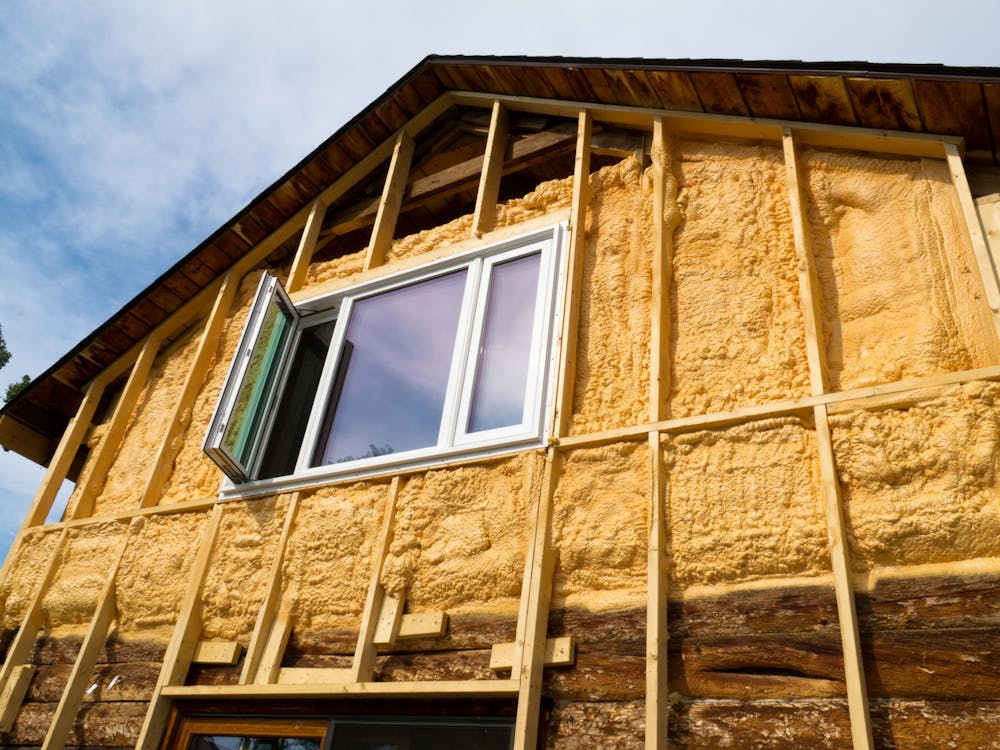 Insulating the walls is crucial to stabilise temperatures inside.
Shutterstock
Insulating the walls is crucial to stabilise temperatures inside.
Shutterstock
Between ten and 35% of the energy we spend cooling or heating our homes escapes through single glazed windows and doors. Installing double or triple glazed windows and doors will go a long way to keep temperatures more stable inside.
It’s worth noting the energy performance rating systems on measurement labels, which are often attached to window and door units you can buy in stores.
Ultimately, a combination of improved natural ventilation and mechanical ventilation (such as air conditioners as fans) can result in considerable energy savings – up to 79% in some instances.
3. Energy consumption
While the above strategies will result in significant energy savings, it’s also vital to consider the energy required to produce and manufacture retrofitting materials. Consider using salvaged or recycled materials where possible, or choosing locally made products which avoid emissions associated with transport.
Effectively installing solar panels can offset this “hidden” carbon. Let’s say you’ve done all you can to lower your home’s carbon footprint – you’ve rolled out insulation, installed double glazed windows and made the most of sunshine.
Read more: Stop removing your solar panels early, please. It's creating a huge waste problem for Australia
You can then calculate the energy you still use to heat or cool your home. This number will determine how many rooftop solar panels you should install to break even, rather than simply installing as many panels that can fit.
This will not only save you money, but also minimise waste. Researchers estimate that by 2047, Australia will accumulate 1 million tonnes of solar panel waste.
It’s worth opting for solar panels with micro-inverters, which capture optimal energy performance per panel while allowing you to add more panels in future if needed.
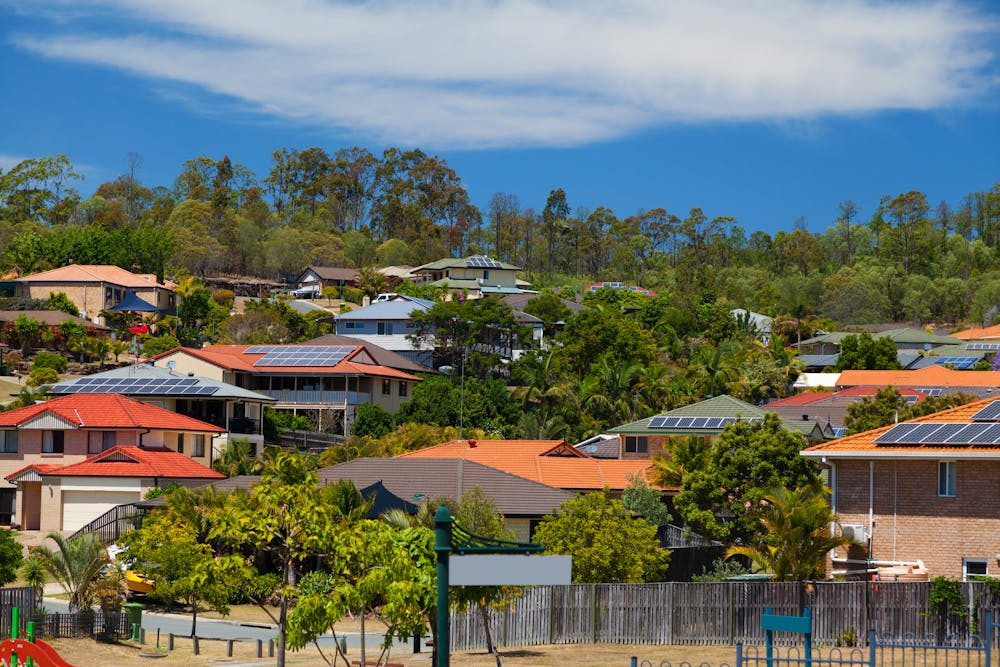 Solar panels can offset some of the carbon associated with manufacturing the materials you’ve purchased.
Shutterstock
Solar panels can offset some of the carbon associated with manufacturing the materials you’ve purchased.
Shutterstock
Another option is to use air-source heat pumps, which absorb heat from outside and bring it inside (like a reverse air conditioner). These can take the form of mini-split heat pumps for individual rooms, or multi-zone installations.
They can sense indoor temperature, and operate at variable speeds and heating or cooling intensity, which means their energy performance is very efficient. My research finds well-planned use of such systems can reduce the energy used for heating by 69% and cooling by 38%.
It’s well worth the effort
These retrofitting ideas might seem expensive, or take too much time. However, they’ll often save you money in the long run as energy prices become increasingly uncertain.
You can look to Every Building Counts, an initiative by the Green Building Council and the Property Council of Australia, which provides practical plans for emission reduction.
Australia can also learn from ongoing efforts by the Energiesprong network in the Netherlands. This network is industrialising energy efficiency with prefabricated retrofitting building elements.
Some initiatives include lightweight insulated panels that can simply be placed in front of existing walls of homes. These panels are precisely fitted after carefully laser scanning a facade and robotically cutting openings to match existing homes. Harnessing contemporary technology is vital for a speedy net-zero transition.
Authors: Nimish Biloria, Associate Professor of Architecture, University of Technology Sydney


















