

Brands are leaning on 'recycled' clothes to meet sustainability goals. How are they made? And why is recycling them further so hard?
- Written by: Timo Rissanen, Associate professor, University of Technology Sydney
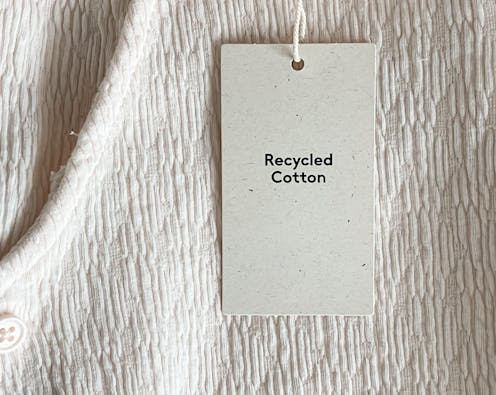
Today we make more clothing than ever before. And the driver for this is primarily economic, rather than human need. Over the past decade, the term “circular economy” has entered the fashion industry lexicon, wherein materials are made to be reused and recycled by design.
Yet we haven’t seen the same level of recycling in fashion as we have in other spaces – such as with plastic recycling, for instance. And this is mainly because clothing-to-clothing recycling is much more difficult.
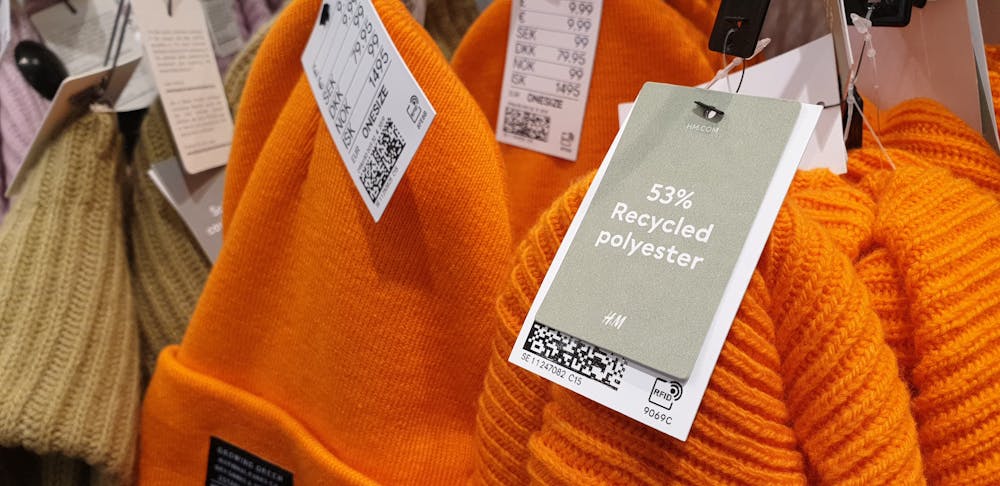
The use of recycled polyester and cotton by brands such as H&M and Cotton On are key aspects of these companies’ sustainability initiatives – but the source of these recycled fibres usually isn’t clothing. Recycled polyester tends to come from plastic bottles, and recycled cotton is usually made from manufacturing waste.
The fact is most clothing is simply not designed to be recycled. Even when it is, the fashion industry lacks the kind of infrastructure needed to really embrace a circular economy model.
Why is recycling clothes difficult?
Recycling clothing isn’t like recycling paper, glass or metal. Clothes are endlessly variable and unpredictable. So they’re not ideal for recycling technologies, which require a steady and consistent source material.
Even a seemingly simple garment may contain multiple materials, with fibre blends such as cotton/polyester and cotton/elastane being common.
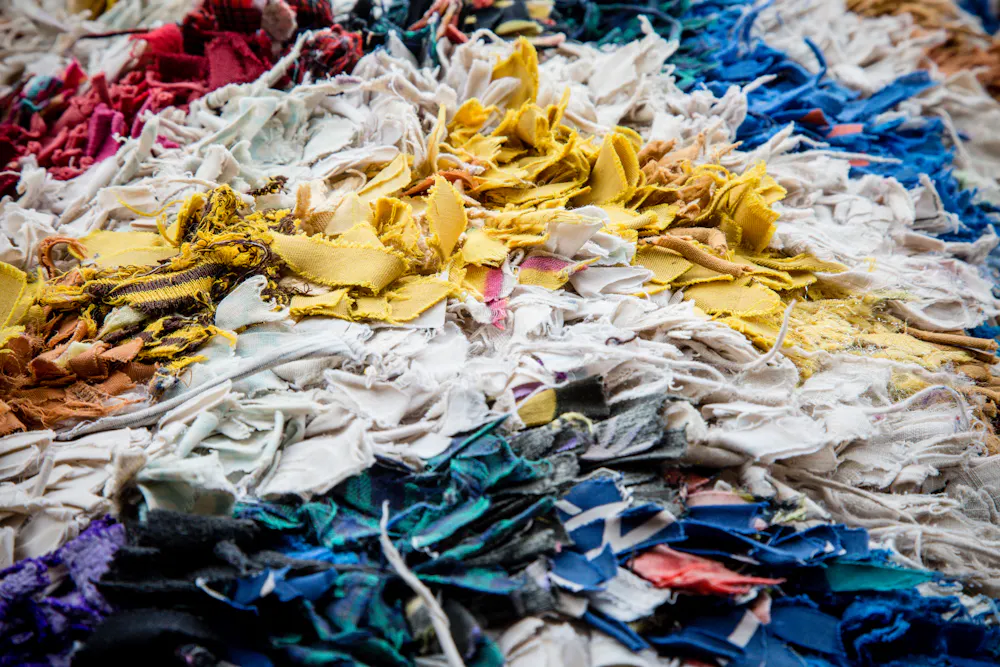
Different fibres have different capacities for recycling. Natural fibres such as wool or cotton can be recycled mechanically. In this process the fabric is shredded and re-spun into yarn, from which new fabric can be woven or knitted.
However, the fibres become shorter through the shredding process, resulting in a lower quality yarn and cloth. Recycled cotton is often mixed with virgin cotton to ensure a better quality yarn.
Most fabrics are also dyed with chemicals, which can have implications for recycling. If the original fabric is a mixture of many colours, the new yarn or fabric will likely need bleaching to be dyed a new colour.
A complex garment such as a lined jacket easily contains more than five different materials, as well as trims including buttons and zippers. If the goal of recycling is to arrive at a material as close to the original as possible, all the garment’s components and fibres would first need to be separated.
This requires labour and can be expensive. It’s often easier to shred the garment and turn it into a low-quality product, such as shoddy which is used for insulation.
 Even if a garment is designed to be recyclable, if the infrastructure needed is missing, it will likely still end up in landfill.
Read more:
To make our wardrobes sustainable, we must cut how many new clothes we buy by 75%
Industry progress and challenges
Companies such as BlockTexx and Evrnu have developed processes to recycle fibres from blended fabrics, though such recycled fibres aren’t yet widely available.
Through a proprietary technology, BlockTexx separates cellulose (present in both cotton and linen) and polyester from textile and clothing waste for new uses, including in new clothing. And Evrnu has developed a type of viscose made entirely from textile and clothing waste.
Spain-based company Recover meticulously sorts through different kinds of cotton textile waste to produce high quality, mechanically recycled, cotton fibre.
There’s also biological recycling. Fibre waste from the Rivcott cotton “gin” (or cotton engine) is composted to become fertiliser for a new cotton crop. The same is possible with natural fibres from worn-out clothing, after potentially toxic dyes and chemicals have been eliminated.
Synthetic fibres such as polyester and polyamide (nylon) can also be recycled mechanically and chemically. Chemical recycling through re-polymerisation (where the plastic fibre is melted) is an attractive option, since the quality of the original fibre can be maintained.
In theory it’s possible to use polyester clothing as the source for this. But in practice the source is usually bottles. This is because clothing is usually “contaminated” with other materials such as buttons and zippers, and separating these is too labour intensive.
The plastic problem
Almost all recycled polyester in clothing today comes from recycled plastic bottles, rather than previous polyester clothing. This is significant when you consider polyester accounts for more than 60% of all fibre use.
Given the rapid increase in the production of synthetic fibres, and the as-yet-unknown impact of microplastics (which were documented in human placentas last year) – the question remains whether clothing should be made from biologically incompatible materials at all.
Polyester clothes, regardless of fibre sources, contribute to microplastic pollution by shedding fibres when worn and laundered.
Even if a garment is designed to be recyclable, if the infrastructure needed is missing, it will likely still end up in landfill.
Read more:
To make our wardrobes sustainable, we must cut how many new clothes we buy by 75%
Industry progress and challenges
Companies such as BlockTexx and Evrnu have developed processes to recycle fibres from blended fabrics, though such recycled fibres aren’t yet widely available.
Through a proprietary technology, BlockTexx separates cellulose (present in both cotton and linen) and polyester from textile and clothing waste for new uses, including in new clothing. And Evrnu has developed a type of viscose made entirely from textile and clothing waste.
Spain-based company Recover meticulously sorts through different kinds of cotton textile waste to produce high quality, mechanically recycled, cotton fibre.
There’s also biological recycling. Fibre waste from the Rivcott cotton “gin” (or cotton engine) is composted to become fertiliser for a new cotton crop. The same is possible with natural fibres from worn-out clothing, after potentially toxic dyes and chemicals have been eliminated.
Synthetic fibres such as polyester and polyamide (nylon) can also be recycled mechanically and chemically. Chemical recycling through re-polymerisation (where the plastic fibre is melted) is an attractive option, since the quality of the original fibre can be maintained.
In theory it’s possible to use polyester clothing as the source for this. But in practice the source is usually bottles. This is because clothing is usually “contaminated” with other materials such as buttons and zippers, and separating these is too labour intensive.
The plastic problem
Almost all recycled polyester in clothing today comes from recycled plastic bottles, rather than previous polyester clothing. This is significant when you consider polyester accounts for more than 60% of all fibre use.
Given the rapid increase in the production of synthetic fibres, and the as-yet-unknown impact of microplastics (which were documented in human placentas last year) – the question remains whether clothing should be made from biologically incompatible materials at all.
Polyester clothes, regardless of fibre sources, contribute to microplastic pollution by shedding fibres when worn and laundered.
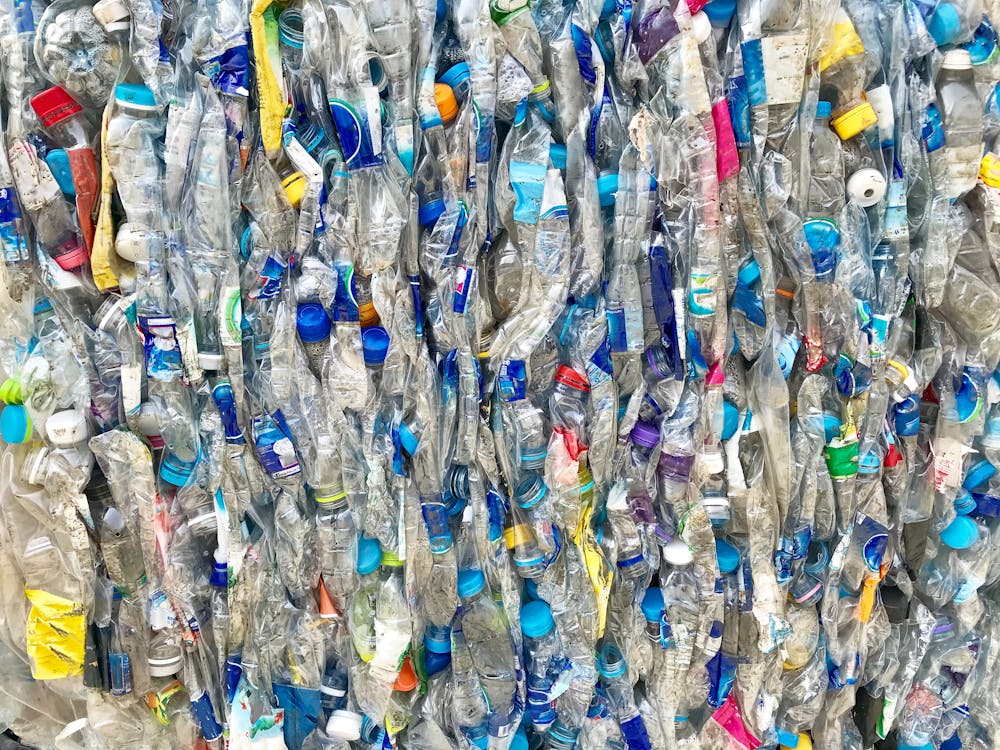 Although plastic bottles can be recycled into clothing, that clothing is very difficult to further recycle.
Shutterstock
A new generation of synthetic fibres from renewable sources (recyclable and also biodegradable) offers a path forward. For instance, the Kintra fibre is made from corn.
Reduce and reuse before you recycle
There’s plenty of evidence that reducing the consumption of clothing by wearing items longer and buying second-hand is preferable to purchasing recycled fibre clothes.
But even second-hand fashion isn’t without problems when you consider the scale and pace of clothing production today.
Liz Ricketts of the US-based OR Foundation, a charity focused on sustainable fashion, paints a gruesome picture of the Kantamanto market in Ghana, where much of the world’s secondhand clothing ends up (including from Australia).
One path forward is for companies to take responsibility for products at their end of life. US fashion brand Eileen Fisher is a pioneer on this front.
The company has purchased garments back from customers since 2009. These are cleaned and sorted, and mostly resold under the Eileen Fisher Renew brand.
Garments too damaged for resale are given to a dedicated design team, which redesigns them to be sold under the Eileen Fisher Resewn collection. Off-cuts from this process are captured and turned into textiles for further use.
Read more:
Time to make fast fashion a problem for its makers, not charities
Authors: Timo Rissanen, Associate professor, University of Technology Sydney
Although plastic bottles can be recycled into clothing, that clothing is very difficult to further recycle.
Shutterstock
A new generation of synthetic fibres from renewable sources (recyclable and also biodegradable) offers a path forward. For instance, the Kintra fibre is made from corn.
Reduce and reuse before you recycle
There’s plenty of evidence that reducing the consumption of clothing by wearing items longer and buying second-hand is preferable to purchasing recycled fibre clothes.
But even second-hand fashion isn’t without problems when you consider the scale and pace of clothing production today.
Liz Ricketts of the US-based OR Foundation, a charity focused on sustainable fashion, paints a gruesome picture of the Kantamanto market in Ghana, where much of the world’s secondhand clothing ends up (including from Australia).
One path forward is for companies to take responsibility for products at their end of life. US fashion brand Eileen Fisher is a pioneer on this front.
The company has purchased garments back from customers since 2009. These are cleaned and sorted, and mostly resold under the Eileen Fisher Renew brand.
Garments too damaged for resale are given to a dedicated design team, which redesigns them to be sold under the Eileen Fisher Resewn collection. Off-cuts from this process are captured and turned into textiles for further use.
Read more:
Time to make fast fashion a problem for its makers, not charities
Authors: Timo Rissanen, Associate professor, University of Technology Sydney 

















