

Our current methods of food production are unsustainable – in his latest book, George Monbiot considers the alternatives
- Written by: Petra Marschner, Professor of Agriculture, University of Adelaide
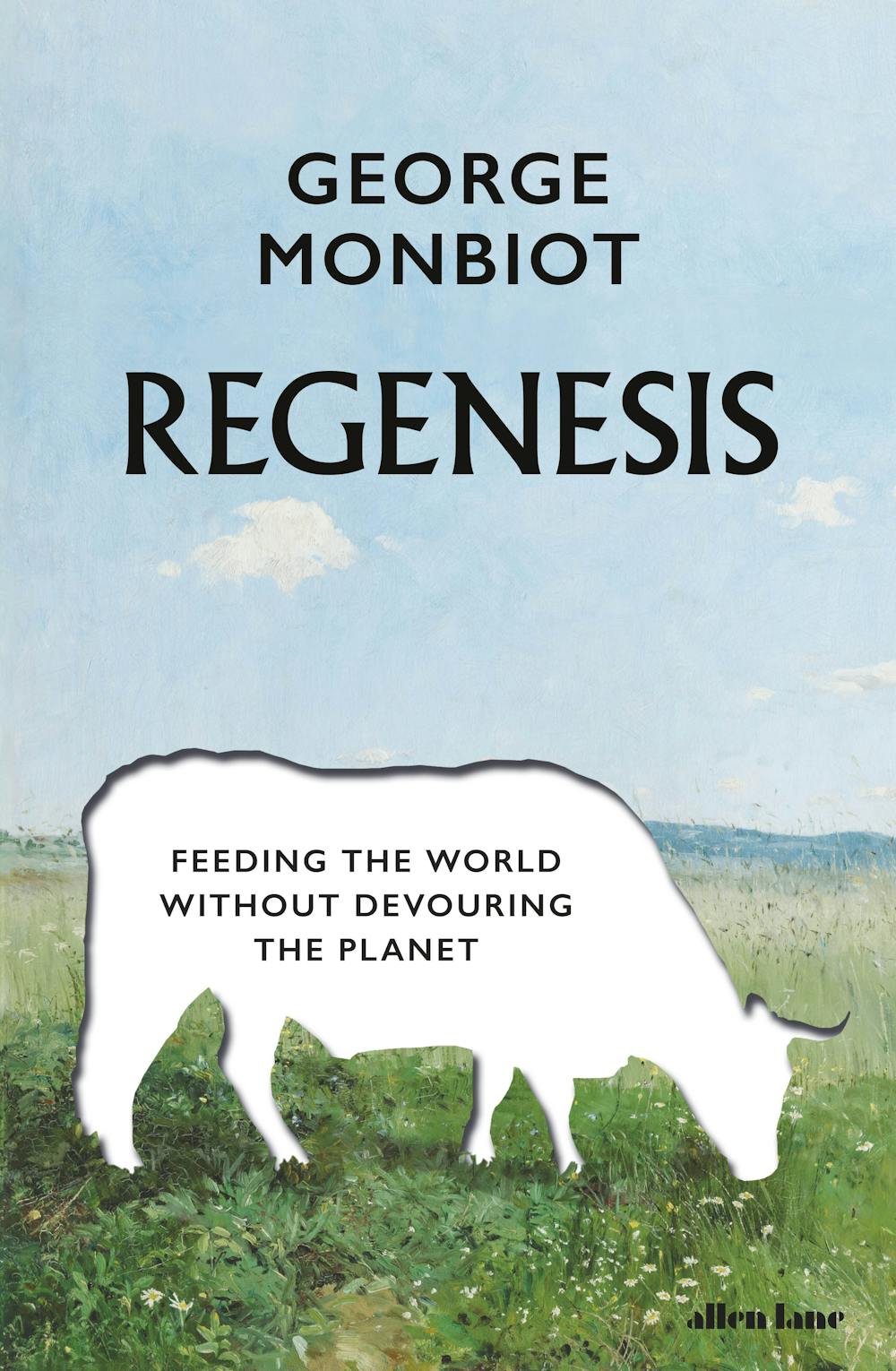
In his new book Regenesis, journalist and environmental activist George Monbiot describes problems associated with agriculture now and into the future. He also gives examples of how agriculture can be improved to produce healthy food sustainably. He does this in an engaging manner by combining his own experiences with an impressive knowledge of the literature.
Review: Regenesis: Feeding the World Without Devouring the Planet – George Monbiot (Allen Lane)
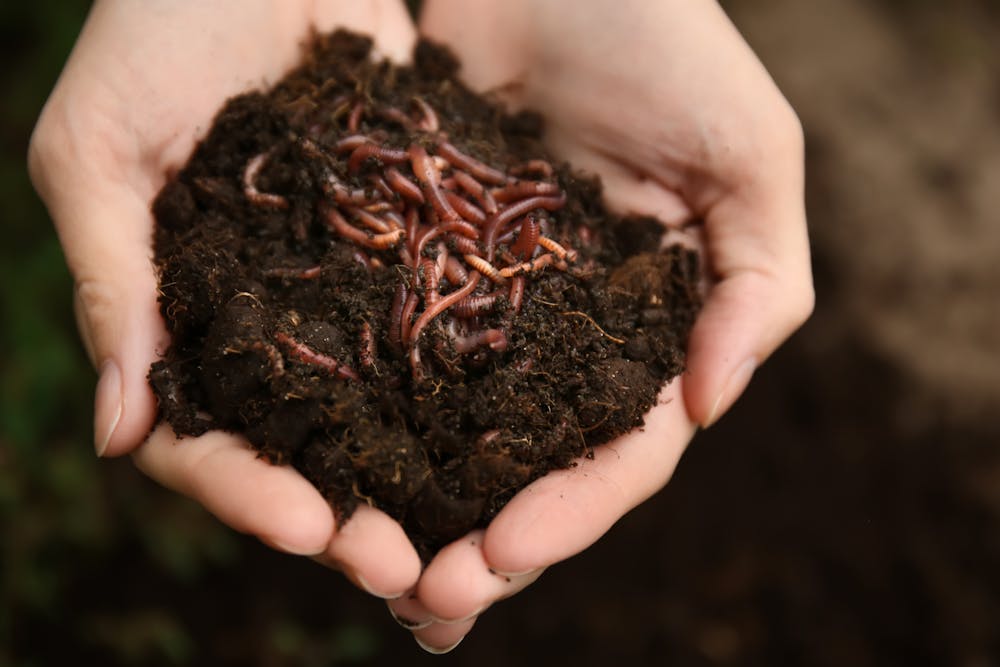
In his opening chapter, Monbiot describes digging into the soil in his orchard. He marvels at the amazing soil life and its diversity, ranging from macro-organisms such as snails, earthworms and beetles, to “mesofauna” such as mites, nematodes, bacteria and fungi. For each group, he describes their functions and interactions with other soil organisms and plants, stressing the importance of a diverse and functional community.
The health of the soil, he emphasises, is crucial for our survival, because processes in soils regulate to a large extent the world above ground.
Monbiot observes that such complex ecosystems cannot be understood simply by studying individual components, and he links this insight to the threat of global warming for food production.
The historical shift in Western diets from a variety of plants to a few major crops (such as wheat, rice, maize and soybean) has created the “standard farm”, which grows only a few crops and requires pesticides and chemical fertilisers to maintain productivity. This has created vulnerabilities in the system, which is beholden to markets and to suppliers of seeds, pesticides and fertilisers. To this can be added the threats of drought, erosion, loss of organic matter, and contamination.
Monbiot describes the environmental flow of nutrients such as nitrogen and phosphorus, to draw a picture of agriculture’s relationship to other systems.
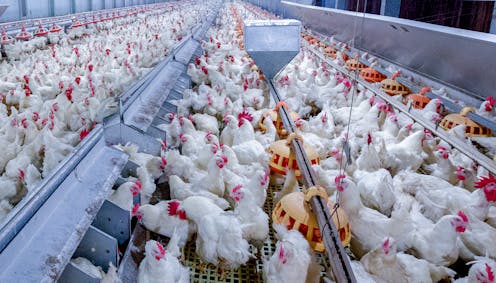
He discusses how effluent from specialised dairy, pig and chicken farms containing animal excrement leads to high nutrient loads in waterways, which in turn stimulates algal growth and leads to the death of other aquatic organisms – a process known as “eutrophication”.
 This process is exacerbated by imported feed stocks. Other contaminants from conventional agriculture include antibiotics, metals, microplastics, fertilisers, herbicides and pesticides, all of which have seeped into natural ecosystems as a consequence of the expansion of agriculture.
But Monbiot understands that nutrient release from organic farming is also difficult to control. He debunks claims that organic farming does not lead to soil and water contamination, that eating local produce reduces greenhouse gas emissions, and that holistic grazing could reverse the increase in emissions over the past 100 years.
What are the alternatives?
Having drawn a bleak picture of current conditions and the future of soils and farming, Monbiot sets out to find examples of land management practices that sustain and even regenerate soils and ecosystems.
In a chapter titled Fruitful, he considers the case of Iain Tolhurst, who manages a vegetable farm that he started on very poor, gravelly soil. Tolhurst gradually built up a healthy soil and now has achieved yields comparable to conventional horticulture using organic management strategies.
These include using natural predators to control pests via flower banks on the edges of his fields. Tolhurst has also reduced nutrient leaching by having his fields planted throughout the year with green manure crops, which serve as a nutrient source for subsequent crops. He composts wood chips as soil amendment and makes a point of growing a wide variety of vegetables.
This process is exacerbated by imported feed stocks. Other contaminants from conventional agriculture include antibiotics, metals, microplastics, fertilisers, herbicides and pesticides, all of which have seeped into natural ecosystems as a consequence of the expansion of agriculture.
But Monbiot understands that nutrient release from organic farming is also difficult to control. He debunks claims that organic farming does not lead to soil and water contamination, that eating local produce reduces greenhouse gas emissions, and that holistic grazing could reverse the increase in emissions over the past 100 years.
What are the alternatives?
Having drawn a bleak picture of current conditions and the future of soils and farming, Monbiot sets out to find examples of land management practices that sustain and even regenerate soils and ecosystems.
In a chapter titled Fruitful, he considers the case of Iain Tolhurst, who manages a vegetable farm that he started on very poor, gravelly soil. Tolhurst gradually built up a healthy soil and now has achieved yields comparable to conventional horticulture using organic management strategies.
These include using natural predators to control pests via flower banks on the edges of his fields. Tolhurst has also reduced nutrient leaching by having his fields planted throughout the year with green manure crops, which serve as a nutrient source for subsequent crops. He composts wood chips as soil amendment and makes a point of growing a wide variety of vegetables.
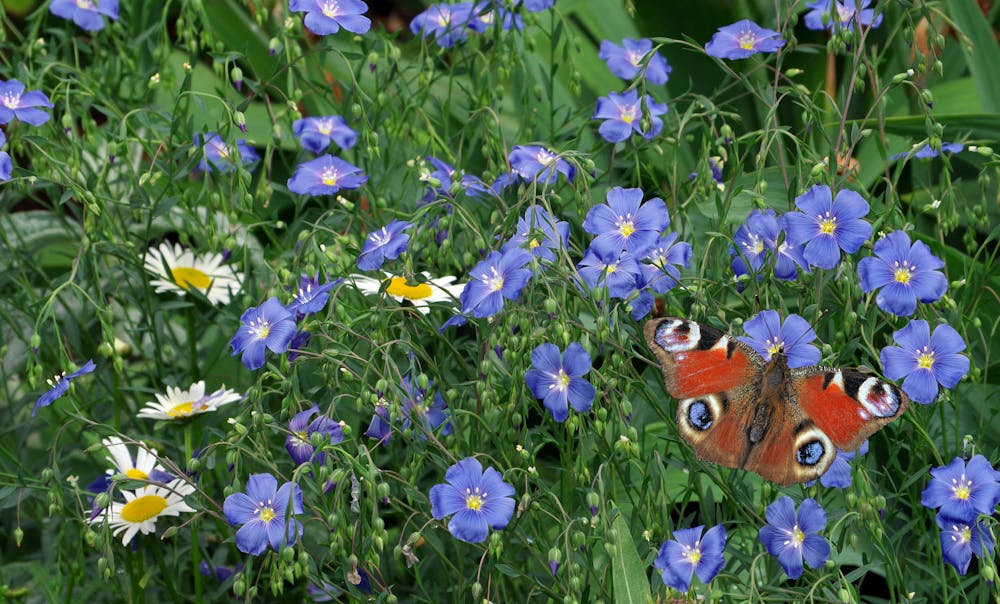 Flower beds on the edge of fields bring insects.
shutterstock
Food waste and food transport are also acknowledged as significant issues. Monbiot notes that distributing leftover food to food banks can only be a local solution to the problem of waste, as transport over long distances would make it uneconomical. Food waste, he argues, could be dramatically be reduced by eating a mainly plant-based diet.
Urban agriculture offers a means of producing food locally, but as Monbiot observes it can only provide a fraction of the food we consume because of the limited space.
Read more:
The world's affluent must start eating local food to tackle the climate crisis, new research shows
Flower beds on the edge of fields bring insects.
shutterstock
Food waste and food transport are also acknowledged as significant issues. Monbiot notes that distributing leftover food to food banks can only be a local solution to the problem of waste, as transport over long distances would make it uneconomical. Food waste, he argues, could be dramatically be reduced by eating a mainly plant-based diet.
Urban agriculture offers a means of producing food locally, but as Monbiot observes it can only provide a fraction of the food we consume because of the limited space.
Read more:
The world's affluent must start eating local food to tackle the climate crisis, new research shows
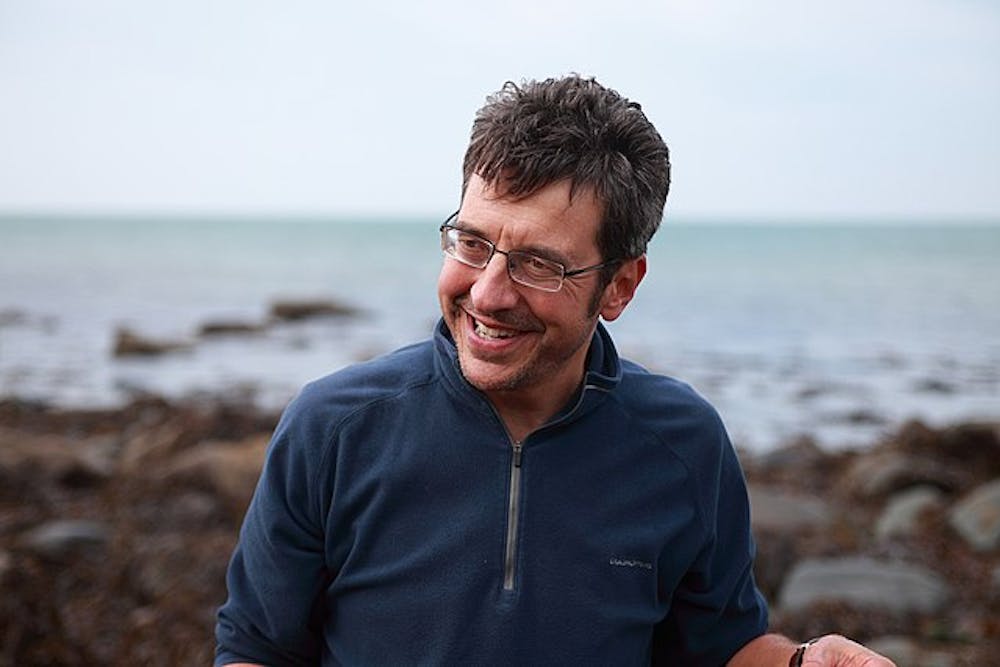 George Monbiot.
John Russell/Wikimedia commons
Monbiot argues we need a better understanding of soil fertility (or agroecology). We need to use this understanding to help farmers develop management strategies that will enhance soil fertility naturally and sustainably.
But switching to alternative farming systems has its difficulties.
Monbiot considers the benefits of no-till farming for soils, but also the problems associated with it, such as the use of herbicides. He describes an alternative farming system based on crop rotations with legumes and cereals (mostly old varieties) and sheep or cattle grazing the leys. This system includes tillage, but only every second year.
Monbiot argues that perennial grain crops have many benefits compared to annuals, because they can grow and be harvested for several years and have deep roots. However, he acknowledges that very few perennial grain crops are sufficiently studied to be grown on a larger scale.
Read more:
Fennel looking a bit feeble? Growing enough veggies to feed yourself depends on these 3 things
George Monbiot.
John Russell/Wikimedia commons
Monbiot argues we need a better understanding of soil fertility (or agroecology). We need to use this understanding to help farmers develop management strategies that will enhance soil fertility naturally and sustainably.
But switching to alternative farming systems has its difficulties.
Monbiot considers the benefits of no-till farming for soils, but also the problems associated with it, such as the use of herbicides. He describes an alternative farming system based on crop rotations with legumes and cereals (mostly old varieties) and sheep or cattle grazing the leys. This system includes tillage, but only every second year.
Monbiot argues that perennial grain crops have many benefits compared to annuals, because they can grow and be harvested for several years and have deep roots. However, he acknowledges that very few perennial grain crops are sufficiently studied to be grown on a larger scale.
Read more:
Fennel looking a bit feeble? Growing enough veggies to feed yourself depends on these 3 things
 Kai Pilger/Unsplash
A farm-free future?
Towards the end of Regenesis, Monbiot turns his attention to livestock farming and farm subsidies that, in his view, only encourage farmers to overstock their land and increase the area for farming to the detriment of the environment.
One of his final chapters presents a vision of farm-free food production, using bacteria to produce carbohydrates, proteins and vitamins. This would require less time and less land than current food production. The high energy requirement could be met by solar and other renewable energy sources.
Switching to food produced by bacteria would require a major change not only in production systems, but also in consumer preferences. It would be strongly opposed by the meat industry.
Monbiot argues that such a switch is essential to save our environment, but food produced by bacteria may mean dependence on a few large producers, which would increase transport costs and could prove to be unaffordable for poorer countries. It also carries the risk of contamination.
Monbiot ends his book with a passionate plea that we need to change our views on farming and food and embrace new ideas for low-impact food production. He argues it is time to take back control of the global food system and create a new, rich, productive and, ideally, organic agriculture, as well as a new cuisine.
In the short chapter that concludes Regenesis, Monbiot returns to his orchard and describes his devastation when frost destroyed the apples just before harvest.
A few weeks later, he starts preparing his orchard for the next year. The story serves as a small example of how hope can triumph over adversity. Monbiot’s hopeful message at the end is that we will soon arrive at a point where things change.
Authors: Petra Marschner, Professor of Agriculture, University of Adelaide
Kai Pilger/Unsplash
A farm-free future?
Towards the end of Regenesis, Monbiot turns his attention to livestock farming and farm subsidies that, in his view, only encourage farmers to overstock their land and increase the area for farming to the detriment of the environment.
One of his final chapters presents a vision of farm-free food production, using bacteria to produce carbohydrates, proteins and vitamins. This would require less time and less land than current food production. The high energy requirement could be met by solar and other renewable energy sources.
Switching to food produced by bacteria would require a major change not only in production systems, but also in consumer preferences. It would be strongly opposed by the meat industry.
Monbiot argues that such a switch is essential to save our environment, but food produced by bacteria may mean dependence on a few large producers, which would increase transport costs and could prove to be unaffordable for poorer countries. It also carries the risk of contamination.
Monbiot ends his book with a passionate plea that we need to change our views on farming and food and embrace new ideas for low-impact food production. He argues it is time to take back control of the global food system and create a new, rich, productive and, ideally, organic agriculture, as well as a new cuisine.
In the short chapter that concludes Regenesis, Monbiot returns to his orchard and describes his devastation when frost destroyed the apples just before harvest.
A few weeks later, he starts preparing his orchard for the next year. The story serves as a small example of how hope can triumph over adversity. Monbiot’s hopeful message at the end is that we will soon arrive at a point where things change.
Authors: Petra Marschner, Professor of Agriculture, University of Adelaide 

















