

child family violence survivors on how court silenced and retraumatised them
- Written by: Camilla Nelson, EG Whitlam Research Fellow, Whitlam Institute within Western Sydney University, and Associate Professor, University of Notre Dame Australia
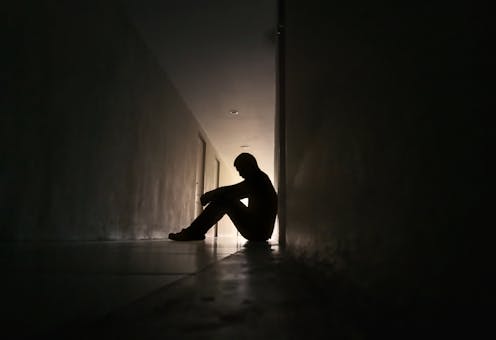
Nobody spoke to Donna* or her sister in the lead up to the family court decision that ordered the children to spend time alone with their father, who was violent. Donna was eight.
Later, after the children told the court’s Independent Children’s Lawyer their father had been “drinking a lot” when he was with them and made “threats to kill”, the judge appointed a supervisor to ensure the children would be physically “safe” from any further violence that might occur. Donna explains,
[…] so, they thought it was safe, but it wasn’t […] we were just terrified of him. Really, really scared …
Donna, now in her 30s, says the court’s disregard generated emotional harm that was “more traumatic” than the serious family violence leading up to court:
[…] when you come from a situation of family violence as a child, your mother is your place of safety - generally - and when mum [is] removed […] you know, those times I was made to spend time with him without her was terrifying. And that was probably more traumatic than the years and years of trauma leading up to that.
After about two years of court-enforced contact, Donna’s father physically assaulted the court-appointed supervisor in front of Donna and her sister, and the judge agreed to lift the orders.
But the psychological damage would resurface later in Donna’s adult life:
[…] when I was 20, 21, I think […] I started to have flashbacks, and that’s when I realised that I needed to get some help because I couldn’t sleep because I just kept having flashbacks.
I spoke to Donna as part of a project for the Whitlam Institute within Western Sydney University.
Based on the research for my book Broken: Children, Parents and Family Courts, the project combines a podcast and policy paper with 12 recommendations designed to create a family law environment able to learn from children’s experience – one based in children’s rights.
What the research found
In Australia, it’s a criminal offence to identify a party to a family law proceeding, including adults who went to court when they were children.
This means survivors of family violence who were subject to Federal Circuit or Family Court orders when they were children are unable to speak – online or in the media – unless they mount an expensive legal action seeking the court’s permission. If they are successful, they can only speak on the terms the court imposes.
As a consequence, successful applications usually involve cases where the media is willing to pay the legal costs.
Quite simply, the court cannot see the impact of its decisions on children’s lives. It is unable to learn from its mistakes. It has no mechanism through which children’s experiences can be used to inform structural change. And children are forced to live with the consequences.
During the writing of this report, I traced the cases of seven adults whose families went to court when they were children. All were child survivors of family violence, and two were survivors of child sexual abuse. The length of litigation varied from two to ten years, including one participant who reported she didn’t have a memory from her childhood that didn’t include the family courts.
While each survivor had difference experiences, they raised common themes. They told me they felt powerless, distressed at being disbelieved, ignored or “kept in the dark”. They said they felt traumatised by the way in which legal actors executed the court’s orders.
They told me about the long-term social, emotional and financial impacts of litigation on their families. They explained this trauma resurfaced in their adult lives.
The cases of the people I spoke to were litigated between 1990 and 2010. Similar themes emerged in the Australian Institute of Family Studies 2018 report, based on interviews with children between the ages of ten and 17 about legal matters that were mostly finalised between 2016 and 2017.
What I found suggests the issues raised by older survivors are also being raised by younger survivors. This suggests the silencing of children is deeply embedded in the adversarial practices of the courts, in the ideologies of the legal profession and in institutional culture.
Nikos*, in his 20s, spent seven years of his childhood in the Federal Circuit and Family Courts. He never got to speak to the Independent Children’s Lawyer:
[…] what I wanted, and what I thought would be better for me was completely irrelevant to the courts.
Ten years after litigation has ended, Nikos can still name the lawyer who refused to speak to him as a child. He said a central problem was that the court’s adversarial system created a forum through which family conflict could be escalated and extended.
Anna*, in her 30s, also says the court made everybody “fight all the time”. She says:
I honestly think that even though my dad was extremely violent, family court made it so much worse.
Anna explains:
Because mum was very angry and very inconsistent with me. But I think she would not have been like that if family court was not happening. If the court had just said in the first place, ‘Look, your dad’s really dangerous, don’t see him,’ she would have been a lot more settled and not under the same financial pressure. So, I think that we would have had a much better upbringing.
As the decade-long litigation escalated, Anna’s relationship with her mother became increasingly “difficult”:
I thought afterwards that probably the most unaddressed issue is how badly family court affected the relationship between my mum and I. [My mother] wasn’t the main perpetrator of family violence, and she did try to protect us from it, but because she couldn’t when the court ordered her to send us to dad’s house, it really has caused quite irreparable damage.
The litigation in Anna’s case lasted until she was 14. When the court handed down its final decision, she ran away from home.
The problem, Donna explains, is that:
Your fate is in the hands of these strangers […] I actually used to, you know, envision myself as a child just walking in there and screaming at them and telling them the truth, you know, and telling them that he is really dangerous. But, you know, not being heard. So what’s the point?
12 recommendations
My report makes 12 recommendations, including that:
there must be a less hostile context in which to hear legal matters which affect children
family law decision-making processes must be anchored in children’s rights
adults who went to court when they were children should not be silenced.
They’re designed to create a simpler and more affordable family law system that reduces harm to children and young people.
This requires the court to provide a child safe environment in which it’s possible for children and young people to speak freely about their safety concerns and be taken seriously.
*Names have been changed and transcripts redacted to remove identifying details as required by law.
Authors: Camilla Nelson, EG Whitlam Research Fellow, Whitlam Institute within Western Sydney University, and Associate Professor, University of Notre Dame Australia


















