

Google AI


Modern Australian

NZ children face a ‘perfect storm’ of dangerous diseases as immunisation rates fall

  • Written by: Anna Howe, Research Fellow, University of Auckland
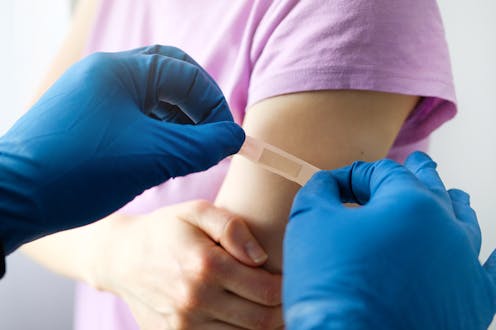
NZ children face a ‘perfect storm’ of dangerous diseases as immunisation rates fall

Routine childhood immunisations have dropped so dramatically globally during the COVID-19 pandemic that the World Health Organization and UNICEF are raising the alarm.

Internationally, 25 million children in 2021 alone have missed out on life-saving vaccinations. This is the largest sustained drop in childhood immunisation in a generation.

In Aotearoa New Zealand, we are seeing a similarly concerning trend. The decline in childhood immunisation resulting in low overall coverage is now putting our tamariki (children) at real risk of preventable disease, especially with national borders open again.

The country is not alone in suffering collateral damage to normal childhood immunisation programmes due to the COVID-19 pandemic. But while the decline may be worrying, all is not lost.

Risk of disease outbreaks

Immunisation coverage at six months of age has fallen in New Zealand from a high of around 80% in early 2020 to 67% by June 2022, and as low as 45% for Māori.

This is important because immunisation coverage at six months is used as a marker for timely receipt of lifesaving government-funded vaccines, including for whooping cough (pertussis), diphtheria, polio, pneumococcal disease and rotavirus.

For example, whooping cough (pertussis), a particularly serious illness for babies, is a very real concern. Aotearoa has seen a pertussis resurgence every three to four years, meaning we are due an increase in cases at a time when we also have low vaccine coverage.

Additionally, these declines in immunisation coverage and subsequent risk of infection are especially important to consider now, as international travel picks up.

NZ Ministry of Health, CC BY-ND The return of ‘old’ diseases Polio, a viral disease that can cause paralysis, disappeared from Aotearoa thanks to immunisation, with the Western Pacific region declared polio free in 2000. As some parts of the world have yet to eradicate it, however, we still vaccinate children against polio. A recent case in an unvaccinated young man in New York shows how the virus can travel and re-emerge – even in developed, polio-free countries. Read more: Diphtheria is back in Australia, here's why – and how vaccines can prevent its spread Likewise, diphtheria is a rare but serious disease that causes breathing problems and can also lead to nerve paralysis and heart failure, with 5% to 10% of people with the disease dying. Until widespread immunisation after the 1940s, diphtheria was a common cause of childhood death, and we haven’t seen it in Aotearoa for decades. But diphtheria has recently been detected in Australia in two unvaccinated children. With New Zealand’s borders fully open since July 31, we run the risk of both these “old” diseases being imported and causing problems for our under-immunised tamariki and their whānau. A perfect measles storm The significant measles outbreak of 2019 serves as a warning. More than 2,000 people were infected and 700 hospitalised, with the largest case numbers in Auckland. Fiji, Tonga and Samoa also saw outbreaks, with Samoa particularly devastated by more than 5,000 cases and more than 80 deaths, mostly in young children. The severity of this outbreak could have been prevented because the combined measles, mumps and rubella (MMR) vaccine is highly effective. Read more: The most challenging phase of the Omicron outbreak is yet to come, but New Zealand may be better prepared than other countries But childhood coverage of MMR was not high enough at the time (nor has it been historically), leaving a known immunity gap of susceptible teens and young adults. Significant efforts have since been made to close this gap in MMR coverage, although these have been dwarfed by the COVID-19 vaccination campaign. The upshot is a potential perfect storm for another measles outbreak, with low MMR coverage worldwide and locally. Measles could “walk” through New Zealand airports and meet under-immunised tamariki and rangatahi (youth). Prevention as cure There is some good news, however. This year we’ve seen the introduction of new initiatives to help manage surges of winter ills, including the government funding influenza vaccines for children aged three to 12. This is welcome, as influenza crosses our border every year (with the exception of 2020 when COVID-19 public health measures, including quarantine and mask wearing, were in force). Because children are often considered super-spreaders, vaccination of children can reduce influenza-like illness and related costs in both tamariki and their whānau. But the message from World Health Organization Director-General Tedros Adhanom Ghebreyesus remains urgent: Planning and tackling COVID-19 should also go hand-in-hand with vaccinating for killer diseases like measles, pneumonia and diarrhoea. In Aotearoa New Zealand, the COVID-19 vaccination experience has also shown how Māori and Pacific community health providers can help reach high vaccination targets – especially when combined with good outreach services, increasing vaccination providers beyond GP clinics, and building the vaccination workforce. But right now the statistics paint a concerning picture. Low childhood immunisation coverage puts tamariki at risk of many preventable and serious diseases and adds a major burden to the already strained healthcare system. Prevention must be our top priority. It is better than the best cure, and will protect the health system from overload so it is available for those who need urgent care.

Authors: Anna Howe, Research Fellow, University of Auckland

Read more https://theconversation.com/nz-children-face-a-perfect-storm-of-dangerous-diseases-as-immunisation-rates-fall-188157

Why the Spring School Holidays Are a Great Time to Visit Coffs Harbour

The spring school holidays are a good time to spend a few days on the Coffs Coast. The weather is starting to warm up, there is plenty to do outdoor...

What to Do When an Older Car Is No Longer Worth Keeping in Melbourne

Ever looked at another repair quote and wondered whether your old car is still worth the trouble? It is a common turning point for Melbourne motoris...

Your Baby's First Year: A Local Guide to Feeding, Sleep, and When to Get Extra Support

Ask ten parents in a Brisbane mothers' group how their baby is feeding or sleeping, and expect ten different answers.  Someone's baby sleeps throug...

Kitchen and Laundry Makeover Ideas That Don't Require a Full Renovation

Full kitchen renos are expensive — and most people don't actually need one.  They need the kitchen to stop looking like it's stuck in 2009, or they...

How Technology Is Reshaping the Modern Australian Commercial Kitchen

The commercial kitchen has always been shaped by technology. Refrigeration changed how ingredients could be stored, modern ventilation transformed k...

The Number on a Roller Blind Fabric That Nobody Explains

Somewhere in the fabric book, next to the colour name, there is a percentage. Three per cent. Five per cent. Ten per cent. Nobody explains it, most c...

What’s Trending in Men’s Jewellery This Father’s Day!

Finding a Father’s Day gift that feels personal, stylish and genuinely wearable is not always easy. While socks and novelty mugs have traditionally ...

Road Signs: Understanding Their Role in Clear and Effective Signage

Effective signage and display hardware can help businesses communicate information, promote products and organise customer or visitor movement. Road...

Bottle Label Printing: Key Factors to Consider Before Your Next Packaging Run

Effective packaging begins with understanding the product, bottle material, artwork and production requirements when planning bottle label printing. H...

Planning a Long-Distance Move With Interstate Movers Melbourne

Moving between states involves more planning than a typical local relocation. Along with packing and transporting household belongings, you need to...

Understanding the Role of an I/O Controller in Industrial Automation

Modern industrial systems depend on accurate communication between sensors, machines and control systems. An I/O controller can help manage this commu...

How the Right Mining Hose Supports Demanding Operations

Mining environments place considerable demands on equipment used for material transfer, water management and processing. Hoses operating in these co...

Simple Ideas for Making Social Gatherings More Memorable

We have all been to those parties where everyone just stands around the kitchen island, staring at their phones, waiting for someone else to make a mo...

Outdoor Wall Lights: Improving Exterior Lighting Around Your Home

Lighting can influence how a room looks, feels and functions, so the right fitting should be selected according to both appearance and practical req...

Commercial Office Cleaning: Combining Routine Office Cleaning With Melbourne Service

Keeping a workplace clean requires a service that can accommodate everyday tasks as well as the particular needs of the business. Professional comme...

Caravan Sales in Queensland: How to Find the Right Caravan for Sale QLD

Caravan ownership is about more than having somewhere to sleep while travelling. For many Queenslanders, it is one of the best ways to explore regio...

What Sir Walter Buffalo Turf Actually Costs in 2026 (And Why Quotes Vary So Much)

Two quotes landed on a Hills District homeowner's kitchen table last spring for the exact same 80-square-metre backyard. One said $12 a metre. The o...

Nearly 1,300 NSW Hospital Beds Are Occupied By People Who Are Ready To Go Home

1,276 people in NSW hospitals have been medically cleared for discharge but remain in hospital because they're still waiting for NDIS or aged care sup...
















