

Why do dingoes attack people, and how can we prevent it?
- Written by: Bill Bateman, Senior Lecturer, Curtin University
The case of Debbie Rundle, who was attacked by dingoes at a mine site in Telfer, in Western Australia’s Pilbara region, evokes our instinctive horror at the idea of being attacked by wild animals.
Rundle suffered severe leg injuries in the incident, and said she feared she may have been killed had her colleagues not come to her aid.
Read more: Azaria Chamberlain inquest: forget the dingo jokes and recognise Lindy's trauma
We know that there are carnivores throughout the world with the potential to kill us. And while most of us will never come face to face with a hungry wolf, lion, tiger or bear, such attacks do unfortunately still occur.
In the scale of things, such attacks are very uncommon – although that is little consolation to the victim. Australia’s dingoes are no exception; despite some infamous examples, dingo attacks on humans are mercifully rare. But people will still understandably want to know why they happen at all, and what can be done to prevent them.
Research on wolf attacks shows that, absent the influence of rabies which can increase wolves’ aggression, two common factors associated with attacks are that they often happen in human-modified environments, and by animals that are habituated to human presence.
These two variables are obviously linked: many species of mammalian carnivore are highly adaptable, and soon learn that human settlements are sources of food, water and shelter.
These human resources can have a profound effect on the behaviour of wild animals. Abundant human food often reduces animals’ aggression towards one another, and can result in the presence of much larger numbers of individuals than normal.
This is equally true of dingoes. Although they are usually observed alone, it is not uncommon to see groups of ten or more dingoes foraging at rubbish dumps associated with mine sites in the Tanami Desert of central Australia. There are thought to be around 100 dingoes that forage in and around the Telfer mine where Rundle was attacked.
Waste food may inadvertently entice animals to human settlements, and this may lead to predators becoming habituated to human presence. In Canada, a young man fell victim to a wolf attack at a mine site; the local wolves were reported to be used to humans, and would even follow rubbish trucks to the tip. They may have come to associate human smells with the provision of food.
Animals that are habituated to humans lose some of their natural wariness towards them. This is typical of many animal species that adapt to urban habitats, and while this may be an appealing trait in squirrels or garden birds, it can be quite different if the animal is a predator capable of attacking a human.
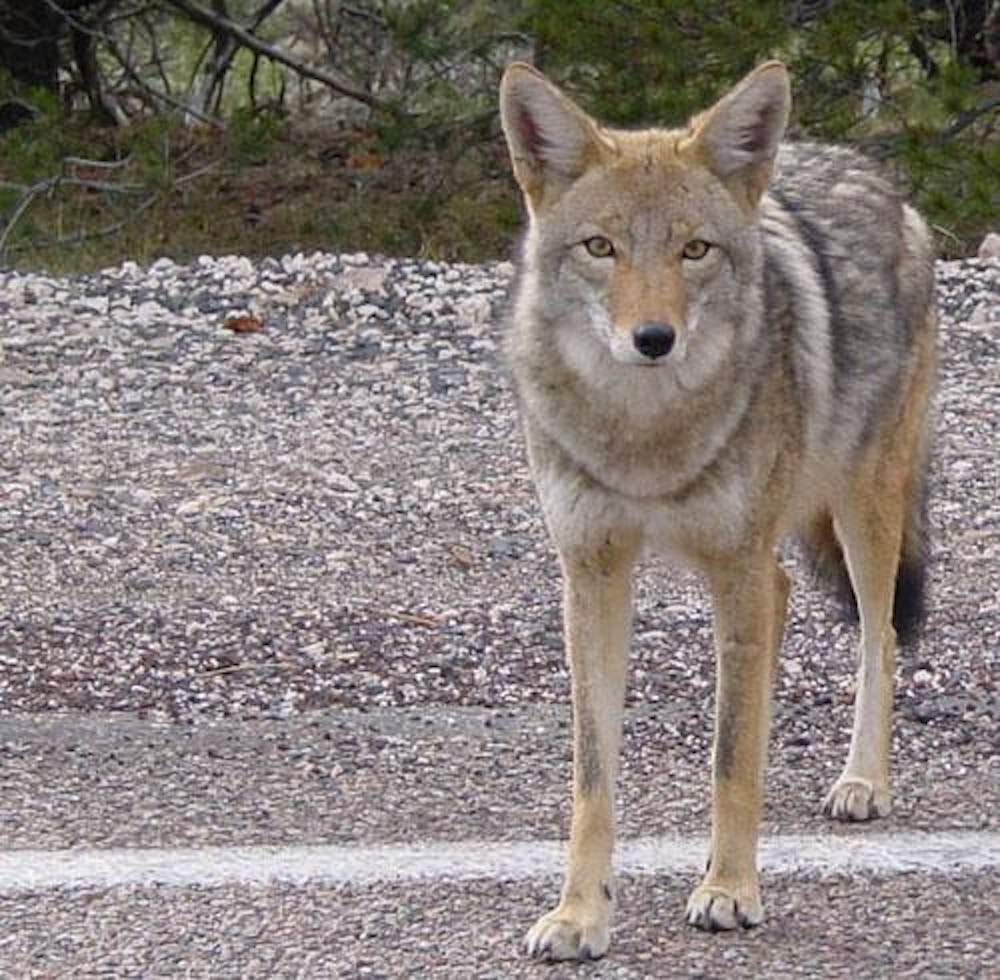 Coyotes can be dangerous, especially when they get used to living in human environments.
Marya/Flickr/Wikimedia Commons, CC BY-SA
Coyotes can be dangerous, especially when they get used to living in human environments.
Marya/Flickr/Wikimedia Commons, CC BY-SA
In the United States, there have been many reports of coyotes attacking humans. The coyote, like the dingo, is reasonably large (typically weighing 10–16kg) and can be found in close association with urban areas. The coyote’s natural range has expanded as wolves (their competitor) have dwindled, and their numbers have increased in and around cities where they find copious and consistent supplies of food and water.
A survey of reported attacks on humans by coyotes showed that many were “investigative”, often involving the animal trying to steal something they perceived as food from the person. Other attacks by coyotes could be identified as “predatory”, in which the victim was pursued and bitten, and often occurred when the coyotes were in a group.
Read more: Dingoes do bark: why most dingo facts you think you know are wrong
The Telfer dingo attack similarly appears to have been investigative – a young dingo climbed onto a table and grabbed Rundle’s phone. But the incident turned nasty when Rundle (perhaps understandably) followed the dingo that had her phone; this seemed to trigger a defensive or predatory attack from two other dingoes.
On Queensland’s Fraser Island, more than half of the recorded aggressive incidents by dingoes towards humans happened when the person was walking or running, suggesting that a “chase” response may have been involved.
The Telfer site, like other mine sites, has strict rules about putting waste food in bins, and managers have been proactive in training workers to not feed dingoes, in an attempt to prevent just such attacks. Rundle certainly seems to have followed these rules.
Unfortunately, in her case, other variables contributed to the attack – an investigative approach by one dingo that stole an item (that may have smelled of food) seems to have turned into an aggressive group attack when she followed the animals.
Read more: Want dingoes to leave people alone? Cut the junk food
What can we do to prevent such attacks? Mine site managers already do much to reduce the likelihood of such incidents by reducing dingoes’ access to food. Fencing off eating areas or storing food in cages – as is done at Fraser Island – can help in this regard.
Interestingly, many people believe that it is best not to act aggressively when they encounter a large carnivore, but in reality it depends on the species. For wolves and pumas, the best tactic seems to be to shout and throw objects to put them off.
Ultimately, the onus is on individual people to be aware of the potential danger of wild predators, and always to treat them with wariness and respect.
Authors: Bill Bateman, Senior Lecturer, Curtin University
Read more http://theconversation.com/why-do-dingoes-attack-people-and-how-can-we-prevent-it-100515


















