

Rather than focusing on the negative, we need a strength-based way to approach First Nations childrens' health
- Written by Jennifer Browne, Research Fellow, Deakin University
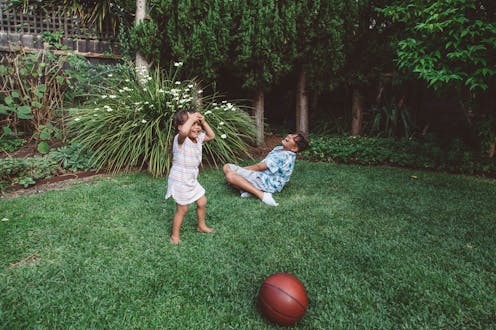
First Nations children represent the future of the world’s oldest continuing culture. Of the 66,000 Victorians who identified as Aboriginal and/or Torres Strait Islander in the 2021 Census, one-third were aged under 15 years.
First Nations children in Victoria are doing well in several health outcomes, our recent report has found. This report provides valuable insight into nutrition, physical activity and wellbeing among First Nations children living in regional Victoria.
Our survey found more than 300 First Nations primary school children were meeting guidelines for physical activity, healthy eating and screen time. Those who met these guidelines also had higher health-related quality of life.
However, our study is rare. Before our report, there was no information available about nutrition and physical activity among primary school-aged First Nations children in Victoria.
More evidence is needed about First Nations children’s health in Victoria. And it needs to be strengths-based, as opposed to highlighting deficits.
Read more: 'I am Country, and Country is me!' Indigenous ways of teaching could be beneficial for all children
A strengths-based approach
To examine First Nations childrens’ health, Aboriginal and non-Aboriginal researchers from Deakin University partnered with the Victorian Aboriginal Community Controlled Health Organisation (VACCHO). This organisation is the peak body representing Victoria’s Aboriginal community-controlled health sector.
VACCHO’s nutrition team works to improve food security and nutrition outcomes among Aboriginal communities across Victoria. Aboriginal Community Controlled Organisations such as these provide culturally safe care, and support self-determination.
In our research, we found there is potential for health data to stigmatise First Nations peoples by focusing on negative outcomes instead of progress. To avoid this, when collating data, we focused on measuring positive health outcomes (such as healthy weight) rather than measuring “problems” (like obesity).
We were interested in identifying factors that contribute to positive wellbeing. This strengths-based approach acknowledges and celebrates the strength of First Nations children.
Many First Nations children are meeting the health guidelines
Our findings indicate that many of the children surveyed were meeting nutrition and physical activity guidelines.
For most of these measures, there was no significant difference between Aboriginal and non-Aboriginal children in the survey.
There’s still work to do
Our survey found Aboriginal children were more likely to report meeting vegetable consumption guidelines than their non-Aboriginal classmates. However, only 21% of Aboriginal children who participated reported eating the recommended number of vegetables each day.
While 53% of Aboriginal children had a healthy body weight, just under half did not. Non-Aboriginal children were more likely to have a healthy weight and on average had a lower body mass index than Aboriginal children.
This could be addressed through the development of a national First Nations food and nutrition plan. This plan would need to address issues such as food security and workforce capacity while directing funding to First Nations community-controlled nutrition programs.
Read more: 'Decolonising' classrooms could help keep First Nations kids in school and away from police
Connecting physical health with social and emotional wellbeing
Our survey also evaluated perceived physical, social, emotional and school-related wellbeing. This was measured using the Paediatric Quality of Life Inventory.
We found non-Aboriginal children in our survey had significantly higher average health-related quality of life scores compared to Aboriginal children. This highlights this importance of promoting children’s mental health and social and emotional wellbeing alongside healthy eating and physical activity.
It’s important to recognise the connection between physical health (such as body weight) and health behaviours (diet, physical activity, screen time and sleep) with social and emotional wellbeing.
This view of health is defined by the National Aboriginal Community Controlled Health Organisation as “not just the physical wellbeing of an individual but the social, emotional and cultural wellbeing of the whole Community”. This is why culturally appropriate research undertaken in partnership with Aboriginal organisations is so important, and something we prioritised in our work.
It is our hope our findings can be used by health services to plan culturally appropriate health promotion programs for First Nations children in Victoria. Ideally governments can use these findings to better support Victorian Aboriginal community controlled health organisations to implement these programs.
Our strengths-based approach should be replicated in future surveys of First Nations childrens’ health. Importantly, Aboriginal health must be in Aboriginal hands.
Holly Beswick from the Victorian Aboriginal Community Controlled Health Organisation (VACCHO) contributed to this article.
Authors: Jennifer Browne, Research Fellow, Deakin University

















