

the renowned Spanish writer who stretched time, and sentences
- Written by Stewart King, Senior Lecturer, School of Languages, Literatures, Cultures and Linguistics, Monash University
Javier Marías, Spain’s most internationally renowned contemporary writer, died on September 11, just shy of his 71st birthday.
Marías’s fame rests on his 14 novels, including A Heart So White, which won the IMPAC International Dublin Literary Award in 1997, Tomorrow in the Battle Think on Me, and the Your Face Tomorrow trilogy. His last novel, Tomas Nevinson, was published in March 2021. In Spain, he is also renowned for his translations of English and American literature and journalism.
In his novels and short stories he picks up and runs with Miguel de Cervantes’ fascination with the line between reality and fiction, particularly in works dealing with secrecy and betrayal. Other prominent themes include the limits and marvels of translation and cross-cultural understanding, and the weight of the past on the present.
 Many of Marías’s works are set entirely or partly in England. The most notable is his sixth novel All Souls, based on the two years he spent as a tutor of translation and Spanish literature at Oxford. Much is made, too, of the Shakespearean titles of several of his novels and of his 1979 prizewinning translation of Sterne’s Tristam Shandy as evidence of his literary anglophilia. But Tristam Shandy is a picaresque tale, a genre born in 16th-century Spain with Lazarillo de Tormes.
Rather than seeing Marías as a Spanish importer of English literary sensibilities, his literary project is perhaps best perceived as a product of the cultural exchange that results from the movement between and across languages in translation.
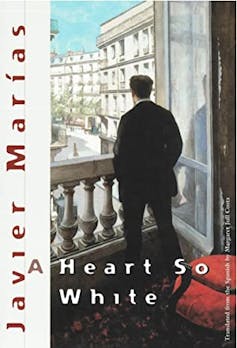
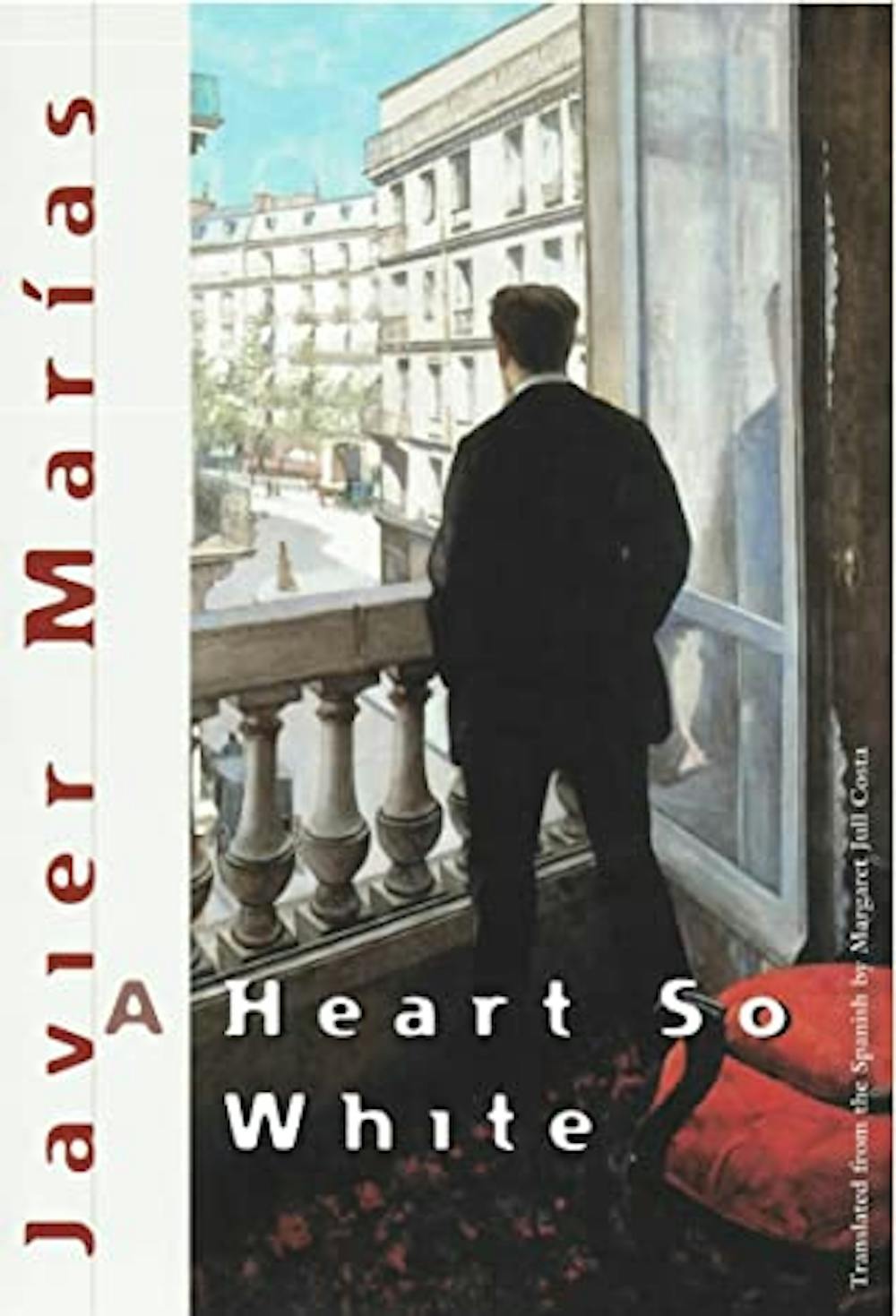
Indeed, translation is a central feature of his work. In All Souls, for example, his protagonist is a Spanish professor who teaches translation at Oxford. A Heart So White – the novel that shot him to international attention in 1992 – is a love story between interpreters.
Many of Marías’s works are set entirely or partly in England. The most notable is his sixth novel All Souls, based on the two years he spent as a tutor of translation and Spanish literature at Oxford. Much is made, too, of the Shakespearean titles of several of his novels and of his 1979 prizewinning translation of Sterne’s Tristam Shandy as evidence of his literary anglophilia. But Tristam Shandy is a picaresque tale, a genre born in 16th-century Spain with Lazarillo de Tormes.
Rather than seeing Marías as a Spanish importer of English literary sensibilities, his literary project is perhaps best perceived as a product of the cultural exchange that results from the movement between and across languages in translation.
Indeed, translation is a central feature of his work. In All Souls, for example, his protagonist is a Spanish professor who teaches translation at Oxford. A Heart So White – the novel that shot him to international attention in 1992 – is a love story between interpreters.
 Marías signing books in 2018.
Wikimedia Commons
Throughout his life, he interspersed creative writing with translation. In addition to Sterne, he also translated Joseph Conrad, Thomas Hardy, W.H. Auden, Joseph Brodsky, Robert Louis Stevenson and J.D. Salinger, among others, into Spanish.
Translation helped him to become a writer, but Marías’s literary style belongs both to Sterne and to the Spanish tradition of long, digressive sentences punctuated by many sub-clauses. This was the style, for example, of his mentor, Juan Benet. Marías’s sentences and paragraphs can run for pages and, like the cliché, the purpose is not the destination but the reflective journey the reader goes on.
Critics tend to praise his later fiction more, like Your Face Tomorrow, but I prefer A Heart So White, which I read in the late 1990s while researching my PhD in Barcelona. The novel’s combination of tragedy, mystery and comedy is compelling, as is its reflection on translation of hidden meanings and the revelation of the characters’ secrets. For a scholar trying to understand the mysteries of another language, it resonated profoundly.
Typewriter and fax machine
Marías was an old-fashioned writer who wrote by hand and on an Olympia Carrera de Luxe typewriter. Long after email became de rigueur, he continued to submit his weekly column to El País via fax. He only recently retired the fax, instead taking a photo of his typed column and submitting it via WhatsApp.
Montalbán’s quip about Marías as an English writer contains an underlying critique of a cosmopolitan author disconnected from Spain. This changed with the publication of the monumental, 1,592-page Your Face Tomorrow, published in three parts between 2002 and 2007. In it Marías partly fictionalises his father’s experience during the Civil War.
Marías signing books in 2018.
Wikimedia Commons
Throughout his life, he interspersed creative writing with translation. In addition to Sterne, he also translated Joseph Conrad, Thomas Hardy, W.H. Auden, Joseph Brodsky, Robert Louis Stevenson and J.D. Salinger, among others, into Spanish.
Translation helped him to become a writer, but Marías’s literary style belongs both to Sterne and to the Spanish tradition of long, digressive sentences punctuated by many sub-clauses. This was the style, for example, of his mentor, Juan Benet. Marías’s sentences and paragraphs can run for pages and, like the cliché, the purpose is not the destination but the reflective journey the reader goes on.
Critics tend to praise his later fiction more, like Your Face Tomorrow, but I prefer A Heart So White, which I read in the late 1990s while researching my PhD in Barcelona. The novel’s combination of tragedy, mystery and comedy is compelling, as is its reflection on translation of hidden meanings and the revelation of the characters’ secrets. For a scholar trying to understand the mysteries of another language, it resonated profoundly.
Typewriter and fax machine
Marías was an old-fashioned writer who wrote by hand and on an Olympia Carrera de Luxe typewriter. Long after email became de rigueur, he continued to submit his weekly column to El País via fax. He only recently retired the fax, instead taking a photo of his typed column and submitting it via WhatsApp.
Montalbán’s quip about Marías as an English writer contains an underlying critique of a cosmopolitan author disconnected from Spain. This changed with the publication of the monumental, 1,592-page Your Face Tomorrow, published in three parts between 2002 and 2007. In it Marías partly fictionalises his father’s experience during the Civil War.
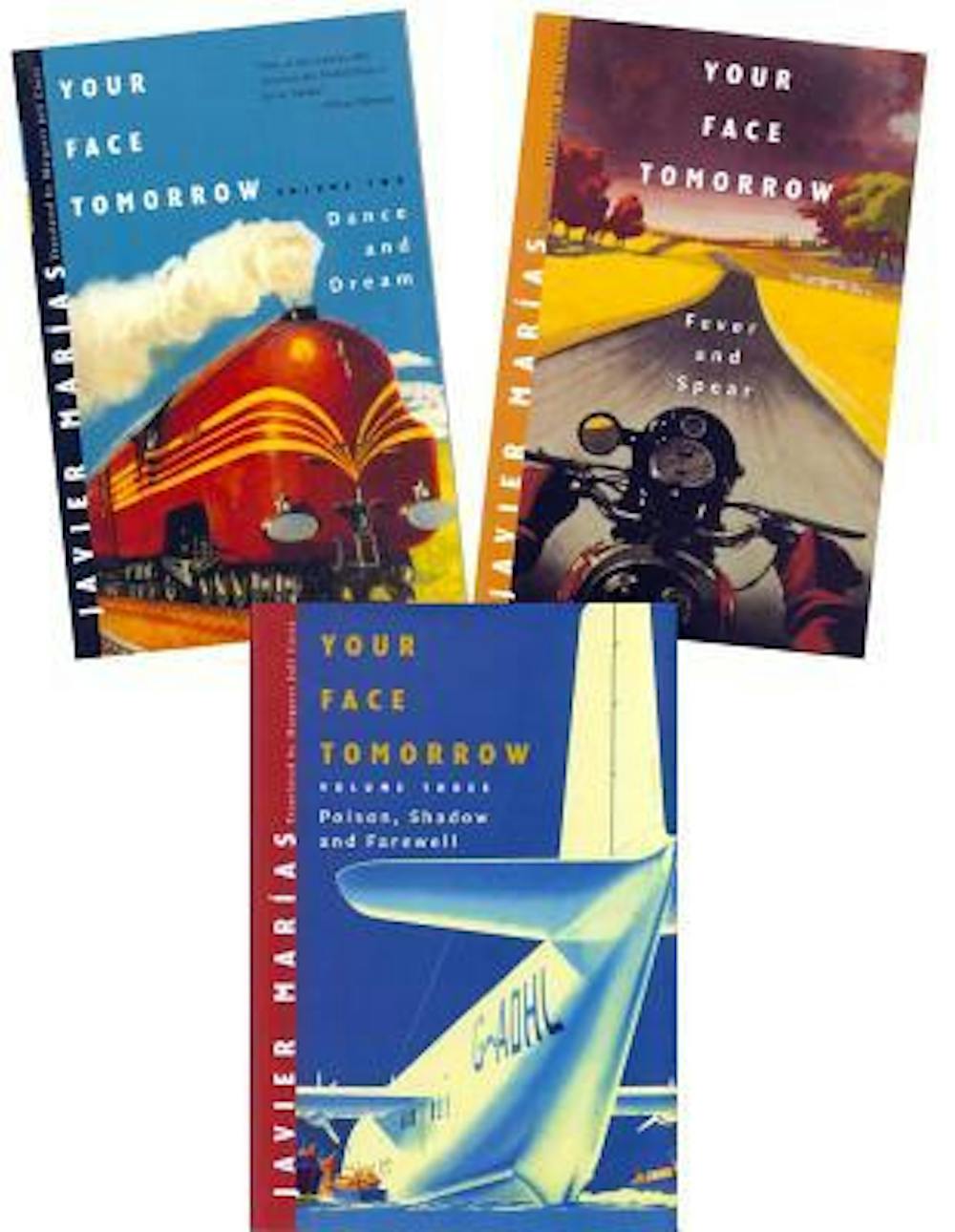 Your Face Tomorrow: published in three parts.
Goodreads
Marías continued his father’s stance vis-à-vis Spanish political interference. He refused to accept institutional prizes or public money to “avoid being connected to any political party or power”. He did so most famously in 2012 when The Infatuations was awarded the National Narrative Prize, worth €20,000.
Marías’s stance meant that, unlike his literary equals Jorge Luis Borges and Mario Vargas Llosa, he was never awarded Spain’s most important literary prize, the Cervantes prize for literature. He did, however, accept numerous foreign literary awards and non-state-funded prizes and honours. This included his election to the Spanish Royal Academy in 2006.
Marías’s seat in the academy will soon be occupied by someone else, but his position as one of the most important writers in the Spanish language will remain.
Authors: Stewart King, Senior Lecturer, School of Languages, Literatures, Cultures and Linguistics, Monash University
Your Face Tomorrow: published in three parts.
Goodreads
Marías continued his father’s stance vis-à-vis Spanish political interference. He refused to accept institutional prizes or public money to “avoid being connected to any political party or power”. He did so most famously in 2012 when The Infatuations was awarded the National Narrative Prize, worth €20,000.
Marías’s stance meant that, unlike his literary equals Jorge Luis Borges and Mario Vargas Llosa, he was never awarded Spain’s most important literary prize, the Cervantes prize for literature. He did, however, accept numerous foreign literary awards and non-state-funded prizes and honours. This included his election to the Spanish Royal Academy in 2006.
Marías’s seat in the academy will soon be occupied by someone else, but his position as one of the most important writers in the Spanish language will remain.
Authors: Stewart King, Senior Lecturer, School of Languages, Literatures, Cultures and Linguistics, Monash University 
















