

how birds adapt to our cities, bringing wonder, joy and conflict
- Written by John Woinarski, Professor (conservation biology), Charles Darwin University
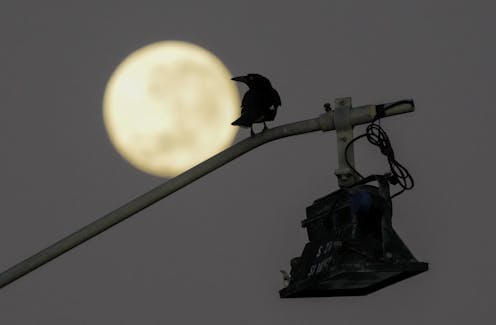
For all the vastness of our Outback and bush, most Australians live in urban areas. In cities, we live within an orderly landscape, moulded and manufactured by us to suit our needs. But other species also live in this modified environment.
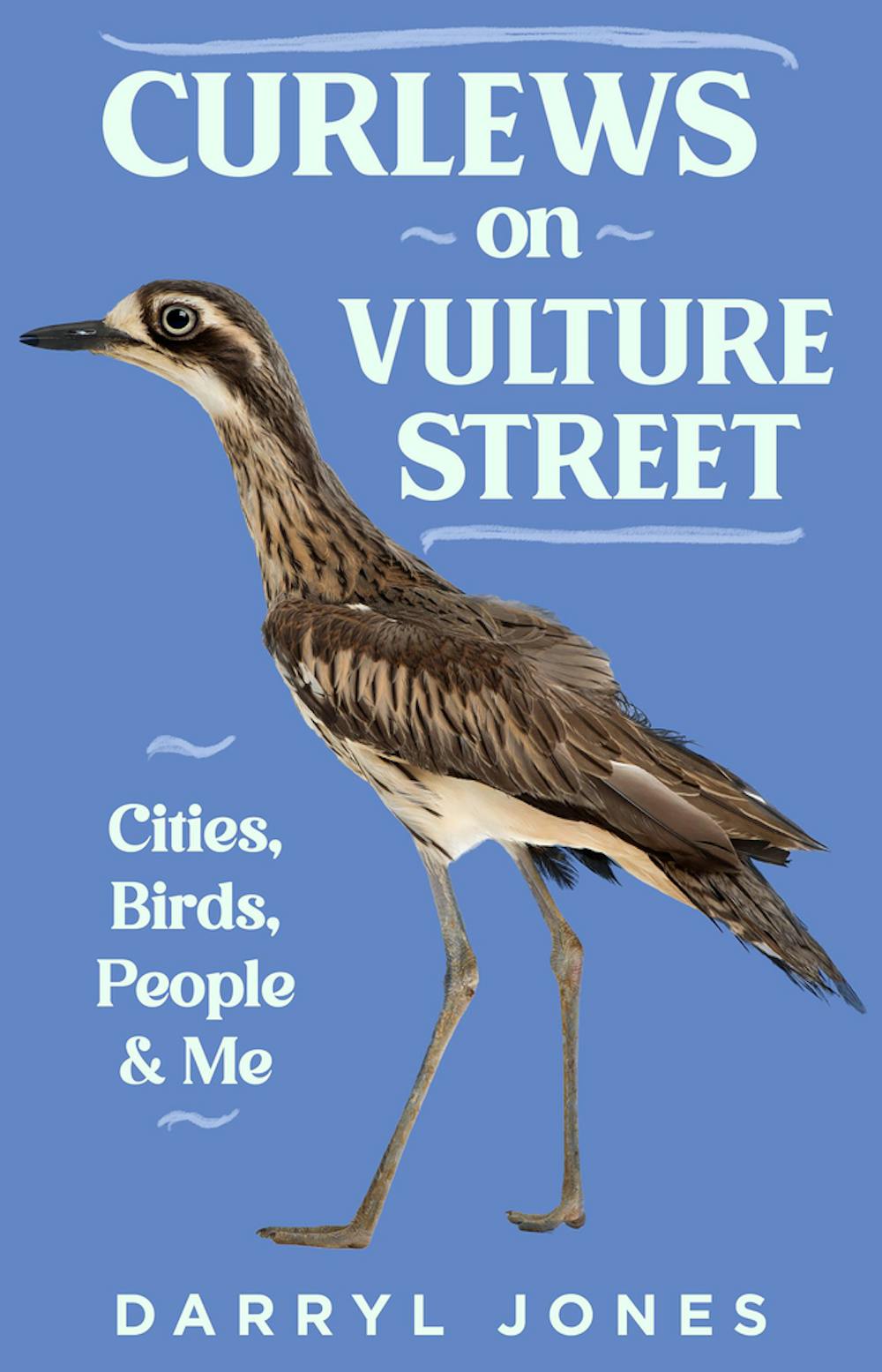
Review: Curlews on Vulture Street: cities, birds, people & me – Darryl Jones (NewSouth)
In many cases, this cohabitation is peaceful, benign or even mutually beneficial. Part of Darryl Jones’ Curlews on Vulture Street: cities, birds, people & me documents the surprising variety of bird life in our cities and towns. Many of these birds are native species, finding a way to live – and sometimes to flourish – in a human-dominated system.
Lorikeets, honeyeaters, cockatoos, crows, currawongs, silver gulls, peregrine falcons, and even (in some Australian cities) curlews and brush-turkeys have cracked the code, adapting to the resources we inadvertently provide, or intentionally create, for them – such as native plants in our gardens. They survive or thrive notwithstanding the cars, cats, concrete, dogs, noise and pollution.
Live streaming of a peregrine falcon nest in Collins St, Melbourne.Many of us appreciate these birds, they add colour, joy and wildness to our lives. As witness to their fascination, thousands of Australians meticulously record the birds in our backyards every year, chuffed at every novelty, casually competing with other backyard observers.
Jones notes that many of us also feed birds, to seek closer interactions with them, and to provide some restitution for the damage our species has done to their natural environment. Urban life can be alienating, lonely; birds can connect us to the wellspring of nature.
However, in some cases, cohabitation with other species is problematic: we come into conflict with those other lives.
Much of the content of this book describes such situations: aggressive dive-bombing magpies, brush-turkeys re-arranging what were once meticulously neat gardens, bin-chickens (white ibis) snatching food from our lunch tables and picnics, and hooligan sulphur-crested cockatoos ripping up our verandahs.
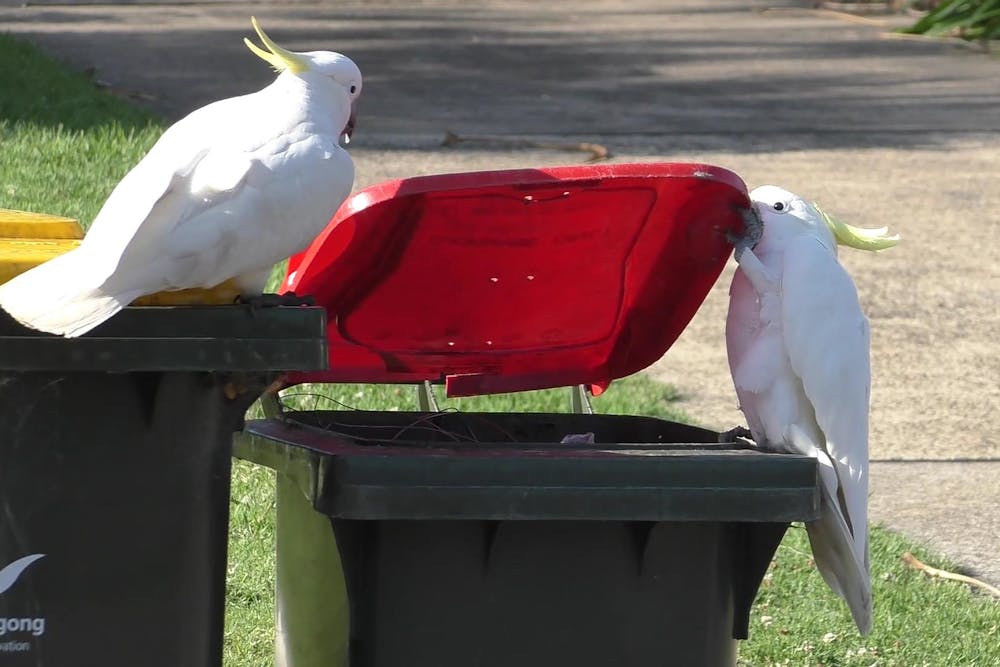
Many of us love these birds; some of us hate them. These are challenging conflicts to resolve, and Jones carefully describes various cases and how he goes about finding solutions.
Happy to admit his initial assumptions are often proven entirely wrong, Jones articulates the need for carefully planned and implemented – and often highly innovative – research in order to understand why these “troublesome” birds are behaving as they do.
He also shows that at least some of these problems, and their solutions, have more to do with human attitudes and behaviours than with the wayward intentions of birds. So, if we stressed less about the orderliness of our gardens, we may enjoy the landscaping chaos that comes with sharing our yards with industrious brush-turkeys. If we can admire the pluck and fierce paternal protective drive of magpies, we may better tolerate their brief seasonal bouts of aggression, or shift our walking or cycling routes to avoid them.
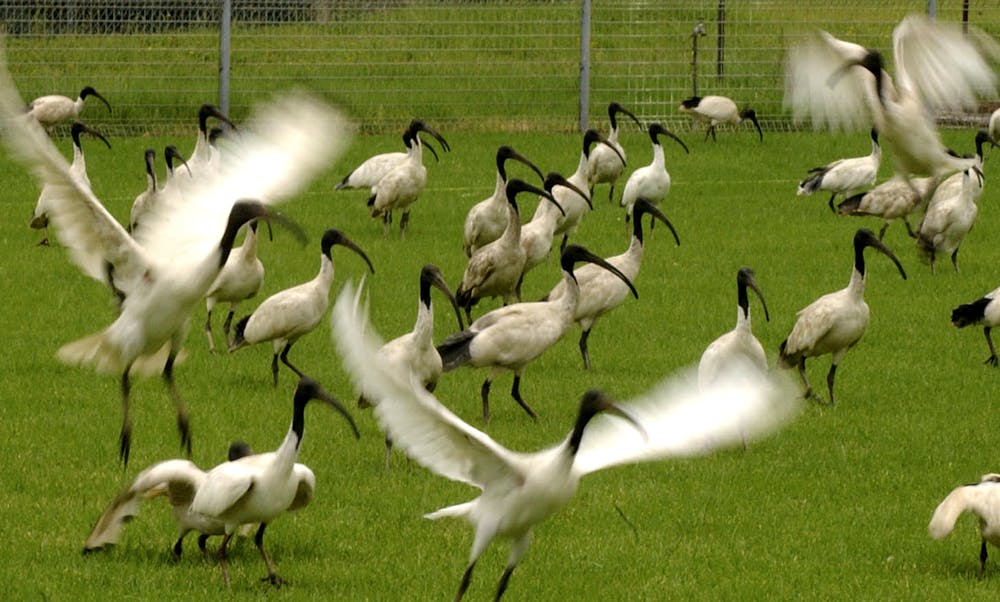 White ibis on a Sydney soccer field.
Mick Tsikas/AAP
White ibis on a Sydney soccer field.
Mick Tsikas/AAP
Read more: Friday essay: the rise of the 'bin chicken', a totem for modern Australia
Solving the swoop
Most Australians have been swooped by magpies, some terrified and long-scarred by the sometimes spectacular experience. It is an acute case of courageous, untamed nature fighting back within our domain.
Jones shows that many magpies do not swoop, that the swooping birds are most always the males, that the behaviour occurs when there are eggs in the nest, and that many swooping birds specialise in their targets. Some birds swoop only cyclists, others pedestrians, and some just one or two individual humans.
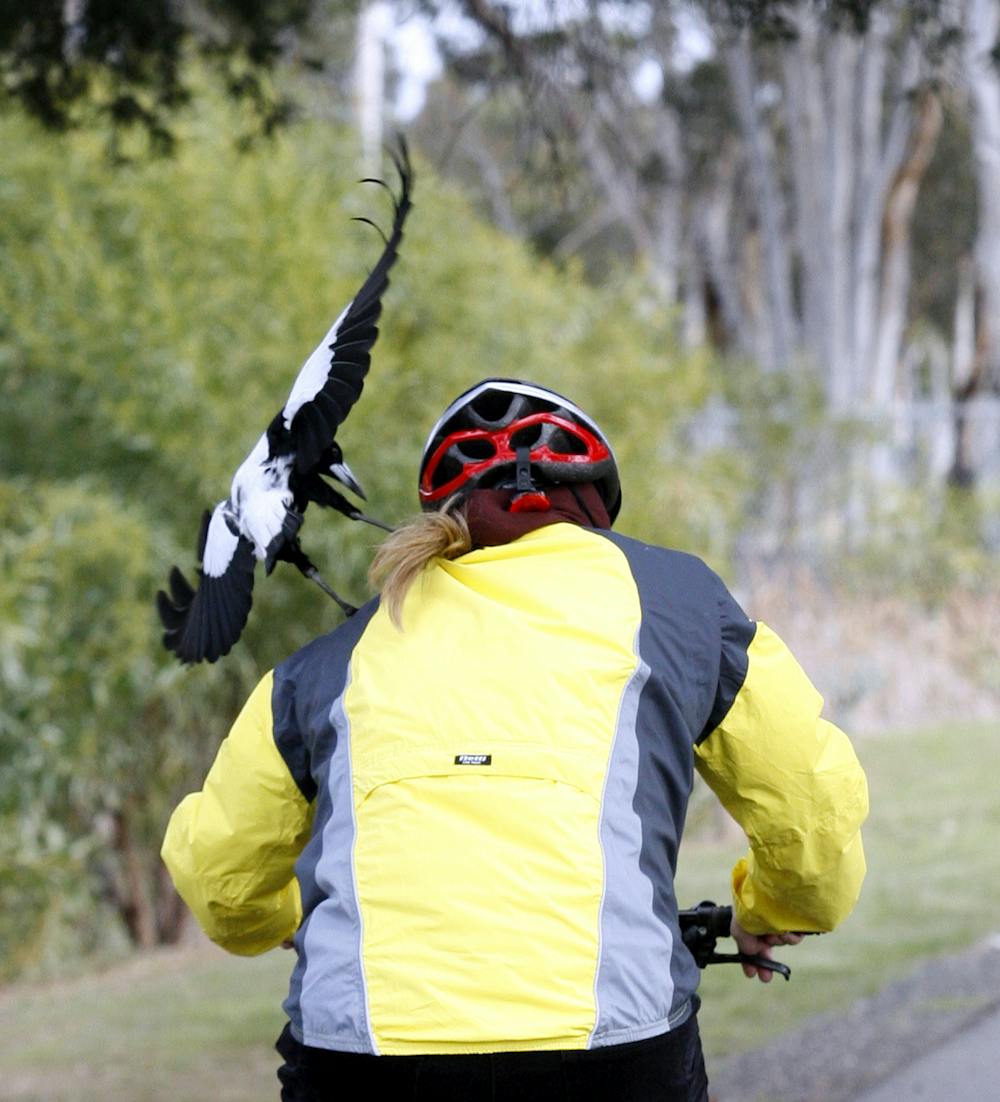 A magpie swooping a cyclist.
Victorian Department of Environment, Land, Water and Planning/AAP
A magpie swooping a cyclist.
Victorian Department of Environment, Land, Water and Planning/AAP
Swooping is an exaggerated form of defence of the clutch against what the magpie perceives to be a potential predator. Whereas many such issues were once addressed simply by shooting, Jones uses careful experimentation to show that the problem can be at least temporarily resolved by capturing the magpie and moving it at least 30 kilometres away: any closer and it may swiftly return.
His studies also show that other male magpies may replace the transported male and help raise his young, an altruism that may return longer-term benefits.
Read more: Altruism in birds? Magpies have outwitted scientists by helping each other remove tracking devices
But this book is more than simply an account of urban birds and wildlife management problems. It is part autobiography, part mystery, part reflective celebration of the beauty, vitality and value of our wildlife.
Jones’ fascination with nature, and particularly with birds, is the current that shapes his career and his life. And the stories in this book infect the reader with this fascination. This engagement is further reinforced by wonderful, evocative illustrations by Kathleen Jennings.
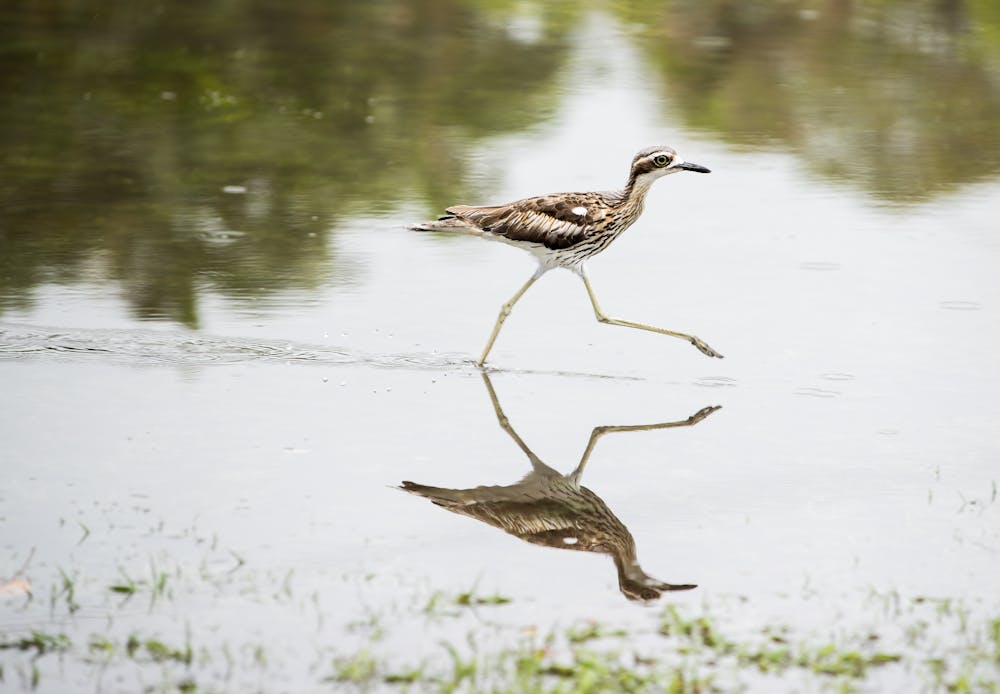 A curlew in Cairns.
Marc McCormack/AAP
A curlew in Cairns.
Marc McCormack/AAP
Childhood events
Some childhood events shape us, embed enduring values, open the pathways that we may follow all our lives. For Jones, the wonder in his life starts with noticing something different in his solitary youth – this particular wonder as prosaic as a single introduced blackbird in the backyard of his house in rural New South Wales, far from the Australian city centres where it was “meant” to be. (Nature is fluid; we cannot presume too much.)
 The first mystery solved by Jones is its identification, a more complex challenge then – in the 1960s – when bird books were crude. Knowing the name of things proves to be a gateway to understanding. The second mystery, also triggered by early experience, is a much larger one, and it permeates this book: how does nature live with us; and how do we live with nature?
Another childhood event is traumatic. Jones describes the brutal killing by other boys of a beloved pet magpie. It reinforces his feeling for birds, and a desire to help conserve them; and it reminds us that we can’t assume that all people share such sympathies.
Jones honed his youthful interest in birds through tertiary education. He is generous in recognising the mentors who guided him on this pathway, and the characters who later helped him understand and develop practical solutions to urban wildlife issues. Over time, he returns the favour: mentoring – and admiring the expertise of – many students.
The first mystery solved by Jones is its identification, a more complex challenge then – in the 1960s – when bird books were crude. Knowing the name of things proves to be a gateway to understanding. The second mystery, also triggered by early experience, is a much larger one, and it permeates this book: how does nature live with us; and how do we live with nature?
Another childhood event is traumatic. Jones describes the brutal killing by other boys of a beloved pet magpie. It reinforces his feeling for birds, and a desire to help conserve them; and it reminds us that we can’t assume that all people share such sympathies.
Jones honed his youthful interest in birds through tertiary education. He is generous in recognising the mentors who guided him on this pathway, and the characters who later helped him understand and develop practical solutions to urban wildlife issues. Over time, he returns the favour: mentoring – and admiring the expertise of – many students.
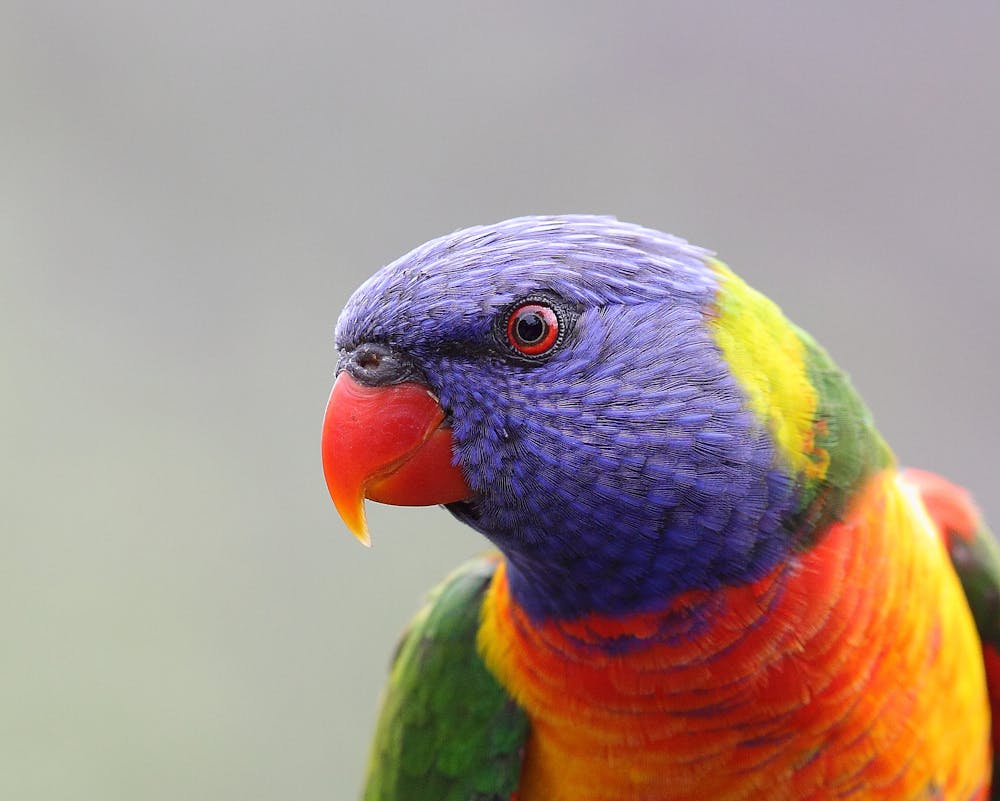 Birds bring us color and joy.
Aussie backyard bird count/AAP
The subject of this book is a tricky one. We should all appreciate the variety of wildlife that can live within our cities, and we should help to maintain and enhance it. But of course, across much of the world, including much of Australia, biodiversity is in steep decline, and it is particularly those native species that are dependent upon unmodified natural environments that are most suffering.
Jones at least notes this broader context. We should not be so beguiled by the wildlife in our cities, and even the increases in that wildlife, into presuming that nature is resilient and can cope with the way we mess with this world.
But we should also be grateful: even in our cities and suburbs, we live in a wonderful world, full of small mysteries, surrounded by the lives of many other animals. Our lives become better, richer, less selfish if we can see and try to understand that wonder. This book helps guide us there.
Authors: John Woinarski, Professor (conservation biology), Charles Darwin University
Birds bring us color and joy.
Aussie backyard bird count/AAP
The subject of this book is a tricky one. We should all appreciate the variety of wildlife that can live within our cities, and we should help to maintain and enhance it. But of course, across much of the world, including much of Australia, biodiversity is in steep decline, and it is particularly those native species that are dependent upon unmodified natural environments that are most suffering.
Jones at least notes this broader context. We should not be so beguiled by the wildlife in our cities, and even the increases in that wildlife, into presuming that nature is resilient and can cope with the way we mess with this world.
But we should also be grateful: even in our cities and suburbs, we live in a wonderful world, full of small mysteries, surrounded by the lives of many other animals. Our lives become better, richer, less selfish if we can see and try to understand that wonder. This book helps guide us there.
Authors: John Woinarski, Professor (conservation biology), Charles Darwin University 
















