

Clive Hamilton's activism memoir wars with neoliberals, the 'naive' left and China
- Written by: Geoffrey Robinson, Senior Lecturer, School of Humanities and Social Sciences, Deakin University
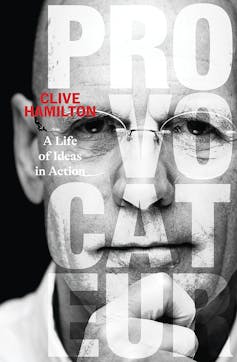
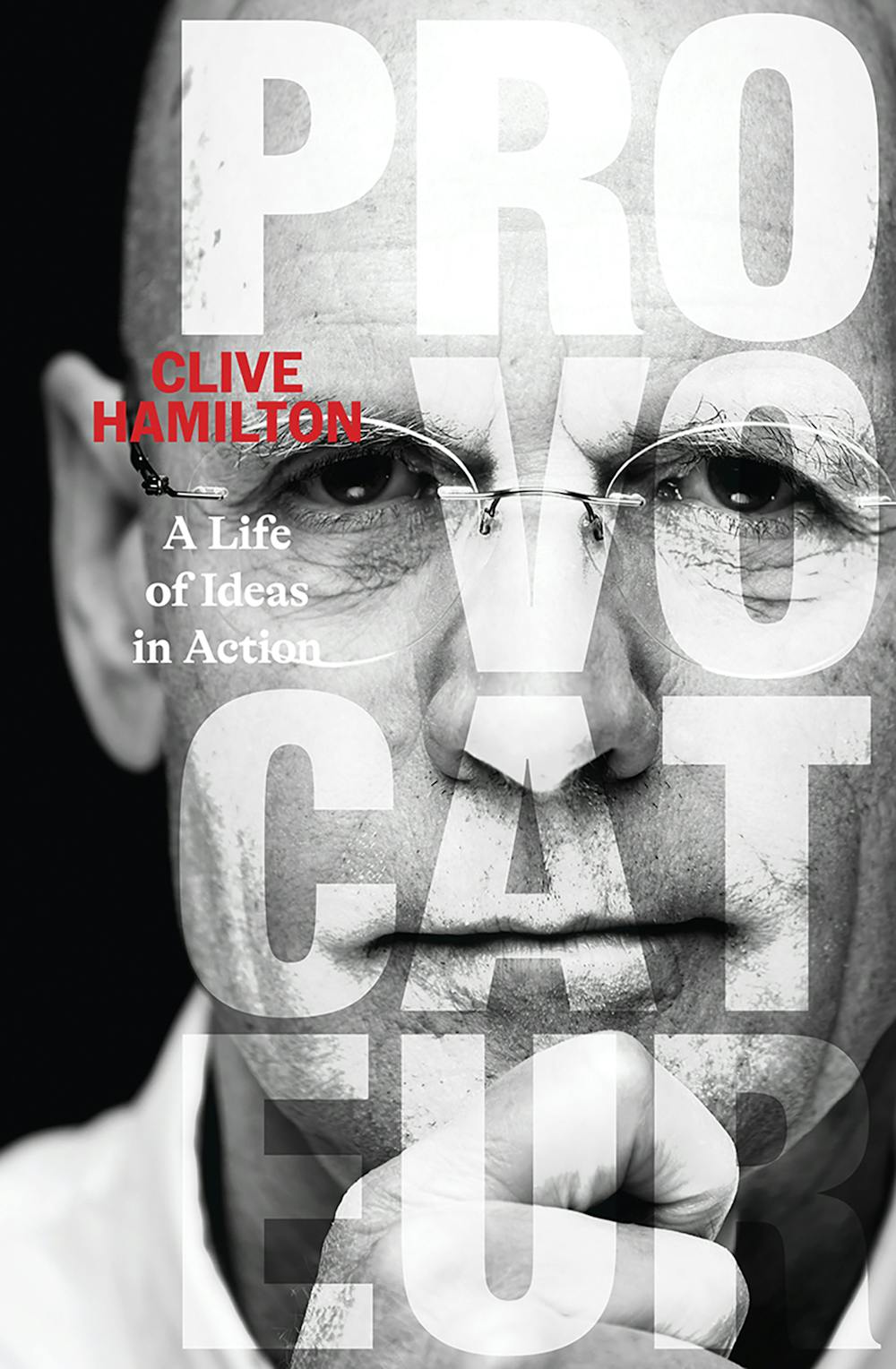
Clive Hamilton personifies the Australian progressive “public intellectual”. He’s a prolific author of opinion articles and books, concerned “to make a difference in the world” by persuading people to engage with “powerful ideas”.
His memoir describes almost 40 years of activism. The tone is often confessional: he admits to an introvert’s terror at electioneering and a white progressive’s anxiety about what to say to Indigenous people. Despite this, Provocateur is most of all a narrative of “ideas in action”, embodied by one individual.
Review: Provocateur: A life of ideas in action – Clive Hamilton (Hardie Grant)
Hamilton’s fame is closely linked to The Australia Institute, which he founded in 1994. Since then it has come to dominate the progressive think-tank landscape. His narrative offers much guidance for think-tank progressives: a relentless focus on media relations and public impact, and most of all, an ability to discern the mood of progressive opinion. Hamilton may be aligned with the Greens, but he has little time for the amateurism and self-absorption that were once Greens traditions.
Appealing to the unconverted
Progressives, Hamilton argues, should initially talk among themselves – but then move on to appealing to the unconverted. He is an enthusiast for focus groups and opinion polling. In the battle for media attention, Hamilton is aware of the power of provocation and outrage. He admits he sometimes deliberately overstates his certainty, aiming to generate opposition. He has little interest in understanding the motives of his opponents, who include “postmodern” academics, Chinese nationalists, pornography consumers and affluent suburbanites.
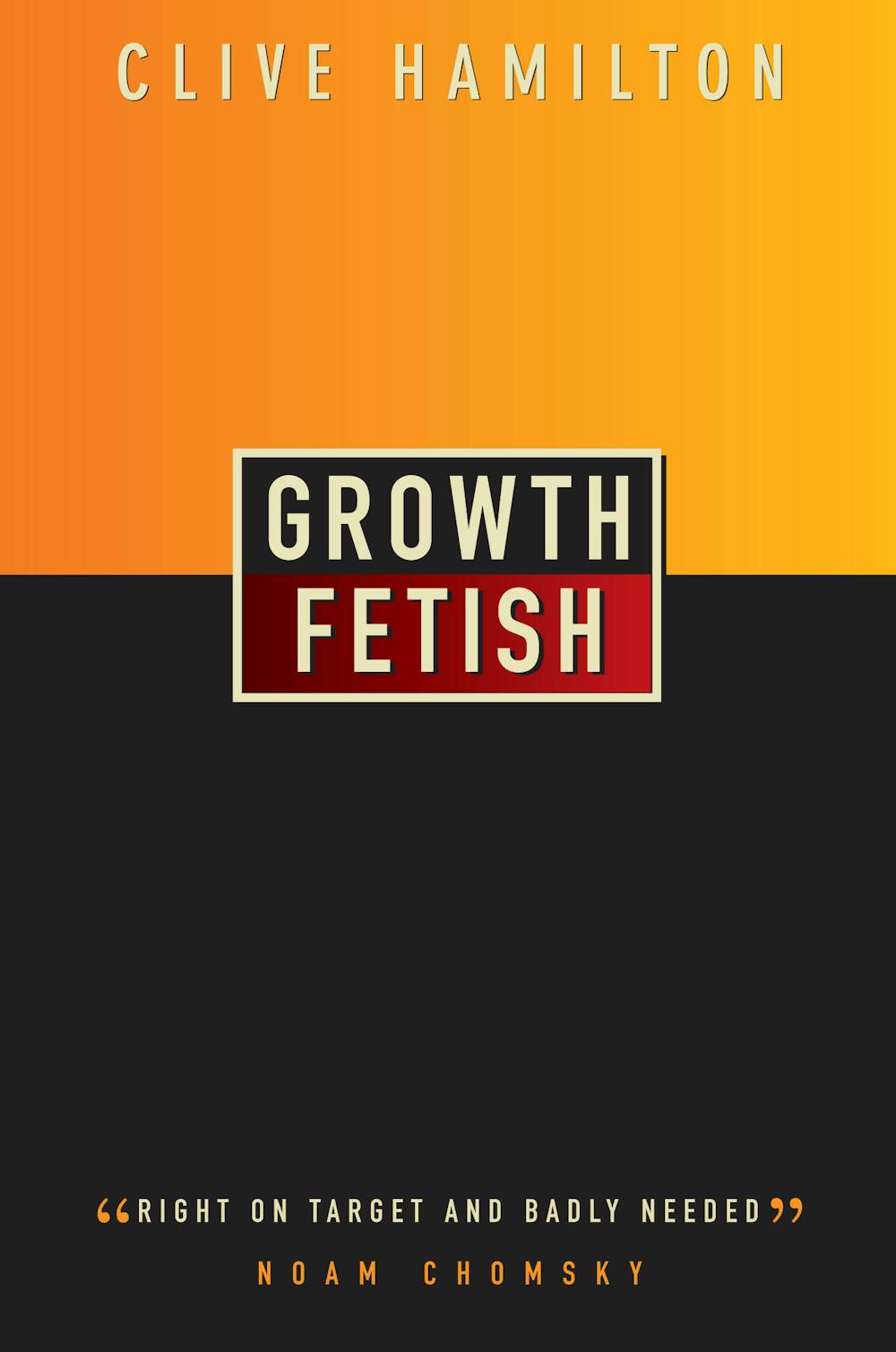 Hamilton’s (and The Australia Institute’s) war with consumerism and affluenza, as covered in his 2003 book Growth Fetish, appealed to those traumatised by John Howard’s materialist ascendancy. Two chapters cover Hamilton’s battle with the retailer David Jones – a war sparked by a 2006 Australia Institute report that accused the retailer of “corporate paedophilia”, on the grounds that its advertising material sexualised children. David Jones sued The Australia Institute, and Hamilton as executive director, for “misleading and deceptive conduct” under the Trade Practices Act. They withdrew their action (first threatened in October 2006) in April 2008, after nearly 18 months of engagement.
This was the archetypal Australia Institute campaign: a bold offensive for the moral high ground, followed by grim defence against a cashed-up opponent. The narrative reveals a lot about the ability of the wealthy to use the legal system against their opponents. It also shows Hamilton at war with much of the self-identified left. His “sex-positive” critics, such as Catherine Lumby or David Marr, are cast as shallow libertarians –acquiescent to capitalist individualism and indifferent to the social decay of modern society.
Throughout the book, Hamilton accuses the “left” of capitulating to identity politics and libertarianism. Here, he swims with the tide of much contemporary Australian opinion: left and right. He offers a “post-liberal” dismissal of liberalism as selfish, atomistic individualism.
Read more:
Book Review: Hidden Hand – Exposing How the Chinese Communist Party is Reshaping the World
Climate politics and China
Climate politics, above all, is central to the first part of the book. The story here is familiar and depressing: the “greenhouse mafia”, the duplicities of “moderate” Liberals, and the failures of former prime minister Kevin Rudd. The result, as Hamilton sees it, is a looming climate catastrophe. He doesn’t share the optimistic view of Rudd’s former climate advisor Ross Garnaut that rational policy will eventually triumph.
Hamilton’s work with The Australia Institute often reflected an optimistic sensibility: the belief people were ready to embrace alternatives to neoliberal individualism – and that some had already begun to move in this direction (for example, by “downshifting”). The climate crisis challenged Hamilton’s optimism and left him adrift and exhausted.
Despair at the failure of climate activism drove his shift to warning against the threat of China – more specifically, the Chinese Communist Party. It’s the focus of the final third of the book. This section is hard to judge.
In part, it combines a principled critique of Australian foreign policy with a reasoned condemnation of the actions of the Chinese government and its supporters – and a depressing account of the unwillingness of publishers to challenge a great power. Hamilton’s first China book, Silent Invasion, was abandoned by two major publishers – Allen & Unwin and then Melbourne University Publishing – due to fear of legal action (and for Allen & Unwin, fear of reprisal from China too).
Hamilton’s (and The Australia Institute’s) war with consumerism and affluenza, as covered in his 2003 book Growth Fetish, appealed to those traumatised by John Howard’s materialist ascendancy. Two chapters cover Hamilton’s battle with the retailer David Jones – a war sparked by a 2006 Australia Institute report that accused the retailer of “corporate paedophilia”, on the grounds that its advertising material sexualised children. David Jones sued The Australia Institute, and Hamilton as executive director, for “misleading and deceptive conduct” under the Trade Practices Act. They withdrew their action (first threatened in October 2006) in April 2008, after nearly 18 months of engagement.
This was the archetypal Australia Institute campaign: a bold offensive for the moral high ground, followed by grim defence against a cashed-up opponent. The narrative reveals a lot about the ability of the wealthy to use the legal system against their opponents. It also shows Hamilton at war with much of the self-identified left. His “sex-positive” critics, such as Catherine Lumby or David Marr, are cast as shallow libertarians –acquiescent to capitalist individualism and indifferent to the social decay of modern society.
Throughout the book, Hamilton accuses the “left” of capitulating to identity politics and libertarianism. Here, he swims with the tide of much contemporary Australian opinion: left and right. He offers a “post-liberal” dismissal of liberalism as selfish, atomistic individualism.
Read more:
Book Review: Hidden Hand – Exposing How the Chinese Communist Party is Reshaping the World
Climate politics and China
Climate politics, above all, is central to the first part of the book. The story here is familiar and depressing: the “greenhouse mafia”, the duplicities of “moderate” Liberals, and the failures of former prime minister Kevin Rudd. The result, as Hamilton sees it, is a looming climate catastrophe. He doesn’t share the optimistic view of Rudd’s former climate advisor Ross Garnaut that rational policy will eventually triumph.
Hamilton’s work with The Australia Institute often reflected an optimistic sensibility: the belief people were ready to embrace alternatives to neoliberal individualism – and that some had already begun to move in this direction (for example, by “downshifting”). The climate crisis challenged Hamilton’s optimism and left him adrift and exhausted.
Despair at the failure of climate activism drove his shift to warning against the threat of China – more specifically, the Chinese Communist Party. It’s the focus of the final third of the book. This section is hard to judge.
In part, it combines a principled critique of Australian foreign policy with a reasoned condemnation of the actions of the Chinese government and its supporters – and a depressing account of the unwillingness of publishers to challenge a great power. Hamilton’s first China book, Silent Invasion, was abandoned by two major publishers – Allen & Unwin and then Melbourne University Publishing – due to fear of legal action (and for Allen & Unwin, fear of reprisal from China too).
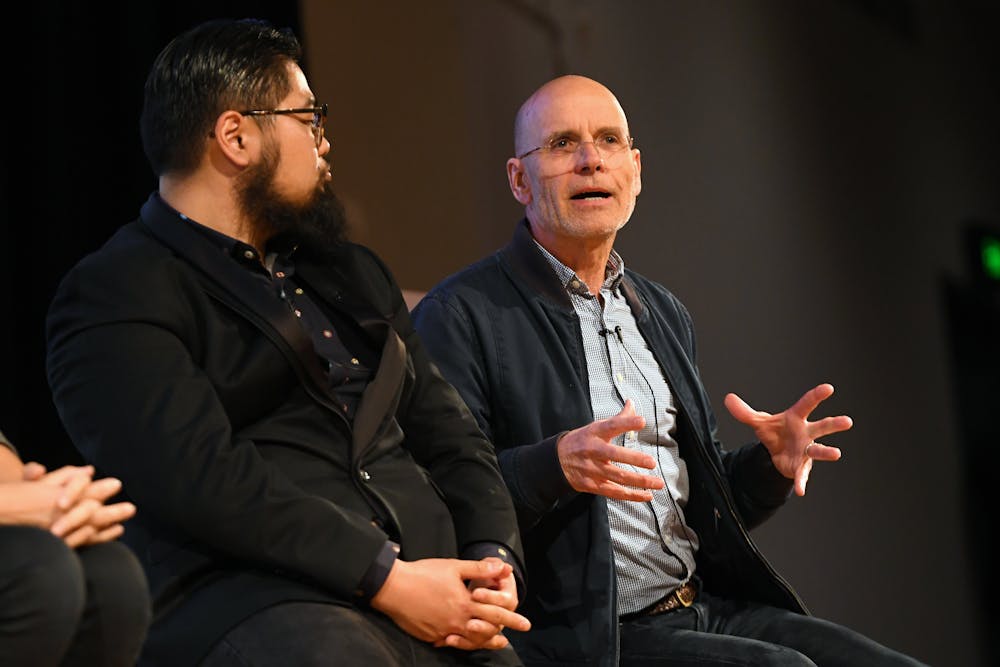 Clive Hamilton talking about Hong Kong’s situation and its influence on China, at an event in Melbourne.
James Ross/AAP
Behind the book lurks the old trope of left disillusionment: the complaint that “the left” has betrayed its values. Most of all, it recalls Noel Pearson or Phillip Sutton complaining “the left” was indifferent to the dysfunctional reality of many Indigenous communities.
Hamilton rails against what he sees as the naivety of the left – but also the hidden hand of China, whose agents (and unwitting agents) he perceives everywhere: Paul Keating, Bob Carr, Tasmanian Liberal and Labor, Hugh White, Geraldine Doogue. He even sees them within Daniel Andrews’ staff. Robert Manne launched Hamilton’s unsuccessful Greens candidacy in the 2009 Higgins by-election, but Hamilton accepts the breakdown of relations between them over the China issue.
Hamilton seems to view some on the right more favourably. He appears on the Bolt Report – not because of any sympathy for Andrew Bolt, but in the hope of appealing to some of Bolt’s audience (just as he sought conservative support in his campaign against “corporate paedophilia”). Hamilton talks to security intellectuals, and credits former US president Donald Trump for recognising the China threat, in contrast with the naivety of his predecessor Barack Obama. this edit ok?
Despite this, Hamilton’s story is not a neoconservative one. His unhappiness with much of the left does not impel him to forgive old enemies, such as The Australian newspaper. He would never follow the example of Warren Mundine or Mark Latham. He remains a strong critic of modern materialism and growth mania, and an advocate of radical climate action. Most of all, he is still a seeker in search of meaning.
The 2022 federal election provides a real-world coda to Provocateur. Hamilton has had a long association with the Greens. But his sensibility seems a poor fit for Adam Bandt’s social democracy.
In many aspects, this book speaks more to the “teals”. Not to their Turnbullite MPs, but to the army who impelled them to victory: the moral middle-class, Boomer and millennial, precariat and retired, rich and poor. Provocateur will need a sequel.
Authors: Geoffrey Robinson, Senior Lecturer, School of Humanities and Social Sciences, Deakin University
Clive Hamilton talking about Hong Kong’s situation and its influence on China, at an event in Melbourne.
James Ross/AAP
Behind the book lurks the old trope of left disillusionment: the complaint that “the left” has betrayed its values. Most of all, it recalls Noel Pearson or Phillip Sutton complaining “the left” was indifferent to the dysfunctional reality of many Indigenous communities.
Hamilton rails against what he sees as the naivety of the left – but also the hidden hand of China, whose agents (and unwitting agents) he perceives everywhere: Paul Keating, Bob Carr, Tasmanian Liberal and Labor, Hugh White, Geraldine Doogue. He even sees them within Daniel Andrews’ staff. Robert Manne launched Hamilton’s unsuccessful Greens candidacy in the 2009 Higgins by-election, but Hamilton accepts the breakdown of relations between them over the China issue.
Hamilton seems to view some on the right more favourably. He appears on the Bolt Report – not because of any sympathy for Andrew Bolt, but in the hope of appealing to some of Bolt’s audience (just as he sought conservative support in his campaign against “corporate paedophilia”). Hamilton talks to security intellectuals, and credits former US president Donald Trump for recognising the China threat, in contrast with the naivety of his predecessor Barack Obama. this edit ok?
Despite this, Hamilton’s story is not a neoconservative one. His unhappiness with much of the left does not impel him to forgive old enemies, such as The Australian newspaper. He would never follow the example of Warren Mundine or Mark Latham. He remains a strong critic of modern materialism and growth mania, and an advocate of radical climate action. Most of all, he is still a seeker in search of meaning.
The 2022 federal election provides a real-world coda to Provocateur. Hamilton has had a long association with the Greens. But his sensibility seems a poor fit for Adam Bandt’s social democracy.
In many aspects, this book speaks more to the “teals”. Not to their Turnbullite MPs, but to the army who impelled them to victory: the moral middle-class, Boomer and millennial, precariat and retired, rich and poor. Provocateur will need a sequel.
Authors: Geoffrey Robinson, Senior Lecturer, School of Humanities and Social Sciences, Deakin University 

















