

Tuatara are returning to the mainland – but feeding the hungry reptiles could be more difficult than expected
- Written by: Sarah K. Lamar, PhD Candidate & Teaching Fellow, Te Herenga Waka — Victoria University of Wellington
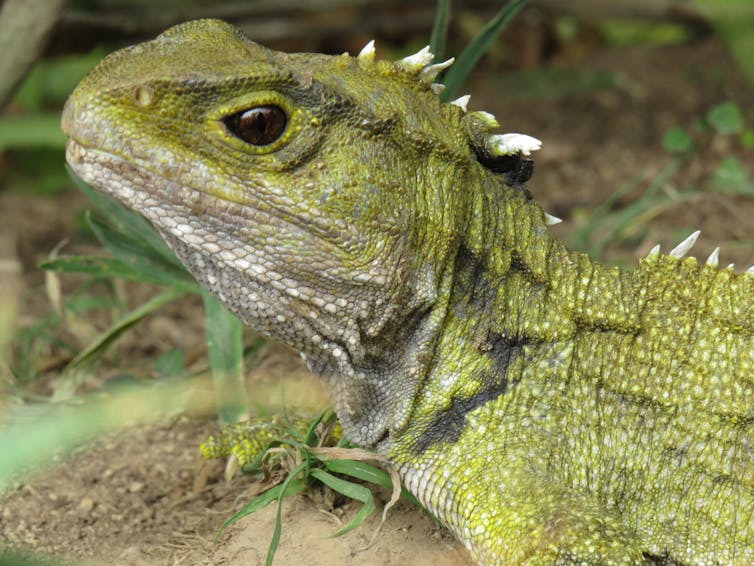
Following the settlement of Aotearoa New Zealand, many native species were wiped from the mainland. It’s a familiar story – one that has affected species like the iconic flightless kākāpō and the tuatara, a reptile in a category all its own.
As the New Zealand government moves towards the goal of Predator Free 2050, the reintroduction of native species back into predator-free areas on the mainland is becoming increasingly common.
However, these reintroductions from offshore islands to the mainland can have unexpected outcomes.
A recent study led by researchers at Te Herenga Waka–Victoria University of Wellington raises questions about the impact habitat differences will have when we are reintroducing taonga species of special cultural significance to Māori.
The study focused on tuatara, which have undergone extensive recovery efforts. But the process of reintroducing these reptiles back onto the mainland may not be as straightforward as previously thought.
An icon of Oceania
Tuatara are reptiles so unique they are the sole surviving species in Rhynchocephalia – one of the four reptile orders.
Long-lived, slow to reproduce, and laying their eggs in the ground, tuatara are vulnerable to predators like stoats and rats. Natural populations of tuatara remain only on predator-free offshore islands.
However, tuatara have been settled back onto the mainland inside several fenced ecosanctuaries, a trend that’s likely continue as the impact of invasive mammals is reduced across the country.
New research on the diets of tuatara living on Takapourewa/Stephens Island reveals that larger individuals are eating a surprising amount of seabirds – or at least seabird matter.
Using carbon signatures to assess diet, we found that as much as 40% of the dietary carbon in sampled tuatara had marine origins – explaining the headless seabird carcasses often encountered across the island.
For a tuatara with a mouth large enough to fit around a seabird, and a territory in the burrow-pocked forest floor, this might mean one fledgling head a week.
The seabird situation
Seabirds represent a crucial food source on offshore islands, providing the opportunity for animals that can consume seabird eggs, fledglings or adults with a boon of nutrients like polyunsaturated fatty acids (PUFAs).
These fatty acids are important for egg hatchability, embryo development and juvenile growth in other reptile species.
However, seabird colonies like the ones found on the Takapourewa are absent from mainland New Zealand, which poses a couple of questions: what are populations of tuatara reintroduced to the mainland eating, and are there physiological implications from this dietary lack of seabirds?
Read more: Not a lizard nor a dinosaur, tuatara is the sole survivor of a once-widespread reptile group
We currently don’t know how much of a benefit to growth and development the large role of seabirds in the tuatara diet provides or what the lack of these nutrients may mean for tuatara living on the mainland.
In ecosanctuaries, where biodiversity is high, skinks, geckos and ground-nesting native birds may provide some supplementation of PUFAs. However, PUFAs trend higher in marine environments than terrestrial systems.
Dietary disparity
This new research sheds light on an important facet of reintroducing native species to the mainland.
The biological communities on offshore islands are often very different from those on the mainland and the species living there are part of a complicated, interwoven web of predator and prey interactions.
While New Zealand is the undisputed seabird capital of the world, the mainland is very different from the time when tuatara were widespread. Once covered in either seabird colonies or the guano from seabird colonies, the mainland is now a patchwork of bush, agriculture and urban areas.
Read more: Reptiles: why one in five species face extinction
This research supports the need for a holistic view of restoration and a measured approach to reintroductions.
For many mainland ecosanctuaries, the resources to restore seabird populations are extremely limited. Located near cities with large amounts of light pollution, and with poor or missing records of which seabirds historically inhabited the space, the possibility of large-scale seabird restoration to the mainland is difficult.
What will the lack of seabirds, which make up a significant portion of the diet of large tuatara on offshore islands, mean for mainland populations? And will we see physiological effects of this disparity at our ecosanctuaries?
With lifespans of well over 100 years, setting up tuatara restorations is aiming for success well beyond our lifetimes. While we don’t yet know how this dietary disparity is affecting the viability of tuatara populations, the sheer number of seabirds being consumed by large tuatara offshore makes it a pressing question for restoration - and raises questions about how we approach translocations in Oceania.
Authors: Sarah K. Lamar, PhD Candidate & Teaching Fellow, Te Herenga Waka — Victoria University of Wellington


















