

New dates suggest Oceania's megafauna lived until 25,000 years ago, implying coexistence with people for 40,000 years
- Written by: Michael Westaway, Australian Research Council Future Fellow, Archaeology, School of Social Science, The University of Queensland
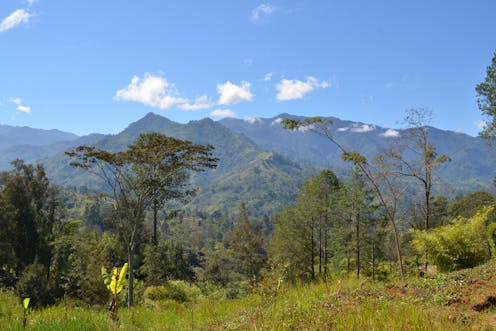
For most of Australia’s human past sea levels were lower than they are today. Australia’s mainland was connected to Papua New Guinea and Tasmania as part of a larger landmass called “Sahul”.
During the Ice Ages Sahul was home to a unique range of megafauna, which included giant marsupials, birds and reptiles. The extinction of megafauna in Sahul remains one of the most contested debates in Australian science.
Now, our new paper published in Archaeology in Oceania provides compelling evidence megafauna may have coexisted with people in the region longer than previously thought – and as recently as about 25,000 years ago.
Our research extends the likely period of overlap between megafauna and people to about 40,000 years. It brings new evidence against the theory that people in Sahul drove the megafauna extinction.
An enduring scientific debate
Like other regions during the ice ages (a period known as the Pleistocene) Sahul contained the enigmatic megafauna. The term “megafauna” as it’s used in Australia is generally applied to ancient animals that weighed more than about 45kg.
There is disagreement on how Sahul’s megafauna went extinct. Since 1831 – when eminent anatomist Sir Richard Owen received megafauna fossils from Wellington Cave in New South Wales, and a decade later from the Darling Downs in Queensland – there has been speculation about how Sahul’s megafauna went extinct.
Owen argued humans were responsible. Others, such as Prussian scientist Ludwig Leichhardt, favoured environmental change as the cause, proposing megafauna extinction in the Darling Downs occurred as a result of the draining of swamps due to tectonic uplift.
Today the debate continues along similar lines. Some researchers argue Aboriginal people were responsible for driving all megafauna extinct by 42,000 years ago.
Read more: Humans coexisted with three-tonne marsupials and lizards as long as cars in ancient Australia
Decades of work in Sahul
The most direct approach to understanding what happened to the megafauna involves excavating sites containing their remains, and applying a range of techniques to understand how these sites (and their surroundings) have changed through time. Revisiting old sites with new techniques helps us gather as much data as possible.
The most significant research into understanding megafauna extinction in northernmost Sahul was conducted in the 1970s by archaeologist Mary-Jane Mountain at the Nombe rockshelter in the Papuan Highlands.
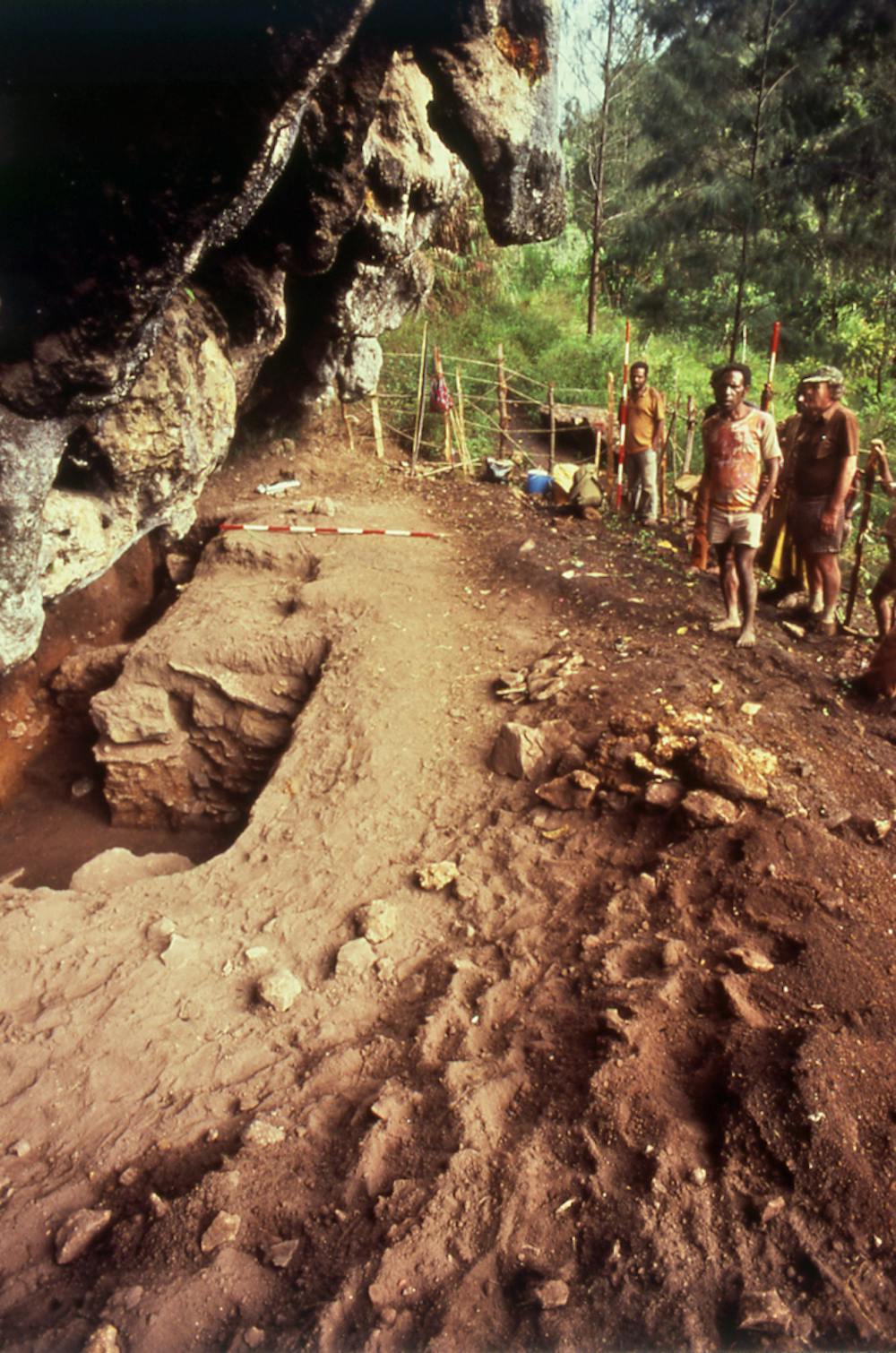
Mountain’s careful excavation of a site known to have been inhabited by people in the late Pleistocene also uncovered megafauna fossils.
While the fossils themselves couldn’t be dated, the dating of charcoal samples, non-megafauna animal bones and snail shells from adjacent deposits revealed megafauna existed in the area as recently as 19,000 years ago.
However, a paper published in 2001 argued archaeological sites weren’t ideal for testing megafauna extinctions as they lacked near-complete animal fossils that had been moved by people.
Nombe was removed from the list, along with the original dates for megafauna surviving as recently as 19,000 to 25,000 years ago.
In 2016, another important paper was published reassessing these dates. This research used a more modern carbon-dating approach called accelerated mass spectrometry (AMS) dating.
This method can date much smaller charcoal particles, and once more led researchers to dates that supported the original estimates revealed through Mountain’s work.
Redating Nombe
For our new paper, we decided to further test these estimates using uranium-series (U-series) dating of megafauna fossils. The U-series dating technique has been refined over several decades. It allowed us to directly date megafauna fossils from the Papuan Highlands for the first time.
Our research suggests the fossils date to between 22,000 and 27,000 years ago – which is very close to Mountain’s original estimates and the more recent accelerated mass spectrometry dates.
The U-series dating provides minimum age estimates, which means the fossils could be older. But since our estimates are supported by previous accelerated mass spectrometry dating, collectively the data provide a compelling case for the existence of megafauna in Sahul as recently as 25,000 years ago.
This contradicts the persisting theory these animals were extinct by 42,000 years ago.
Our research also extends the period of overlap between megafauna and people. If the earliest dates for people in Sahul go back 65,000 years, this implies some 40,000 years of overlap.
Read more: Aboriginal Australians co-existed with the megafauna for at least 17,000 years
Adding to this, recent work at the Willandra Lakes in NSW and the Seton Rockshelter at Kangaroo Island also estimates Sahul’s megafauna were alive some 30,000 years ago.
Was there another ancient human?
Some argued the arrival of people to Sahul drove significant environmental change, to the point that megafauna could no longer survive.
But our analysis of pollen at Nombe reveals high-altitude forests (called montane forests) persisted from at least 26,000 years ago to the end of the Pleistocene 10,000 years ago. The archaeological evidence shows people weren’t that active in the area during this time – which suggests it’s unlikely they drove the megafauna extinction.
Rather, we raise the possibility megafauna may have coexisted with hominins (a group including us, Homo sapiens, and our close ancestors) for much longer than previously thought.
Geneticists have found the mysterious ancient humans called Denisovans were likely present in the Papuan Highlands before Homo sapiens arrived. So they may have been familiar with megafauna further back than 65,000 years ago.
But this idea needs to be further investigated. We don’t have Denisovan fossils from Papua New Guinea. We only have genetic data in modern Highland populations to study.
More field work will help us understand not only how megafauna went extinct across Sahul, but how they interacted with their surroundings, and how their collapse may have shaped today’s environments.
Read more: Giant marsupials once migrated across an Australian Ice Age landscape
Authors: Michael Westaway, Australian Research Council Future Fellow, Archaeology, School of Social Science, The University of Queensland


















