

how we can bring respect to Australian democracy
- Written by: Stan Grant, Vice Chancellors Chair Australian/Indigenous Belonging, Charles Sturt University
This is a piece by Stan Grant, Professor of Indigenous Belonging at Charles Sturt University, and Jack Jacobs, Research Fellow at Charles Sturt University, following the launch of the Yindyamarra Pledge for democracy: a call to reimagine Australian democracy.
Democracy is under siege.
In every corner of the world, it faces external and domestic threats that challenge its standing relative to alternative political systems.
China rises, an authoritarian power to threaten the West.
Russia invades Ukraine, its democratic neighbour, as the West rallies in support.
Autocracy is also on the rise within democracies. The United States, Brazil, United Kingdom, India and several European democracies are – or have recently been – led by populists fuelled by the discontent of the dispossessed: those left behind by markets that have for decades prioritised profits over people.
All this is inflamed by tribalism and a public debate deranged by the worst aspects of social media.
Not long ago, political scientist Francis Fukuyama declared liberal democracy the “end of history”.
What went wrong?
The legacy of history and the myth of ‘progress’
One place to look for an explanation is in history, in the Enlightenment myth of “progress” that has shaped our world since the 18th century.
From the French Revolution of 1789 to the invasion of Iraq in 2003, many philosophical liberals have been motivated by the idea that history has a forward movement: that human societies, though infinitely complex and diverse, are to be experimented on and redesigned according to rational, liberal principles.
This “illusion of destiny” – to invoke a striking phrase from Harvard University philosopher and economist Amartya Sen – has left tragedy in its wake.
Colonialism and coercive liberalism
Perhaps the most pernicious form of “progress” myth has been colonialism.
Throughout the 16th, 17th, 18th and 19th centuries, European powers struggled to subjugate once free peoples in Australia, the Americas, Asia, Africa and the Pacific.
In her recent book, Legacy of Violence, Harvard historian Caroline Elkins reminds us that in the British case, liberalism was used as a coercive force:
[…] violence was inherent to liberalism. It resided in liberalism’s reformism, its claims to modernity, its promises of freedom, and its notion of the law – exactly the opposite places where one normally associates violence.
In places like Australia and India – from where these authors hail, respectively – the British promised freedom but delivered submission.
Speaking back to liberalism
What are we to do with liberal democracy, a tradition that makes a virtue of freedom yet has been imposed down the barrel of a gun?
To the colonised millions of the world, liberalism remains captured by Whiteness.
These people are speaking back to liberalism.
They have not always spoken the language of liberalism – they have their own traditions of tolerance, dignity, sympathy and respect – but have brought a powerful moral force to liberalism.
Edmund Burke, the 18th-century philosopher-statesman of Irish Catholic heritage, spoke back to liberalism when he impeached Warren Hastings, governor of Bengal, for betraying liberal ideals through colonialism in India.
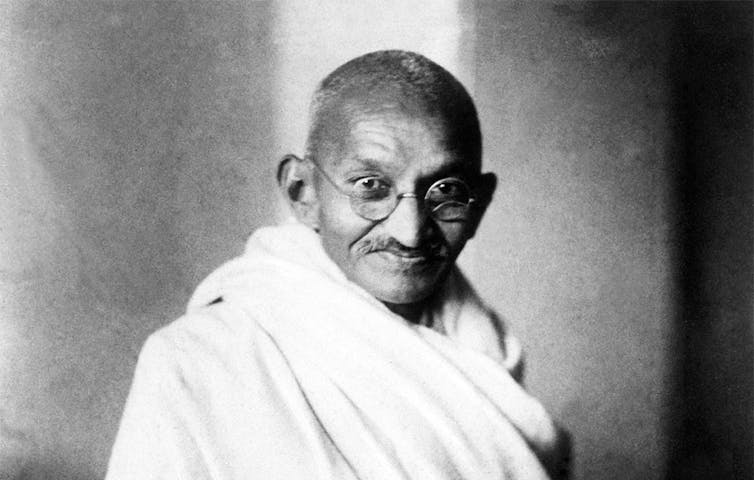
Mahatma Gandhi, writing a century later in Hind Swaraj, spoke back to liberalism when he called on the English to honour their “own scriptures” and respect Indian freedom.
W.E.B. Du Bois spoke back to liberalism when he told a UN Peace Conference after the second world war that the West had “conquered Germany […] but not their ideas” by keeping illiberal practices alive through colonialism in Africa.
These people shamed liberalism.
Rosa Parks refused to sit in the back of a bus and inspired a movement.
Powerful voices like Martin Luther King junior may have appealed to liberalism’s dream of character over colour, but he had no illusions about an America that he had also damned to hell.
In Australia, Yorta Yorta man William Cooper sent a petition to King George VI to remind him of his moral duty to a people whose lands were “expropriated” by the Crown and whom the Crown denied legal status. He called for black seats in parliament to “prevent the extinction of the Aboriginal race”.
And Pearl Gambayani Gibbs helped lead a day of mourning in 1938, proclaiming: “I am more proud of my Aboriginal blood than of my white blood”.
These figures implore us to remember that liberal democracy is but one way of living and being.
Yindyamarra
Wiradjuri people have our own philosophy, yindyamarra. It defies simple translation but it grounds respect in all we do.
How do we bring respect – yindyamarra – to Australian democracy? Is our liberalism even capable of respecting the sovereignty never ceded of First Nations peoples?
Australian liberalism has passed from extermination to exclusion to assimilation but has stopped short of recognition.
After two centuries of broken hearts and shattered dreams, it is little wonder hope can appear delusional.
As Munanjahli and South Sea Island writer and scholar Chelsea Watego has said: “Hope is as passive as the social world we occupy insists we have to be”.
Hope, or its absence, has been an enduring theme in talking back to history and political liberalism. Du Bois spoke of “a hope not hopeless but unhopeful”.
A constitutionally enshrined First Nations Voice offers its own version of what Noel Pearson has spoken of as radical hope.
Proponents of the Voice say it is a pathway to justice – to truth and treaty.
Political philosopher Duncan Ivison says it “prefigures a possible refounding of Australia”.
But its modesty – a voice not a veto – risks losing faith with First Nations people. Prime Minister Anthony Albanese has already said it is a voice “nothing more, nothing less”.
He says the parliament will set the composition of the Voice.
That begs the question: can the parliament meet the urgency of the demands of Aboriginal and Torres Strait Islander peoples?
The challenge of the Constitutional Voice is to honour the unending struggle of those Aboriginal and Torres Strait Islander champions who have sought to prise open the locked door of Australian democracy.
With liberal democracy struggling under the weight of its racist and violent history, now is a time for our voices to add more weight to the scales: to demand liberal democracy is responsible, accountable, and fit for the 21st century.
Yindyamarra is a Wiradjuri voice; a voice for justice.
It is a voice inspired by Wiradjuri elders including my father, Dr Uncle Stan Grant Snr, whose work has helped a new generation to speak Wiradjuri and speak back to power.
Yindyamarra is his gift to me, his son.
Yindyamarra winhanganha: calls us to build a world of respect grounded in our knowledge and being in a world worth living in
Yindyamarra is an antidote to Western nihilism and the worst of Western liberalism.
Yindyamarra is my father’s Wiradjuri hope; a hope to be earned.
Yindyamarra dares this nation to build a democracy worthy of that hope.
Authors: Stan Grant, Vice Chancellors Chair Australian/Indigenous Belonging, Charles Sturt University


















