

Will your energy bills ever come down? Only if Labor gets serious with the gas majors
- Written by: Samantha Hepburn, Professor, Deakin Law School, Deakin University
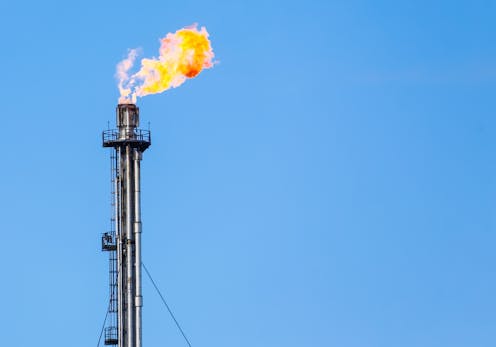
Over the next two years, energy prices are expected to rise by a whopping 56%. That’s the dismal forecast in this week’s federal budget.
The rise will be extremely painful, adding enormous pressure to households already struggling with the cost of living.
In response, the government is talking tough. Treasurer Jim Chalmers has flagged a government intervention and has asked the Australian Competition and Consumer Commission (ACCC) to examine the gas market closely.
But does the government have any real leverage? It’s so far baulked at pulling the gas trigger – a mechanism to limit exports if there’s a local shortfall.
If Labor genuinely wants to stop prices skyrocketing, it must forcibly reserve gas for the east coast market. The policy has worked for Western Australia. The question is, does it have the nerve?
Is there any hope for consumers? Short term, it’s unlikely. But within three years, Australia should be able to produce half its electricity from renewables – and the sun and wind are, thankfully, resistant to geopolitical price hikes.
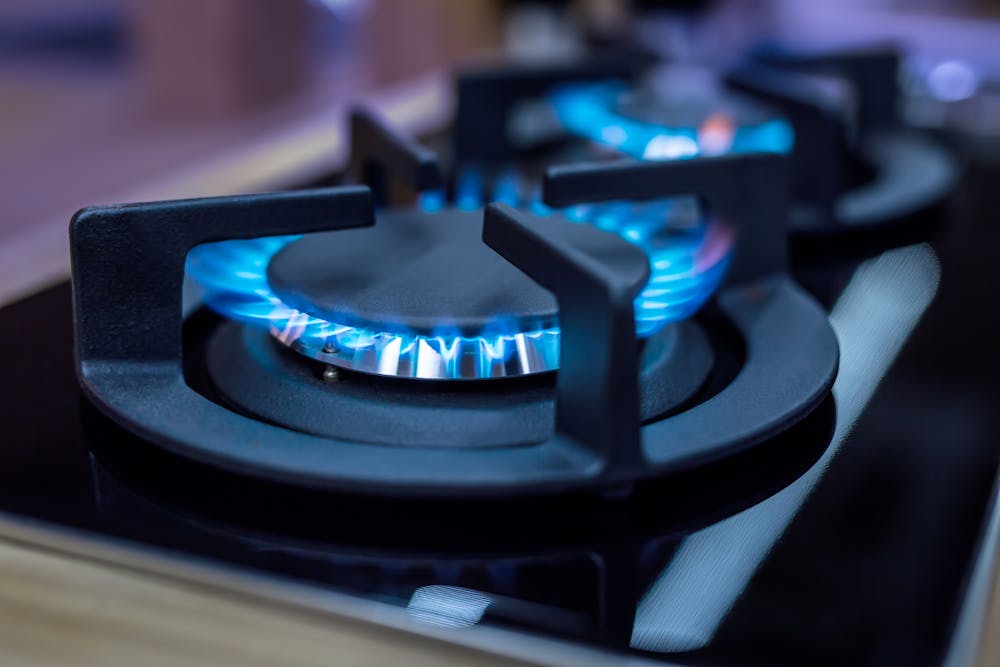
Why do energy prices keep rising?
Right now, we’re still highly dependent on fossil fuels, because the renewable transition is still in its early stages.
Oil, gas and coal prices are spiking following Russia’s invasion of Ukraine. Sweeping sanctions on Russia forced many European countries to find alternative gas supplies, causing global prices to skyrocket. So while Australia has plentiful gas, producers are selling much of it overseas – and domestic users have to pay the same high international price.
What’s more, the Australian electricity market has been forced to rely more on expensive gas due to rising number of extreme weather events, unexpected coal plant outages, fuel supply issues and the closure of old coal plants.
To date, the national market (which excludes Australia’s north and west) has imposed few restrictions on gas exports. This cannot continue. Gas is a public resource and the government must act to protect vulnerable consumers.
What has the government tried?
Since taking power in May, Labor has done two things to bring prices down: extended an existing agreement with gas producers, and proposed changes to the gas trigger to make it easier to pull. Neither have had noticeable success.
The agreement signed at the end of September extends the Morrison-era agreement out to 2030. The goal is simple: ensure we do not run short of gas next year.
The problem is, while good in principle, these types of agreements – known as heads of agreement – are not legally binding.
The extended agreement says producers must offer uncontracted gas to the domestic market – gas left over after producers have satisfied their contractual supply obligations – before it’s offered to the international market.
It must be offered at a competitive price, which is hard to define in a highly turbulent international market. It provides no price security.
What’s more, the code of conduct guiding the agreement is voluntary and there’s no legal recourse for non-compliance.
This is a feeble, unsatisfactory way to regulate Australia’s multibillion-dollar gas sector in the face of a global energy crisis.
Read more: Albanese government's first budget delivers election promises but forecasts soaring power prices
What about the so-called “gas trigger”?
If a shortfall of gas is forecast, the federal government can pull the gas trigger – a mechanism where the energy minister can impose export restrictions.
This is a supply mechanism, not a price mechanism. Intended as a last resort, it was introduced in 2017 and has never been used – not even this year, despite the dire predictions of a shortfall next year.
What’s Labor doing? Proposing to make it easier to pull this trigger by assessing any shortfall every three months instead of only once a year. But this won’t change the price of gas.
Don’t we have more protection against price spikes?
When you look at your energy bill, you may notice a key phrase: the default market offer. Effectively a price cap, it was introduced in 2019 to ensure the standing offers of energy retailers couldn’t rise too much.
Standing offers – as opposed to market offers – include mandatory consumer protections, usually making them more expensive. Confused? You’re not alone. While energy users have always been able to choose between standing and market offers, in reality, most of us didn’t know the difference.
That’s why the ACCC got involved in 2018, finding the national electricity market wasn’t operating in the best interest of consumers.
In response, the government introduced a code forcing energy retailers to adhere to the default market offer, set by the Australian Energy Regulator. This price cap is figured out by taking into account wholesale cost of energy and cost of living pressures. For instance, this financial year, price increases were capped at 1-9% in Victoria, 8.5-14% in New South Wales, and 11.3% in South-east Queensland.
The default market offer has proved an important safeguard against anti-competitive pricing in the retail sector. But the problem now is the wholesale cost of energy has spiked, forcing up the default market offer to reflect the rising cost of energy for retailers.
How could Labor get serious on energy prices?
As prices surge, pressure will rise on the government to quit tinkering and take stronger action – namely, legally reserving gas for east coast use, and tackling the soaring network costs of maintaining and expanding the poles and wires through which electricity flows.
In WA, the energy crisis has been much more muted. This year, wholesale energy price rises in the west have averaged A$64 a megawatt-hour while east coast rises have been more than four times higher at an extraordinary $284/MWh.
That’s because the WA government learned from a 2008 gas outage and brought in a reservation policy which mandates 15% of the gas extracted in the state must stay there.
A federal gas reservation policy is the best way to increase supply and drive down prices.
The second step is to intervene in network costs, which contribute up to half of the cost to you as a consumer.
The problem is, worsening extreme weather damages existing infrastructure. And we’ll need much more transmission infrastructure to get to a clean energy grid.
To solve this part of your energy bill pain, state and federal governments can work to expand our underground power network, which is more resilient to floods and fire. But we also need to develop a fair and equitable way of allocating network costs.
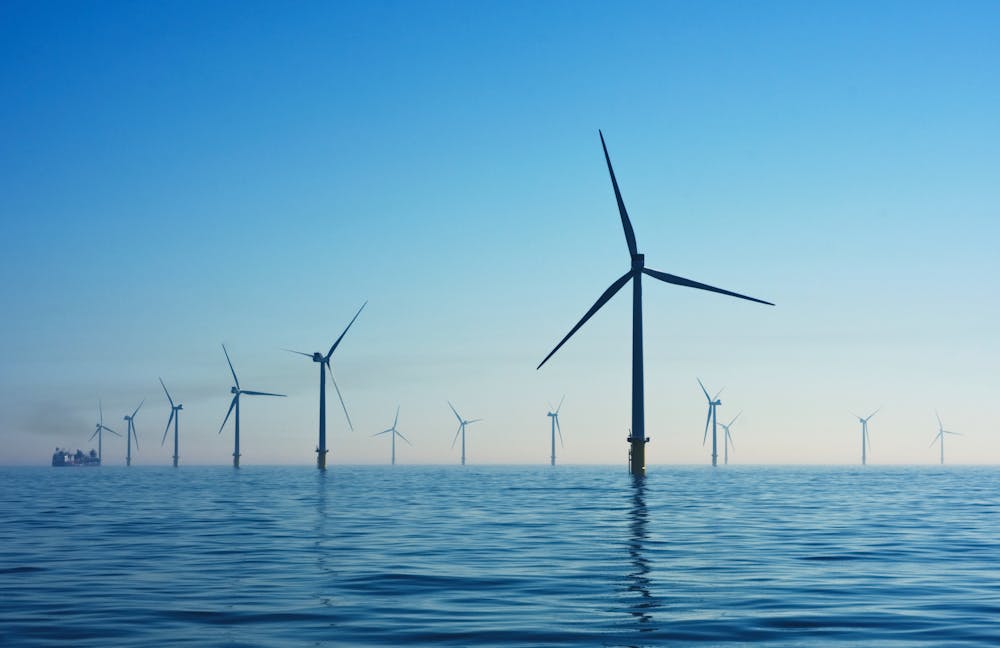 Renewables are coming - but not fast enough to stave off this pain.
Nicolas Doherty/Unsplash, CC BY
Renewables are coming - but not fast enough to stave off this pain.
Nicolas Doherty/Unsplash, CC BY
Beyond softly-softly
Where does this leave us? In a world of (temporary) pain. Until we stop relying on expensive gas, coal and oil, market turbulence will add more pain. Change is coming – and fast – with renewables expected to meet 50% of our electricity needs within three years.
Those three years are likely to be rough. We are dependent on gas until enough renewables and storage come online. Given our gas is a national resource, we should treat it as such. The softly-softly approach isn’t working.
As consumers feel the pain, energy poverty and food insecurity will spike. Things may have to get worse for Labor to bite the bullet and take decisive action.
Read more: Want a solution for the energy crisis gripping Australia's east? Look west
Authors: Samantha Hepburn, Professor, Deakin Law School, Deakin University


















