

We spoke to the exhausted flood-response teams in the Hunter Valley. Here's what they need when the next floods strike
- Written by: Iftekhar Ahmed, Associate Professor, University of Newcastle
People living in the Hunter region of New South Wales know all too well the devastation disasters can bring. After enduring the 2019-2020 horror bushfire season, La Niña settled in for three wet summers and residents experienced back-to-back floods.
Since early October, we’ve conducted nine in-depth interviews with members of flood-response teams in the Hunter for our ongoing qualitative research into how prepared these communities are for future floods. Many people in the Hunter are living in temporary accommodation. A councillor we spoke to pointed out, “there are still people living in caravans, and they’ll be in caravans for quite some time”.
For the Northern Rivers region, which was ravaged by record-breaking floods in February and March this year, some relief is coming.
Prime Minister Anthony Albanese and NSW Premier Dominic Perrottet today announced a A$800 million buyback scheme for residents in seven areas – including Lismore, Ballina and Tweed – where “major flooding would pose a catastrophic risk to life”. Some 2,000 homeowners will be eligible for funding to sell their homes, repair damage, or make their homes more resilient.
More flooding is expected across eastern Australia in coming weeks, as La Niña conditions are set to persist until early 2023. This is a time to take stock of the lessons gained from the previous spate of floods, and to assess how agencies and communities are heeding these lessons to manage coming floods.
Floods in the Hunter
Overall it seems regular warnings are being provided and agencies have actively stepped up their operations. Still, some Australian communities currently experiencing floods, such as in Victoria, remain vulnerable.
For example, this month many people have become marooned in places where flood defences were inadequate and it was too late to evacuate.

Our research focuses on the Hunter region’s experience of recent floods as they relate to climate change. We want to find out how local communities can improve their resilience and capacity to adapt to floods.
In the Hunter, floods have severely impacted businesses. Cumulative losses in businesses across the region caused a significant economic setback, at a time when many were still struggling with the economic impacts of COVID.
For example, a pub in the centre of Wollombi was submerged to its roof last July. And a vineyard and resort owner we spoke to explained: “We were trapped here for nearly a week in July, including some resort guests”.
Towns such as Broke, Gillieston Heights, Maitland and Singleton were completely isolated, as road networks became inundated. This made evacuations difficult or even impossible.
A police officer said people were trapped in recent floods and he expected the same if another flood strikes, adding: “We need to put in place better evacuation systems.”
Great demands are placed on volunteers of the State Emergency Services (SES). As one volunteer said: “I just joined the SES early this year and since then it has been a very busy time!”
Other volunteers mentioned the potential for “burnout” after dealing with so many floods over a long time, including this month.
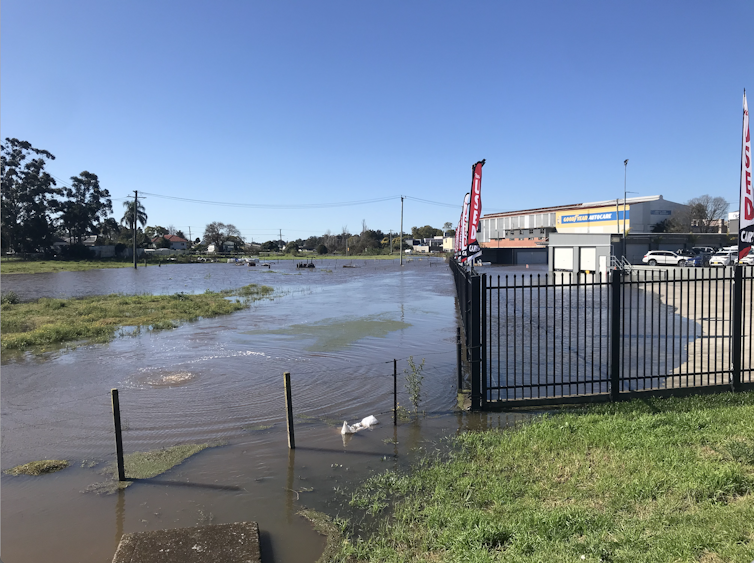
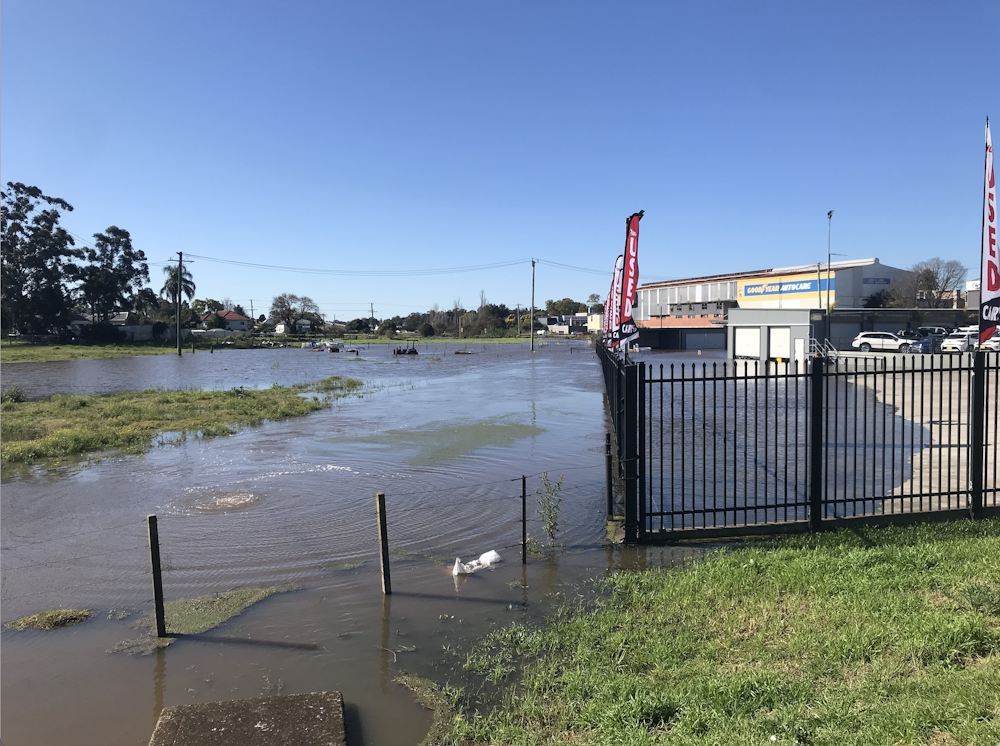 Flooding in Maitland in July this year.
Ifte Ahmed, Author provided
Flooding in Maitland in July this year.
Ifte Ahmed, Author provided
Mixed messages
The biggest problem to be solved, according to our interviews, is inadequate communication.
A local police officer told us: “The focus should be on early warning and communication. There were mixed messages [to residents] from the services on the ground”. This was in regards to when exactly residents should evacuate.
These mixed messages not only hampered timely evacuation operations, but also strained the communication between the regional Emergency Management Centre and on-ground staff, as well as between emergency services and communities.
He also pointed out the challenge of local complacency to heed warnings, encapsulated in the typical “She’ll be right” mentality.
Read more: What’s in the mud? Flood victims' fears eased by early test results
Research shows social media offers communication opportunities during disasters, but it’s also evident that the potential for misinformation on social media can hinder effective communication. Lack of internet access and language barriers can also make effective communication difficult.
Another police officer said: “Communication is something that I am always thinking of. It’s not just us getting the messages out but getting [communities] to hear our messages and respond to them appropriately”.
 SES volunteers were among those we interviewed for our upcoming research.
AAP Image/Dean Lewins
SES volunteers were among those we interviewed for our upcoming research.
AAP Image/Dean Lewins
The importance of emergency communications has been highlighted in Australian research on disaster risk management. For example, a 2016 paper found around 20% of all emergency management problems since 2010 were linked to communicating with communities.
As agencies and communities grapple with frequent flooding, it seems preparedness measures may indeed be improving. For example, in anticipation of Victoria’s floods this month, we saw the rapid deployment of sandbags and even the building of a new levee in Echuca.
Across towns in the Hunter regions, our research participants told us of efforts to improve, for instance, equipment supply and inter-agency coordination. For example, the NSW SES have, in recent years, initiated “Flood Forums” to gather together, plan and coordinate different emergency agencies, in response to communications issues.
Read more: Beyond a state of sandbagging: what can we learn from all the floods, here and overseas?
What next?
Another key area that deserves attention is to understand the multi-hazard scenario confronting Australian agencies and communities, as we face back-to-back bushfires, floods, and storms under climate change.
One way to tackle this is by bringing together agencies, such as the Rural Fire Service and the SES, into coordination to address multiple hazards, perhaps even as a single entity.
Interestingly, this was suggested by both SES and Rural Fire Service volunteers in our research interviews. They told us that combining the agencies into a single entity would lead to, for instance, less competition for recruiting volunteers.
As soil remains sodden and catchments are saturated, towns across Australia should be wary of more floods in the coming weeks. We hope being awareness of the urgent need for disaster management agencies to communicate better will lead to tangible improvements.
Authors: Iftekhar Ahmed, Associate Professor, University of Newcastle


















