

40 years ago, protesters were celebrated for saving the Franklin River. Today they could be jailed for months
- Written by: Piero Moraro, Lecturer in Criminology, Edith Cowan University
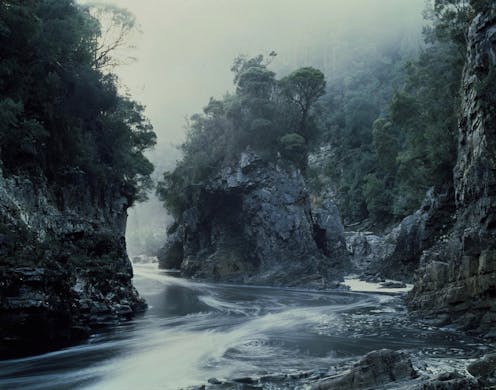
The 1982 campaign to stop the building of Tasmania’s Franklin River dam was a defining moment in the history of Australia’s social movements. Those events are now being recounted in the documentary Franklin, screening throughout the country.
Franklin tells how thousands of activists stood up in front of police and bulldozers and, through a persistent yet peaceful opposition, eventually forced the Tasmanian government to abandon the project. It was one of Australia’s most famous campaigns of civil disobedience.
Sadly, the story contrasts starkly with current political discourse. Environmental activists in Australia today are often depicted as public enemy number one. In the past few years, a swathe of anti-protest legislation has been enacted at both state and federal levels, imposing extremely tough sentences on those falling foul of the law.
A citizen trying to emulate the Franklin dam protesters today would likely pay a very high price. This silencing of dissent means an important tool for environmental advocacy is closed – and both nature and democracy will suffer.
Silencing peaceful protest
Politicians insist anti-protest laws protect the community from disruptive behaviour. Human rights organisations, on the other hand, denounce the laws as systemic repression which threatens the right to protest.
The former Coalition federal government was consistent in its anti-protest stance. It frequently sought to portray environmental and animal-welfare activists as dangerous extremists.
For example, a peaceful animal welfare protest in Melbourne in 2019 which disrupted traffic drew the ire of then prime minister Scott Morrison. He described the activists as “green-collared criminals” and said “the full force of the law” should be used against them.
At the state level, Queensland, New South Wales, Tasmania, Victoria and Western Australia have all contributed to demonising environmental protest. And there’s no sign they intend to change.
Two months ago, the Tasmanian government increased penalties for protesters who, much like the old Franklin activists, obstruct “business activities” such as mining and logging.
Read more: Animal rights activists in Melbourne: green-collar criminals or civil 'disobedients'?
First-time offenders face a fine up to $9,050 and up to 18 months in prison. For second offences, the fine is $13,575 and two years in prison.
Earlier this year, the NSW government passed a bill introducing the new offence of disrupting major public facilities. It means citizens who, for example, organise a peaceful protest in front of a train station, face up to two years in prison.
Also in NSW, one non-violent activist was recently remanded for two weeks in a maximum-security prison, and others have been subjected to harsh curfew conditions despite posing no threat to the community.
And NSW Police this year re-established a special Strike Force Guard that seeks to prevent, investigate and disrupt unauthorised protests.
NSW’s harsh approach prompted Amnesty International to launch a petition urging the state government to respect citizens’ right to protest.
Is ‘direct action’ dying?
Demonstrations and other public forms of protest are a type of civil disobedience known as “direct action”.
As part of a current research project, we interviewed Direct Action Everywhere (DxE) activists, and representatives from Vegan Rising and Animal Liberation. The interviews reveal that some activists are abandoning direct action in light of the new anti-protest laws.
For example, Animal Liberation has shifted to lobbying and education to enact change. As one person from the organisation told us:
In the past, when the laws were very different, (we) would do more direct action, such as sit-ins. But now we’ve moved away from that, because it’s illegal. As an organisation, it wouldn’t help to have us shut down because of an illegal action like that.
Likewise, Sea Shepherd founder Paul Watson recently left the organisation following its decision to abandon direct action as a protest strategy.
But the tougher laws have not deterred other protesters. Animal activist Tash Peterson told us:
Disruptive activism and civil disobedience are essential to create social change and bring to light the atrocities animals are subjected to […] Until recently, I was rarely charged for my protesting, but now things are changing and I am getting arrested for disorderly conduct and trespass.
Former Greens leader Bob Brown played a key role in the 1982 Franklin campaign. More recently, he says his organisation, the Bob Brown Foundation, will continue to “peacefully defend” Tasmania’s native forests, waterways and wildlife, adding:
The real villains here are those who want to jail fellow citizens for defending public forests and wildlife.
Read more: Friday essay: how archaeology helped save the Franklin River
Peaceful protest is a basic right
As the Franklin documentary shows, protesters were willing to spend a few days in prison as the price of their campaign’s success. But the price paid by protesters today is so much higher.
At a federal level, the new Labor government has an opportunity to shift the tone of the national conversation and support the right of citizens to engage in peaceful protest.
Such an approach is consistent with the party’s values. Ahead of the May election, Labor told Human Rights Watch that:
Promoting universal human rights is an essential policy objective for Labor. [It is] vital to ensuring a peaceful world where all people have the right to live with dignity, freedom, safety, security and prosperity.
Franklin celebrates the role of non-violent direct action as a tool for social change. It tells of a people exercising their rights and coming together to fight for environmental justice. Let’s hope those kinds of stories are not consigned to history.
Human Rights Watch will hold a special screening of Franklin in Melbourne on November 2.
Authors: Piero Moraro, Lecturer in Criminology, Edith Cowan University


















