

Kate Cocks, the pioneering policewoman who fought crime and ran a home for babies – but was no saint
- Written by: Lainie Anderson, PhD candidate, University of South Australia
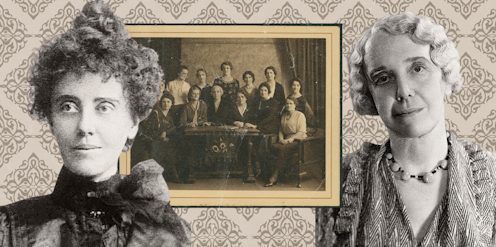
In 1915, an unmarried, 40-year-old woman by the name of Fanny Kate Boadicea Cocks was hand-picked for the role of South Australia’s first policewoman. A small number of others had taken up similar roles globally, amid growing fears for the morality of young women enjoying ever more independence in a rapidly changing world.
But Kate Cocks, as she called herself, was the first woman in the British Empire to enjoy the same salary as her male counterparts, and to receive the same powers of arrest. Asked if she wanted six additional policewomen in her tiny office in Adelaide’s Victoria Square, she replied: “No, give me one woman. I don’t even know what I am going to do yet.”
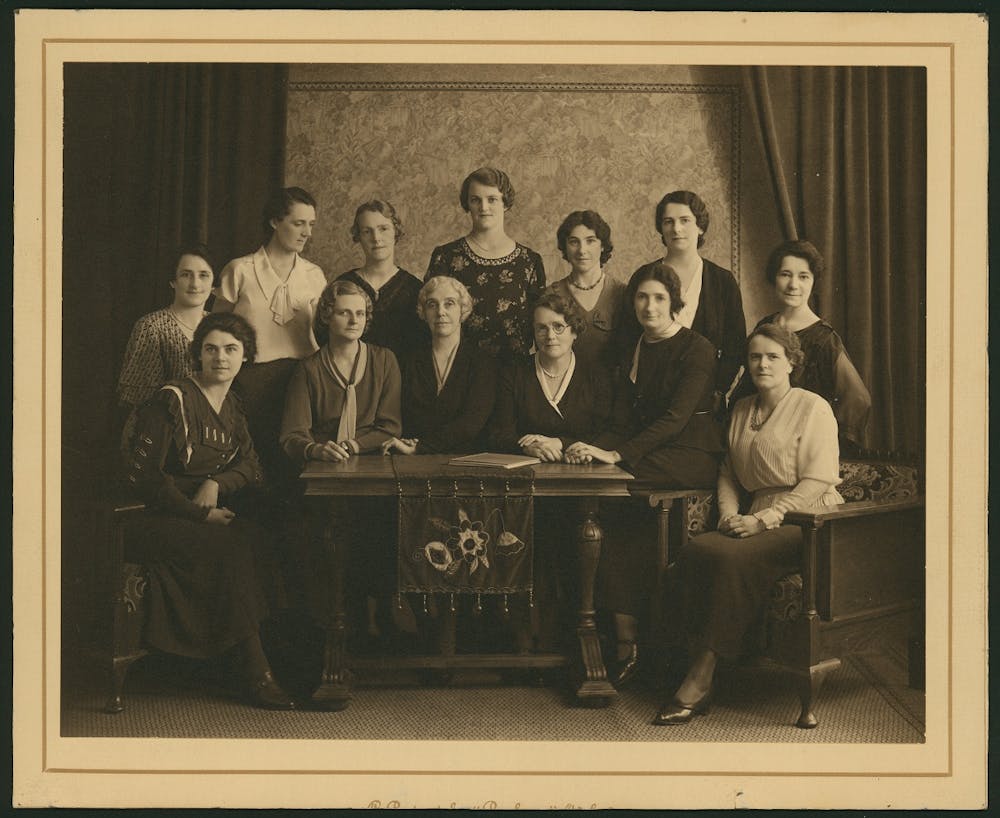
Most of the time, Cocks walked the beat, patrolling railway stations, beaches and parklands for 60 hours a week in prim neck-to-ankle civilian outfits and one-and-a-half-inch heels. But Cocks was instrumental in solving several major crimes, too.
She received six honorary mentions (and ultimately an MBE) for resolving cases including the poisoning of children in a country town, abortion rackets, drug smuggling and a controversial sodomy case involving a prominent Adelaide hotelier and politician.
The staunch Methodist was known to hold all-night vigils with desperate mothers outside houses where their daughters were “living in sin”. She strode into opium dens to frogmarch young women out. And she regularly arrested “callous” fortune tellers “preying” on the wives and mothers of soldiers during World War I.
Read more: Hidden women of history: Kudnarto, the Kaurna woman who made South Australian legal history
A childhood of drought and debt
Three short biographies, drawing primarily on a series of interviews with Cocks for Adelaide’s The Advertiser after her 1935 retirement, paint the policewoman as highly empathetic – almost saintly (although she was in fact far more complex than that). They trace that empathy to a childhood of poverty, dislocation and faith.
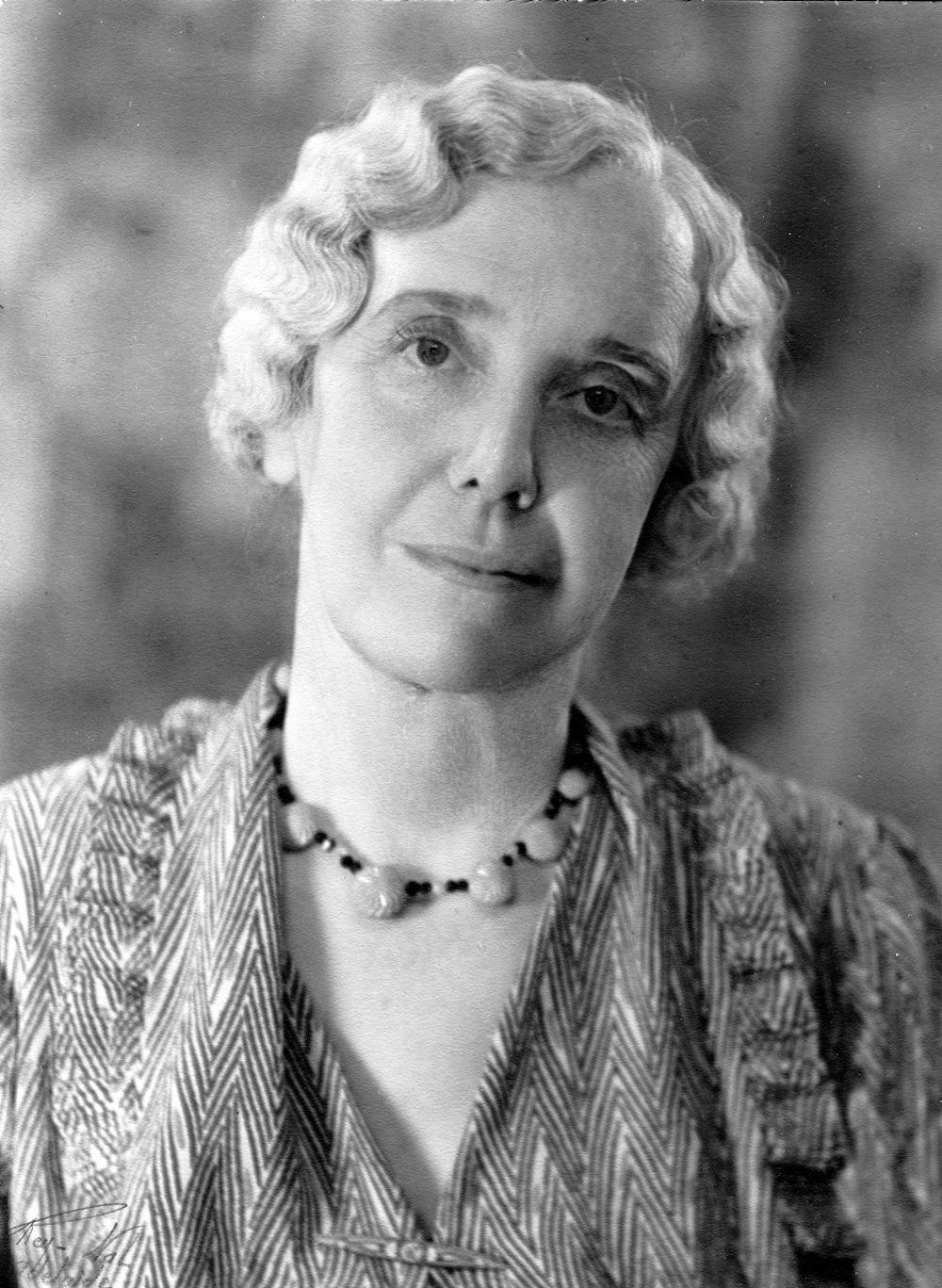 Fanny Kate Boadicea Cocks.
State Library South Australia/Flickr, CC BY
Fanny Kate Boadicea Cocks.
State Library South Australia/Flickr, CC BY
Born in Moonta in 1875 to a miner and a teacher, Cocks was two when her father swapped mining for farming in the Southern Flinders Ranges. The move was a disaster, with years of prolonged drought resulting in the family scattering across the nation to work and pay off debts. “Katie”, aged 14, was sent to finish her schooling with relatives in Victoria.
By 22, Cocks was a teacher and sub-matron at the Edwardstown Industrial School for neglected and delinquent children in Adelaide. As she told The Advertiser in 1936:
Sheltered in a good home, I had not known anything of vice and cruelty, and I never bathed a neglected baby, or tended a sad-faced dirty child, without realising that I had been led by Providence to have my vision adjusted to see life in reality and try to alter some of its injustices.
With the backing of mentor and State Children’s Council member Catherine Helen Spence, Cocks was later appointed as the state’s first full-time juvenile court probation officer, spending nine years in the role and earning respect for her hands-on, practical approach with children and their parents.
Read more: How Australia became a nation, and women won the vote
A ‘natural pick’ to police immorality
By 1915, prominent, pious and resolute in the view that prevention was better than cure, Cocks was the natural pick for the policing of immorality. Not that everyone was convinced of the need for women officers.
As Patricia Higgs and Christine Bettess write in To Walk a Fair Beat: A History of the South Australian Women Police, some senior members of the force believed women would be “quite useless”, and that women’s patrolling would be better aligned to “ladies connected with some philanthropical association”.
But the same voices who achieved world-leading suffrage rights for South Australian women were not to be drowned out. A progressive Labor government introduced legislation to change all existing Acts so that “every word of the masculine gender shall be construed as including the feminine gender”.
With the bill’s passage, “policeman” was suddenly a gender-neutral term, avoiding a vote on the necessity of women police – and indeed any debate over equal remuneration.
Cocks was not a saint. She was a complex character, both of her time and ahead of her time. She was a profoundly moralistic, staunch Methodist who loved a good perm and patronised Adelaide’s best tailors.
She found ways for young unmarried mothers to keep their babies, but did not believe in birth control. As she told The Advertiser in 1936:
In my opinion, a mother is the nearest thing to God upon this earth, because she, too, creates. That is why I am so opposed to all the abortive practices nowadays.
Though hailed in her biographies as “everybody’s friend”, she was not universally adored. Her nickname in some quarters was “Three Feet Apart”, because during night patrols she used a five-foot cane on any young couples not maintaining that distance.
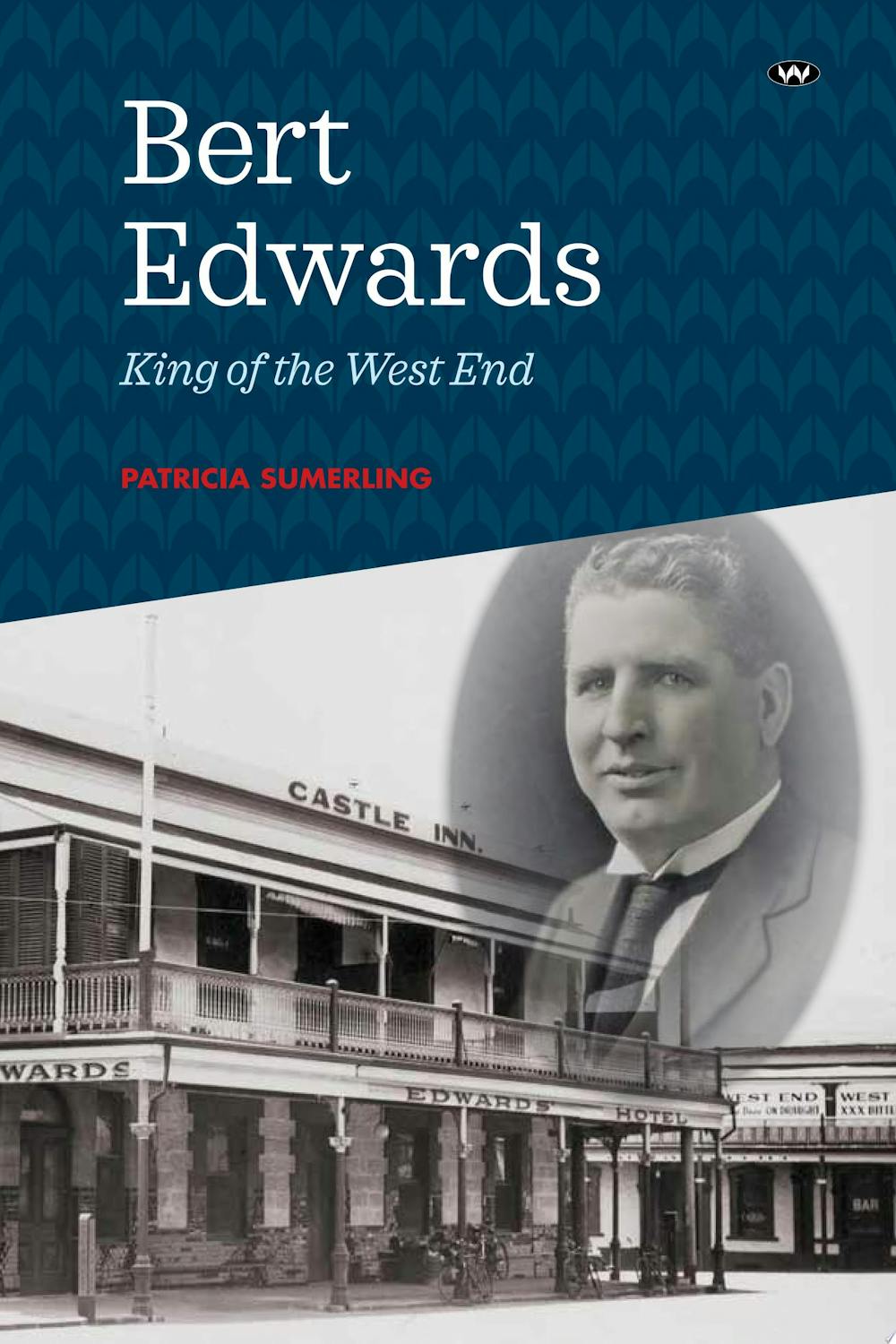 In the book Bert Edwards: King of the West End, Patricia Sumerling highlights Cocks’ unprofessionalism during a controversial sodomy case. Cocks rifled through the belongings of a prime witness to find her diaries when she wasn’t home. She also interviewed the witness alone – which wasn’t against the rules, but threw the case into doubt when the young woman later claimed that Cocks inserted additional material into her witness statement.
In the book To Walk a Fair Beat, it’s noted that Cocks was so evasive during the initial hearing, repeatedly claiming privilege, that the magistrate described her as “a most difficult witness”.
Read more:
Friday essay: the story of Fook Shing, colonial Victoria's Chinese detective
A complex legacy
Perhaps no aspect of Cocks’ career is more complex than her legacy with the Stolen Generations and Forgotten Australians. Soon after retiring from the police force, at the age of 60, she founded a refuge that became known as the Methodist Home for Girls and Babies.
Around the time of her death in 1954, the home was renamed in her honour. In 2011, the Uniting Church of SA and UnitingCare Wesley Adelaide Inc (now Uniting Communities) issued an unreserved apology to mothers and children for the past practice of forced adoptions from the Kate Cocks Memorial Babies Home between 1937 and 1976.
In the 1987 book Mission Story: The Story of the Adelaide Central Mission, Ivor Bailey writes that during Cocks’ 15 years as superintendent at the home, 1,500 babies were cared for and 560 (or 37%) were adopted. Under her supervision, children could be left in the care of the home for up to three years while their mothers got themselves into a position where they could take their baby home.
Newspaper reports and records also confirm that some First Nations children, predominantly from the Northern Territory, were under her supervision. In 1941, Cocks told Adelaide’s Mail newspaper:
There are no unwanted babies. At present I have quite 12 women who are eager to adopt little girls and five who want little boys […] but many of the girls are insistent that they keep their children.
Annual reports from the home, held by Uniting Communities, show that by 1971 – 17 years after Cocks’ death – the proportion of unmarried mothers having their babies adopted had risen to 90%.
When Cocks resigned from the force in 1935, Police Commissioner Brigadier-General Raymond Leane described her as “the biggest woman I have ever met”, who “never bungled anything”, despite using “the most unorthodox” methods he’d ever witnessed.
Kate Cocks’ legacy is complex and contradictory. But hers is a story worth telling.
Authors: Lainie Anderson, PhD candidate, University of South Australia
In the book Bert Edwards: King of the West End, Patricia Sumerling highlights Cocks’ unprofessionalism during a controversial sodomy case. Cocks rifled through the belongings of a prime witness to find her diaries when she wasn’t home. She also interviewed the witness alone – which wasn’t against the rules, but threw the case into doubt when the young woman later claimed that Cocks inserted additional material into her witness statement.
In the book To Walk a Fair Beat, it’s noted that Cocks was so evasive during the initial hearing, repeatedly claiming privilege, that the magistrate described her as “a most difficult witness”.
Read more:
Friday essay: the story of Fook Shing, colonial Victoria's Chinese detective
A complex legacy
Perhaps no aspect of Cocks’ career is more complex than her legacy with the Stolen Generations and Forgotten Australians. Soon after retiring from the police force, at the age of 60, she founded a refuge that became known as the Methodist Home for Girls and Babies.
Around the time of her death in 1954, the home was renamed in her honour. In 2011, the Uniting Church of SA and UnitingCare Wesley Adelaide Inc (now Uniting Communities) issued an unreserved apology to mothers and children for the past practice of forced adoptions from the Kate Cocks Memorial Babies Home between 1937 and 1976.
In the 1987 book Mission Story: The Story of the Adelaide Central Mission, Ivor Bailey writes that during Cocks’ 15 years as superintendent at the home, 1,500 babies were cared for and 560 (or 37%) were adopted. Under her supervision, children could be left in the care of the home for up to three years while their mothers got themselves into a position where they could take their baby home.
Newspaper reports and records also confirm that some First Nations children, predominantly from the Northern Territory, were under her supervision. In 1941, Cocks told Adelaide’s Mail newspaper:
There are no unwanted babies. At present I have quite 12 women who are eager to adopt little girls and five who want little boys […] but many of the girls are insistent that they keep their children.
Annual reports from the home, held by Uniting Communities, show that by 1971 – 17 years after Cocks’ death – the proportion of unmarried mothers having their babies adopted had risen to 90%.
When Cocks resigned from the force in 1935, Police Commissioner Brigadier-General Raymond Leane described her as “the biggest woman I have ever met”, who “never bungled anything”, despite using “the most unorthodox” methods he’d ever witnessed.
Kate Cocks’ legacy is complex and contradictory. But hers is a story worth telling.
Authors: Lainie Anderson, PhD candidate, University of South Australia 

















