

Google AI


Modern Australian

Humans are going back to the Moon, and beyond – but how will we feed them?

  • Written by: Kim Johnson, Senior lecturer, La Trobe University
Humans are going back to the Moon, and beyond – but how will we feed them?

NASA’s Artemis I launch is a major step forward in humans going deeper and spending longer in space than ever before.

Future Artemis missions plan to take crew to the Moon and eventually Mars, which is likely to be a three-year round-trip.

But what will the astronauts eat? There are only so many protein bars and vitamins one can tolerate and survive on for years on end.

Plants are the basis of life on Earth with their amazing ability to convert light, water and carbon dioxide (CO₂) into food, and are the logical solution to support humans in space.

The challenges of a space garden

Astronauts have already eaten space radish, chilli peppers and lettuce grown on the International Space Station, and having freshly grown veggies in microgravity can support health and wellbeing. But there are a number of challenges in growing a flourishing space garden.

Space environments are CO₂-rich, lack soil microbes, have altered gravity, are exposed to potentially harmful solar radiation, and need to use recycled, high-salt water. For plants to thrive in space and offer the full range of nutrients for human health, they need a redesign.

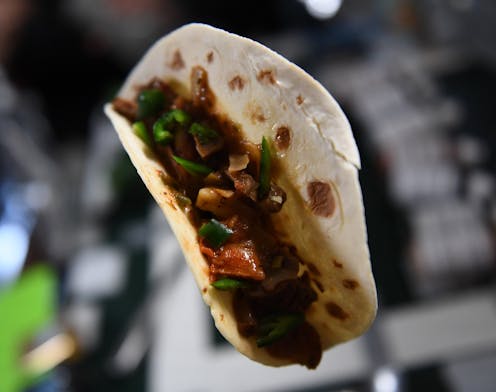
After months of freeze-dried or prepackaged space food, imagine going to your space garden, picking a ripe juicy tomato and spicy chilli to add to your tacos. Adding fresh produce has been a good way to improve astronaut wellbeing, supply essential vitamins and minerals, and add variety and flavour, especially as low-gravity environments affect our taste and smell.

A renewable source of fresh food is essential to future long-term space missions, to avoid astronauts experiencing “food fatigue”, malnutrition and weight loss.

A man looking at bright red chilies growing in a rectangular opening in the wall of a space capsule
Chilies have been successfully grown on the ISS, and astronauts have consumed some of them in tacos. NASA Johnson, CC BY-NC-ND

Space plants are currently grown in closed boxes with low energy LED lights, porous clay “soil” with water, nutrients and oxygen supplied to roots; high-tech sensors and cameras monitor plant health. Plants did not evolve to grow in a box and use energy and resources in readiness for changes in light, temperature and disease, limiting full growth potential.

So there is great opportunity to adapt plant genetics to produce faster-growing “pick and eat” food crops such as tomato, carrot, spinach and strawberry designed to reach their maximum potential in closed, controlled environments.

A black tray of small green leafy plants laid out in a grid
Astronauts have also successfully grown radishes on the ISS, providing further data on space gardening experiments. NASA Johnson, CC BY-NC-ND

A sustainable space plant future

Future plant growth systems for space will need to be entirely sustainable. That means working alongside all the other systems on a space station or a lunar/Martian base, recycling water and nutrients.

All plant parts will need to be food, compost or converted into useful products such as fuels and plastics. Human waste, including urine, offers a nutrient source for plants, yet they also need to be able to cope with this salty water supply. However, there’s one plant that could be particularly suited to the task.

Duckweed may not be available at your local supermarket, but this very fast-growing plant could be in all space gardens thanks to its ability to thrive in recycled water and be zero waste, with the whole plant being eaten.

Duckweed doubles its weight in just two days, is harvested continually, and is high in protein, nutrients, antioxidants and vitamins. Only a few essential elements (such as vitamin B12/D) are missing that could make it a reliable base source for complete human nutrition.

Read more: Duckweed is an incredible, radiation-fighting astronaut food – and by changing how it is grown, we made it better

Recent technical advances in genome editing, gene regulation, and methods to analyse nutrients can be harnessed to adapt duckweed and other plants for optimal growth, minimal waste and complete nutrition.

New plants developed in this way can contain proteins perfectly balanced for human digestion and use, healthy plant oils for an energy boost, and soluble fibre for better gut and cardiovascular health.

Specks of round green leaves on a dark background
Duckweed, a fast-growing aquatic plant, could be the next space ‘superfood’. Onushi/Shutterstock

Striving to explore space has brought us thousands of innovations we use in everyday life. We can expect that inventions we come up with to support humans thriving in space will deliver multiple and essential sustainability benefits to Earth, especially to on-demand supply of nutrition and biomaterials. Experts across the globe are working together toward these dual goals, including plant biologists, engineers, food chemists, psychologists, sensory experts, nutritionists, ethicists, and legal experts.

A new frontier of human achievement is on the horizon – humans will soon not only be looking up to the night skies in wonder, but also travelling to those destinations beyond our own atmosphere, and in so doing planting seeds of a new way of life on Earth and beyond.

Authors: Kim Johnson, Senior lecturer, La Trobe University

Read more https://theconversation.com/humans-are-going-back-to-the-moon-and-beyond-but-how-will-we-feed-them-189794

Downsizing or Upgrading Your Caravan? Here's How to Sell It Without the Hassle

Selling a caravan can feel like a major task, especially when you are unsure about its value, paperwork, or how to find a buyer. Whether you are dow...

The Best Overseas Adventure Holidays for Australians Who Love the Outdoors

Australia offers no shortage of incredible outdoor experiences, but sometimes the best way to satisfy your sense of adventure is to head overseas. A...

Cape Town Wine Shuttle: Winelands Tasting & Tours

Embark on an unforgettable journey through the picturesque Cape Winelands, where world-class wines and breathtaking scenery await. Our Cape Town Win...

Why Giant Rats Tail Grass Keeps Coming Back After Spraying

Giant Rats Tail Grass (GRT) is one of the most frustrating pasture weeds for farmers and lifestyle property owners. You spray an infested area, see th...

When Custom Cardboard Boxes Make Sense for Your Business

Custom cardboard boxes can be useful when a standard carton does not fit a product, packing method or presentation requirement particularly well. A ...

Virtual Livestock Fencing and GPS Tracking: Improving Visibility Across Cattle Properties

What Virtual Livestock Fencing Means for Modern Cattle Management Managing cattle across extensive properties requires more than knowing where anim...

Sydney Pawnbrokers Explained: How Hocking Your Car Actually Works

Sometimes you need cash, and you need it soon. If you own a car, you may already have a way to get it. That's what people mean when they say they've...

Moving Interstate from the Gold Coast to Brisbane (or Back)? What Removalists Wish You Knew First

Have you talked to anyone who’s done the move? They say the same thing: the drive up the M1 is the easy part. It's everything around it that catches...

Why the Spring School Holidays Are a Great Time to Visit Coffs Harbour

The spring school holidays are a good time to spend a few days on the Coffs Coast. The weather is starting to warm up, there is plenty to do outdoor...

What to Do When an Older Car Is No Longer Worth Keeping in Melbourne

Ever looked at another repair quote and wondered whether your old car is still worth the trouble? It is a common turning point for Melbourne motoris...

Your Baby's First Year: A Local Guide to Feeding, Sleep, and When to Get Extra Support

Ask ten parents in a Brisbane mothers' group how their baby is feeding or sleeping, and expect ten different answers.  Someone's baby sleeps throug...

Kitchen and Laundry Makeover Ideas That Don't Require a Full Renovation

Full kitchen renos are expensive — and most people don't actually need one.  They need the kitchen to stop looking like it's stuck in 2009, or they...

How Technology Is Reshaping the Modern Australian Commercial Kitchen

The commercial kitchen has always been shaped by technology. Refrigeration changed how ingredients could be stored, modern ventilation transformed k...

The Number on a Roller Blind Fabric That Nobody Explains

Somewhere in the fabric book, next to the colour name, there is a percentage. Three per cent. Five per cent. Ten per cent. Nobody explains it, most c...

What’s Trending in Men’s Jewellery This Father’s Day!

Finding a Father’s Day gift that feels personal, stylish and genuinely wearable is not always easy. While socks and novelty mugs have traditionally ...

Road Signs: Understanding Their Role in Clear and Effective Signage

Effective signage and display hardware can help businesses communicate information, promote products and organise customer or visitor movement. Road...

Bottle Label Printing: Key Factors to Consider Before Your Next Packaging Run

Effective packaging begins with understanding the product, bottle material, artwork and production requirements when planning bottle label printing. H...

Planning a Long-Distance Move With Interstate Movers Melbourne

Moving between states involves more planning than a typical local relocation. Along with packing and transporting household belongings, you need to...
















