

The End of History: Francis Fukuyama's idea explained
- Written by: Chris Fleming, Associate Professor in the School of Humanities and Communication Arts, Western Sydney University
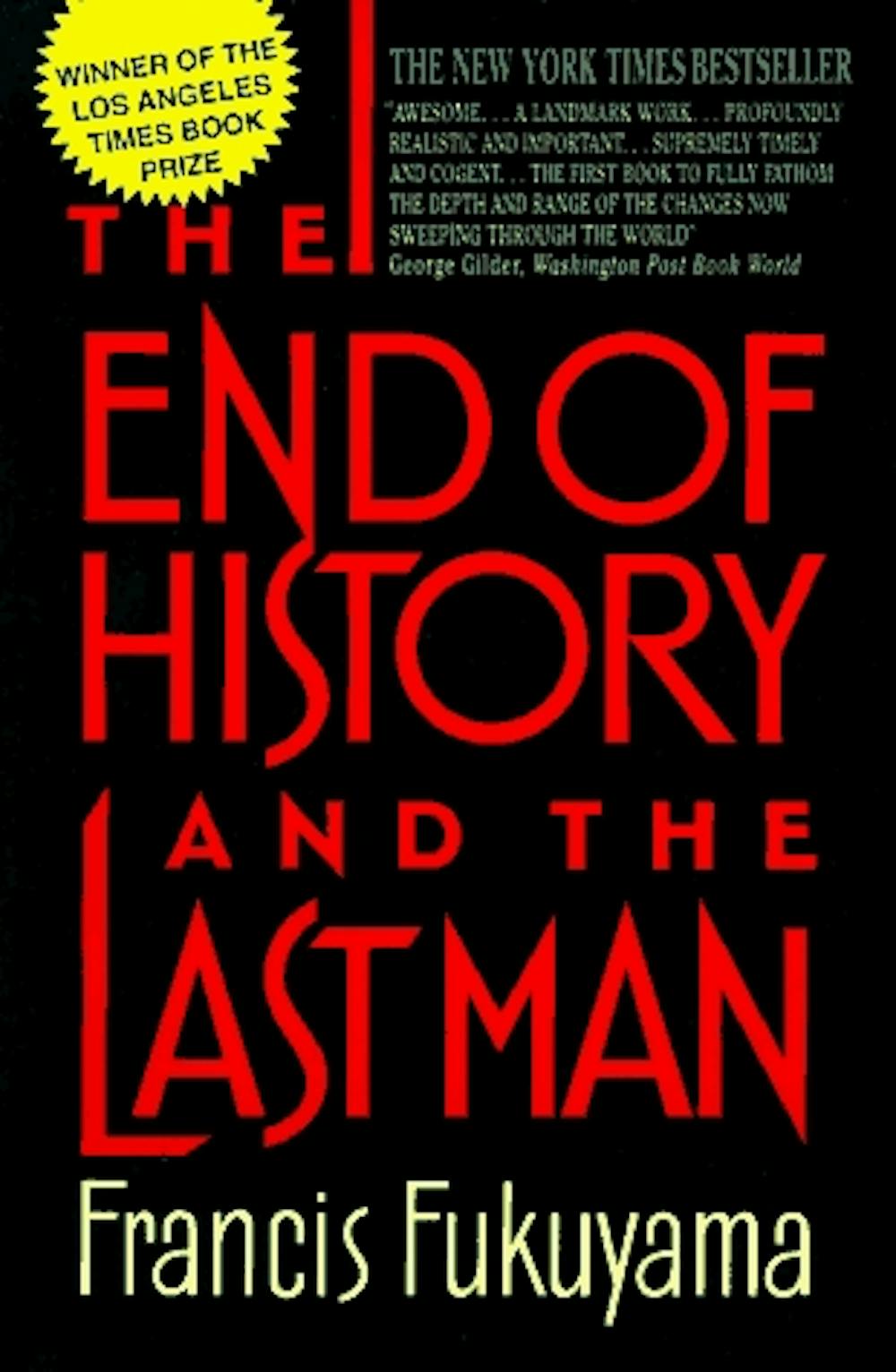
In 1989, a policy wonk in the US State Department wrote a paper for the right-leaning international relations magazine The National Interest entitled “The End of History?”. His name was Francis Fukuyama, and the paper stirred such interest – and caused such controversy – that he was soon contracted to expand his 18-page article into a book. He did so in 1992: The End of History and the Last Man. The rest, they say, is (the end of) history.
Fukuyama became one of those academics whose work was cribbed to a shorthand: The End of History. It is, no doubt, a memorable and dramatic phrase – but it is as unclear as it is striking.
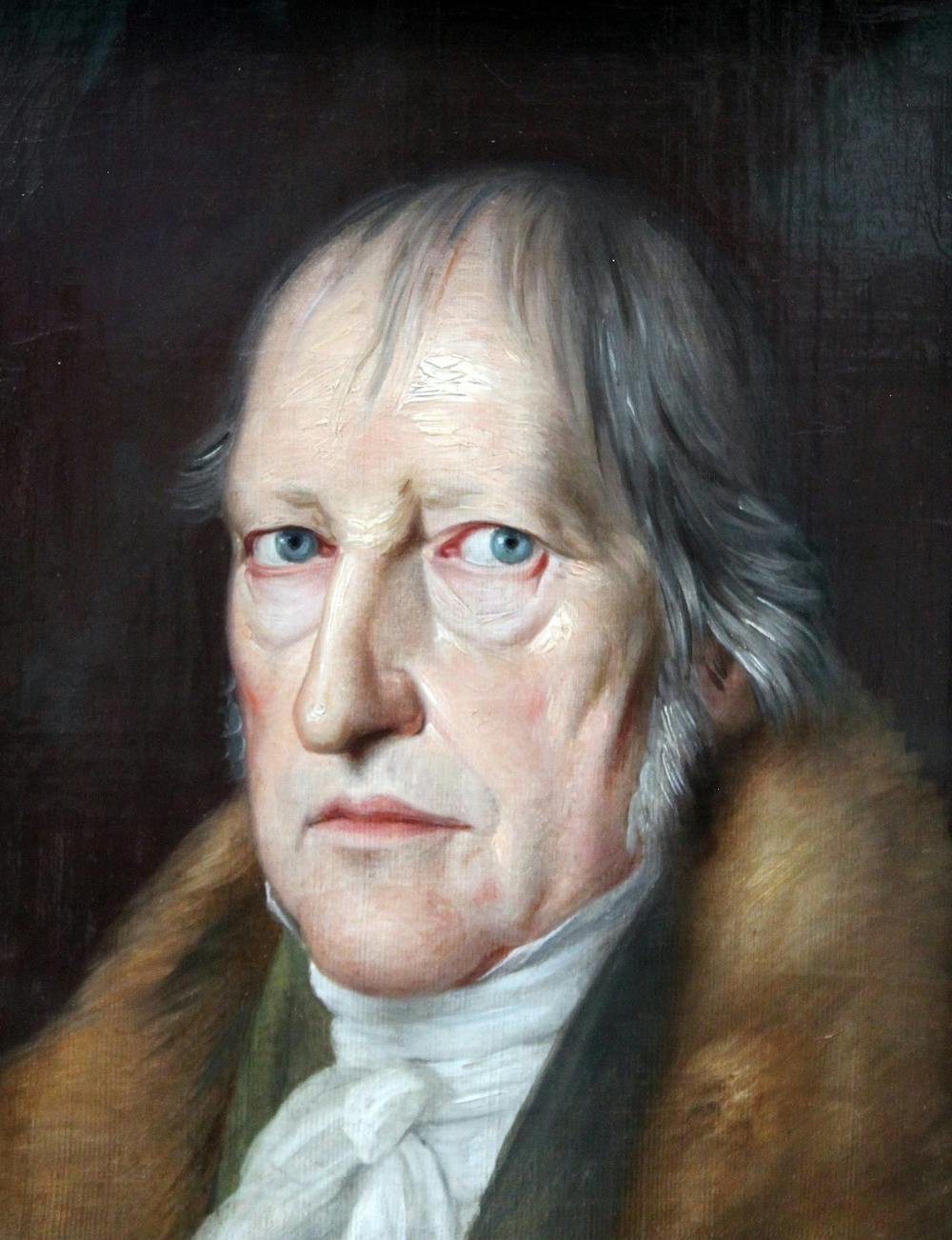 Jakob Schlesinger: The Philosopher Georg Friedrich Wilhelm Hegel, 1831.
Wikimedia Commons
Hegel – according to Kojève – had witnessed this end of history (or at least the beginning of such an end) with the French Revolution and its universalisation of the ideas of equality and liberty.
Fukuyama judged Kojève correct: the French republic had not been bettered, despite many fascistic and communist attempts to make it so. It is not necessarily that the ideals of the revolution were all realised perfectly (as if the Reign of Terror served as vindication of liberalism) but that – as ideals – they had manifested themselves decisively, shown their force, and since proved unsurpassable.
For Fukuyama, Hegel’s misfortune was to be thought of by many 20th-century intellectuals as a mere precursor to Marx, for whom the fate of a society – and an “end of history” – was not determined by its ideas, but by its material organisation.
For Marx, the resolution of historical development would take the form of global communism. This would mean the end of the exploitation of man by man, the dissolution of private property, the resolution of all antitheses between mental and physical labour, the emergence of a system in which each individual would contribute “according to his ability,” and consume “according to his needs”.
Read more:
Karl Marx: his philosophy explained
But by the end of the 1980s, Fukuyama – along with a host of others – began to suspect we weren’t going to see a Marxist “end of history” after all.
The Russian Communist Party, under Mikhail Gorbachev, was moving towards a series of reforms: a “reconstruction” (Perestroika) pushing for greater openness and transparency (Glasnost) and even the expansion of profit-seeking and commercialisation within the confines of a planned economy.
These democratising and liberalising reforms – a response to the totalitarian impulses and long-term economic stagnation of the Eastern Bloc – both delayed and precipitated the collapse of the Soviet Union in late 1991.
Limitations
Many have accused Fukuyama of a Whiggish tendency towards reifying and valorising a particular model of government – the United States specifically – as somehow embodying the perfect form of the modern state.
But this critique, commonly held, is largely misplaced. Fukuyama has pointed out repeatedly the failures of the US, the misguided collapsing of liberalism with neoliberalism, and – more recently – the populist nationalism of the Republican Party, which he sees as catastrophic and of a piece with parallel developments in, for instance, Tayyip Erdōgan’s Turkey and Viktor Orbán’s Hungary.
Jakob Schlesinger: The Philosopher Georg Friedrich Wilhelm Hegel, 1831.
Wikimedia Commons
Hegel – according to Kojève – had witnessed this end of history (or at least the beginning of such an end) with the French Revolution and its universalisation of the ideas of equality and liberty.
Fukuyama judged Kojève correct: the French republic had not been bettered, despite many fascistic and communist attempts to make it so. It is not necessarily that the ideals of the revolution were all realised perfectly (as if the Reign of Terror served as vindication of liberalism) but that – as ideals – they had manifested themselves decisively, shown their force, and since proved unsurpassable.
For Fukuyama, Hegel’s misfortune was to be thought of by many 20th-century intellectuals as a mere precursor to Marx, for whom the fate of a society – and an “end of history” – was not determined by its ideas, but by its material organisation.
For Marx, the resolution of historical development would take the form of global communism. This would mean the end of the exploitation of man by man, the dissolution of private property, the resolution of all antitheses between mental and physical labour, the emergence of a system in which each individual would contribute “according to his ability,” and consume “according to his needs”.
Read more:
Karl Marx: his philosophy explained
But by the end of the 1980s, Fukuyama – along with a host of others – began to suspect we weren’t going to see a Marxist “end of history” after all.
The Russian Communist Party, under Mikhail Gorbachev, was moving towards a series of reforms: a “reconstruction” (Perestroika) pushing for greater openness and transparency (Glasnost) and even the expansion of profit-seeking and commercialisation within the confines of a planned economy.
These democratising and liberalising reforms – a response to the totalitarian impulses and long-term economic stagnation of the Eastern Bloc – both delayed and precipitated the collapse of the Soviet Union in late 1991.
Limitations
Many have accused Fukuyama of a Whiggish tendency towards reifying and valorising a particular model of government – the United States specifically – as somehow embodying the perfect form of the modern state.
But this critique, commonly held, is largely misplaced. Fukuyama has pointed out repeatedly the failures of the US, the misguided collapsing of liberalism with neoliberalism, and – more recently – the populist nationalism of the Republican Party, which he sees as catastrophic and of a piece with parallel developments in, for instance, Tayyip Erdōgan’s Turkey and Viktor Orbán’s Hungary.
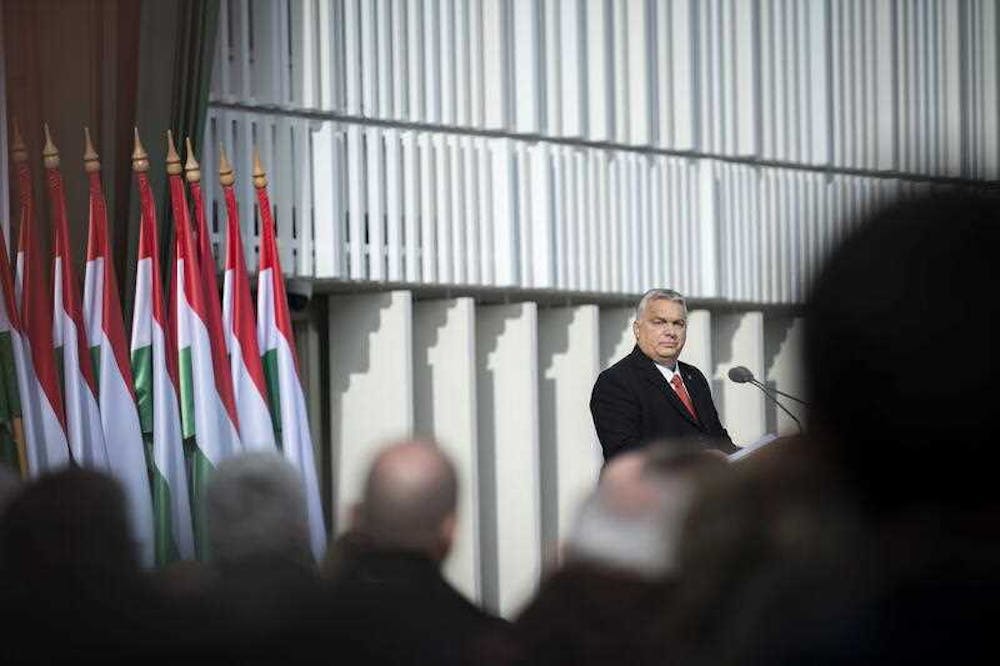 Viktor Orban pictured last month.
Hungarian Prime Minister's Press Office/EPA
His thesis, therefore, concerning “the end of history” is not so much that this form of political organisation has been realised, but that, as an idea, it is one upon which we cannot improve. And maybe he is right about this. But the devil, as always, is in the details – and Fukuyama seems to sometimes pass over those in silence.
He acknowledges, for instance, but has provided scant recommendation on how to resolve, the inherent tension between the strength of liberal democratic states and the freedoms of their citizens.
A strong state will be one which is able to enforce its mandate – but how is this enforcement to be squared with the liberties of the individuals that comprise its citizenry?
Here Fukuyama counsels “balance”. We may be given to wonder not only what to weigh, but what metric might be used. Furthermore, issues about “details” may run deeper than merely the question of policy resolutions to address such fundamental tensions; much of Fukuyama’s best-known work work favours the general over specifics.
Viktor Orban pictured last month.
Hungarian Prime Minister's Press Office/EPA
His thesis, therefore, concerning “the end of history” is not so much that this form of political organisation has been realised, but that, as an idea, it is one upon which we cannot improve. And maybe he is right about this. But the devil, as always, is in the details – and Fukuyama seems to sometimes pass over those in silence.
He acknowledges, for instance, but has provided scant recommendation on how to resolve, the inherent tension between the strength of liberal democratic states and the freedoms of their citizens.
A strong state will be one which is able to enforce its mandate – but how is this enforcement to be squared with the liberties of the individuals that comprise its citizenry?
Here Fukuyama counsels “balance”. We may be given to wonder not only what to weigh, but what metric might be used. Furthermore, issues about “details” may run deeper than merely the question of policy resolutions to address such fundamental tensions; much of Fukuyama’s best-known work work favours the general over specifics.
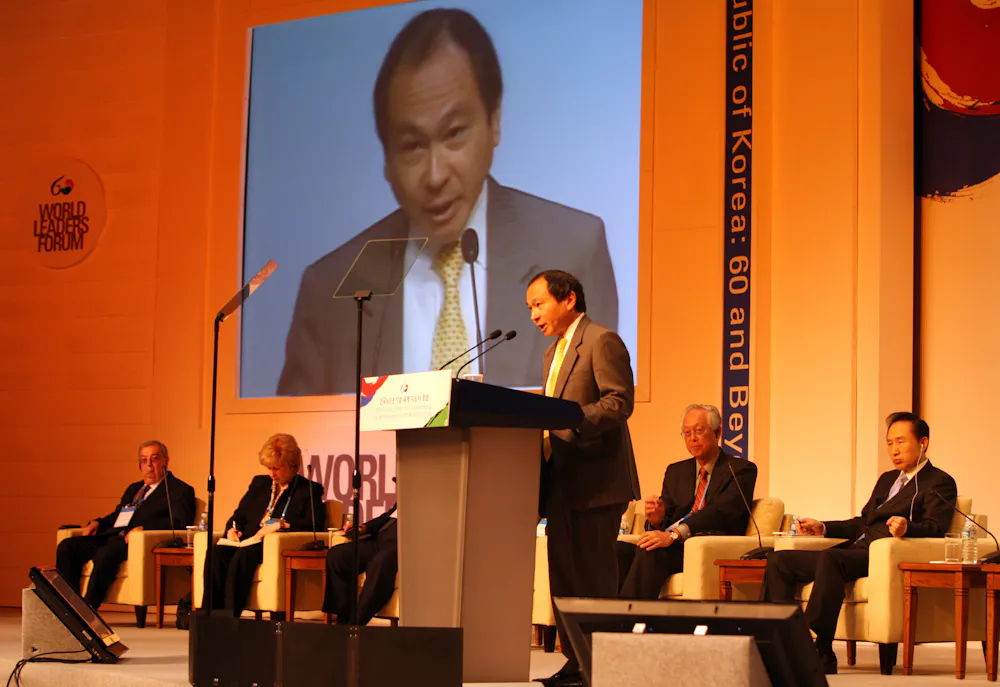 Francis Fukuyama speaking at a world leaders forum in Seoul in 2008.
Yonhap/AAP
This may be no coincidence, given the German idealist framework out of which his thesis was originally couched. Both Hegel and Marx have been accused of a “totalising” vision in which the dirty historical details – of stateless people, show trials and pogroms, the human casualties of both liberal and illiberal “state building” – are swept to the side in the name of universal tales of progress.
It is important to point out that the liberal democratic state Fukuyama praises is one which is very rarely established liberally or democratically. Recent attempts at forcefully “exporting” liberal democracy into countries have very often resulted in destabilisations and tyrannies far worse than those they hoped to replace.
And what of the recent phenomenon concerning the global resurgence of a number of authoritarian regimes, from Nicaragua and Sudan to Burma and Iran, whose successes (if not stability) don’t immediately give rise to the kind of optimism about democratisation that was at large in the 1980s?
A more sober stance
Even if his commitment to his position hasn’t wavered, Fukuyama has sobered somewhat in the years following his original article. Although as convinced as ever in liberal democratic states as the ultimate form of political organisation, he is certainly more sanguine about their imminent victory in the world we actually live in.
In an interview in 2021, the Norwegian political historian Mathilde C. Fasting pressed Fukuyama on the global rise rise and damaging impact of populism, and on what Stanford University’s Larry Diamond calls “democratic recession” – a decline in the number of democracies around the world, as well as the degradation of democratic structures within established democracies, including the US and Britain:
Fasting: Is what we are witnessing “temporary counterwaves,” to quote Samuel Huntington, or are they fundamental reversals that belie the optimism before the millennium?
Fukuyama: I don’t think you can answer that at this point.
Nobody can, of course. As a science, political futurology has proved itself even more dismal than economics.
Authors: Chris Fleming, Associate Professor in the School of Humanities and Communication Arts, Western Sydney University
Francis Fukuyama speaking at a world leaders forum in Seoul in 2008.
Yonhap/AAP
This may be no coincidence, given the German idealist framework out of which his thesis was originally couched. Both Hegel and Marx have been accused of a “totalising” vision in which the dirty historical details – of stateless people, show trials and pogroms, the human casualties of both liberal and illiberal “state building” – are swept to the side in the name of universal tales of progress.
It is important to point out that the liberal democratic state Fukuyama praises is one which is very rarely established liberally or democratically. Recent attempts at forcefully “exporting” liberal democracy into countries have very often resulted in destabilisations and tyrannies far worse than those they hoped to replace.
And what of the recent phenomenon concerning the global resurgence of a number of authoritarian regimes, from Nicaragua and Sudan to Burma and Iran, whose successes (if not stability) don’t immediately give rise to the kind of optimism about democratisation that was at large in the 1980s?
A more sober stance
Even if his commitment to his position hasn’t wavered, Fukuyama has sobered somewhat in the years following his original article. Although as convinced as ever in liberal democratic states as the ultimate form of political organisation, he is certainly more sanguine about their imminent victory in the world we actually live in.
In an interview in 2021, the Norwegian political historian Mathilde C. Fasting pressed Fukuyama on the global rise rise and damaging impact of populism, and on what Stanford University’s Larry Diamond calls “democratic recession” – a decline in the number of democracies around the world, as well as the degradation of democratic structures within established democracies, including the US and Britain:
Fasting: Is what we are witnessing “temporary counterwaves,” to quote Samuel Huntington, or are they fundamental reversals that belie the optimism before the millennium?
Fukuyama: I don’t think you can answer that at this point.
Nobody can, of course. As a science, political futurology has proved itself even more dismal than economics.
Authors: Chris Fleming, Associate Professor in the School of Humanities and Communication Arts, Western Sydney UniversityRead more https://theconversation.com/the-end-of-history-francis-fukuyamas-idea-explained-193225


















