

What we mean when we say 'sovereignty was never ceded'
- Written by: Eddie Synot, Lecturer, Griffith Law School, Griffith University
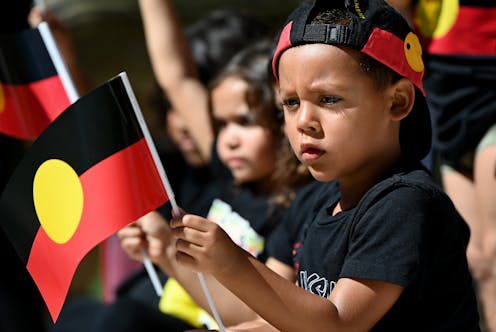
In discussing the Uluru Statement from the Heart, I will be doing something that, as a lawyer, is perhaps not best practice: I am not going to define my terms or confine my comments to the law.
Although our constitutional system of governance is underpinned by a rigid concept of sovereignty we have inherited from the British parliament, its meaning is in fact quite nebulous.
This sovereignty is not actually defined in our constitution, but rather made out by the structure and role of the institutions within. An example of this legacy is the prime minister not being mentioned. Rather, the prime minister is established by convention as “first among equals”. The only roles mentioned in the Australian Constitution are the ministers of state and cabinet itself, and the executive council.
In a constitutional monarchy, both the Crown and the parliament borrow their authority from the people: the Crown by consent and heredity, and the parliament through the electoral process.
Ostensibly, we in Australia, have two competing claims to sovereignty by right of heredity over this continent: that of the Crown and of Indigenous peoples. But although the case for Indigenous sovereignty seems irrefutable, the reality is much more complicated.
Read more: Albanese releases draft wording for Indigenous 'Voice to parliament' referendum
Sovereignty never ceded
There are two undeniable and competing facts about the relationship between Indigenous and non-Indigenous Australia that both sides must face up to.
The first is summed up in one well known phrase that is much more than a slogan: “sovereignty never ceded”. It is as simple as that.
First Nations have never ceded sovereignty. The land was taken by force and has been retained by force.
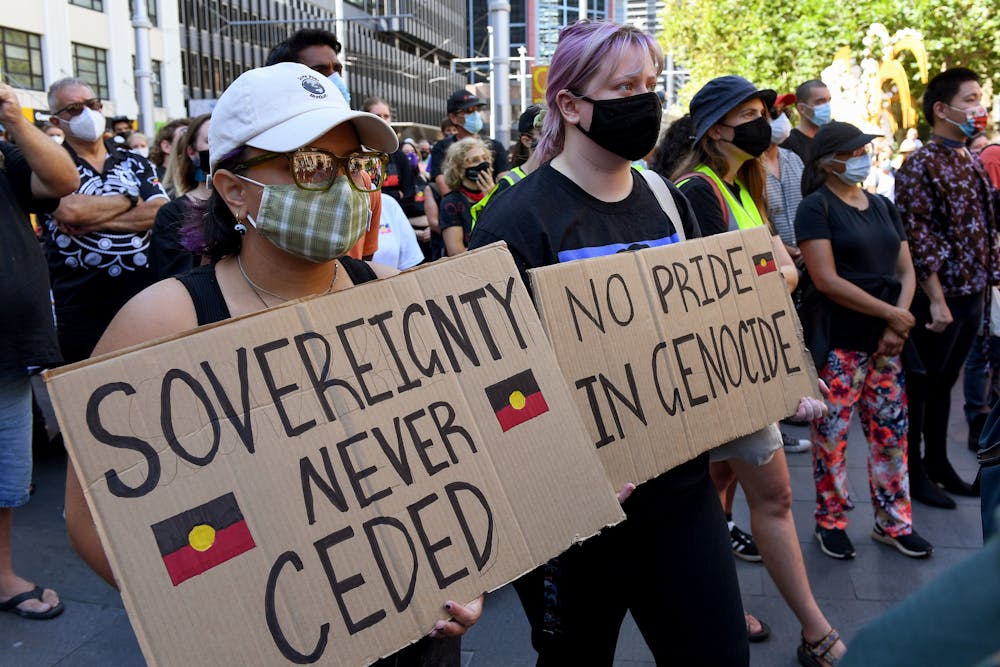
Many have claimed Indigenous peoples have acquiesced by default. None are correct. In Arnhem Land and other locations, where Indigenous people only came into contact with Europeans in the 20th century, their law remains the predominant legal system.
Those pockets of uninterrupted continuity of law and culture have enabled Indigenous peoples Australia-wide to refuse to be erased, despite the weight the nation has thrown behind it, and for us to have this conversation today and force this change.
The second, undeniable fact is that the Australian state’s legitimacy does not rest upon a treaty with First Nations. This is a fact that is hard for many to swallow. I don’t agree with it. I don’t like it, but it is a fact we must accommodate if we are to give meaningful expression to Indigenous sovereignty.
The path to change is through understanding and acknowledgement of this fact.
Further, First Nations are not recognised as nation states under international law. It is important to note the international legal system was authored by those same nation states whose invading colonies are founded on Indigenous lands and now draw their authority from them.
So, our rights, even under the United Nations Declaration of the Rights of Indigenous Peoples, a non-binding agreement, are subservient to the nation states within which we have our legal existence.
With our acceptance of this system comes the fact the Commonwealth of Australia is paramount. Even when we enter treaties with the commonwealth, and states and territories, those agreements remain susceptible to the Australian Constitution and the Commonwealth of Australia.
Short of a coup or an entire rewriting of the Australian nation – neither desirable nor realistic – there is no stepping outside of those authorities. It is constitutionally impossible.
Read more: A constitutional Voice to Parliament: ensuring parliament is in charge, not the courts
The fabric of government
These are the political and legal realities we must accept as First Nations. No matter how strong the belief in our sovereignty or how just our claims, those facts will never change. Technical points of law and principles of fairness count for little in the face of history. This is the context within which we must frame our response.
Some see it as intractably difficult. I do not. Although we must work within the institutions of the Australian state, this does not mean those institutions must remain irredeemably colonial, nor does it mean we cannot change our nation.
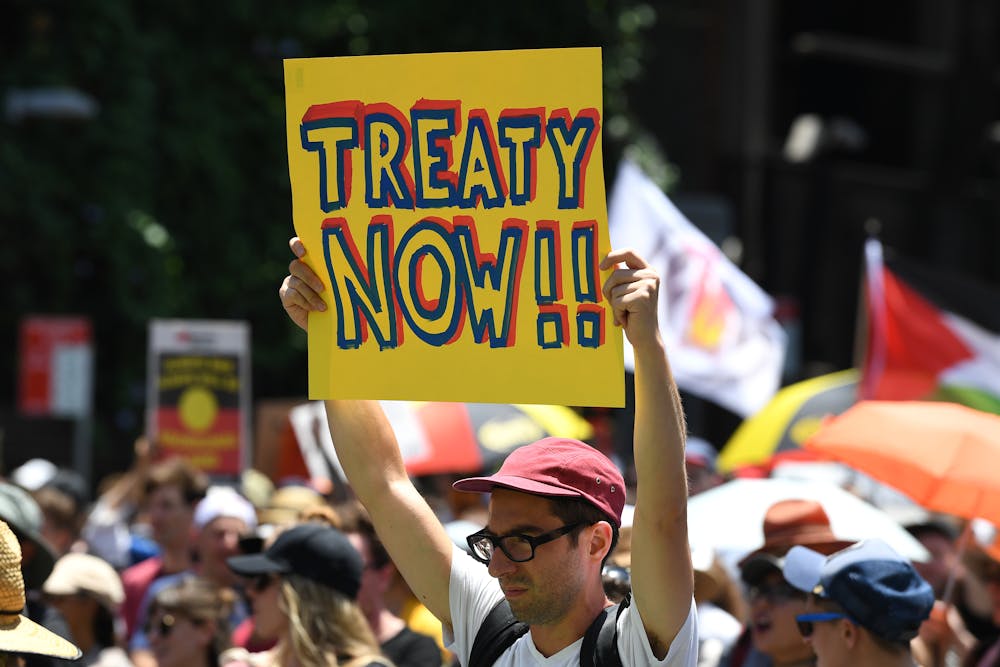 We can change our nation.
AAP Image/Joel Carrett
We can change our nation.
AAP Image/Joel Carrett
The answer is not to accept loss of sovereignty as an inescapable reality. Instead, we need to navigate a pathway through the system that gives expression to what we mean when we say sovereignty was never ceded.
The delegates of the 13 regional dialogues that led to the Uluru Statement from the Heart understood this.
In a process of deliberative dialogue and informed decision-making, they worked through the political and legal obstacles to giving meaningful expression to Indigenous sovereignty and achieving change. This is a key reason why the First Nations Voice to Parliament enshrined in the constitution comes first in the Statement.
Substantive structural reform to the political system has to come first if the Makarrata Commission for treaty and truth-telling is to have meaningful effect.
We have had treaty promises and truth-telling processes before, but in the absence of this structure they have had little impact on the grander scheme of things.
If we are to change the constitutional structure of this nation then we need to begin here, at its foundation, with the Voice to Parliament: a permanent institutional mechanism that respects First Nations by recognising their place and sovereignty in the fabric of government.
Read more: Why a First Nations Voice should come before Treaty
This is an edited extract from Volume 2 of the New Platform Papers: From the Heart: The Voice, the Arts and Australian Identity, available now from www.currency.com.au
Authors: Eddie Synot, Lecturer, Griffith Law School, Griffith University
Read more https://theconversation.com/what-we-mean-when-we-say-sovereignty-was-never-ceded-195205


















