

the inside story of how the teals won Australia's six richest electorates
- Written by: Amy Nethery, Senior Lecturer in Politics and Policy Studies, Deakin University
For many voters despairing about the gridlock and lack of integrity in Australian politics in recent years, the success of the teal independents in the May 2022 federal election was an exhilarating moment. They won six formerly safe Liberal seats, returned four independents - Zali Steggall in Warringah, Helen Haines in Indi, Rebekah Sharkie in Mayo, and Andrew Wilkie in Clark - and sent David Pocock to the Senate.
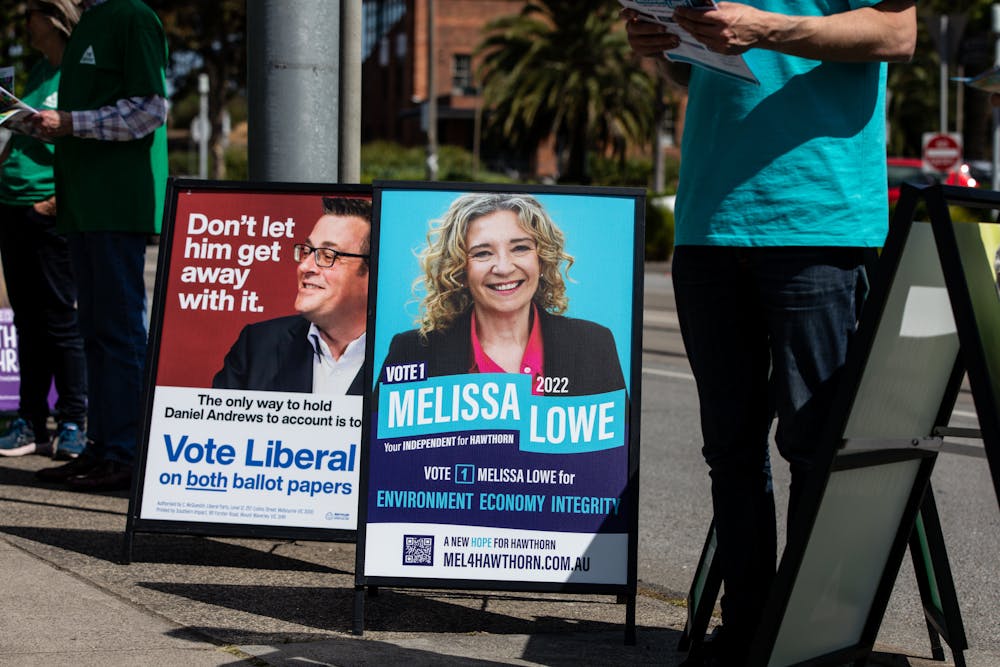
The Victorian election last weekend was the first test of whether the teals would have the same appeal in the states. Targeting Liberal electorates in a Labor-held state, three candidates ran a close second: Sophie Torney in Kew, Melissa Lowe in Hawthorn, and Kate Lardner in Mornington.
This near miss in Victoria can be attributed to a tight cap on funding, the absence of high-profile candidates, and the fact the Andrews Labor government, which was returned, was a different antagonist than Scott Morrison’s Coalition government. Teals planning to run in the New South Wales election in March 2023 will have been watching closely.
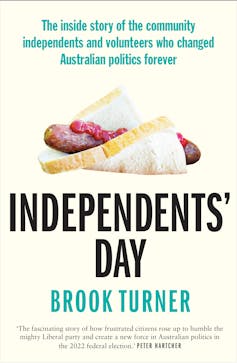
The extraordinary success of the teals and other community independents at a federal level has been captured in three new books: The Teal Revolution, by Margot Saville; Independents Day, by Brook Turner; and The Big Teal, by Simon Holmes à Court.
The three books provide an account of the teals’ campaigns in this historic election. As well as being compelling reads, their rich descriptions of the campaigns provide a blueprint for change that will inspire others to action. Australian politics might just be changed forever.
Review: The Teal Revolution – Margot Saville (Hardie Grant); Independents Day – Brock Turner (Allen & Unwin); The Big Teal – Simon Holmes à Court (Monash University Publishing)
It’s the community, stupid
The “teals”, Holmes à Court explains, was a term that emerged in the media in the weeks leading up to the election, because the phrase “community independent” was too unwieldy. Fair enough, but the shorthand gives a false impression of homogeneity, and downplays the fact that each candidate arose from separate grassroots community groups, all fed up with politics as usual.
 Saville and Turner provide detailed accounts of how each community group grew organically into extraordinarily successful campaigns, responding to local and universal concerns. Many of these campaigns began from the shared frustration of two or three well-connected, well-resourced neighbours utterly fed up with politics as usual.
Many took the name “Voices of”, building on the model devised by Cathy McGowan in Indi in 2013. “Kitchen table” conversations were held in electorates around the country, awakening an enthusiasm for political engagement that had previously been suppressed by two-party dominance.
McGowan and Zali Steggall were the templates for the audacious vision, but just as important were the suite of independents who, over the past decade, have been able to exert their influence in parliament: Kerryn Phelps, Tony Windsor, Andrew Wilkie, Rebekah Sharkie and others.
The Grattan Institute report, Gridlock, on the policy impacts of two-party dominance, was another important impetus for action. The idea driving these community campaigns was not that independents could make a difference, but that they were the only way to make a difference.
Read more:
The big teal steal: independent candidates rock the Liberal vote
Enter the candidates
Mostly, the candidates themselves did not drive their grassroots campaigns, but were actually selected by them. I was surprised how intentional this selection was. In 2018, for example, a marketing company inspired by the “Vote Tony Out” group in Warringah came up with a list of characteristics for a successful candidate in that electorate.
Turner reports that she needed to be female, with a name as memorable as Tony Abbott’s; an athlete, preferably who has represented Australia at an international level; and
articulate, intelligent, respected within the community, and to have lived locally for a long time. Into that frame walked Zali Steggall.
Saville and Turner provide detailed accounts of how each community group grew organically into extraordinarily successful campaigns, responding to local and universal concerns. Many of these campaigns began from the shared frustration of two or three well-connected, well-resourced neighbours utterly fed up with politics as usual.
Many took the name “Voices of”, building on the model devised by Cathy McGowan in Indi in 2013. “Kitchen table” conversations were held in electorates around the country, awakening an enthusiasm for political engagement that had previously been suppressed by two-party dominance.
McGowan and Zali Steggall were the templates for the audacious vision, but just as important were the suite of independents who, over the past decade, have been able to exert their influence in parliament: Kerryn Phelps, Tony Windsor, Andrew Wilkie, Rebekah Sharkie and others.
The Grattan Institute report, Gridlock, on the policy impacts of two-party dominance, was another important impetus for action. The idea driving these community campaigns was not that independents could make a difference, but that they were the only way to make a difference.
Read more:
The big teal steal: independent candidates rock the Liberal vote
Enter the candidates
Mostly, the candidates themselves did not drive their grassroots campaigns, but were actually selected by them. I was surprised how intentional this selection was. In 2018, for example, a marketing company inspired by the “Vote Tony Out” group in Warringah came up with a list of characteristics for a successful candidate in that electorate.
Turner reports that she needed to be female, with a name as memorable as Tony Abbott’s; an athlete, preferably who has represented Australia at an international level; and
articulate, intelligent, respected within the community, and to have lived locally for a long time. Into that frame walked Zali Steggall.
 Zali Steggall matched a marketing company’s list of characteristics that identified what a successful Warringah candidate would look like.
Bianca De Marchi/AAP
In 2021, several community groups conducted similar data-driven scouting exercises, but most candidates stepped forward after prompting by friends or networks. The mixed levels of enthusiasm revealed a lot about each candidate’s character.
Kylea Tink, for example, was first off the block in North Sydney, putting herself forward before “Voices of North Sydney” had taken off. Zoe Daniel’s friend Angela Pippos put Daniel’s name forward to the “Voices for Goldstein” group. Monique Ryan answered a full-page ad in The Age. Allegra Spender, the youngest of the cohort – with three young children, and perhaps the best insight into the demands of parliamentary life – took the most convincing.
They have not risen through the ranks of party politics, yet as highly accomplished women, they bring to parliament a full suite of skills and experience from their careers. As independents without the balance of power, there is a hard ceiling to what they can achieve personally.
They can be loudspeakers for their communities and shape the policy agenda, especially on climate, gender equity and political integrity, for which they have a mandate. Alongside the Greens, they strengthen the progressive end of the policy debate and provide a counterbalance to the hard right of the Coalition. Yet, they cannot aim to be a minister or hold real decision-making power.
Still, their influence is likely to have an impact in two main ways: by changing the tone of parliament, and by proving a model for reinvigorating Australians’ engagement in politics.
Read more:
The teal independents want to hold government to account. That starts with high-quality information
A grassroots campaign, or revolution of the wealthy?
The prominent role of Simon Holmes à Court and his organisation Climate 200 associates these community candidates with great wealth. He is, after all, the son of Australia’s first billionaire (although, as he quips in The Big Teal, this media tagline ignores the great influence of his mother, the extraordinary Janet Holmes à Court).
Clearly, the early and substantial investment from Climate 200, a donor network, helped raise the dough for 22 community campaigns around Australia, and it is quite possible that the teals wouldn’t have succeeded without it. His high profile, and willingness to take the stage to speak about the movement, is controversial among many in the movement.
Holmes à Court is not the only rich person in this story – in fact, Turner and Saville’s books read at times like roll-calls of wealthy, well-connected people. The cast of actors include chief executives, bankers, barristers, marketing experts, IT specialists, chief financial officers, engineers and medical specialists.
Zali Steggall matched a marketing company’s list of characteristics that identified what a successful Warringah candidate would look like.
Bianca De Marchi/AAP
In 2021, several community groups conducted similar data-driven scouting exercises, but most candidates stepped forward after prompting by friends or networks. The mixed levels of enthusiasm revealed a lot about each candidate’s character.
Kylea Tink, for example, was first off the block in North Sydney, putting herself forward before “Voices of North Sydney” had taken off. Zoe Daniel’s friend Angela Pippos put Daniel’s name forward to the “Voices for Goldstein” group. Monique Ryan answered a full-page ad in The Age. Allegra Spender, the youngest of the cohort – with three young children, and perhaps the best insight into the demands of parliamentary life – took the most convincing.
They have not risen through the ranks of party politics, yet as highly accomplished women, they bring to parliament a full suite of skills and experience from their careers. As independents without the balance of power, there is a hard ceiling to what they can achieve personally.
They can be loudspeakers for their communities and shape the policy agenda, especially on climate, gender equity and political integrity, for which they have a mandate. Alongside the Greens, they strengthen the progressive end of the policy debate and provide a counterbalance to the hard right of the Coalition. Yet, they cannot aim to be a minister or hold real decision-making power.
Still, their influence is likely to have an impact in two main ways: by changing the tone of parliament, and by proving a model for reinvigorating Australians’ engagement in politics.
Read more:
The teal independents want to hold government to account. That starts with high-quality information
A grassroots campaign, or revolution of the wealthy?
The prominent role of Simon Holmes à Court and his organisation Climate 200 associates these community candidates with great wealth. He is, after all, the son of Australia’s first billionaire (although, as he quips in The Big Teal, this media tagline ignores the great influence of his mother, the extraordinary Janet Holmes à Court).
Clearly, the early and substantial investment from Climate 200, a donor network, helped raise the dough for 22 community campaigns around Australia, and it is quite possible that the teals wouldn’t have succeeded without it. His high profile, and willingness to take the stage to speak about the movement, is controversial among many in the movement.
Holmes à Court is not the only rich person in this story – in fact, Turner and Saville’s books read at times like roll-calls of wealthy, well-connected people. The cast of actors include chief executives, bankers, barristers, marketing experts, IT specialists, chief financial officers, engineers and medical specialists.
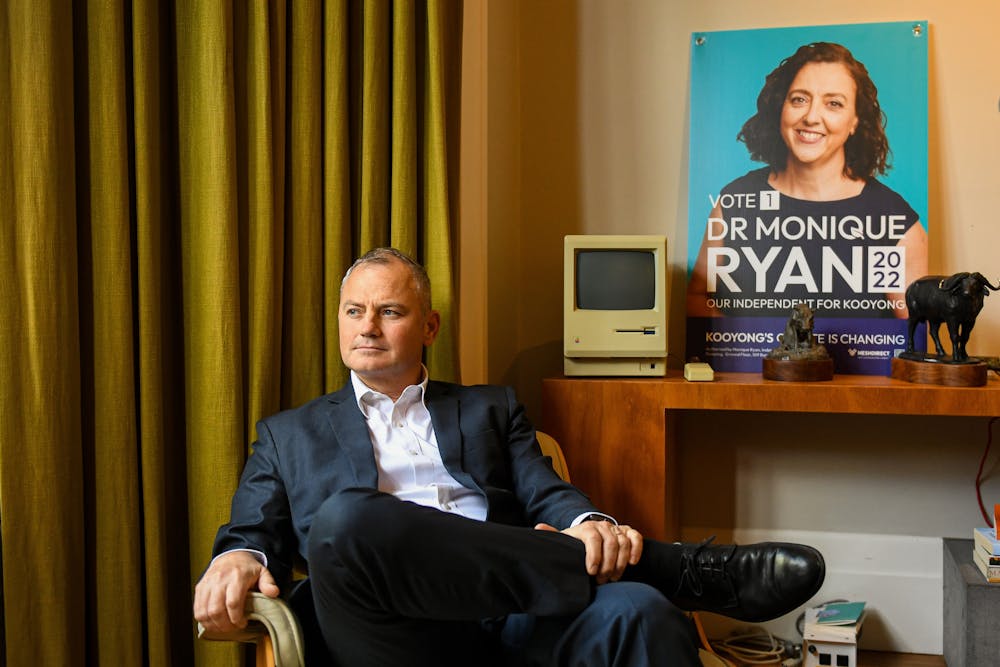 Simon Holmes à Court’s Climate 200 donor network helped raise money for 22 community campaigns around Australia.
Morgan Hancock/AAP
The most influential of those behind the scenes of the community campaigns were at a stage in their lives where they were able to pivot to a “third career”, in which they could focus their skills and resources to make political history.
Many were sufficiently well-off to invest $50,000 to kickstart a campaign, with a promise to double if needed, and could put their lives on hold for up to six months to run campaigns. Both Saville and Turner describe this milieu with an amusing (if somewhat gossipy) touch, dropping details of the famous art owned by one, the sale price of the harbourside mansion of another.
Perhaps these activists’ wealth was required to bring about change in Australia’s six richest electorates, but timing also mattered.
The black summer bushfires, coating Sydney and Melbourne in thick smoke, brought the urgency of the climate crisis home. Also crucial was the fact that during lockdowns, whole communities learned how to use Zoom at the same time, vastly increasing attendance at town-hall style online meetings. The community campaigns were also a women’s movement, with the March 4 Justice protests in Canberra proving an important catalyst for connection.
Simon Holmes à Court’s Climate 200 donor network helped raise money for 22 community campaigns around Australia.
Morgan Hancock/AAP
The most influential of those behind the scenes of the community campaigns were at a stage in their lives where they were able to pivot to a “third career”, in which they could focus their skills and resources to make political history.
Many were sufficiently well-off to invest $50,000 to kickstart a campaign, with a promise to double if needed, and could put their lives on hold for up to six months to run campaigns. Both Saville and Turner describe this milieu with an amusing (if somewhat gossipy) touch, dropping details of the famous art owned by one, the sale price of the harbourside mansion of another.
Perhaps these activists’ wealth was required to bring about change in Australia’s six richest electorates, but timing also mattered.
The black summer bushfires, coating Sydney and Melbourne in thick smoke, brought the urgency of the climate crisis home. Also crucial was the fact that during lockdowns, whole communities learned how to use Zoom at the same time, vastly increasing attendance at town-hall style online meetings. The community campaigns were also a women’s movement, with the March 4 Justice protests in Canberra proving an important catalyst for connection.
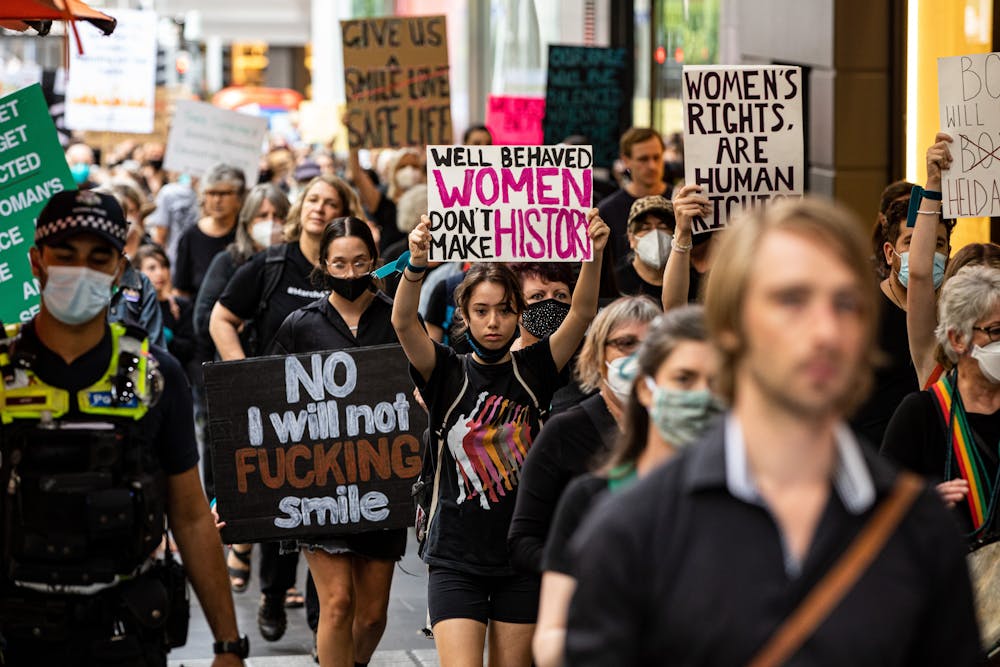 Women’s March 4 Justice, demanding a review of sexual assault laws and other gains, were ‘an important catalyst’ for the rise of the independents in the 2022 federal election.
Diego Fedele/AAP
More quietly, the housing crisis also influenced the outcome, with renters in wealthy electorates more likely to vote teal (and in Brisbane, for the Greens) than people who owned their own home.
The success of independents across the country is further evidence of the appetite for change in places without water views.
The other success story, of course, was the way Dai Le, the former Liberal candidate, who ran as an independent, saw off Labor heavyweight Kristina Keneally in Fowler. Near-misses in the previously safe seats of Bradfield, Wannon, Cowper, Nicholls and Groom have primed independent candidates for clinching these seats next election. Across the country, thousands of volunteers turned up or donated money.
As Holmes à Court writes, election campaigns are known to be for the ambitious or lonely; the independents’ campaigns were full of the fun-loving and passionate.
Blueprints for change
Holmes à Court’s The Big Teal makes it clear from the first line that he “wasn’t there at the beginning”. The slim, readable book is a compelling account of how he became integral to the 2022 election, and indeed, the campaign’s public face.
Women’s March 4 Justice, demanding a review of sexual assault laws and other gains, were ‘an important catalyst’ for the rise of the independents in the 2022 federal election.
Diego Fedele/AAP
More quietly, the housing crisis also influenced the outcome, with renters in wealthy electorates more likely to vote teal (and in Brisbane, for the Greens) than people who owned their own home.
The success of independents across the country is further evidence of the appetite for change in places without water views.
The other success story, of course, was the way Dai Le, the former Liberal candidate, who ran as an independent, saw off Labor heavyweight Kristina Keneally in Fowler. Near-misses in the previously safe seats of Bradfield, Wannon, Cowper, Nicholls and Groom have primed independent candidates for clinching these seats next election. Across the country, thousands of volunteers turned up or donated money.
As Holmes à Court writes, election campaigns are known to be for the ambitious or lonely; the independents’ campaigns were full of the fun-loving and passionate.
Blueprints for change
Holmes à Court’s The Big Teal makes it clear from the first line that he “wasn’t there at the beginning”. The slim, readable book is a compelling account of how he became integral to the 2022 election, and indeed, the campaign’s public face.
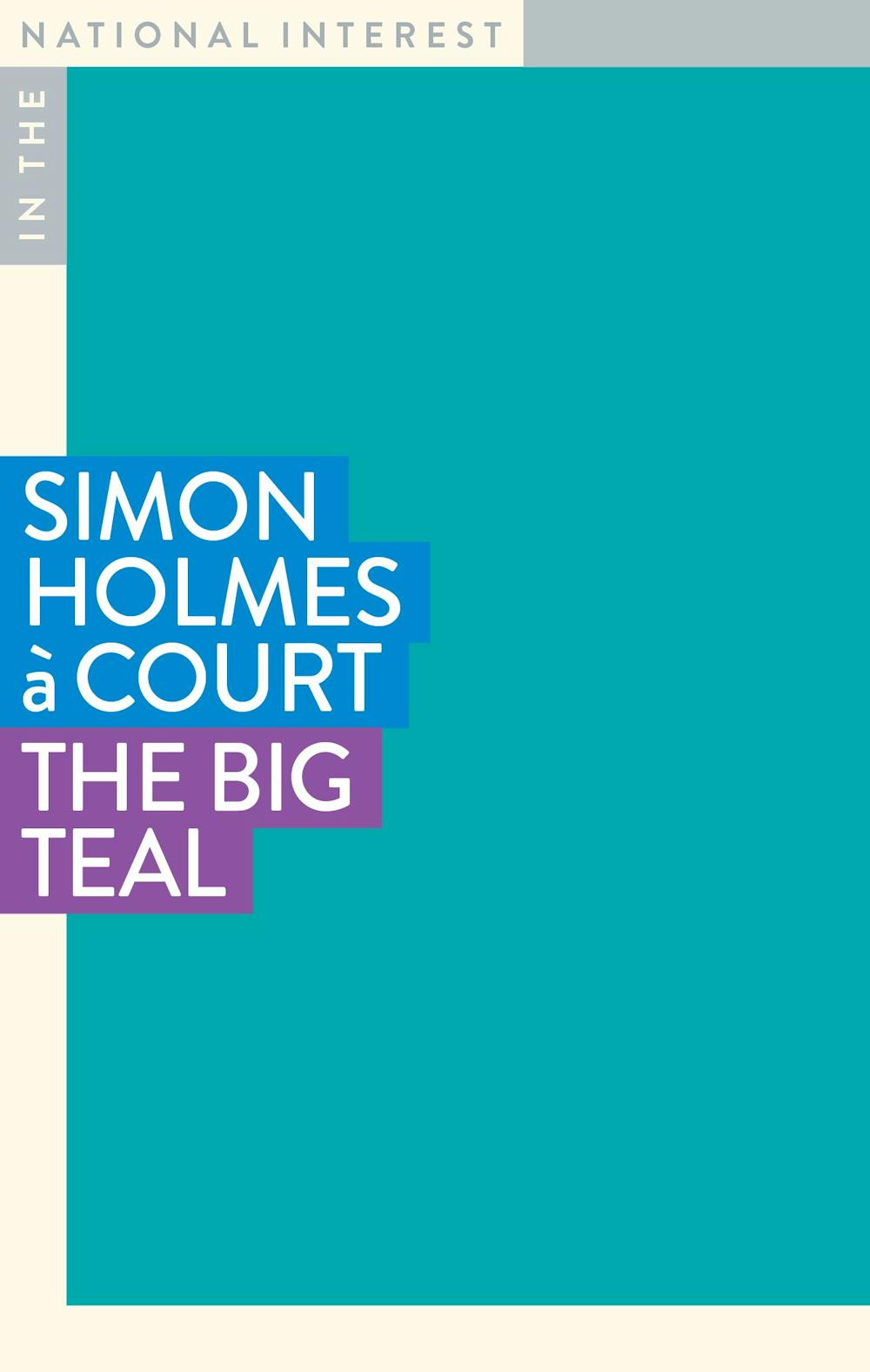 It is a personal account, reflecting on his parents, his traumatic years at Geelong Grammar, and first forays into community and environmental politics. It also sets out the values of Climate 200, and explains the many ways that incumbency and two-party dominance have rigged the system for Labor and the Coalition for so long.
By contrast, Saville’s The Teal Revolution and Turner’s Independents Day provide blow-by-blow accounts of the campaigns, and in so doing, they provide a blueprint for success.
We get a rich sense of what it takes to make campaigns work: the answer is networks and money, preferably lots of both. Saville’s book is the sports-car version of the story, tightly structured and fast-paced. It was an effective decision of Saville’s to distinguish the Sydney teals from those in Melbourne and Perth, in separate chapters, to emphasise the slightly different character of the candidates and campaigns.
It is a personal account, reflecting on his parents, his traumatic years at Geelong Grammar, and first forays into community and environmental politics. It also sets out the values of Climate 200, and explains the many ways that incumbency and two-party dominance have rigged the system for Labor and the Coalition for so long.
By contrast, Saville’s The Teal Revolution and Turner’s Independents Day provide blow-by-blow accounts of the campaigns, and in so doing, they provide a blueprint for success.
We get a rich sense of what it takes to make campaigns work: the answer is networks and money, preferably lots of both. Saville’s book is the sports-car version of the story, tightly structured and fast-paced. It was an effective decision of Saville’s to distinguish the Sydney teals from those in Melbourne and Perth, in separate chapters, to emphasise the slightly different character of the candidates and campaigns.
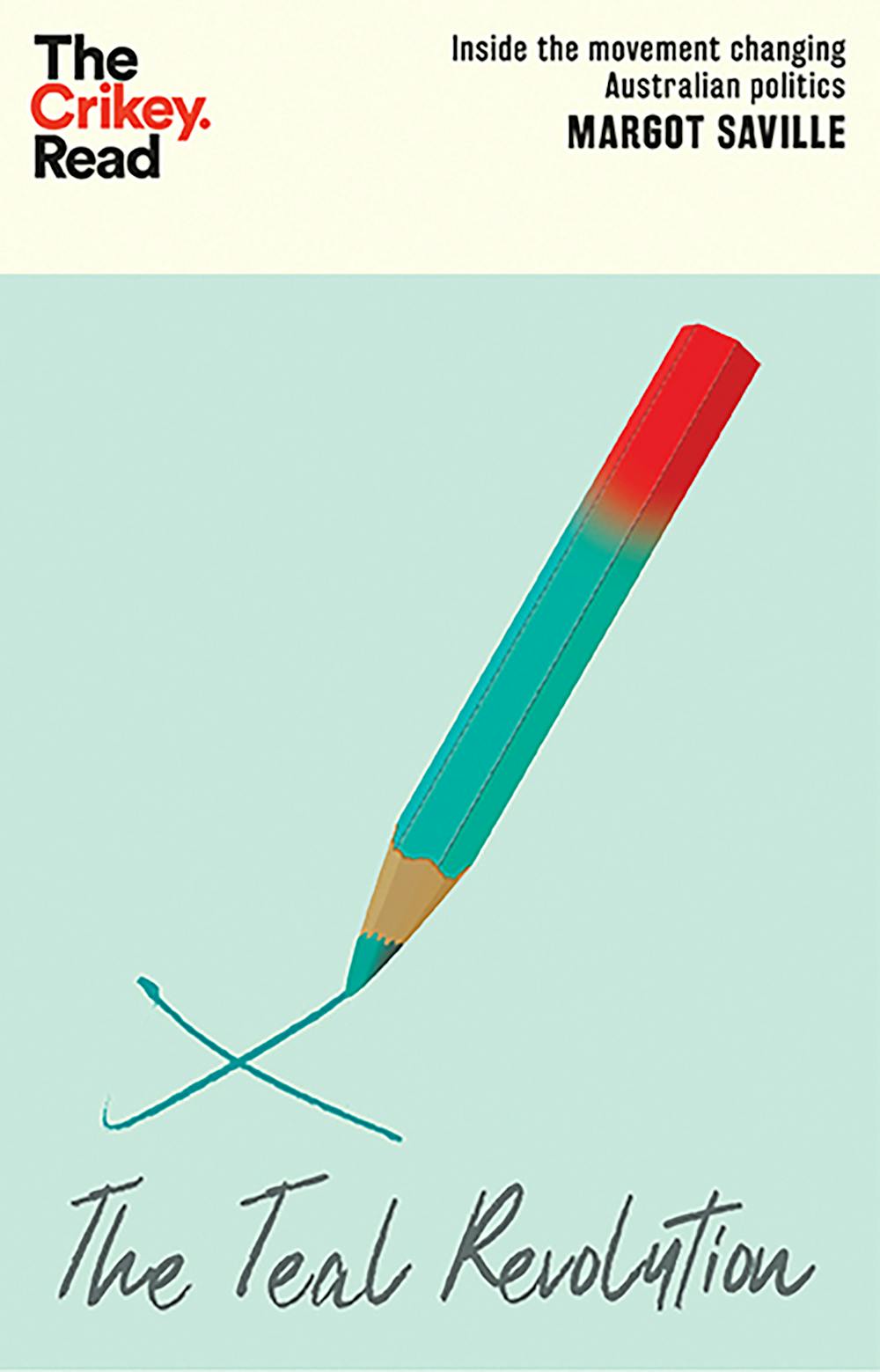 Alone among the three, Saville’s book has several moments of hilarity: mostly at the expense of Liberal MPs who provide verbal equivalents of toddler foot-stamping throughout the campaign. They are laugh-out-loud funny because, well, we know what happened.
Turner’s Independents Day is a fuller and more unwieldy book, especially in the first half, as Turner explains the way the various campaigns came together.
It’s a fascinating insight, but there are too many accounts of actors having a decisive coffee, walk or swim, and nearly every page introduces someone new in the interconnected web of growing influence. No doubt the accounts of hundreds of others were left on the editing block. The heavy detail is not organised chronologically or geographically, and requires its readers to have a solid grasp of Australian politics since 2010.
While it was great to read about the many nearly successful campaigns around the country, it’s a shame that Dai Le is almost entirely absent. As a Vietnamese woman with a long history of politics, her success taking on the Labor party in a lower socio-economic electorate is a unique story and worthy of our attention.
Turner’s account of David Pocock’s success in the senate race indicates he is a different order of politician to the teals from Sydney, Melbourne and Perth. Pocock had just begun working with his brother on a long-planned regeneration project in Zimbabwe when he made the decision to return to Australia and pursue the Senate seat.
Pocock’s success means the Senate could be the target of future teals campaigns. With the balance of power, he has used his position early to demand Anthony Albanese’s agreement to set up a “statutory advisory committee” to examine “the adequacy of social support payments every year before the federal budget”, before agreeing to support Labor’s industrial relations legislation.
Read more:
We're about to have Australia's most diverse parliament yet – but there's still a long way to go
Australian politics has changed
Federally, it is unlikely the Coalition will win back the seats it lost to the teals. Several more electorates, held by both major parties, might fall next time around, further expanding the crossbench. It is not unthinkable that hung parliaments could become the norm, with independents from the left and right of politics.
The challenge for community campaigns will be how they can support high-quality candidates from a diversity of ethnic and sociocultural backgrounds. For now, at least, the two-party dominance has been cracked wide open.
Authors: Amy Nethery, Senior Lecturer in Politics and Policy Studies, Deakin University
Alone among the three, Saville’s book has several moments of hilarity: mostly at the expense of Liberal MPs who provide verbal equivalents of toddler foot-stamping throughout the campaign. They are laugh-out-loud funny because, well, we know what happened.
Turner’s Independents Day is a fuller and more unwieldy book, especially in the first half, as Turner explains the way the various campaigns came together.
It’s a fascinating insight, but there are too many accounts of actors having a decisive coffee, walk or swim, and nearly every page introduces someone new in the interconnected web of growing influence. No doubt the accounts of hundreds of others were left on the editing block. The heavy detail is not organised chronologically or geographically, and requires its readers to have a solid grasp of Australian politics since 2010.
While it was great to read about the many nearly successful campaigns around the country, it’s a shame that Dai Le is almost entirely absent. As a Vietnamese woman with a long history of politics, her success taking on the Labor party in a lower socio-economic electorate is a unique story and worthy of our attention.
Turner’s account of David Pocock’s success in the senate race indicates he is a different order of politician to the teals from Sydney, Melbourne and Perth. Pocock had just begun working with his brother on a long-planned regeneration project in Zimbabwe when he made the decision to return to Australia and pursue the Senate seat.
Pocock’s success means the Senate could be the target of future teals campaigns. With the balance of power, he has used his position early to demand Anthony Albanese’s agreement to set up a “statutory advisory committee” to examine “the adequacy of social support payments every year before the federal budget”, before agreeing to support Labor’s industrial relations legislation.
Read more:
We're about to have Australia's most diverse parliament yet – but there's still a long way to go
Australian politics has changed
Federally, it is unlikely the Coalition will win back the seats it lost to the teals. Several more electorates, held by both major parties, might fall next time around, further expanding the crossbench. It is not unthinkable that hung parliaments could become the norm, with independents from the left and right of politics.
The challenge for community campaigns will be how they can support high-quality candidates from a diversity of ethnic and sociocultural backgrounds. For now, at least, the two-party dominance has been cracked wide open.
Authors: Amy Nethery, Senior Lecturer in Politics and Policy Studies, Deakin University 

















