

The world finally has its first 'parastronaut'. Can we expect anyone to be able to go to space one day?
- Written by: Steven Moore, Professor, School of Engineering and Technology, CQUniversity Australia
The European Space Agency made history last week with the announcement of the first “parastronaut”, 41-year-old UK citizen John McFall.
He is the first candidate selected for the Parastronaut Feasibility project, described by ESA as a “serious, dedicated and honest attempt to clear the path to space for a professional astronaut with a physical disability”.
McFall, a former Paralympic sprinter, had his right leg amputated after a motorcycle accident at age 19.
Most of us are familiar with images of gruelling astronaut selection tests and training from movies such as The Right Stuff. ESA seeks to answer the practical question of what changes to training and equipment need to be made for a physically disabled person to travel to space.
How are astronauts selected?
NASA first selected astronauts, the Mercury Seven, in 1959. Recruitment was limited to male military test pilots less than 40 years old, in excellent physical and mental health, and less than 1.8m tall (the Mercury capsule was tiny).
Today, NASA uses a similar basic eligibility screening. Applicants must have 20/20 vision (corrective lenses and laser eye surgery are okay) with blood pressure under 140/90 when seated and a height between 1.49 and 1.93m (to fit available spacesuits).
However, this is the easy part. Candidates endure several rounds of interviews and testing, and if lucky enough to be selected will need to pass the long-duration flight astronaut physical. It’s a gruelling week-long test of physical abilities necessary for space, such as agility and hand-eye coordination, as well as tolerance of extreme pressure and inertial (rotating) environments.
This is followed by a two-year training period mastering complex space hardware and software, performing simulated EVAs (spacewalks) in Houston’s Neutral Buoyancy Laboratory, and experiencing weightlessness during parabolic flight.
Read more: Australia just flew its own 'vomit comet'. It's a big deal for zero-gravity space research
Although I have described the NASA process here, similar programs are used across space agencies. Determining what adaptations to training are required to allow participation by physically disabled candidates will be one outcome of the parastronaut project.
Astronaut diversity is improving
Culturally, astronaut selection criteria have slowly evolved since the first all-male, all-military cohorts. The first female (and civilian) in space, Soviet cosmonaut Valentina Tereshkova, flew on the Vostok 6 capsule in 1963.
It was another 15 years before NASA selected female astronauts, and a further five before Sally Ride became the first US woman in space aboard the shuttle Challenger in 1983. The first NASA astronaut of colour, Guion “Guy” Bluford, flew in the same year.
The 2021 NASA astronaut class of ten candidates, Group 23, included four women and several candidates from culturally diverse backgrounds.
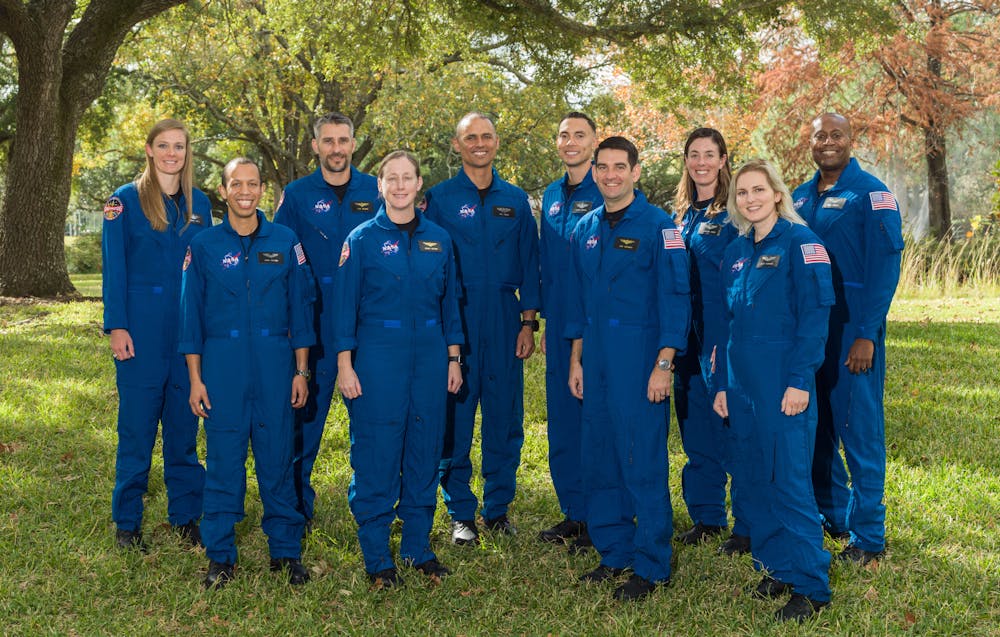
It would appear that diversity in astronaut selection has lagged behind society, and ESA has made a bold step with the parastronaut project.
Levelling the playing field
ESA has initially focused on candidates with a lower-limb disability. Astronauts primarily use their upper body to get around in weightlessness, and a lower-limb disability is unlikely to impair movement. In this respect, zero-g presents a level playing field.
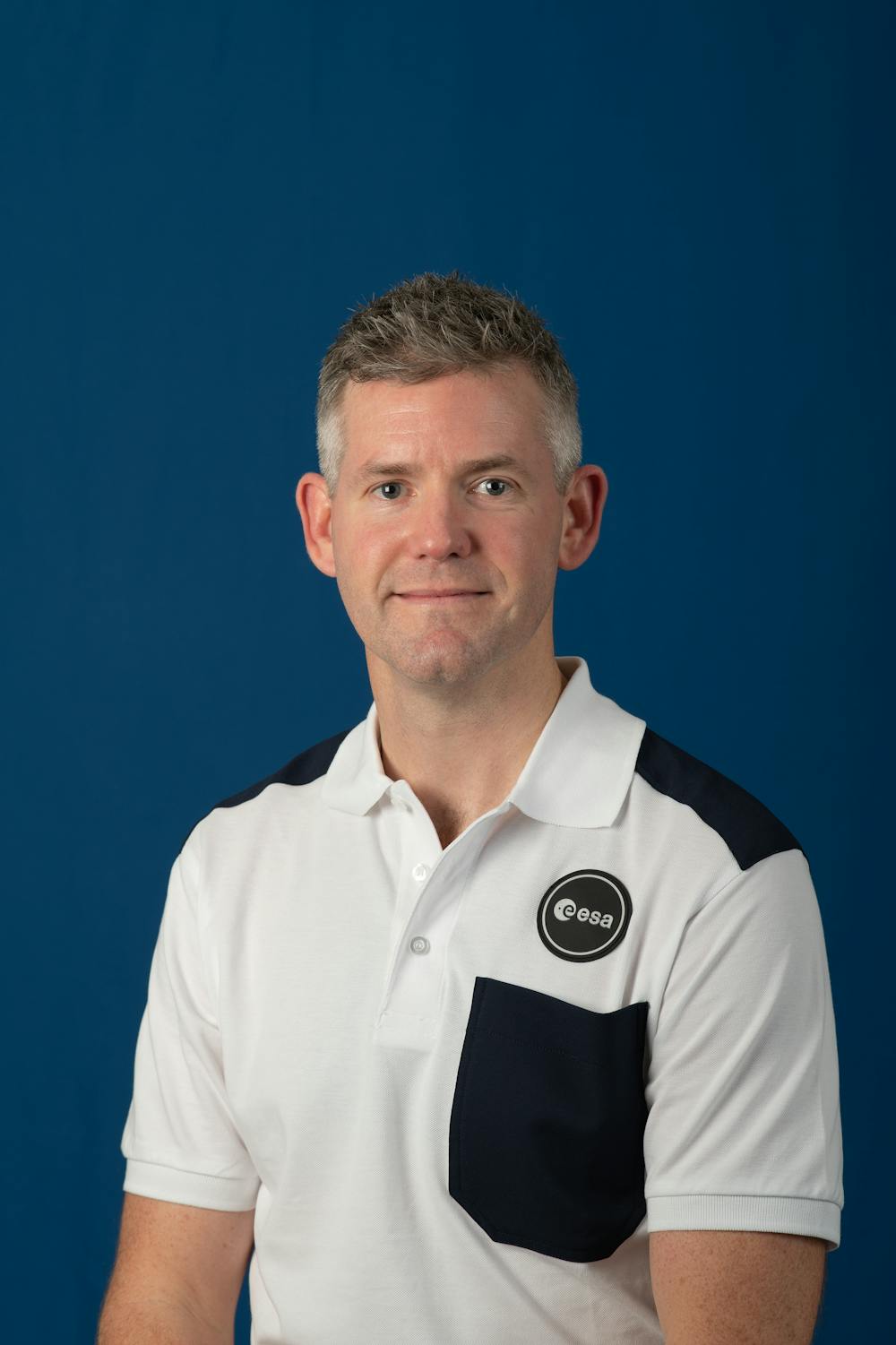 British doctor and Paralympian John McFall is a member of the ESA Astronaut Class of 2022.
ESA - P. Sebirot
British doctor and Paralympian John McFall is a member of the ESA Astronaut Class of 2022.
ESA - P. Sebirot
Issues are likely to arise when operating existing space hardware. The parastronaut study aims to determine what modifications to launch vehicles, spacesuits and other space systems would be necessary to allow a physically disabled astronaut to live and work in space.
There is precedent for an astronaut with a progressively disabling condition flying in space. NASA astronaut Rich Clifford was diagnosed with Parkinson’s disease in 1994 after noticing a lack of movement in his right arm when walking, shortly before his third scheduled shuttle flight.
NASA not only allowed him to launch aboard Atlantis in 1996 for his final mission, but scheduled Clifford for a six-hour EVA on the exterior of the Mir space station.
Although his experience was largely positive, Clifford did note he had difficulty donning his spacesuit due to limited motion of his right arm. The human-machine interface may present the biggest challenge for future parastronauts.
Space is still risky and extreme
In November 2021 we passed the milestone of 600 humans having gone to space. Compare that to the 674 million passengers who flew on US airlines in 2021 alone.
If we could travel back in time to when only 600 people had flown in aeroplanes, we would find the risk of flying considerably higher than today. This is where we are with spaceflight.
It remains a high-risk venture to an extreme environment with significant physical and mental challenges. We are still a long way from anyone being able to travel to space, although hopefully we won’t have to wait until billions of people have launched to reach a level of safety comparable to modern commercial aviation.
Our knowledge of the physical, mental and operational risks associated with spaceflight is still incomplete. Of the 600+ space travellers to date, only 70 have been female, and an understanding of gender difference in space health is only just beginning to emerge.
How would a physical disability affect an astronaut’s performance in space? We don’t know, but ESA is taking the first step in finding out. It would appear that space truly is the last frontier.
Authors: Steven Moore, Professor, School of Engineering and Technology, CQUniversity Australia


















