

NZ's proposed pumped storage hydropower project will cost billions – here's how to make it worthwhile
- Written by: Alan Brent, Professor and Chair in Sustainable Energy Systems, Te Herenga Waka — Victoria University of Wellington
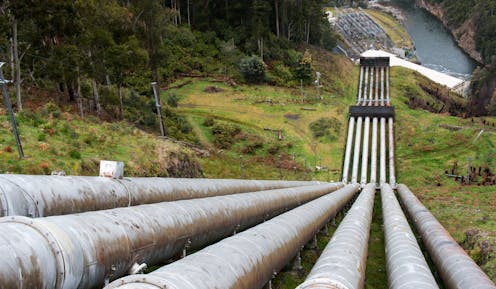
Greater electrification of the economy is an essential part of Aotearoa New Zealand’s climate policy, as set out in the emissions reduction plan.
But the national electricity system depends heavily on the fluctuating storage capacity of hydropower lakes, which makes the country prone to energy shortages during dry years.
The NZ Battery Project aims to address this. One of the options being investigated is the Onslow pumped storage hydropower (PSH) scheme.
The Onslow project will comprise a 60km² reservoir in the existing Onslow and possibly Manorburn basins. Author provided, CC BY-SAA feasibility study is due to be completed and cabinet is expected to decide early in the new year whether to continue to the next phase of establishing a detailed business case.
Pumped storage hydropower is an established technology. It accounts for more than 94% of the globally installed energy storage capacity.
Worldwide, pumped storage hydropower has been ramping up. In 2021, 4.7GW capacity was added, up from 1.5GW in 2020. If it continues, the Onlow project will be one of the largest PSH schemes in the world, adding up to 1.5GW of generation capacity.
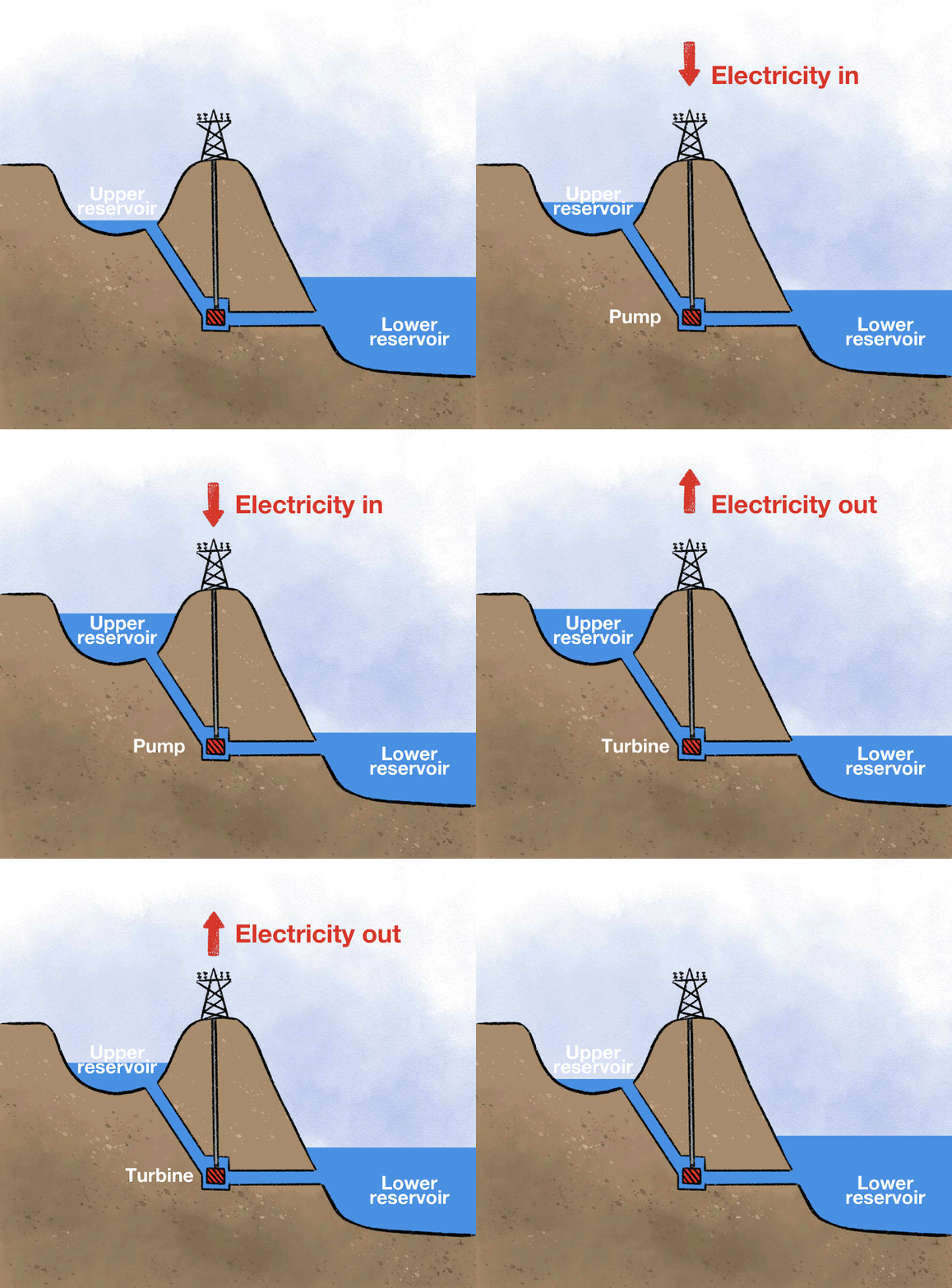
The proposed scale of the Onslow project requires a considerable investment – at least NZ$4 billion. To justify this, we argue the scheme should be seen as a public-good and multi-purpose asset. It would not only support electricity generation but also address water and other sustainability priorities in the face of climate change.
Read more: Batteries of gravity and water: we found 1,500 new pumped hydro sites next to existing reservoirs
Making the investment worthwhile
Pumped storage hydropower is well known to be a cost-competitive option for energy storage. While the capital expenditure is high, the cost of the energy is one of the lowest, at 20-40 cents per kWh. Return on investment in pumped storage hydropower is considerably better than for conventional batteries.
The Onslow project is also likely to qualify for a climate bond because its carbon emissions may reasonably be under the limit of 50gCO₂/kWh. To achieve this, it must use renewable energy resources for the pumping and its construction footprint has to be reduced.
Other environmental and social impacts (and opportunities) also need to be addressed. This includes the planting of an indigenous forest around the reservoir to prevent sediment erosion.
A multi-purpose asset
The Onslow infrastructure provides a way of managing dry years by storing water during rainy periods.
It can also participate as a conventional electricity generator. This will have implications for the wholesale electricity market because variability (from renewable generators) is currently mitigated by existing hydropower and fossil-fuel generation.
From a technical perspective, the challenge for Transpower is to maintain a consistent frequency and voltage in the power network. The Onslow infrastructure will assist with frequency regulation for the entire electricity network.
It offers a fast-acting and large-scale dynamic load, as is the case for other pumped storage hydropower projects such as the UK’s Coire Glas project or France’s Grand Maison. Both are also located remotely in the network similar to Onslow.
Globally, PSH schemes are viewed as multi-purpose assets. The Wivenhoe Dam (in Queensland, Australia) is a lower reservoir for a pumped storage hydropower scheme and provides drinking water and flood mitigation for Brisbane.
Another example is the hydropower infrastructure of the Durance Valley in France. It was designed, built and regulated to guarantee the operator provides drinkable water (740 million cubic metres per year) for 5 million inhabitants. It also supplies water to more than 170,000 hectares of cultivated lands (1.5 billion cubic metres per year in a dry season), generates reliable low-carbon electricity (for over 2 million people per year) and protects the valley from extreme flooding – and it’s become a visitor attraction, drawing 2.5 million tourists annually.
Onslow would offer similar water-management services. It could be delivering fresh water to Dunedin and other towns in the area, potentially free water to surrounding farmers and flood protection for towns along the Clutha River.
Another benefit is the regeneration of the Waiau and Waitaki rivers by freeing capacity (and water) from the Manapouri hydro system and the lakes at Tekapo and Pukaki.
Hydropower schemes are also viewed as territorial objects or public management tools. The schemes in the Drac Valley in the French Alps are a good example. While some of the agricultural land in the alpine valley was lost, the real estate values have increased substantially. Recreational activities now provide the main income for the area, estimated at €3 million (NZ$5 million) over five years.
The schemes have an enormous impact on local economies. The operators pay local taxes and provide employment, including local subcontracts, worth an estimated NZ$88 million.
Read more: How to ensure the world's largest pumped-hydro dam isn't a disaster for Queensland's environment
The Onslow project would obviously bring employment opportunities (more than 1,000 direct and more indirect) during the construction and throughout its operation. But it could also provide financial benefits to the local community in the form of a local tax paid by the operator to maintain roads and infrastructure networks (telecom, water, energy) as well as other public services.
To ensure Onslow manifests as a sustainable, public-good asset requires careful upfront co-ordination to avoid complications. If the project goes ahead and is managed well, Onslow may become a long-lasting asset that offers the opportunity to diversify a low-carbon, self-resilient economy in Aotearoa New Zealand.
Authors: Alan Brent, Professor and Chair in Sustainable Energy Systems, Te Herenga Waka — Victoria University of Wellington


















